One of the first things that came to mind shortly after Christmas and before the New Year was how much my Mom and Dad would have been thrilled and proud that a great film like 12 Years a Slave received great reviews and had enjoyed large viewing audiences. I would have heard a litany of what they remembered about their childhoods and how far we Black folks have come. And if they were still alive they would surely have warned me not to hyperventilate about whether or not Santa Claus was Black or some of the foolish and racist slips of the tongue that seem to dominate our current news cycles on most days.
Strangely, my mind goes back to that one scene in the film 12 Years a Slave where after a slave has literally dropped dead from exhaustion while laboring in the fields, you see the slaves standing around a gravesite that they have prepared for their fallen comrade. Suddenly, a slave woman begins singing the old Negro spiritual “Roll, Jordan, Roll.” Then all of the slaves joined in and they sang with a joyous abandon. At this moment in the movie theater, I completely lost my composure. I wept so loudly that I had to place my hand over my mouth to muffle the sound. For days, I wondered why that scene—and not one of the other more horrible scenes where someone was beaten or tortured—caused me to cry like a two-year-old toddler. Then it came to me. This was a gift. The gift was not simply my ancestors’ songs, but their decision that they had a right to sing their songs.
Their gift feels as familiar as a book of black poetry or history or the first time my parents took me to a Jazz concert or to see the Alvin Ailey American Dance Theatre or to a Broadway play. Afterwards, they would always inform me that I must never forget that it was my people that had created the artistry and creative offerings that I had just witnessed. The lesson was simple—I could perpetually cry about what white folks had done to my people or I could fight for and celebrate what my people had done for themselves and for me, all of which is a balancing act. Yes, one must call out and fight against racism. Yet, one cannot allow it too much space in one’s head, lest one descend into perpetual victimhood. “How much of your energy are you gonna’ give THEM,” Daddy would ask without blinking?
I wept in the dark of that movie theatre, as the slaves on the screen sang with abandon and rejoicing. It is difficult to count one’s blessings when the world and everyone in it seems to be your enemy. Yet, that is exactly what the slaves did. My slave ancestors did not sing with joy because they were happy and content, but rather because the singing allowed them to reclaim their humanity, to reclaim their right to joy. No degree of inhumane treatment routinely meted out to them by white slave masters could make them surrender their own humanity, or their very human need for joyousness and a belief in the future even when that future was uncertain. Their gift is still a gift that keeps on giving if you are willing to claim it. This is what I hope to remember now, and in the New Year.
Although it now seems ages ago, I remember one of my former classmates told me something quite revelatory shortly before my graduation from Agnes Scott College. She told me that when my classes were over, and I had turned in that last paper, I was going to make a discovery: I would discover my reading and analysis addiction. I laughed. After all, I thought, we both were older when we returned to school to complete our college degrees. Were we not naturally immune to the kind of excesses that affected much younger women? Agnes Scott’s student body was and still is well over a fourth non-traditional age students, meaning students over the age of 25.
The benefit of attending school with students of various ages was that we all learned something from each other. I was a History major and every semester I was usually assigned anywhere from 18 to 22 books to read in semesters that were usually no longer than 15 or 16 weeks. When my classmate (who graduated before me) told me that after graduation she would get up at 6:00 AM just to go out to fetch the morning newspaper to read, I was certain she was telling one of her funny stories. I was wrong!
After I turned in my final paper for the Senior History Colloquium, I lounged around for a couple of days and then it started: the hunt for reading material. Now, I already owned over a thousand books. I suddenly found myself opening books and re-reading chapters of books I had read years ago; then magazines, scholarly journals, and the TV guide. I read a couple of stage plays, including the stage directions. Was it possible for me to just stop reading and just let my brain relax for a moment? Was it possible for me to pause and not do what I was trained to do? Yet, if I did read something, could I read it just for pleasure?
Like most “Scotties,” my classmate gave me some good advice. She said we all know that most people need to read more. We tell our children to read books; and there is a genuine crisis in how little some people read. Yet, she said, anything you cannot turn off for a while is controlling you, not the other way around. Reading is absolutely necessary and essential to any good education. Yet, when you have to struggle to allow yourself to take a break, there is a problem. Reading and deep analysis must always be self-directed. Deep analysis can become ineffective once it becomes an involuntary reflex.
Scenario Two:
On a few occasions, I have attended stage plays with actors. Most of these actors I love to death. We have sat in the audience making small talk before the show began and then WHAM! Less than two minutes into the production, the same actors that I love were analyzing every thing: “I wonder why the set designer placed that chair over there?”“How did the stylist get that woman’s hair to look like that?” After the play was over, the analysis really kicked into high gear: “I thought that this character should have entered from the left instead of the right.” “It was a great play, but I would have placed the intermission in a different place.” “Why was that odd sculpture on the table in the corner?” Soon I was thinking to myself, “Why, oh why, did I not just come to see this play by myself?”
Now, to be fair, all actors, playwrights, directors, and etcetera have to analyze plays like this. If they do not do this, they risk overlooking important details that might compromise the integrity of their future performances and productions. It is an exercise in understanding what works on a stage and what does not work on a stage. They cannot take anything for granted: the lighting, the set, costumes, particular moments in the script that they believe need to grab the audience’s attention. Yet, there is a problem when the criticisms and evaluations seem to run on automatic pilot. There is also a problem in not being able to simply sit in an audience and just enjoy the show.
So why are these two scenarios a bit dangerous? After all, there is every reason to complain about the lack of intellectual and artistic stimulation in society as a whole. Most of us with any degree of brains knows that putting a book in a child’s hands or taking them to see a play or to a concert is far better than giving them $200 sneakers and video games. Most of us have witnessed the performance that pandered to the audience for cheap laughs or sank into a ridiculous melodrama designed to do nothing more than make people weep. We have all read the book or essay that seemed written purely for titillation. We do not need any of that. Yet…
The danger in never being able to simply watch a performance just for sheer enjoyment is dangerously close to losing the joy of viewing performance art altogether. The danger in not being able to momentarily, put the book down or not being able to stop analyzing everything is also very close to becoming entirely disconnected from the very people you wish to reach and teach. When you watch what they watch or read what they read, do you do so through their eyes and ears? How can you know what the people expect or need to know or want to know or want to experience or need to experience unless you occasionally JOIN THEM?
So, take a moment and just chill. Every once and awhile, when you read, simply drink in whatever you are reading, and leave your criticisms, questions, and analysis for some later time. If you are watching a play or listening to a piece of music, just watch, just listen, just enjoy. Pause and try to recall when everything that you know now (or think you know now) was once perfectly fresh and new to you. Take that occasional moment to deliberately NOT review, but to renew. Then, get back to work!
One of the best things about research is that no matter how long you do it, you always find something new. As a historian, and particularly one that focuses on theatre, I am always amazed at the rich theatrical heritage of my own native city Atlanta, Georgia and the tremendous role our Historically Black Colleges have played in nurturing that heritage. There are certainly more facts about this facet of the city than appear on this list, but below are my first five favorite facts:
1. The founder of Atlanta Life Insurance Company, the former slave Alonzo Herndon, had a wife that taught Drama and Speech to one of the first academic theatre groups at a historically Black college in the United States. An amazing thespian, Adrienne Elizabeth McNeill Herndon enjoyed a stellar reputation as an interpreter of Shakespeare. Married to Alonzo Herndon, she devoted much of her expertise to the students of *Atlanta University (then an undergraduate institution) in the late 19th century, helping to develop and found the Atlanta University Players (not to be confused with the Atlanta University Summer Theatre) and coaching it into an amazing group of actors that made its debut in 1895. However, Mrs. Herndon was a very fair complexioned woman. African American scholar Dr. W. E. B. DuBois had the best and most humorous story about her. Because of her acting abilities (and the fact that she was not always easily identifiable as Black), Thomas Dixon, a white racist playwright offered Mrs. Herndon a part in his play “The Klansman.” Writing in the NAACP’s Crisis magazine in 1927, W. E. B. DuBois noted that Dixon offered her a role in his play in “blissful ignorance of” her race.
2. The Atlanta University Summer Theatre gave its first performance in the summer of 1934 and ran continually until 1977 making it the longest running Summer Stock Theatre in the United States. The Atlanta University Summer Theatre was made up of student and faculty actors & professors, visiting professors (and some local Atlanta actors) from *Atlanta University, Spelman College (all female), Morehouse College (all male), and later performers from *Clark College, and Morris Brown College. The Atlanta University Summer Theatre actors and directors performed five full-length plays over a six-week period, during June and July of each summer from 1934 through 1941 alone. The five-play, six week schedule was not completely abandoned until 1970 when the summer schedule was trimmed to three plays. (*Founded in 1865 Atlanta University was an undergraduate institution as was *Clark College, founded in 1869. During the school year 1929-1930, Atlanta University exclusively became a graduate school. In 1988, however, Atlanta University and Clark College merged and became Clark Atlanta University.)
3. One of the great scientific minds of our time was Morehouse College alumnus Dr. Samuel Nabrit, who earned a Ph.D. in Biology from Brown University in 1932. An accomplished Marine Biologist*, he taught at both Morehouse College and Atlanta University. In 1956, President Eisenhower appointed him to the National Board of the National Science Foundation and he served as Special Ambassador to Niger under President John F. Kennedy. (A biography and obituary on Dr. Samuel Nabrit in the New York Times.) Less well known is that Nabrit was a regular actor performing with the Atlanta University Summer Theatre when he taught at Morehouse College and Atlanta University during the 1930s. (Sidebar: *Marine Biology was the original academic major of actor Samuel L. Jackson, when he was a student at Morehouse College.)
4. A few weeks before her nineteenth birthday, Black Theatre legend (and then Howard University student) Shauneille Perry spent her summer in Atlanta and appeared as the character “Anias” in Alexander Dumas’ “Camille” during the 15th season (1948) of the Atlanta University Summer Theatre, directed by Owen Dodson. Shauneille Perry is one of the first Black women to direct an Off-Broadway play and has a long list of credits for both the stage and the screen. The United States Congress honored Perry in 2011 for her lengthy and prolific career as an actor, playwright and screenwriter.
5. The amazing and rather colorful director-actor-lighting and technical designer Dr. John McLinn Ross, both acted in plays and directed for the Atlanta University Summer Theatre during the 1930s. Like his colleagues who managed and directed the Atlanta University Summer Theatre (the principle director during the 1930s was Anne M. Cooke, a Spelman professor, along with Owen Dodson), he studied at Yale University’s School of Drama. Yet, Ross has the distinction of being the first Black person to receive the Master of Fine Arts degree in Acting, Directing, and Technical Directing from the Yale School of Drama in 1935, only four years after Yale graduated the first MFA graduates in Drama. Atlanta-based photographer & cultural chronicler Susan Ross is the great niece of Dr. John McLinn Ross.
There were four little Black girls whose lives were snuffed out on Sunday morning, September 15, 1963 when a bomb planted by racist White terrorists exploded in the Sixteenth Street Baptist Church in Birmingham, Alabama. They were, Denise McNair who was the youngest at age 11, Carol Robertson aged 14, Cynthia Wesley** aged 14 (**Real and Birth name is “CYNTHIA MORRIS”), and Addie Mae Collins was aged 14. When that bomb went off, most Black Birmingham citizens and most Black Americans forgot about the “March on Washington,” held a mere eighteen days earlier on August 28. Not long after the blast, all hell broke loose. The New York Times headline on the following day read (click here for article): “Birmingham Bomb Kills 4 Negro Girls in Church; Riots Flare; 2 Boys Slain.“
Birmingham, then nicknamed “Bombingham,” had an ugly history it would take decades to live down. A middle class neighborhood in the city had suffered so many bombings that it was nicknamed “Dynamite Hill,” because angry Whites bombed homes to stop Black people from moving into the area. Dynamite Hill was the neighborhood that honed and developed future Phi Beta Kappa scholar, radical activist, and author Angela Davis. Yet, that is a story for another essay. There are those of us, however, who think the story of what and who we lost on that fateful Sunday morning deserves its place in all the national narratives of American history. I am one of those people; so is actor and activist Erich McMillan-McCall.
My friend, Erich is the founder of Project1Voice, an organization devoted to preserving Black theatre companies and our important historical legacies. I should add that not only is he a multitalented performance artist with credits on Broadway, national stages, and television, he is also a visionary. I say he is a visionary, however, with a very important acknowledgement of the type of communities that both of us grew up in as children. Black women, he emphasizes, were at the center of these communities. Yet, in several of our usual marathon-long telephone conversations, he has lamented that he is bothered by how Black women’s voices are not only muted or unacknowledged in the historical narratives, but also on the stage, and in the arts.
Erich and I are products of a time when to be young and Black and living in the American South did not necessarily mean that everywhere you went there was danger; what it tended to mean was the Black community in which you grew up was supportive, filled with a great deal of love and encouragement. There were threats to our wellbeing, to be sure. Yet, those threats largely came from outside the neighborhoods where we lived. As much as some very sympathetic White liberal folks and some younger Black Americans have erroneously assumed otherwise, our Black parents and elders made sure we had normal childhoods with school, church, piano lessons, baseball games, concerts, plays, parties, and family picnics. They did all of this for us in spite of the racism and the perpetual threat of (and often real) racial violence that characterized much of life for us during the 1960s and 1970s. Erich understands this type of upbringing.
His proactive approach, that provides greater visibility to financially struggling Black theatre companies while engaging educational, civic, and political organizations in this collective struggle for artistic, political, educational, economic, and historical viability is not exactly a new way of doing things. The Black community that I grew up in was filled with folks who could sing, dance, act, organize, who taught school, practiced medicine, ran businesses, and helped elect Black people to political office—This is what we were/are. I loved this Black community, and the activism and the theatre it produced. I still live in the neighborhood my family moved to when I was around the age of eleven. It has not entirely lost those same qualities that it had during my childhood. However, I fear that these types of communities become more rare with each passing decade. At the same time, I am gratified and encouraged by Erich’s embrace of the old collaborative efforts of our neighborhoods and organizations that we remember about our childhoods; and his insistence that those qualities can be modified and used to great affect in the information age. I hope this is the beginning of a new trend.
Sunday, September 15, 2013, is the 50th anniversary of one of our worst tragedies. On this date, Project1Voice, in collaboration with Howard University, African Continuum Theatre Company, the Duke Ellington School of the Arts, and the John F. Kennedy Center for the Performing Arts will present a reading of the play “Four Little Girls,” written by Christina Ham, directed by Phylicia Rashad. It will stream live online at 6:00 PM EST via the Kennedy Center’s website.
Targeted toward young audiences, this will be one of those wonderful opportunities to sit down in front of your computer screens with your children and your friends to watch this important piece of theatre and history—Free of Charge. You should also check for viewing parties around the country. Additionally, over thirty Black theatre companies around this nation will be presenting “Four Little Girls” simultaneously on the fiftieth anniversary of this national tragedy.
Erich and I both remember neighborhoods where middle class and working class Black families looked out for each other and each other’s children. These facts, however, are precisely why the slaughter of Denise McNair, Carol Robertson, Cynthia Wesley** (**born as “Cynthia Morris,” but cited in the historiography and in most news reports as “Cynthia Wesley“) and Addie Mae Collins was so devastating to Birmingham’s Black community and other Black communities throughout the nation. The reading of this play is not only a way to honor these dead children, but to also recall and remember the kind of stable and warm neighborhoods where all of them and us grew up. Let us honor these little girls by going home again. Peace.
Please visit: Project1Voice and the Kennedy Center for the Performing Arts for more information about this play; how to access the play via the internet on Sept. 15, 2013 at 6 PM EST; and for information about other great performances and programs.
** Shortly after this blog was published, I, Leslye Joy Allen, was contacted by Fate Morris, the brother of the young girl commonly known in historical and news records as “Cynthia Wesley.” Fate Morris insisted that his sister’s real name is “CYNTHIA DIANE MORRIS,” and that authorities recorded her name incorrectly the day of the explosion. Mr. Morris also informed me that he has decided to accept the Congressional Medal for his sister. Originally he and Sarah Collins Rudolph (sister of Addie Mae Collins) had declined this medal. Please read the following article about the survivors of this tragedy: “Survivor of ’63 Bombing Seeks Funds”**
Please join Project1Voice‘s commemoration of the lives of these four little girls:
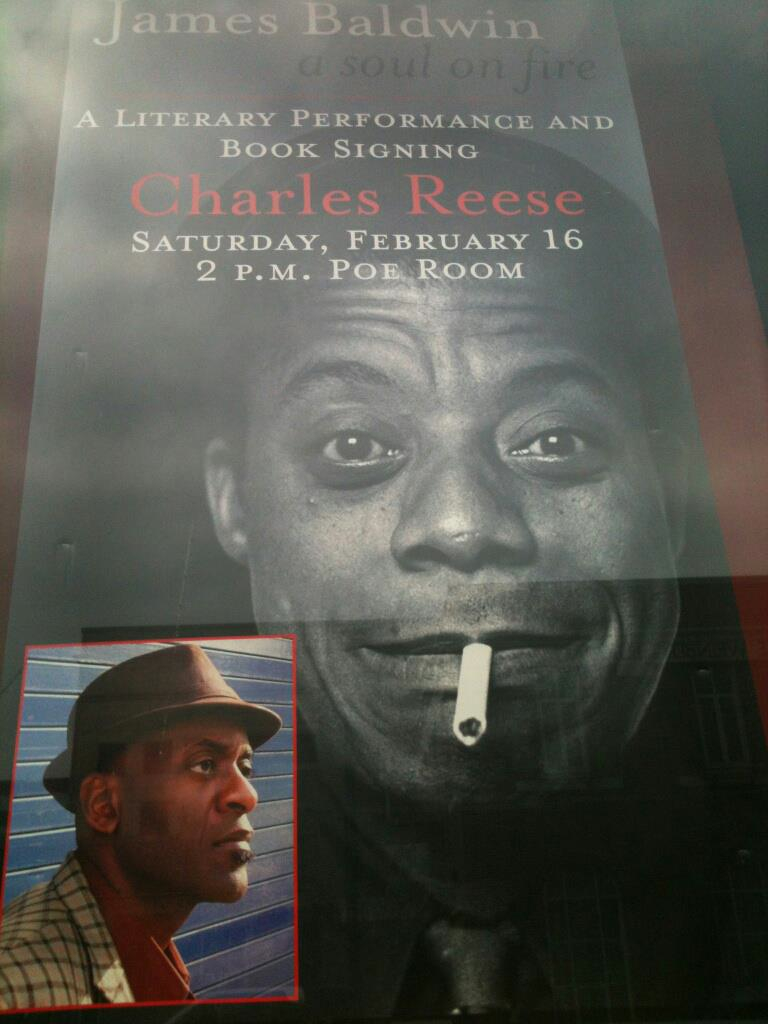
My friend Charles Reese wrote this poem in honor of my late mother Syble Allen Williams (March 1, 1921 – February 9, 2013). Thanks Charles for this rare gift; it makes her passing a little bit easier to bear. — Leslye Joy Allen

 This Blog was written by Leslye Joy Allen and is protected by U. S. Copyright Law and licensed under a Creative Commons Attribution-NonCommercial-NoDerivs 3.0 Unported License. Any partial or total reference to this blog, or any total or partial excerpt of this blog must contain a direct reference to this hyperlink: http://leslyejoyallen.com with Leslye Joy Allen clearly and visibly stated as the author.

 Leslye Joy Allen