A Personal Prayer of Cuba

by ©️Leslye Joy Allen

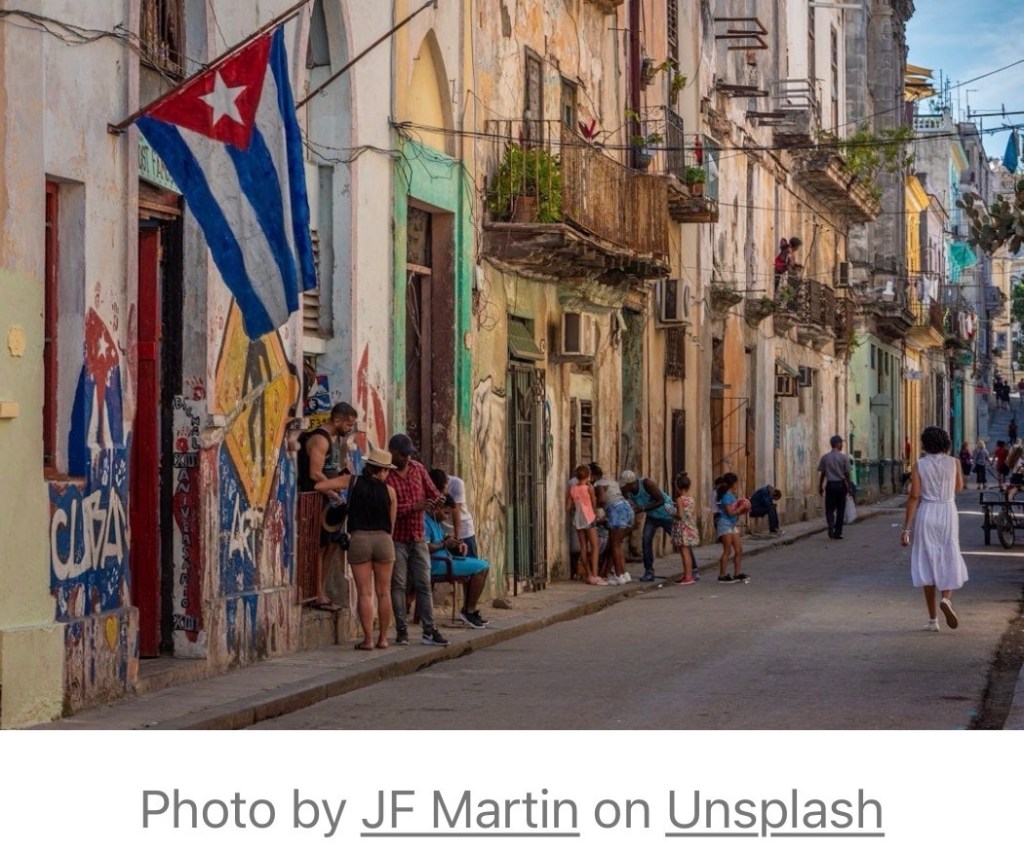
The following below that is written in italics is partially a meditation on Cuba. It is a response I wrote to a piece about Cuba’s current crisis exacerbated by American neglect and cruelty that was written by Arturo Dominguez. A link to his exceptional article is at the very end of this essay. What’s in italics is a rumination I wrote to Arturo:

“I still remember reading that when Afro-Cuban musical artists came to perform in the United States that they had to perform in the U.S. for free. When asked why they were willing to perform for nothing, the answer was always the same: “We want to see where Dizzy Gillespie was born.”

Thanks for this report Arturo Dominguez because every time there is a sanction, a deprivation, I am reminded that no one suffers in Cuba but the people themselves. I still remember the heinous and wretched Helms-Burton Act which banned ships who docked in Cuba’s ports from docking in the United States for several months.

I remember my professors having to fly out of Atlanta to Canada and then taking a flight from some airport in Canada to Havana to do whatever research they were performing on their visits.

The United States has done nothing but made an example of Cuba as a message to other countries in Latin America and the Caribbean that says “This is how far we’ll go; this is how bad we’ll treat you, if you don’t fall in line.”

I might just turn this comment into a meditation.”

A few moments after reading Arturo’s essay I stumbled on one of my favorite thinkers Vijay Prashad who also was offering his thoughts on the viciousness of the United States government against the Cuban people because it is the people that suffer—No one else. (A link to Vijay’s essay is at the end.)
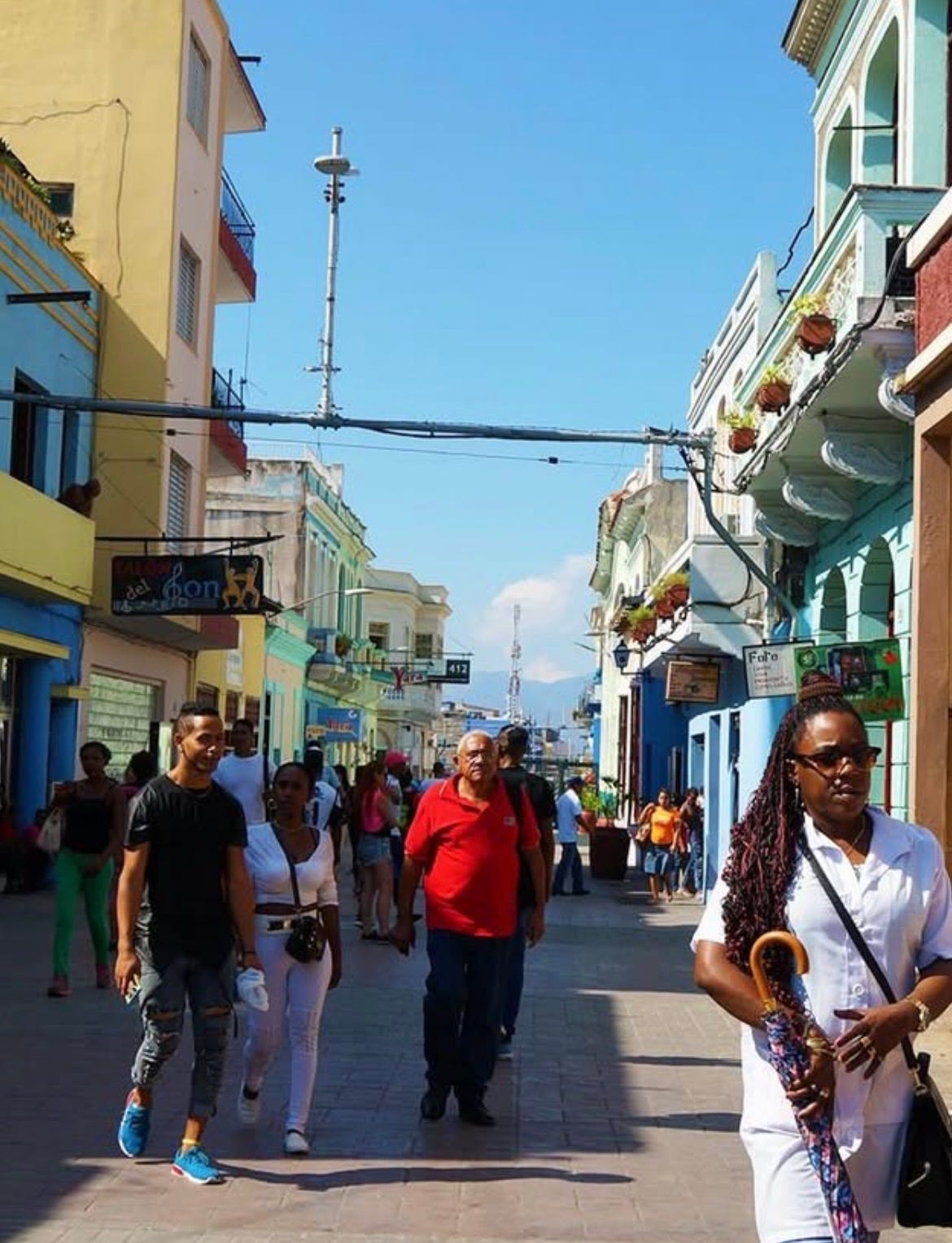
I don’t have the strength to comment on Prashad’s piece right now except that it is brilliant and accurate. I will leave it to you dear reader to examine both his and Arturo’s essays at your leisure. I have only one thing to say.

One line of my paternal family was sold as slaves from Santiago de Cuba to the mainland United States during the period of slavery in this Western hemisphere. My paternal great grandmother was born a slave named Mollie Laws. Her previous family surname was Layende. 

Like most people during the 1700s and 1800s, when one moved (or was sold) some place else the last name was changed to adapt to the new culture one was inhabiting. In the United States, it was typically expected that you Anglicize your name to something that English speakers could pronounce. So “Layende” became “Laws.”

Anyhow I used to relay my personal history to my History students in an effort to make sure that they understood that Chattel slavery took place throughout the Western world. Importantly, what we now call the United States received less than 6 percent of all the Africans transported to this hemisphere during the trans-Atlantic slave trade. The majority of Africans (around 95 percent) landed in what is now named Latin America and the Caribbean. 

I don’t have any deep analysis here about how difficult Afro-American genealogy can be. I don’t have any deep commentary about the many cultures and cultural differences that exist between all of the descendants of Africa who occupy this hemisphere except I have always known that for better or worse I belong to them.

Right after I read Arturo’s essay and then Vijay’s essay, I recalled a favorite memory from the classroom. A student whose name escapes me now came to class after Spring Break with a faded photograph he took while out on the Atlantic ocean. 

He learned that I had roots in Cuba and so did he. He pulled out this faded photo taken on the water. Far off in the distance I saw something that looked like a line stretched across the water. 

“What is that long line in the water that I see in the distance?,” I asked. 

That line across the water in the distance is Cuba, Ms. Allen. I hope you get there someday.” 

©️Leslye Joy Allen

I am an Independent Historian, Oral Historian and Dramaturge. Please consider supporting my work and research with a few bucks for Coffee and Eggs via my CashApp or become a paid subscriber to me on Substack to help me sustain my research.

All blogs written by Leslye Joy Allen are protected by U. S. Copyright Law and licensed under a Creative Commons Attribution-NonCommercial-NoDerivs 3.0 Unported License. Any partial or total reference to any blog authored by Leslye Joy Allen, or any total or partial excerpt of any blog authored by Leslye Joy Allen must contain a direct reference to this hyperlink: https://leslyejoyallen.com with Leslye Joy Allen clearly stated as the author.  Postings or blogs placed here by other writers should clearly reference those writers.  All Rights Reserved.

Hyperlinks to additional articles are below photos.
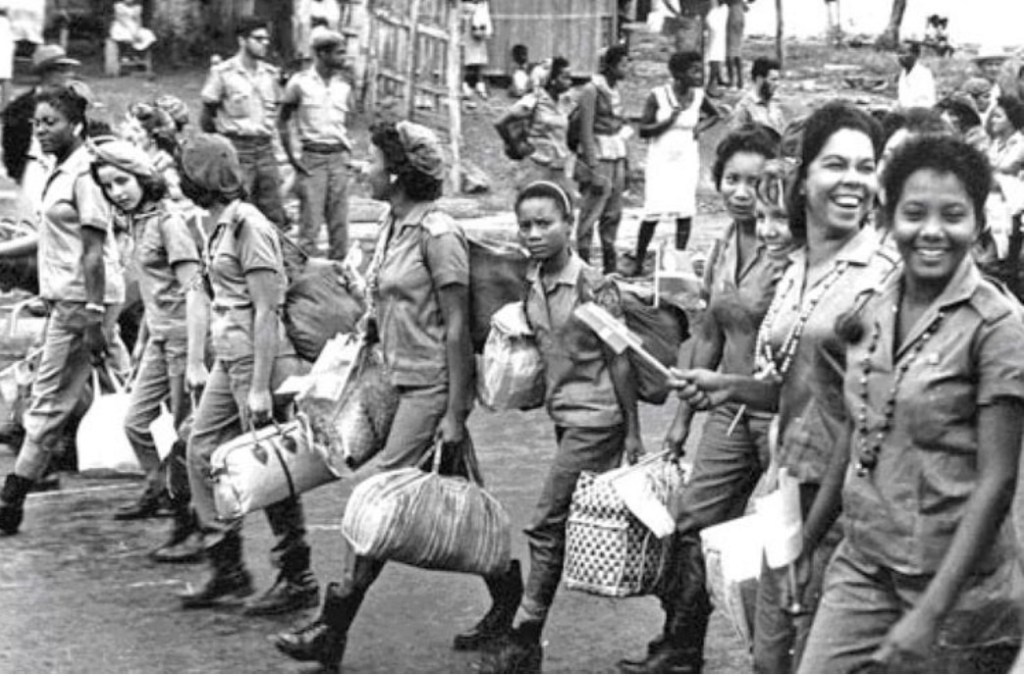
(from Analysis: Cuba on the Brink)

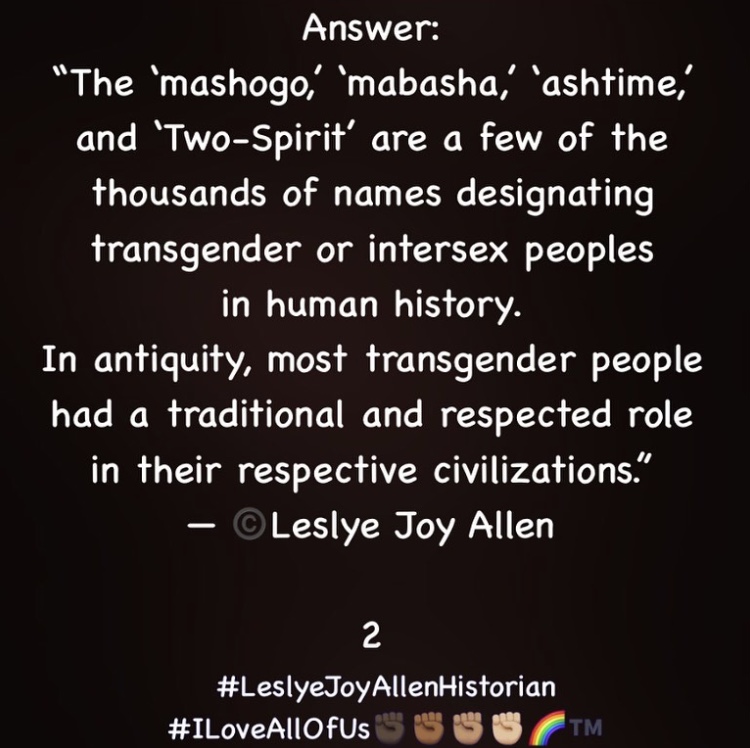
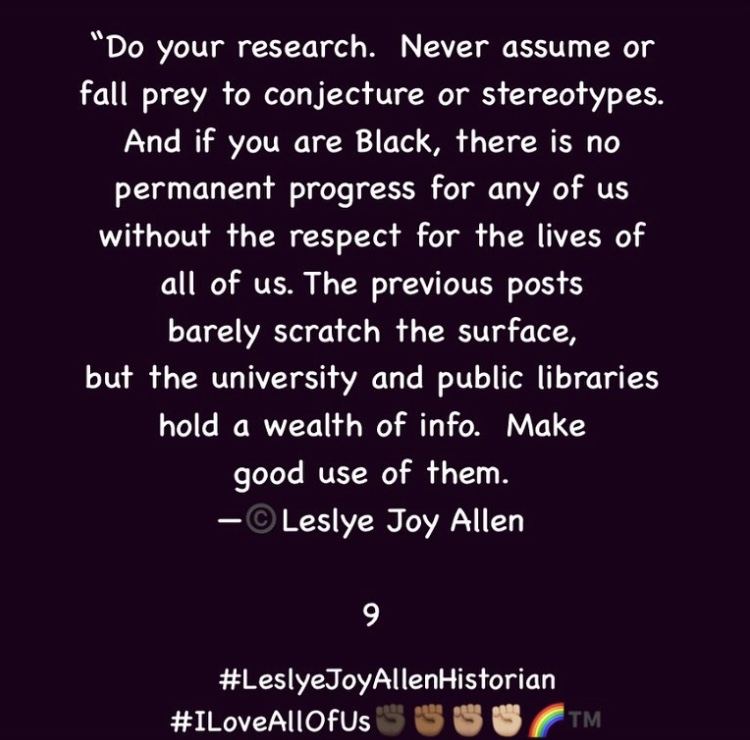
(from Why is the United States Afraid of Cuba?)

A Micro-History of Gender Variations in Ancient Africa, Asia, and North America

by Leslye Joy Allen

Copyright © by Leslye Joy Allen.  All Rights Reserved.

This is an extremely tiny micro-history of Gender that is almost never covered in classrooms. While there is enough data available on this subject that fills thousands of libraries, it is particularly important information in light of the recent excessive violence and neglect of our/my transgender sisters and brothers.

It is important to remember that many ancient African, Asian, and Native American civiliations tended to identify and accept people who were not easily lumped into a single category defined strictly as male and female. There were (and always will be) a tiny minority of individuals who were/are best defined and/or recognized as not fitting into either of the two gender categories emphasized by the Western world.

As difficult as it may be to accept, gender is a social construct and has an entirely different meaning from biological sex. Western ideologies, which were largely dispersed through domination and conquest, have their value. Yet, Western colonization of parts of Africa, Asia and the Americas also replaced, altered, and in some cases, destroyed indigenous belief systems and cosmologies that were beneficial to the peoples that created them. Hopefully, the following 9 frames will provoke further study about this topic, gender dysphoria (a very real human status), and a greater understanding of people and peoples who do not neatly fit this very Western concept of being either one thing or the other.

Copyright © by Leslye Joy Allen.  All Rights Reserved.

This blog was written by Leslye Joy Allen and is protected by U. S. Copyright Law and licensed under a Creative Commons Attribution-NonCommercial-NoDerivatives-4.0 International License. Any partial or total reference to this or any blog authored by Leslye Joy Allen, or any total or partial excerpt of this or any blog by Leslye Joy Allen must contain a direct reference to this hyperlink: https://leslyejoyallen.com with Leslye Joy Allen clearly stated as the author. All Rights Reserved.

A Thought About Black Panther

By Leslye Joy Allen

Copyright © 2018 by Leslye Joy Allen.  All Rights Reserved.

“Royal Purple” by © Leslye Joy Allen

This is not a review of the film Black Panther.  This is a brief musing about what crossed my mind after I saw this film.  First, Black Panther is unapologetically “Black.” I use “Black” here to indicate that while the film is set in the fictional African nation of Wakanda, it also includes Africans of a variety of ethnicities, African Americans and a genuine nod to the entire African Diaspora most of whom are descendants of former slaves in the West.  I am a member of that African Diaspora. The film also gives a few cultural nods to the Ndebele, Yorùbá, Maasai, and Akan peoples on the African continent (thank you, actor-vocalist-friend Saycon Sengbloh for pointing this out first).  The film gets the multi-facted roles of African women so very right.  The film also has some serious messages unlike any messages you have ever heard in a Marvel Super Hero movie.  Don’t worry, if you have not seen it yet, I’m not going to ruin it for you.  All I can say is that it is an entertaining joy ride of a film that will make you think…really, really think.  With that said, here’s what I thought about immediately after I saw Black Panther.

Black Panther has stirred up a genuine sense of pride in Black Americans that we don’t get to feel with this much enthusiasm too often.  It has taken decades of hard work to undo some of the psychic and spiritual damage done to Africa’s descendants in the West who have endured brutal chattel slavery, Jim Crow, systematic racism and discrimination, police brutality, you-name-it.  It has taken decades of hard work and scholarship to undo some of the psychic and spiritual damage done to Africa’s descendants in the West who, for centuries, were told that Africa had no real history, no real contributions to civilization when all of what these descendants were told is/was/remains patently false.  However, it is dangerous to over-romanticize any history; to make any and every description of our African ancestors totally positive. Black Panther, in its own unique way through fiction, de-romanticizes history by showing us a multi-ethnic, multi-generational Wakanda with all the friction and righteous compromise and conflict such diversity can foster.  You leave the movie theater proud, but fully aware that Africans (and we African descendants) have tremendous gifts and flaws not because we are or ever have been inferior or superior, but rather because we are human.

I remember a lecture given by the late African scholar, Dr. Ali Mazrui back in 1996 where he stated that to deny Africans the ability to be wrong was also the same as denying them their humanity.  Dr. Mazrui was always controversial.  He said the only African-American activist that he had any real respect for was Randall Robinson, the founder of Trans-Africa. When asked why he only dug Robinson, Dr. Mazrui said, “Robinson not only raises his voice when Whites do something wrong to Africans, Robinson speaks out when Africans are doing something to wrong to other Africans.”  I’ve never forgotten that statement and what that statement truly means.

When you love your people, you praise them when they are right and you don’t make excuses for them when they are wrong.  You work to correct them.  You speak out against racism, colonialism, and the exploitation of your people no matter who the adversary is.  That lecture by Dr. Mazrui, and so many lectures given by visiting and former professors drove home that I could not afford to care as much about how Africans and African-descended peoples looked to the rest of the world more than I cared about how well or how poorly they/we all were doing.  If you love your people you don’t worry about what their image is and how it affects you as much as you worry about their well-being, period.  Black Panther shows just how difficult that can be, but it also shows that it can be gloriously done…

Now, if you don’t exactly understand this post, it is probably because you have not seen Black Panther yet.  It could also be because you know very little about the continent of Africa’s very complicated history.  However, my points will be clearer once you’ve opened a few books and taken the ride to Wakanda.  So, get to the movie theater.  You won’t be disappointed.  Wakanda Forever.

Copyright © 2018 by Leslye Joy Allen.  All Rights Reserved.

This blog was written by Leslye Joy Allen and is protected by U. S. Copyright Law and licensed under a Creative Commons Attribution-NonCommercial-NoDerivs 3.0 Unported License. Any partial or total reference to this or any blog authored by Leslye Joy Allen, or any total or partial excerpt of this or any blog by Leslye Joy Allen must contain a direct reference to this hyperlink: https://leslyejoyallen.com with Leslye Joy Allen clearly stated as the author. All Rights Reserved.

How I Maintain Peace and Equilibrium

by Leslye Joy Allen

Copyright © 2017 by Leslye Joy Allen. All Rights Reserved.

Adire Eleko cloth (Yorùbá, circa 1960)

The following is simply a few of my methods for maintaining a sense of balance and a sense of peace.  This is not for everyone, nor should it be.  Each individual must find where their sense of balance is…The following I learned from my late mother and father, a few late cousins, several former professors, some friends, and from my students and the young people I mentor:

I believe in spending time with and listening to young people. Children, adolescents and young adults not only need guidance but I also need their guidance. Only they can tell me how they feel or how they arrived at a particular opinion. I ask them to teach me something and they always do; and just as I learn something new, they also feel empowered because an older person needed their assistance and advice and respected their capacity to give it.

I avoid negative people. That person (or people) who never has anything nice to say about anything or anyone can ruin an otherwise great day. I avoid them as much as possible or altogether.  (Included in this group are whiners, complainers, moochers, and those who are chronically lazy.)

I expect good treatment and greet almost everyone with a smile; and 99 times out of 100 I get that good treatment and friendliness back. Most people will smile back and speak, but even if they do not smile back, I do not lose anything by smiling and being friendly.  A kind word to a waiter or customer service representative has often gotten me a few perks.

I stop from time-to-time to take a snapshot of a flower, a sunset or a view that catches my attention. Occasionally, I have pulled over on the side of the road to do this. When I look for beauty I often find it.

I turn off the news. I have purged myself of the affliction of addiction to bad news, to horrifying news, to doom and gloom.  Yes, there are plenty of problems that need and should have my attention and my activism. Yet, a combination of activism and cynicism does not work for me; neither does feeding off of the gore and bad policies that have overtaken most news outlets.

I pick my battles. Not every battle is worth the tension and heat it generates. If the battle only allows me to blow off steam, if it resolves nothing nor makes me any income nor pushes me any closer to my goals, then I do not need to participate in that battle. When the battle helps me or someone else, then I might fight it.

I maintain an inquisitiveness about spirituality, the arts, about my ancestors, and I do the research.  For example, I love the idea that the Yorùbá people (along with their many Afro-American descendants in the Americas) believe that procreation is also a form of art.  A sense of wonder about creation and creativity (artistic and otherwise) without the rigid dogmas of organized religions is a better path for me to stay connected to my Creator, and all of creation.

I hope anyone who reads this finds (or has found) his or her own path to peace.

Àṣé!

Copyright © 2017 by Leslye Joy Allen.  All Rights Reserved.

This blog was written by Leslye Joy Allen and is protected by U. S. Copyright Law and licensed under a Creative Commons Attribution-NonCommercial-NoDerivs 3.0 Unported License. Any partial or total reference to this or any blog authored by Leslye Joy Allen, or any total or partial excerpt of this or any blog by Leslye Joy Allen must contain a direct reference to this hyperlink: https://leslyejoyallen.com with Leslye Joy Allen clearly stated as the author. All Rights Reserved.