A Personal Prayer of Cuba

by ©️Leslye Joy Allen

The following below that is written in italics is partially a meditation on Cuba. It is a response I wrote to a piece about Cuba’s current crisis exacerbated by American neglect and cruelty that was written by Arturo Dominguez. A link to his exceptional article is at the very end of this essay. What’s in italics is a rumination I wrote to Arturo:

“I still remember reading that when Afro-Cuban musical artists came to perform in the United States that they had to perform in the U.S. for free. When asked why they were willing to perform for nothing, the answer was always the same: “We want to see where Dizzy Gillespie was born.”

Thanks for this report Arturo Dominguez because every time there is a sanction, a deprivation, I am reminded that no one suffers in Cuba but the people themselves. I still remember the heinous and wretched Helms-Burton Act which banned ships who docked in Cuba’s ports from docking in the United States for several months.

I remember my professors having to fly out of Atlanta to Canada and then taking a flight from some airport in Canada to Havana to do whatever research they were performing on their visits.

The United States has done nothing but made an example of Cuba as a message to other countries in Latin America and the Caribbean that says “This is how far we’ll go; this is how bad we’ll treat you, if you don’t fall in line.”

I might just turn this comment into a meditation.”

A few moments after reading Arturo’s essay I stumbled on one of my favorite thinkers Vijay Prashad who also was offering his thoughts on the viciousness of the United States government against the Cuban people because it is the people that suffer—No one else. (A link to Vijay’s essay is at the end.)

I don’t have the strength to comment on Prashad’s piece right now except that it is brilliant and accurate. I will leave it to you dear reader to examine both his and Arturo’s essays at your leisure. I have only one thing to say.

One line of my paternal family was sold as slaves from Santiago de Cuba to the mainland United States during the period of slavery in this Western hemisphere. My paternal great grandmother was born a slave named Mollie Laws. Her previous family surname was Layende. 

Like most people during the 1700s and 1800s, when one moved (or was sold) some place else the last name was changed to adapt to the new culture one was inhabiting. In the United States, it was typically expected that you Anglicize your name to something that English speakers could pronounce. So “Layende” became “Laws.”

Anyhow I used to relay my personal history to my History students in an effort to make sure that they understood that Chattel slavery took place throughout the Western world. Importantly, what we now call the United States received less than 6 percent of all the Africans transported to this hemisphere during the trans-Atlantic slave trade. The majority of Africans (around 95 percent) landed in what is now named Latin America and the Caribbean. 

I don’t have any deep analysis here about how difficult Afro-American genealogy can be. I don’t have any deep commentary about the many cultures and cultural differences that exist between all of the descendants of Africa who occupy this hemisphere except I have always known that for better or worse I belong to them.

Right after I read Arturo’s essay and then Vijay’s essay, I recalled a favorite memory from the classroom. A student whose name escapes me now came to class after Spring Break with a faded photograph he took while out on the Atlantic ocean. 

He learned that I had roots in Cuba and so did he. He pulled out this faded photo taken on the water. Far off in the distance I saw something that looked like a line stretched across the water. 

“What is that long line in the water that I see in the distance?,” I asked. 

That line across the water in the distance is Cuba, Ms. Allen. I hope you get there someday.” 

©️Leslye Joy Allen

I am an Independent Historian, Oral Historian and Dramaturge. Please consider supporting my work and research with a few bucks for Coffee and Eggs via my CashApp or become a paid subscriber to me on Substack to help me sustain my research.

All blogs written by Leslye Joy Allen are protected by U. S. Copyright Law and licensed under a Creative Commons Attribution-NonCommercial-NoDerivs 3.0 Unported License. Any partial or total reference to any blog authored by Leslye Joy Allen, or any total or partial excerpt of any blog authored by Leslye Joy Allen must contain a direct reference to this hyperlink: https://leslyejoyallen.com with Leslye Joy Allen clearly stated as the author.  Postings or blogs placed here by other writers should clearly reference those writers.  All Rights Reserved.

Hyperlinks to additional articles are below photos.

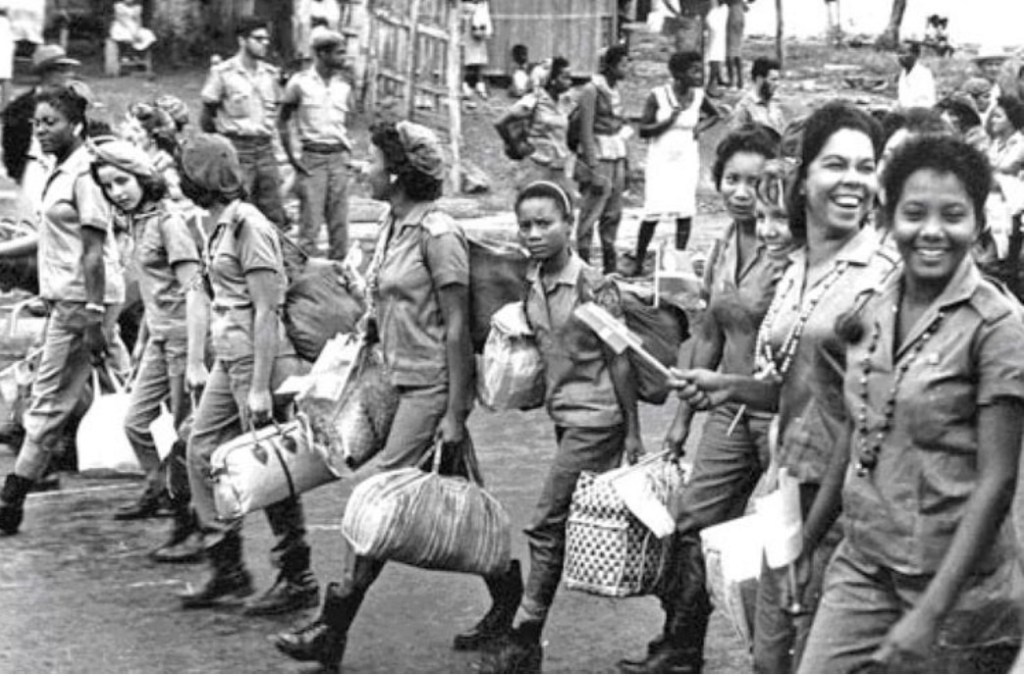
(from Analysis: Cuba on the Brink)

(from Why is the United States Afraid of Cuba?)

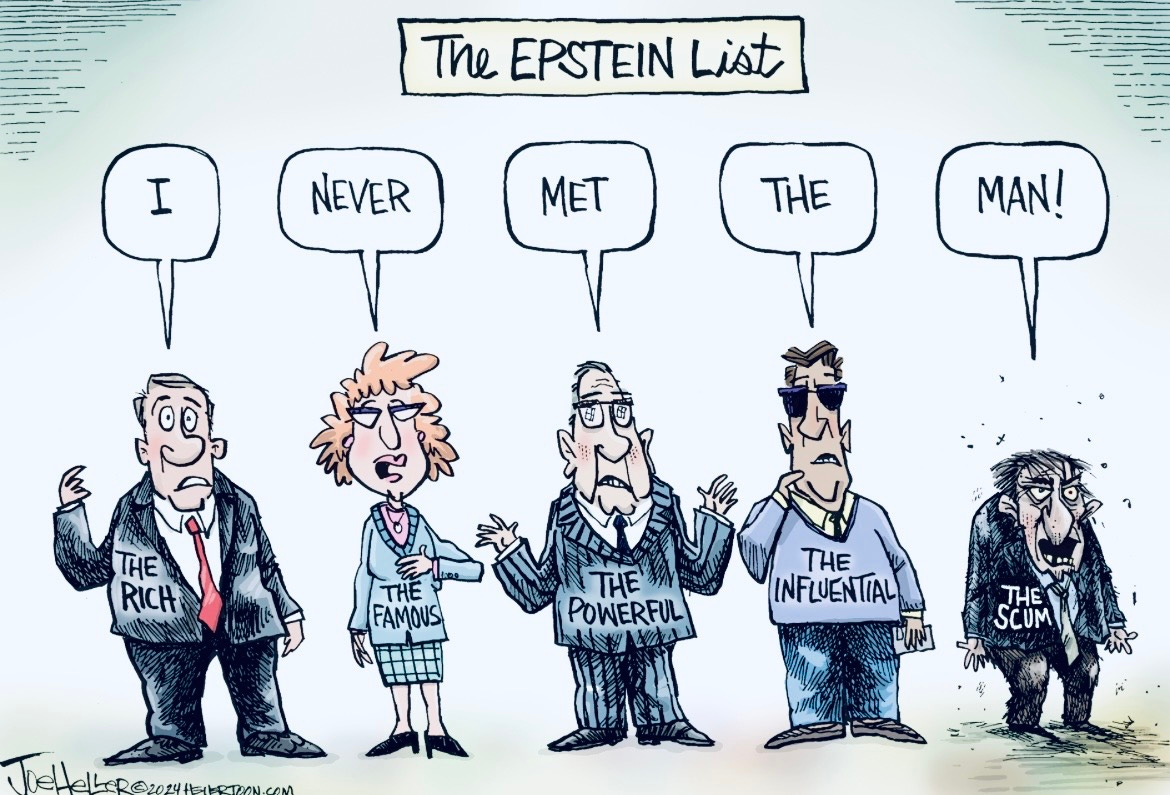
You Don’t Just Protect, You Correct: A Teachable Epstein Moment

by ©️Leslye Joy Allen

I had to stop reading what was in this recent release of more Epstein Files. I am not sure if I can look again because the sickness in it is far more insidious than one can stomach. I have access to all of them that can be accessed so I can access the details of more of them should I choose to do so. Don’t send me any of them, please.

Many of the men who have clamored for the release of these files have done so primarily to make political capital out of them. They don’t actually care that much about what happened to those girls. And I don’t care if they get angry about what I just wrote. 

These are the same men who rarely, if ever, confront men who have sexually violated women and who never organize as a collective group to publicly state that this behavior is wrong. They tend to just tell women and girls in their orbit how to avoid certain types of men. That is honorable, but… 

the responsibility is still left on women and girls to police men’s behavior. And before I hear that typical smokescreen that says “she should have known better than to…” please know that those kinds of statements not only prove that this heinous sexual behavior exists, but it also tacitly condones that behavior since the men in these scenarios are allegedly not responsible for their behavior because the girls and women should have expected to be violated based on their location or their appearance, not on certain men’s inability to behave themselves. 

An excited 16-year-old girl who just met her favorite male singer and who foolishly follows him up to his hotel room when he says, “I have invited a few friends up, come join us,” should not expect to be raped. He never should have invited her up for a variety of reasons—the first reason being her age and the second reason being that she is a stranger that he just met. 

An impressionable 16-year-old boy with a crush on his neighbor, a 35-year-old woman, should not expect to be forced/seduced by her because he mowed her lawn and then helped her take her groceries in the house. Importantly, his initial feelings of violation should not be replaced with congratulatory praise for his participation in the act which confuses her wrong behavior towards him as some male rite of passage for him. 

These same men crying out for Trump and his sexually perverted team members to be brought to justice are not trying to destroy or collapse the current legal system at least until they have covered their asses and the asses of men they know that might not easily swim out of the Epstein quagmire. Illegality and sexual impropriety were built into the system. It’s still there. 

(from The Arbitrary Ages of Consent: The Epstein Files by Leslye Joy Allen on Substack)

It is not that all men (or women) are potential sexual abusers; it’s just that the ability to get away with it or have it somehow described with less severity is enshrined in the very definitions and expectations of masculinity. Rape is rarely forgiven by ethical men, but excessive male sexual prowess and promiscuity often is.

So here’s where it gets dicey, particularly for women. I have several good Black male friends, most of whom I have known since elementary school. There isn’t one of them that would not protect me if they witnessed me being physically harmed in any way by anyone.

There isn’t one of them who would not go, or at least want to go, after someone they believed had assaulted me sexually. Yet, if something like that happened I would not be likely to tell them because they would either end up in jail due to a physical confrontation with my offender or they would be injured or killed for their efforts. That kind of love is gratifying; yet some of the things that kind of love can produce is scary, and it can occasionally make certain scenarios worse. So…

the real onus for ethical and righteous men is not simply protection, but correction. If men do not confront other men about their behavior, their sexism, their misogyny, their misogynoir, and their double standards then the process of bringing sex offenders to justice will always be processed first through that “Boys will be boys” lens.

(from “The Evidence of Things Not Seen” and the Epstein Files by Leslye Joy Allen on Substack)

Furthermore, a woman’s chronic need for protection from rape or other forms of assault essentially means that the problem remains chronically intact. The only way to end this is to end the manner in which men think of women and how they interact with and talk to other men; and whether they can do the most unpopular thing to do, which is: confront other men. 

Additionally, the sexual violation of boys by men and women will continue to be swept under the rug by the perverted tenets of masculinity that insist that a boy or man should be silent because to speak up about his abuse is anathema to the myth that all men are physically and psychologically strong simply because they are men. It is male sexual assault victims’ equivalent to that nonsense that says, “Big boys don’t cry.”

Every opinion, good or bad, biased or unbiased, informed or uninformed, is also a confession. Silence, when the needs of the hour demand that you speak, can be proof of cowardice or a desire to conform to the status quo or an admission that you are protecting the guilt of someone else or even your own. 

Justice for Epstein’s victims and prison time for the participants in these heinous actions is only a first step. Yet, we won’t correct the alleged norms that generated and aided and abetted Epstein and his cronies as long as their actions are seen as some anomaly rather than proof of a perpetual problem. 

©️Leslye Joy Allen

I am an Independent Historian, Oral Historian and Dramaturge. Please consider supporting my work and research with a few bucks for Coffee and Eggs via my CashApp or become a paid subscriber to me on Substack to help me sustain my research.

All blogs written by Leslye Joy Allen are protected by U. S. Copyright Law and licensed under a Creative Commons Attribution-NonCommercial-NoDerivs 3.0 Unported License. Any partial or total reference to any blog authored by Leslye Joy Allen, or any total or partial excerpt of any blog authored by Leslye Joy Allen must contain a direct reference to this hyperlink: https://leslyejoyallen.com with Leslye Joy Allen clearly stated as the author.  Postings or blogs placed here by other writers should clearly reference those writers.  All Rights Reserved.

Social Media Overload

by Leslye Joy Allen

Copyright © by Leslye Joy Allen

I freely admit I enjoy social media.  We social media denizens trade ideas, photos, debate politics, say prayers for people in need, raise money, promote good causes, advertise our own enterprises, post recipes and witty sayings, talk about art, film, theatre, and occasionally go on rants.  I try to keep rants to a bare minimum. But hey, if ranting on social media is what keeps you from going out and shooting people at the mall, then rant away.  Now with all that’s good about social media, I’ve also experienced what I now call “social media overload.” I thought I would share some of my opinions because occasionally I get messages from people asking me why I don’t comment on posts as much as I used to.  Well, I know I’ve lost time in the past by spending too much time posting, commenting, clicking and tweeting.

I primarily use my laptop much more than I use my smartphone for any form of social media; and I always log out when I’m done, so I don’t hear those dings you hear on a smartphone when someone posts or tweets something new. Plus, with a sporadic and highly irregular work schedule while I also try to write and edit and finish a dissertation is hard enough.  I can typically write a blog in less than 30 minutes, but writing and editing a dissertation in squirts is a slow and agonizing process, so staying online isn’t possible anyway.  I now deliberately and regularly go a minimum of 24 to 48 hours (often longer) without checking in on social media. The first time I did this several months ago, I discovered something about these 24 to 48 hour cycles.  My first full day away, I found myself severely missing posting and commenting on other people’s posts.

If you stay away from all social media for roughly 24 to 48 hours and then return, you will probably notice one or two (or maybe three) subjects trending.  There will be one post after another about essentially the same thing.  Let’s say it’s something that everyone seems to like; so everyone is super happy about an event, a film, you name it.  When that happens I can almost guarantee that if you sign off again and then revisit after the next 24 to 48 hours, whatever was trending that everyone liked a few days ago will now have its critics.  So then there will be a series of comments or a few articles telling you that what you initially liked 24 to 48 hours ago is no longer something that you should like, but something you should question or at least greet with some suspicion.  Some of these fresh critiques often have some value and tend to make good reading.  Yet, I noticed that a lot of these articles and comments read like the pseudo-intellectual hogwash they are; and often the real tragedy is that these articles are penned by perfectly good writers who seem to be having a hard time finding something to write about and have simply jumped on the bandwagon with the rest of the cynics.  Then if you sign off and stay gone for yet another couple of days, something even more curious will have probably happened.  Within that next 24 to 48-hour cycle—this is our third cycle, now—you will have another set of reverse critics who will critique those initial critics who dared criticize what you and everyone else liked in the first place. If you have a headache reading this, don’t feel bad.  I have one too!  However, I didn’t see these patterns until I let a few days go by without visiting social media.

I had an interesting conversation recently with a Personal Development Counselor. He was a charismatic young man who looked to be in his late twenties to early thirties.  He told me something that I found quite troubling.  Most of his work, he said, was with young male Internet Technology professionals, commonly called ITs.  He stated that almost all of the young male ITs he meets have problems talking to women because they spend all day staring at a computer screen.  He bluntly told me that most of them don’t know how to make small talk.  Almost all of the questions they ask him are about how they might best find the right words to approach a woman to date via some online service.  Simple things like having a conversation with a woman and then asking her out for a simple cup of coffee is totally foreign to many of these guys.  His job as a Personal Development Counselor is to give these young men some kind of road map to use to help them create a satisfying personal life because they do not know how to do it by themselves.

Now, before every Internet Technology professional sends me personal denials of such behavior and/or hate comments, hold your horses and slow your roll.  I know plenty of well-rounded IT professionals and I know that the majority of folks in this profession do not have the problems identified by this Personal Development Counselor.  I do suspect that  youth plays a factor in these problems. Those of us who are now in our AARP years remember a time when you didn’t need a computer or a smartphone to do anything and everything.  You had to go out and meet people, make eye contact, have conversations, and you did not have a smartphone as a constant distraction.  Younger men and women have no such memories.  What this young Personal Development Councilor shared with me made me take a good hard look at how much, how long and what content I place on social media and why I do it.

A while back I made a personal commitment to not post the news on my Facebook, Twitter or Instagram accounts.  What appears on MSNBC or CNN or FOX is almost always bad news anyway. I’ve managed to stick with this formula about 98 percent of the time.  On those days when something tragic has happened yet again to another Black person, to another woman, another LGBTQ person, another child, and etcetera, you can expect the threads on most social media to be filled to the brim with this bad news, tragic news, and horrible news, along with their shock and hurt about these tragedies.  All of it would be easier to stomach if there wasn’t so much of it.  It’s not that racists and sexists and misogynists and homophobes and rapists and murderers don’t do ugly, horrible mess to people with great regularity; it’s that this ugliness is not happening to me or you every single minute of the day because if it were happening to all of us 24/7, none of us would have the time or the luxury to post about it and debate about it on social media.  It is not that bad things don’t happen, but rather that good things happen as well. Now before you say that we all need to talk about these problems and vent about these tragedies, consider this:  If you do not post or comment about some major issue or problem, what exactly is going to happen or not happen if you don’t post or if you are absent for a few days?  What exactly would you be doing if you were not posting and commenting on your own or someone else’s posts?  This leads me to what I call the “Instant Gratification Trap.”  I’m as guilty of being caught by it and in it as anyone.

The “Instant Gratification Trap” is when you discover that your posts are rather popular and/or make people feel better and/or make people think deeply. Suddenly you feel important and admired. When I simply stopped posting anything negative and made it a point to post something positive, I found nothing wrong with basking in the warmth of compliments generated by folks who pressed the “Like” button and “Share” button and those who “Re-Tweeted” my posts.  All of this makes for good feelings all around.  However, the next thing I felt was obligated to continue making these kinds of intellectually stimulating posts.  “Obligated” is actually the wrong word here.  I felt compelled to post more positive posts because I ENJOYED and DESIRED the affirmative reactions of my real friends and my “cyberspace associates.”  Even further, I started to believe that what I had to say was so very important that I better hurry up and post something else that was wise and wonderful because, hey, what’s going to happen to all of those people who rely on my posts and my comments if I’m not there to post or comment?!  Let me say this as plainly as possible:  This is some ego tripping of the highest order.  All of us, hopefully, get to help people out, give some good advice and feel a little extra special, which is healthy.  We should feel confident about our work and our words and our contributions.  But exactly where do we draw the line?

Now, I read a lot of writing by my own real personal friends and many of my cyberspace associates; and there are some seriously talented writers and thinkers among them. Many of us are quite bright and we might say a lot of things that need to be said, but we’re not the only crayons in the box.  The problem with Instant Gratification is that it is short-lived because you haven’t worked that hard for it; it’s fleeting.  So, like a drug addict in search of another high, you post more and more to get more and more validation.  That validation strokes the ego; at least I know it stroked mine.  However, here’s how I’ve decided to use my ego.  I have enough of an ego to not want my very best writing to be on some social media site because once it’s posted there, it belongs to the site.  You can always lay claim to what you wrote, but the jury is still out as to whether any social media site needs your permission to reproduce what you’ve written somewhere else for the site’s own purposes.  When I feel the need to say something really serious, I put it in my blog or in my notes for some future essay.

Now, here’s an aspect of social media that is more delicate.  On most social media sites you can “unfollow” or “block” people. On Facebook you can “unfriend and block” people.  Every person I know has had that moment when they suddenly discover that “friend” or what I call a “cyberspace associate” who disagrees with them on every moral or ethical question out there.  Their contradictory opinions seem to come out of nowhere, but they really don’t come out of nowhere.  Remember, you don’t actually personally know a lot of these people who make it to your friend list; and they typically made it to your list because they know about thirty people that you actually know or they seem to be natural allies due to their posts and comments. Then one day they comment on some thread of yours and manage to annoy everyone with their narrowmindedness or their determination to ram their opinions down everyone’s throat and by their unwillingness to respect the opinions of others.  So after a few acrimonious comments and a variety of pithy rebuttals to their opinion, you get angry as hell and you click that “Unfriend” button so you don’t have to hear from them again.  Now, there are some good reasons for unfriending these creeps.  I got rid of one that was running for public office and who also turned out to be damned near a stalker.  (I also blocked him and thank God he lost his election.)

Now, I don’t blame folks for not wanting to be bothered with internet trolls or real life ass holes who spend the better part of their days trying to start arguments and foment dissension among groups of people who might be having a stimulating and insightful discussion. Yet, the problem with unfriending people with opposing views is that’s not how it works in the real world. As I have encouraged healthy debates among my former History students, they know like I do that you don’t learn as much from the people with whom you agree, but from those people with whom you disagree.  It might make you feel better to “unfriend” someone. I know it made me feel better. Yet, when met with opposition face-to-face instead of in cyberspace, you have to monitor your anger to prevent a debate from turning into a full-fledged argument or worse.  You have to think with more precision because you are in the physical presence of someone who disagrees with you and who has also pushed your buttons. I often think we argue on social media because it’s physically safer to do so; and there is nothing wrong with that. However, you might discover in face-to-face communications that your adversary has a point worth listening to.  And the key word here is “listen.”  Unless you’re communicating via FaceTime, most communication on social media is written. I have read (and learned to stay the hell off of) some threads where someone’s words were misconstrued precisely because no one on the thread could see that person’s body language or hear the natural inflections in that person’s voice that give additional meanings and depth to the point they were trying to make. And this leads me to something the Personal Development Counselor said about empathy.

The last thing he told me was that he thought too much consumption of social media led a lot of folks to believe that they were highly informed and highly sympathetic to people with problems when they were not.  Reading a book or a story, he said, created empathy.  He’s right.  You identify with the protagonist or some character in the book.  After you’ve finished reading the book, you continue thinking about the characters, the themes, what did it all mean, and why you enjoyed it, etcetera.  The brevity of posts on social media, he said, doesn’t require this kind of investment. You read a few lines of a post, and think about it for a few minutes, and then you move on to the next post or the next thread.  There isn’t much time to ponder and process what you just read if you’re suddenly distracted by something else that is more provocative.

I met a couple of young people recently who have deleted several of their social media accounts, including this Personal Development Counselor.  I probably will continue to enjoy social media for all the reasons I listed at the beginning of this blog.  I personally know plenty of people on social media who are caring, thoughtful people who genuinely want everyone they know to be informed about some serious problems going on in the world or about the good that’s out there; but there’s a creeping shallowness on social media that I’ve noticed in recent years.  It is no accident that the rapper Kanye West thinks “slavery was a choice,” if we consider that his exposure to the subject and its history has obviously been through imbibing short blurbs, 30 second soundbites, memes and slogans designed more to catch the ear and eye than to honestly analyze and inform anyone about what was a highly complex and brutally oppressive institution.

The fact that West and others think you can explain and reduce Chattel Slavery in the Americas—a 400-plus year old institution—to something as simple and singular as “choice” not only speaks volumes about what books they haven’t read, but also how their brains are now wired to believe that their ability to understand complex subjects can be accomplished via tweets, short articles, and a few posts.  West is not unusual nor is he an anomaly.  Kanye West is the results.  It’s hard to invest in people and consider their feelings when empathy with other people and their history is short term because the next post or thread about someone or something else is so much more exciting.  It’s easy to dismiss what is not provocative or catchy; after all, most of these posts are designed to draw people to them.  I don’t know what the long term repercussions of this type of media saturation will mean to everyone, but for me it means I’m going to be taking regular breaks from all forms of it from now on. Peace.

Copyright © by Leslye Joy Allen.

This blog was written by Leslye Joy Allen and is protected by U. S. Copyright Law and licensed under a Creative Commons Attribution-NonCommercial-NoDerivs 3.0 Unported License. Any partial or total reference to this or any blog authored by Leslye Joy Allen, or any total or partial excerpt of this or any blog by Leslye Joy Allen must contain a direct reference to this hyperlink: https://leslyejoyallen.com with Leslye Joy Allen clearly stated as the author. All Rights Reserved.

Ralph McGill Would Never Defend “Stand Your Ground”

Photographer: Jon Sullivan. Copyright: Public domain image, not copyrighted, no rights reserved, royalty free stock photo. “Scales of Justice” by Jon Sullivan, photographer. Copyright: Public domain image, not copyrighted, no rights reserved, royalty free stock photo. Available from Public-Domain-Image.com

By Leslye Joy Allen

Historian, Educator, Theatre and Jazz Advocate & Consultant

Copyright © 2012 by Leslye Joy Allen.  All Rights Reserved.

For those of you who are unfamiliar with the late Ralph McGill (1898-1969), he was a White journalist and publisher of the old Atlanta Constitution (now the Atlanta Journal Constitution).  He was also a well-known liberal who wrote about racial discrimination in society at large and within the criminal justice system.  He did this long before the Civil Rights Movement reached its apogee in the 1960s.  Martin Luther King, Jr. mentioned McGill in his eloquent “Letter From a Birmingham Jail.”  King wrote that McGill and some other White journalists, “have written about our struggle in eloquent, prophetic and understanding terms.”  Indeed, McGill was a man who watched, learned, and evolved into one of the most progressive voices in the American South and the nation when it came to race relations, civil rights, and the penal system.  With that said, it is important for you to understand that I did not learn about Ralph McGill from a newspaper or a book, but rather from my schoolteacher mother.

Mama remembered that he emphasized that when a Black person killed another Black person they typically received very light jail or prison sentences—that is, if they received any jail time at all.  It was just the opposite if they had killed a White person.  He noted that because of this failure to properly punish Black people who killed other Black people, the judicial system literally encouraged those individuals to carry out their anger to its fullest possible extreme.  He accused the judicial system of encouraging Black folks to kill each other.  Mama said that there was an unsettling joke going around in Atlanta during the 1940s that said: if you were a Black man that killed another Black man you would be out of jail in time to go to your victim’s funeral.  Indeed, in his column in the Atlanta Constitution on September 17, 1941, McGill wrote:

“In the first place our courts, to our shame and, although no one seems to see it, to our very great financial cost, never take Negro crime seriously.  A Negro murderer, killing another Negro, rarely receives any severe punishment.  Juries and prosecutors have, for years, viewed them lightly as just another Negro killing, and therefore, of not much importance.”  (Ralph McGill – Crime, Standards, Methods 9-17-1941)

He remained one of a handful of White journalists that understood that any law or process or social practice that devalued Black life also made Black people the more likely targets of violence by killers of all races.  He also noted that many members of Atlanta’s then all-White police department had poor training and were “quick-on-the-trigger.”

I thought about Ralph McGill after the tragic killing of Trayvon Martin in Sanford, Florida in February of 2012.  When Jordan Davis of Atlanta, Georgia was killed in Jacksonville, Florida later in November, I again thought about McGill, arguably one of the most vocal writers who paid serious attention to Black-on-Black and White-on-Black violence and the institutionalized racism in the criminal justice systems of Georgia and the nation.  I will not recount how Jordan Davis and Trayvon Martin died needless and preventable deaths.  I will leave it to you to read the details of Davis’ death on your own.  (Take a minute and read Madison Gray’s very brief Time Magazine report “With Echoes of Trayvon Martin, Florida Man Claims Self Defense in Shooting Death of Teen.”)  Yet, I wonder what McGill might have said about the horrible killings of these two unarmed Black teenagers by two men—One of Peruvian and Jewish extraction and the other a White man.  I am sure he would have had much to say about the racial dynamics surrounding these two killings and the law known as “Stand Your Ground.”

Nearly half the states in this country have “Stand Your Ground” laws.  At minimum, these laws allow an individual the right to use deadly force if that individual has a reasonable belief that their lives are threatened.  Importantly, the law typically states that it is not necessary for a threatened individual to retreat from the perceived danger.  The jury is still out on whether this kind of law has reduced crime rates anywhere.  It is important to note, however, that there is nothing in these laws that give citizens the right to provoke and/or create a potentially volatile scenario where they place themselves in danger and then use deadly force in response to the dangerous scenario they created.

The fact that George Zimmerman, charged with second degree murder of Trayvon Martin, was told by a 911 operator not to follow Martin, has forced Zimmerman’s attorneys to drop the use of “Stand Your Ground” as a part of his defense is cause for all of us to pause.  The fact that Michael Dunn, charged with the murder of Jordan Davis (and also charged with attempted murder of the other teens in the SUV), told these kids to turn their music down at a gas station is also problematic.  Most people do not stay at a gas station for very long.  Is it safe or even logical to tell total strangers what to do or what not to do while they are seated in their own vehicles at a public place like a gas station at 7:30 in the evening?  Think about it.  Will Florida lawmakers ever understand that the state’s “Stand Your Ground” laws are not always working in the best interests of its citizens?  McGill would have recognized the counterproductive and dangerous potential for abuse in “Stand Your Ground” legislation.

When I finally got the opportunity to read some of the newspaper columns written by McGill, I noticed some important qualities:  He spoke his mind about what was going on in the city and the world at that moment.  Yet, he did so with an eye on the future.  Like many of Atlanta’s early boosters, he always prescribed the course of action that he believed was best for the city of Atlanta—the entire city of Atlanta.  He knew that crime, racial discrimination, racial virulence, and the like, were bad for the city.  He was as practical and he was ethical.

I do not know exactly what McGill might have said or asked about the killings of Trayvon Martin and Jordan Davis.  Yet, I have little doubt that he would understand and endorse the necessity of raising the following questions about how citizens interpret their rights as defined in “Stand Your Ground” law:  How does the “Stand Your Ground” law define “feeling threatened”?  If you look menacing or say something that makes me feel afraid, will the law allow me the right to use deadly force against you based solely on my assumption of what I think you might do?  Do citizens need more than the basic right of self-defense?  What might an angry person do if they are armed and know that they might be able to get away with killing someone because, by law, they do not have to retreat from danger?  Much like Atlanta in 1941, does not this law encourage people to choose to kill one another?  Don’t these kind of laws eventually breed a flagrant disregard for the law?  McGill wrote that, “Anything that breeds contempt for the law is costly.”  He was right.

When I asked my Mama why she liked Ralph McGill, she simply said,

“He made sense and he was always, always fair.  He always asked for justice and the fair treatment of all citizens.  Justice and fair treatment were the only things Black people wanted.”

Justice and fair treatment are still all we want.


Copyright © 2012 by Leslye Joy Allen.  All Rights Reserved.

Leslye Joy Allen is proud to support the good work of Clean Green Nation.  Visit the website to learn more about it: Gregory at Clean Green Nation!

Creative Commons License This Blog was written by Leslye Joy Allen and is protected by U. S. Copyright Law and licensed under a Creative Commons Attribution-NonCommercial-NoDerivs 3.0 Unported License.  Any partial or total reference to this blog, or any total or partial excerpt of this blog must contain a direct reference to this hyperlink: http://leslyejoyallen.com with Leslye Joy Allen clearly stated as the author.