The following below that is written in italics is partially a meditation on Cuba. It is a response I wrote to a piece about Cuba’s current crisis exacerbated by American neglect and cruelty that was written by Arturo Dominguez. A link to his exceptional article is at the very end of this essay. What’s in italics is a rumination I wrote to Arturo:
“I still remember reading that when Afro-Cuban musical artists came to perform in the United States that they had to perform in the U.S. for free. When asked why they were willing to perform for nothing, the answer was always the same: “We want to see where Dizzy Gillespie was born.”
Thanks for this report Arturo Dominguez because every time there is a sanction, a deprivation, I am reminded that no one suffers in Cuba but the people themselves. I still remember the heinous and wretched Helms-Burton Act which banned ships who docked in Cuba’s ports from docking in the United States for several months.
I remember my professors having to fly out of Atlanta to Canada and then taking a flight from some airport in Canada to Havana to do whatever research they were performing on their visits.
The United States has done nothing but made an example of Cuba as a message to other countries in Latin America and the Caribbean that says “This is how far we’ll go; this is how bad we’ll treat you, if you don’t fall in line.”
I might just turn this comment into a meditation.”
A few moments after reading Arturo’s essay I stumbled on one of my favorite thinkers Vijay Prashad who also was offering his thoughts on the viciousness of the United States government against the Cuban people because it is the people that suffer—No one else. (A link to Vijay’s essay is at the end.)
I don’t have the strength to comment on Prashad’s piece right now except that it is brilliant and accurate. I will leave it to you dear reader to examine both his and Arturo’s essays at your leisure. I have only one thing to say.
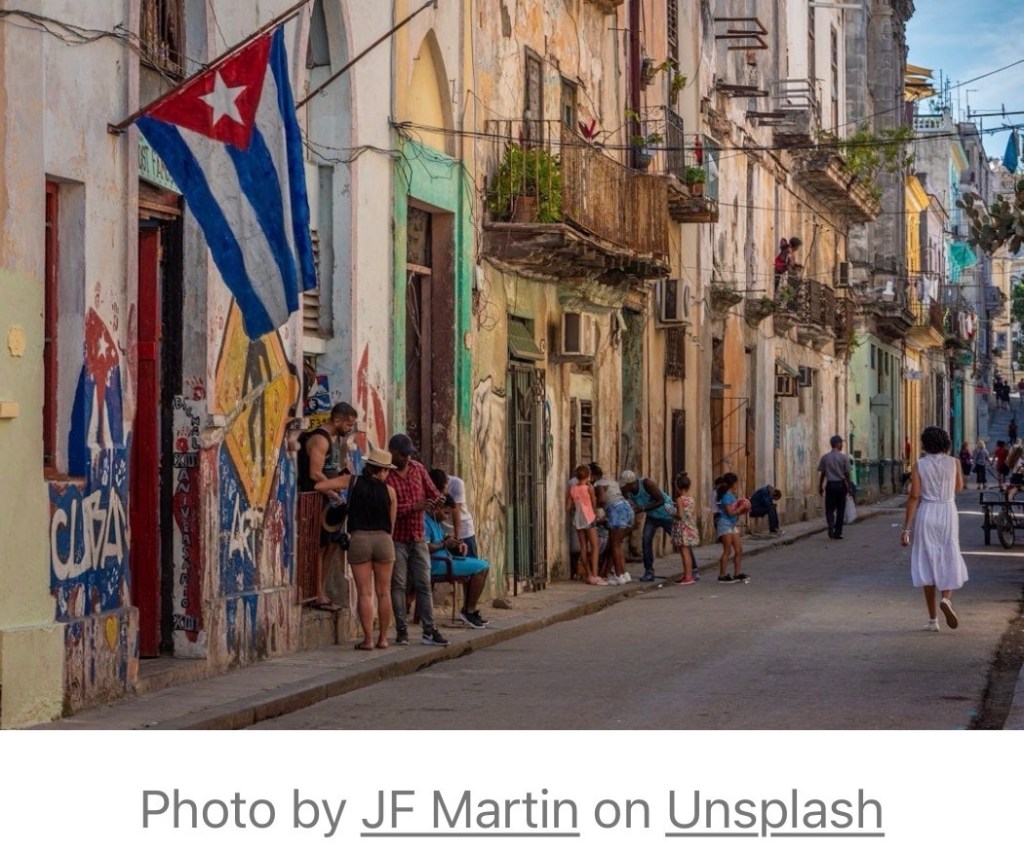
One line of my paternal family was sold as slaves from Santiago de Cuba to the mainland United States during the period of slavery in this Western hemisphere. My paternal great grandmother was born a slave named Mollie Laws. Her previous family surname was Layende.
Like most people during the 1700s and 1800s, when one moved (or was sold) some place else the last name was changed to adapt to the new culture one was inhabiting. In the United States, it was typically expected that you Anglicize your name to something that English speakers could pronounce. So “Layende” became “Laws.”
Anyhow I used to relay my personal history to my History students in an effort to make sure that they understood that Chattel slavery took place throughout the Western world. Importantly, what we now call the United States received less than 6 percent of all the Africans transported to this hemisphere during the trans-Atlantic slave trade. The majority of Africans (around 95 percent) landed in what is now named Latin America and the Caribbean.
I don’t have any deep analysis here about how difficult Afro-American genealogy can be. I don’t have any deep commentary about the many cultures and cultural differences that exist between all of the descendants of Africa who occupy this hemisphere except I have always known that for better or worse I belong to them.
Right after I read Arturo’s essay and then Vijay’s essay, I recalled a favorite memory from the classroom. A student whose name escapes me now came to class after Spring Break with a faded photograph he took while out on the Atlantic ocean.
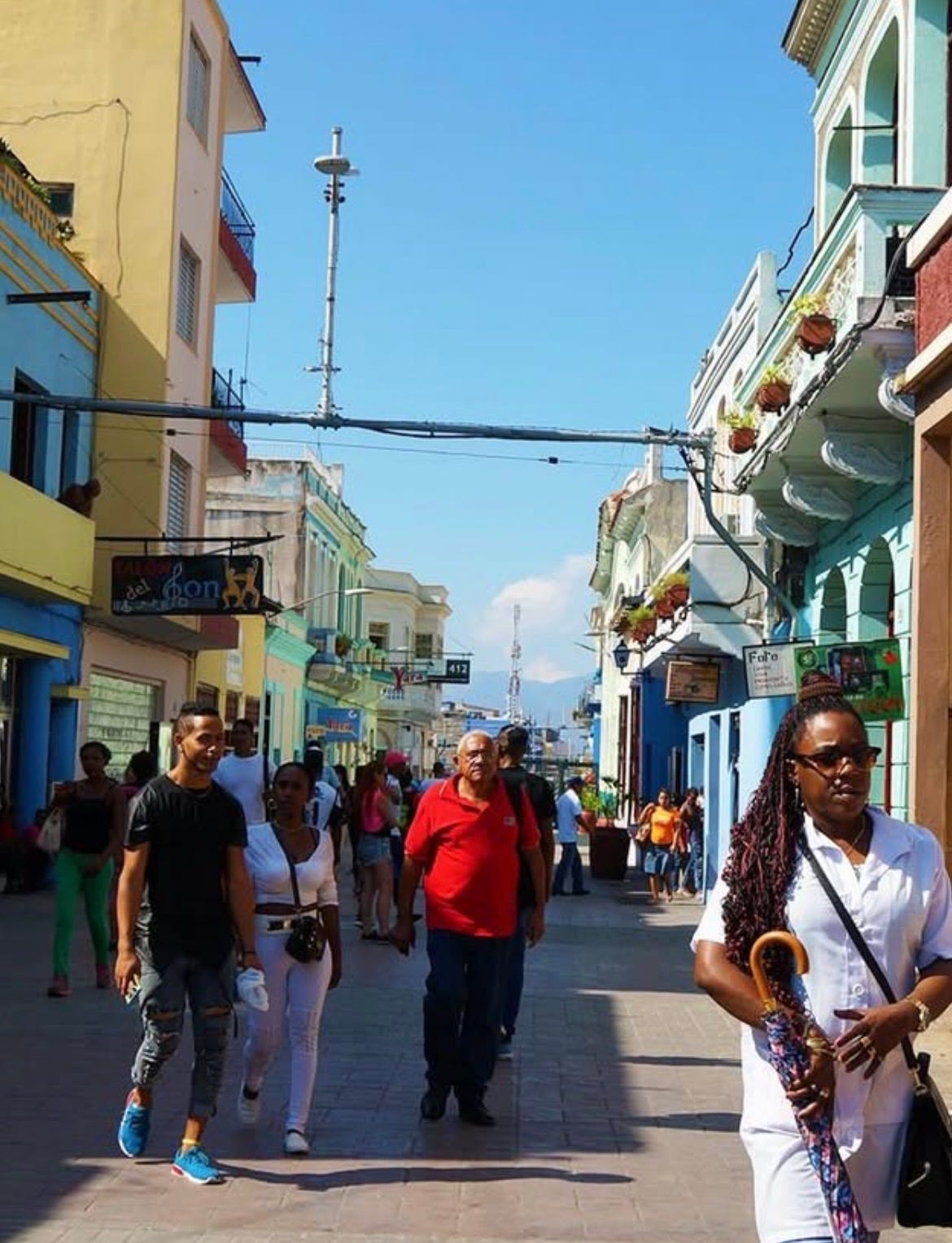
He learned that I had roots in Cuba and so did he. He pulled out this faded photo taken on the water. Far off in the distance I saw something that looked like a line stretched across the water.
“What is that long line in the water that I see in the distance?,” I asked.
“That line across the water in the distance is Cuba, Ms. Allen. I hope you get there someday.”
I am an Independent Historian, Oral Historian and Dramaturge. Please consider supporting my work and research with a few bucks for Coffee and Eggs via my CashApp or become a paid subscriber to me on Substack to help me sustain my research.
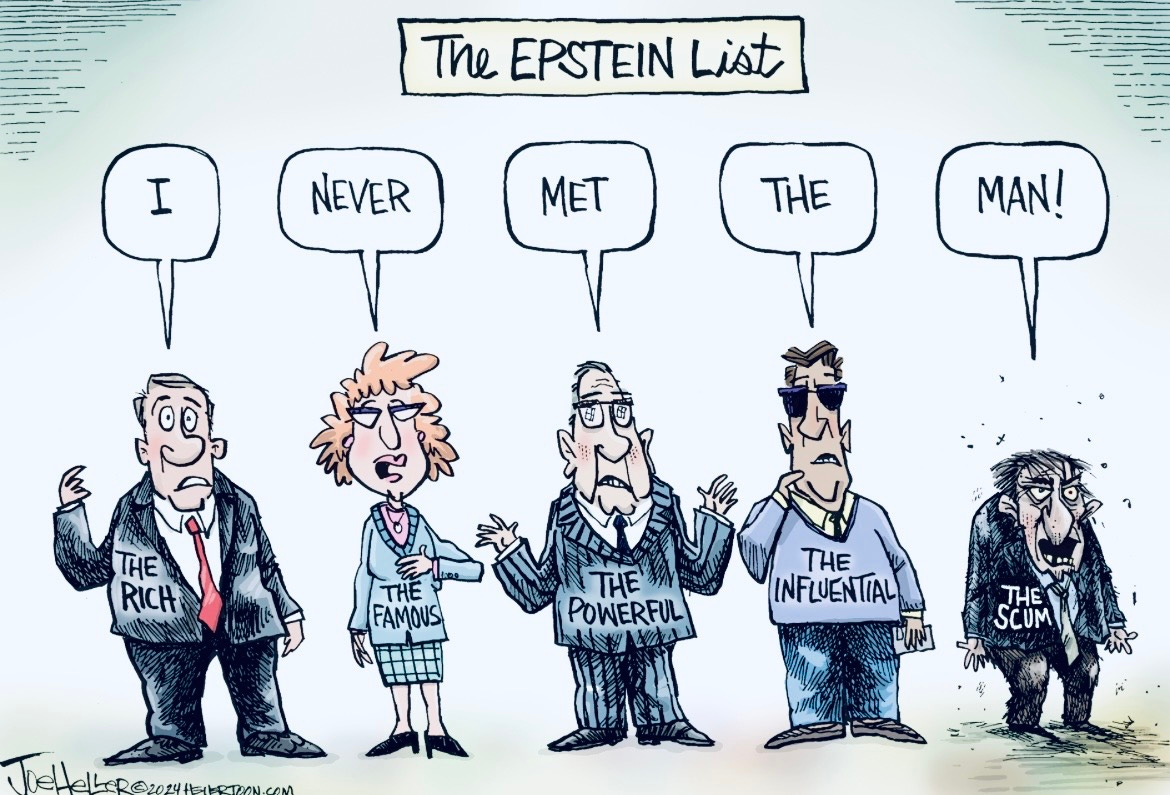
I had to stop reading what was in this recent release of more Epstein Files. I am not sure if I can look again because the sickness in it is far more insidious than one can stomach. I have access to all of them that can be accessed so I can access the details of more of them should I choose to do so. Don’t send me any of them, please.
Many of the men who have clamored for the release of these files have done so primarily to make political capital out of them. They don’t actually care that much about what happened to those girls. And I don’t care if they get angry about what I just wrote.
These are the same men who rarely, if ever, confront men who have sexually violated women and who never organize as a collective group to publicly state that this behavior is wrong. They tend to just tell women and girls in their orbit how to avoid certain types of men. That is honorable, but…
the responsibility is still left on women and girls to police men’s behavior. And before I hear that typical smokescreen that says “she should have known better than to…” please know that those kinds of statements not only prove that this heinous sexual behavior exists, but it also tacitly condones that behavior since the men in these scenarios are allegedly not responsible for their behavior because the girls and women should have expected to be violated based on their location or their appearance, not on certain men’s inability to behave themselves.
An excited 16-year-old girl who just met her favorite male singer and who foolishly follows him up to his hotel room when he says, “I have invited a few friends up, come join us,” should not expect to be raped. He never should have invited her up for a variety of reasons—the first reason being her age and the second reason being that she is a stranger that he just met.
An impressionable 16-year-old boy with a crush on his neighbor, a 35-year-old woman, should not expect to be forced/seduced by her because he mowed her lawn and then helped her take her groceries in the house. Importantly, his initial feelings of violation should not be replaced with congratulatory praise for his participation in the act which confuses her wrong behavior towards him as some male rite of passage for him.
These same men crying out for Trump and his sexually perverted team members to be brought to justice are not trying to destroy or collapse the current legal system at least until they have covered their asses and the asses of men they know that might not easily swim out of the Epstein quagmire. Illegality and sexual impropriety were built into the system. It’s still there.
It is not that all men (or women) are potential sexual abusers; it’s just that the ability to get away with it or have it somehow described with less severity is enshrined in the very definitions and expectations of masculinity. Rape is rarely forgiven by ethical men, but excessive male sexual prowess and promiscuity often is.
So here’s where it gets dicey, particularly for women. I have several good Black male friends, most of whom I have known since elementary school. There isn’t one of them that would not protect me if they witnessed me being physically harmed in any way by anyone.
There isn’t one of them who would not go, or at least want to go, after someone they believed had assaulted me sexually. Yet, if something like that happened I would not be likely to tell them because they would either end up in jail due to a physical confrontation with my offender or they would be injured or killed for their efforts. That kind of love is gratifying; yet some of the things that kind of love can produce is scary, and it can occasionally make certain scenarios worse. So…
the real onus for ethical and righteous men is not simply protection, but correction. If men do not confront other men about their behavior, their sexism, their misogyny, their misogynoir, and their double standards then the process of bringing sex offenders to justice will always be processed first through that “Boys will be boys” lens.
Furthermore, a woman’s chronic need for protection from rape or other forms of assault essentially means that the problem remains chronically intact. The only way to end this is to end the manner in which men think of women and how they interact with and talk to other men; and whether they can do the most unpopular thing to do, which is: confront other men.
Additionally, the sexual violation of boys by men and women will continue to be swept under the rug by the perverted tenets of masculinity that insist that a boy or man should be silent because to speak up about his abuse is anathema to the myth that all men are physically and psychologically strong simply because they are men. It is male sexual assault victims’ equivalent to that nonsense that says, “Big boys don’t cry.”
Every opinion, good or bad, biased or unbiased, informed or uninformed, is also a confession. Silence, when the needs of the hour demand that you speak, can be proof of cowardice or a desire to conform to the status quo or an admission that you are protecting the guilt of someone else or even your own.
Justice for Epstein’s victims and prison time for the participants in these heinous actions is only a first step. Yet, we won’t correct the alleged norms that generated and aided and abetted Epstein and his cronies as long as their actions are seen as some anomaly rather than proof of a perpetual problem.
I am an Independent Historian, Oral Historian and Dramaturge. Please consider supporting my work and research with a few bucks for Coffee and Eggs via my CashApp or become a paid subscriber to me on Substack to help me sustain my research.
For people who have been reading my posts, you may have noticed that I have written about the United States’ severe literacy crisis twice on this platform. If not, you can read them here: The USA Literacy Crisis & This Election and Literacy Crisis, Part II.
This essay is Part III. Let me point out a few things first. Some 65 years ago in 1960, the United States was one of the most literate nations in the world. In 1960, only a handful of states in this country had an illiteracy rate of 10% for people aged 14 and over. The rest of the states registered only about 3% illiteracy. Now we rank 36th in the world for literacy among industrialized nations. There are other sources that place the USA at a literacy rate much lower.
In 2025, 21% of American adults are completely illiterate while 54% of adults read below the 6th grade level. I want to share with you in this essay, however, what poor reading and writing skills look like when these circumstances are also combined with educational red tape.
I taught College History courses for roughly 7+ years, from 2007 to early 2015. My first 2 years, I taught at a Junior College that had several campuses outside the city limits of Atlanta in the outlying metropolitan areas. My last 5 years I taught at large state universities. Junior Colleges are structured for students who have some academic deficits. Students often attend Junior Colleges to fix a deficit in some academic discipline so that they can eventually qualify to attend a four-year institution to earn a Bachelor’s degree.
When I started teaching, I taught year round. After I taught on this particular campus for about two semesters, I noticed that this campus was slowly being converted into a cash cow. The school started accepting anyone who could pay tuition and occasionally referred to students as “customers.” That did not go down well with me and a lot of other Instructors and Professors.
Most of my History students had some problems with reading, writing, and critical thinking skills. I usually spent the first 3 weeks of every semester correcting grammar and insisting that they trust their answers and their own instincts.
When I asked a simple question, initially none of them could state the obvious answer. I demanded that my students give complete and well-thought out answers and opinions in class discussions instead of the abbreviated and one-word answers that chronic text messaging had fostered.
The majority of my students rose to the occasion. They did the work, read my comments, listened to my instructions and suggestions, and put in the extra time needed to get up to speed in writing and having in-depth discussions about History. I did have one student, whose identity I never knew, who complained about having to write 3 five-page long History papers. Imagine having to write 3 papers in a 16-week long semester in college.
I learned later through the grapevine that this student allegedly had an inappropriate relationship with some man in the Junior College’s administration to who that student complained. One day I was informed that I would have to attend a meeting with my Department Chair and the Ombudsman of the School.
During the meeting, both my Department Chair and the Ombudsman kept telling me things like “Many of these students might not know how to interpret what you tell them. They might not understand what you say to them or write on their papers. One student said you told him or her that they could not write!”
I was confused and raised these points: “I have NEVER told a student that they cannot write. I have told or wrote to many of them, however, that they needed to take a good writing course so that they can improve their writing skills and get more practice writing cogent papers. Also, I speak grammatically correct English in the classroom. How can I know when a student cannot understand grammatically correct English? What type of language or techniques are you asking me to use?”
They both stopped talking for about 30 seconds. I interrupted their silence. “Are you asking me to water down my curriculum?!” No one answered my question. They both began to reiterate how much the students might not understand what I asked students to do. I repeated the question FOUR more times. They NEVER answered my question.
When they suggested that I attend a seminar on Customer Service Skills, it was all I could do to hold my tongue. Then my Department Chair finally ruptured this charade of a meeting and asked me, “Do you want this job?”
I swallowed hard and paused for a good 20 seconds and responded, “That’s a rather loaded question, don’t you think? Obviously, when I applied for this job, I wanted and needed a job. I still do. However, anyone who might be offered a better job somewhere else would probably take the better job. That includes me too.”
When I walked out of that office, I was so angry I couldn’t see straight. The Department Chair’s secretary looked at me as I exited and said “Leslye, what did they do to you in there?! Please, please don’t look like that.” I told her I would come back later and fill her in on the details after the Department Chair went to lunch.
So, here was the dilemma. That handful of students that never had any intention of studying and improving their literacy and writing abilities were now expecting to receive passing grades when they were just as inept at the end of the semester as they were at the beginning of it. That meeting, however, was not my worst moment on that campus.
A young Black woman student emailed me and asked me, when the time came, to write her recommendation letter to Spelman College. She had sent in an application to Spelman and assumed that she would be accepted. When I checked her records, she only had a GPA of about 2.0.
Spelman College is a Historically Black College for women that has always teemed with academic brilliance. No girl graduating high school will even be considered for admission with a GPA less than a 3.5. The average GPA of students who are admitted is a 3.8. It is a highly competitive school with an admission rate of only about 34% of applicants.
I very delicately wrote to this young woman that she would need to pull her grades up in order to get into Spelman. I wrote that she should not be discouraged because, “I know you can do it if you work hard and apply yourself by taking some additional classes.” This was my attempt to tell her the hard truth without crushing her dreams or suggesting that she give up. I signed my name to the email, pressed the “Send” button, and sat and cried for about 15 minutes.
It took me years to understand that people who don’t read well or who rarely read at all constantly misinterpret the meanings in spoken and written language. They also assign their own meanings to what people say and write with little to no comprehension. They make decisions based on what they think or feel about something a person said or wrote.
That is where we are in the United States right now. We have a majority adult population that responds to most political propaganda with their emotions and assumptions, never exactly or entirely based on actual facts. Moreover, many don’t even know where or how to look for the facts.
If the Democrats do not figure out how to reach out to semi-literate people stumbling in the dark with information they can barely decipher, then the Democrats are in danger of losing elections for the next several decades. The Political Left is also doomed to be reduced to little more than a group of well-read, but also self-righteous, ideologues that do not know how to reach the people they need to reach who don’t fit the definition of “well-read.”
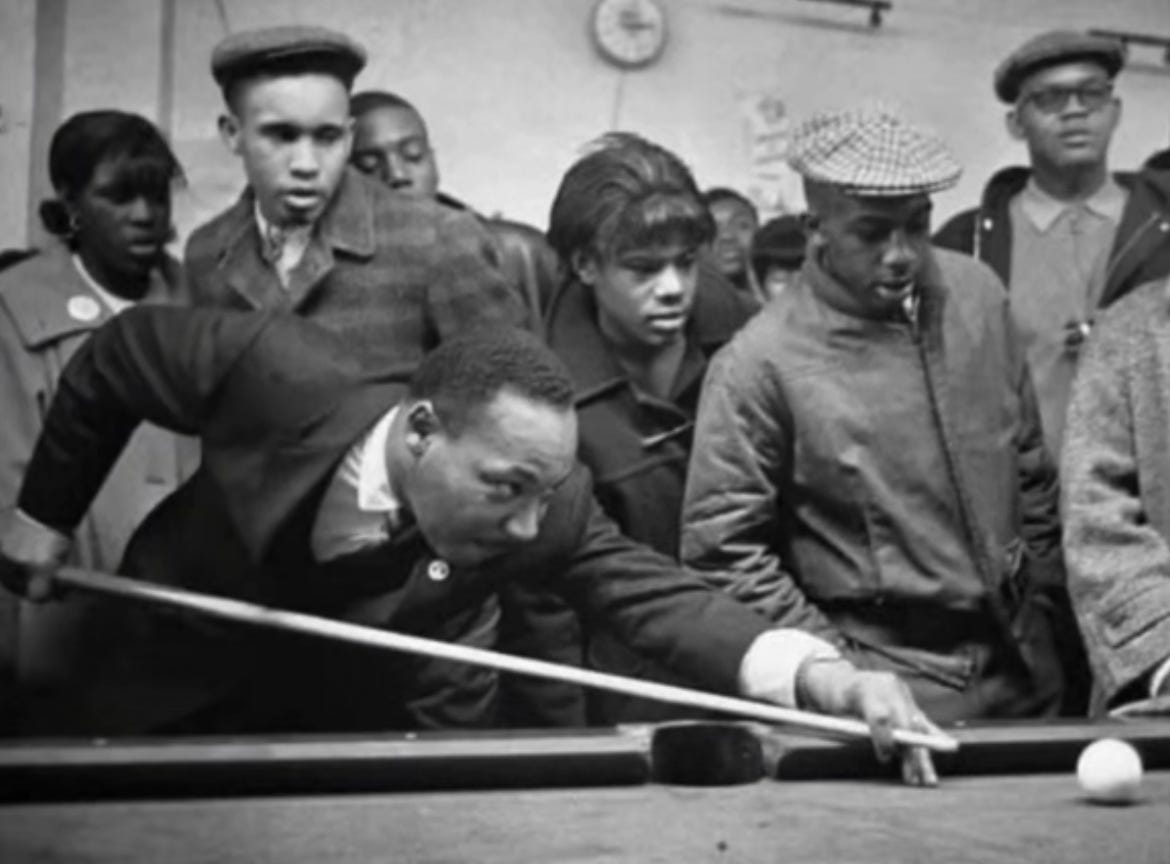
One of the things that made my home boy Dr. Martin Luther King, Jr. so effective was that he was a young man with a doctorate degree who could go hang out in a pool room and shoot pool and talk trash with the men who hung out there as easily as he could address heads-of-state. He could render presidents and prime ministers speechless because he was better educated and more in-tune with what people needed than the vast majority of them.
He could talk with ease to the poorly educated and to the best educated. For those who don’t know, Martin Luther King Jr. was an exceptional scholar who entered college at age 14 and who graduated Morehouse College at the age of 18 and had earned his doctorate by the time he was 25 years old. Kamala Harris’ Mama also had her doctorate degree by the age of 25. She was working in a laboratory when her water broke with her then soon-to-be-born first child that she named “Kamala.”
(Photo of M.L. shooting pool in Atlanta in 1966. The tall guy on the far right in the cap and glasses was then a Morehouse College Freshman named Samuel Leroy Jackson.)
What is my point? Education and literacy matters; and its singular purpose is to help people focus on what they need to be focused on. In 1960, a man or woman in the United States with little resources knew that the public library was still free and they made good use of it. Today, our semi-literate majority adult population that cannot stay still long enough to read a 5-minute article because they are always ready to look at something that is “trending,” is what we are confronted with now.
Long after I left the classroom, I ran into one of my former students from the Junior College where I once taught. He was attending Georgia State University and was about to graduate. Excited to run into me, he said, “I hated you back then. But you pushed me and demanded that I get the work done. Now, I can’t stop reading and doing research. I cannot read enough BOOKS!”
Hugging his neck I said, “Don’t ever stop. The more you dig the more you will know.
So, in the names of your favorite teachers, instructors and professors, please keep talking about the truths and the dangers of a largely illiterate and poor reading nation. Our welfare as a nation and as human beings depend on it.
I was am an Independent Historian, Oral Historian and Dramaturge. Please consider supporting my work with a few bucks for Coffee and Eggs via my CashApp.
You can also subscribe to my writings on Substack and stay in the loop with the best new research, history, journalism, prose, poetry, and etcetera.
I cannot really comment right now about the recent mass shootings because I am soul weary from it. I will write about it another day. I will only say we need to look very carefully at all candidates on this issue of gun control and the banishment of assault rifles. Democrats also better learn to really listen to young people, those Millennials who out-voted Baby Boomers in the 2018 national elections, if they want to win the Whitehouse and put a reasonable dent in the Republican-dominated Senate.
I watched political pundit Thomas Friedman talk about the possibility of Trump winning re-election on MSNBC, right after the publication of his New York Times op-ed “Trump’s Going to Get Re-elected, Isn’t He?”. It’s a chilling thought. Friedman noted that Democratic candidates for president produced some pretty radical ideas in the first debate: everything from advocating for open borders, to free healthcare for anyone who crossed our borders. He was right when he said most Americans, including many on the Left, are not going for any of this. So, after I listened to Friedman, and watched as much of the two Democratic presidential debates I could stomach, I saw several problems Democrats must overcome in order to win the White House in 2020 and possibly pick up more seats in the Senate.
Democrats must recognize that they are no match for our current president when it comes to spin. The current president is a damned reality TV star. He knows how to spin a story, create a repetitive slogan and throw his base enough raw meat to keep them snapping and cheering. If Trump (who already said as much) murdered a man in broad daylight for no reason, most of his supporters will still support him because they are, after all, frightened white people who are now forced to come to terms with what author James Baldwin tried to tell them a long time ago, mainly, that “the world is not white.” Europeans and White Americans are older than everyone else on the planet save the Japanese. Europe’s average age is 42 years old and that fact is coupled with a low birthrate. Of course we must also consider that 11 percent of Black American men who voted for the current president too. These are the Black ass, sexist and self-defeating Neanderthals who are scared to death of women being in any kind of control to the point where they would willingly throw their own people (and themselves) under the bus in the antiquated belief that only men, and only white men at that, can get anything done…But I have not the time to digress about the current Massa’s favorite Darkies…let me get back to the demographics that matter.
When you toss in the relative youth of the rest of the world, it gets even scarier for some folks. Across the entire African continent, the average age is around 20 years old. With the continent of Africa, South America, the Caribbean, India and much of Southeast Asia containing young fertile populations, the death knell of worldwide white supremacy is ringing in many white folks’ ears. We already know the kinds of fears our current president stokes among his supporters, but we cannot spend all of our energy responding to his spin and his lies; we have to use them as fuel for some other strategy to beat him because the Democrats are never going to be able to beat him at propaganda, which leads me to something one of my young friends said. His name is John Jordan, Jr. and he’s a Black, 29-year-old entrepreneur and Morehouse College graduate. We trade ideas often. As Joe Biden seems to be the frontrunner for the Democratic nomination for president, John said this:
“I’m a millenial and the one thing I know is the world has changed and will continue to change. Baby Boomers, especially politicians try to act like they know…Biden’s entire candidacy will rest on his ability to show that as an old, white man he can listen and adapt based on what he is learning.”
John, who was mentored by a Black woman, is right. Democrats are going to have to overcome the generational gap and the intra-party gender and racial biases that threaten the best work of our most activist and youngest Congress persons, namely Ilhan Omar, Alexandria Ocasio-Cortez, Rashida Tlaib and Ayanna Pressley. Our current president has continued to verbally beat up on these four women, not simply because they are people of color, but also because they are women, and young women at that. Tragically, many men of color and white men will not defend women of color whenever those men fear that such a defense will cost them their own personal connections and favor with powerful white men. Additionally, men of a certain age (along with women who’ve learned to adapt to their habits), even when they respect the abilities of women, still tend to expect to direct women. Many of the men I know well over the age of 50 (and I will exit my 50s at the end of 2020), don’t always know how to not place themselves at the center of attention or how to not always have to direct the proceedings.
In my experiences mentoring and/or doing business with well-educated Black men in their 20s to early 40s, I learned that most of them are not terrified of the word “feminist” and can accept direction from a woman, particularly if they think she has a great idea or a better idea. They do not flinch from matters that concern or affect LGBTQIA communities either, but, more often than not, recognize those concerns as inextricably tied to the fabric of our entire community. They tend to worry a whole, whole, whole lot less than their older counterparts about who is going to get the most credit and the most limelight and the most money. Importantly, they don’t see women as competition, and are rarely as defensive as some of their older counterparts when a woman offers an honest critique. In fact, they welcome these critiques as a way to brainstorm and look for new and better ideas. While I cannot speak for other people’s experiences, I can say the young, college-educated Black men I’ve been privileged to meet and mentor are a breath of fresh air.
So, when Democratic presidential candidate Joe Biden got blind-sided by Kamala Harris in the first Democratic debate about the subject of bussing, it was largely due to his underestimating Harris’s abilities at debate, and it was also due to his walking into that debate with a set of assumptions, which are, thank Goddess, becoming obsolete. The second Democratic debate became, unfortunately, one where the candidates spent far too much time critiquing Obama’s policies than expressing in clear language what they would do as president and how they would reverse much of the damage done by the current occupant of 1600 Pennsylvania Avenue. I really do not care much for Democrats savaging each other, but Harris’ one-two punch in the first debate exposed some of Biden’s weaknesses.
Young adults of all genders, women, and Black women in particular, are underestimated by a lot of Baby Boomers and older folks ALL THE TIME. It dawned on me that Biden could easily have his ass handed to him in a debate with the incoming first-year classes of all-women Agnes Scott College or all-women and historically Black Spelman College with ease. Biden wouldn’t fare too well with the students of all-men and historically Black Morehouse College either. If you don’t believe me, go visit those campuses. Go listen to them. Go sit and answer their tough questions. Better yet, go unprepared with the same old weak assumptions about what you think you don’t have to know in order to persuade these brilliant young women and men to vote for you. See what happens to you.
If Biden remains the frontrunner, and eventually the Democratic nominee for president, and the best choice for beating our current president, then there are two things he needs to correct ASAP. First, he cannot dig in his heels and shrug off complaints about something he said simply because he feels like he didn’t do or say anything wrong or potentially offensive. I understood what Biden meant when he said he worked with segregationists because I was born in 1960 during a period when civil rights legislation was being passed, and there was no choice but to work with those segregationists. A young man or woman born in the 80s, 90s or early 2000s would not/will not interpret his comments the same way I do. So, he needs to get over himself enough to listen to and respond effectively to younger voters who he needs to win.
I’ve lived long enough to become an elder. I relish my conversations with young Black men and women all the time. And as one told me, “We respect you because you respect us.” Whoever is the Democratic nominee for president better understand that the overwhelmingly young, Black and women voters that turned the House of Representatives BLUE in 2018 need to be listened to, not talked at. Democrats will not, cannot win without them.
After listening to nearly 100 robocalls over the past three weeks emanating from an assortment of imbeciles who have no better sense than to believe that they are fit to run for public office in my hometown of Atlanta, I had my own “Have-A-Laugh-Friday” on one of my social media pages. Just one of the things I do occasionally to break the tension. Now, this does not mean that I will be posting or blogging something funny every Friday, or that I or anyone else needs to wait for Friday to laugh. And this is also not done to harm the good reputations of the many wonderful members of the City Council who love Atlanta and do really great work—people like Ceasar Mitchell and Keisha Lance Bottoms who are accessible the whole year, have a great staff that responds to you (and not just at election time.)
Now, this is not a political endorsement. I do not publicly endorse political candidates. My mention of those two people is my personal observation of them over several years. Vote for the candidate that best represents your interests, but I am rambling. Back to the matter at hand—these insufferable robocalls.
For the past three weeks every time I got ready to raise my fork to my mouth, the phone rang. Typically, I did not recognize the number on the Caller ID, so I let it go to voicemail. Then before I could swallow my food, I would see the light blinking on my telephone that indicated that I had a message. I would ignore these blinking lights save for the fact that it might be important. I also had little choice but to turn off the ringers on all of my telephones, that is if I planned to eat or get any work done. Now, when I listened to these messages, they all tended to sound something like this:
“Hello, I am ______________________, and I am a father with two children. I am running for the school board because our children are our future.”
Or
“Hello, I am ________________________, and I am supporting _____________________ , for Atlanta City Council. Atlanta can do better than the current….”
You are damn right Atlanta can do better which is why I have to seriously consider whether or not I am voting for you or for any candidate that believes that a barrage of phone calls is going to earn any potential voter’s trust, to say nothing of their vote. Exactly who told these candidates that a torrent of pre-recorded robocalls that always occur around meals or when I am writing or doing research would send me or anyone else to the polls?
I do not think these political candidates are that out of touch—I do think some of them are dumb, dumb as cat s**t, dumb as a stump, dumb as a box of rocks, and as vacant as a white wall. Some of them probably qualify as doofus—Go look up “doofus.” It is now in the dictionary, and I am sure at least a few of these candidates have helped the authorities at Merriam-Webster refine its definition.
Now I could not ever imagine not voting. Too many of my people fought and died for me to have that privilege. I have to say that when I do go to vote on November 5, I really wish the voting machine had an option to write-in candidates whose names ARE NOT on the ballot. If that option was available, I might just write in the name “Daffy Duck,” or “Porky Pig,” for at least one of the offices. Hey, I might as well vote for someone that I could actually have for dinner—literally!
Now I know this blog will be obsolete very soon because November 5, 2013 is almost upon us. Very soon, a few of these candidates will hold public office in Atlanta. They will create laws about zoning and be responsible for formulating policies that determine the education of your children, our children. God help us all!
So here is my suggestion. I know a few people who make it a habit to call their elected officials on a regular basis, but too many of us do not make that effort. We complain in every day conversations about something that needs fixing in city government, but soon we move on to another topic. Yet, this is an opportunity to give them tit-for-tat. Call these representatives when there is a street sign pointing the wrong way. Call them to complain about a pothole in the street. Hell, call them if you have got a hangnail and you just want to complain about how it stings every time you put your hand in dishwater. They have no qualms about calling you with pre-recorded asinine messages that repeat the same horse manure; and worse, they do not seem to know or care how annoying it is. Return the favor and maybe some of them will do the jobs our tax money pays them to do!



 Leslye Joy Allen