Bookstores & Librarians & Libraries Rock: Writers & Readers, Pay Attention

by ©️Leslye Joy Allen

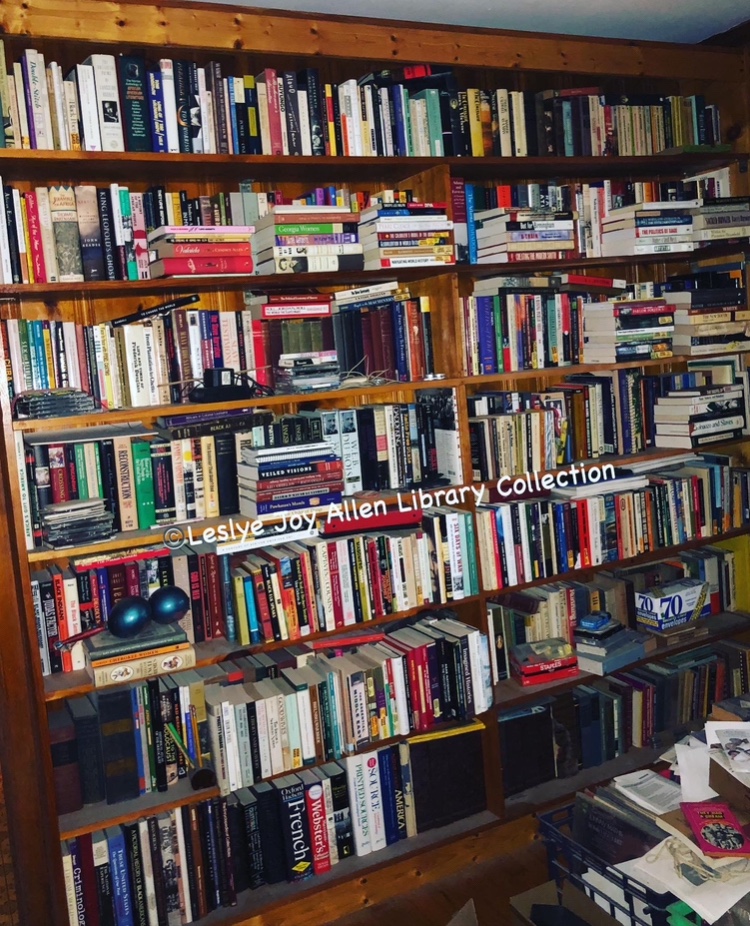
I love bookstores & libraries and librarians, but particularly librarians. They are natural allies to historians or anyone doing research. When you tell them what you are looking for they can point you right to it. I love archivists for the same reason, but archivists deal with materials that are older, and rarer than the books you see on the shelves in bookstores and in public, school and university libraries. This blog, however, is more than a shout out to the folks who handle books, it is for anyone who has written or who plans to write a book.

Here’s a tip. Do your best to get your book reviewed by a librarian. Here’s why.

While most scholarly articles and many scholarly books are peer-reviewed (which means exactly what it says: reviewed by one’s academic peers), the majority of novels, memoirs, some scholarly works, and popular authors’ books are not reviewed by their peers or by librarians.

There is one advantage that a librarian-reviewed book has: If the librarians responsible for purchasing books like the book and recommend the book, they will buy it and other libraries will buy it too! Library sales are not like other purchases. Let me explain.

Let’s say you are a new author. You and/or your publisher (if you have one) get a local bookstore to buy 100 copies of your book for 50 percent off of the retail price of each book. The typical timeline to return copies of books that did not sell is around 6 months. Let’s say, all but 20 copies of your book sold, so the bookstore returns the unsold books for a refund. Now, you certainly sold more books to the local bookstore than to a public or university library, BUT libraries’ sales are final and books are never returned unless there’s some physical damage to the actual book.

So, here’s a suggestion. Scholars and Librarians rarely review books that do not appear to have some scholarly value. Yet, you can always send your manuscript—whether it is a Science Fiction Thriller, a Memoir, or a Book of Poetry—along with a Cover Letter, requesting a review of your book.

Library Journals like Kirkus Reviews (librarians read this one all the time), Library Journal, Booklist, School Library Journal are some of the journals that librarians read and publish in. If you get a positive review in any one of these, you are bound to sell a few books and potentially earn another audience of readers because Bookstores and Libraries and Librarians Rock!

“If libraries order your book, you’re golden, because those sales are non-returnable—an author and publisher’s dream.” — from Returns 101: What New Authors Need to Know

©️Leslye Joy Allen

Vice-President Kamala Harris at Bold Fork Books, on Small Business Saturday, November 30, 2024. Bold Fork Books is a Culinary Bookstore located in Washington, D. C.

#MakeAmericaLiterateAgain

Blogs written by Leslye Joy Allen are protected by U. S. Copyright Law and licensed under a Creative Commons Attribution-NonCommercial-NoDerivs 3.0 Unported License. Any partial or total reference to any blog authored by Leslye Joy Allen, or any total or partial excerpt of any blog authored by Leslye Joy Allen must contain a reference to this hyperlink: https:/leslyejoyallen.com with Leslye Joy Allen clearly stated as the author. Postings or blogs placed here by other writers should clearly reference those writers.  All Rights Reserved.

Remembering “Dumba Nengue: Run For Your Life”

By Leslye Joy Allen

Copyright © 2014 by Leslye Joy Allen.  All Rights Reserved.

I remember the first time I had to read a book called Dumba Nengue: Run For Your Life, Peasant Tales of Tragedy in Mozambique.  I was glad that the book was so very short compared to my other readings.  Originally written in Portuguese by Lina Magaia–who held nothing back–and published in Mozambique, it was an instant best seller.  Lina Magaia told the brutal truth.  Published in English by 1988, the title comes from a Mozambican proverb that means, “You have to trust your feet.”  At only 108 pages, I assumed that reading the book would be a breeze.  It was not.  Midway through it I was sick to my stomach at how easily revolutionaries could descend into absolute depravity and madness.  Reading about the actions of South African-backed Mozambican revolutionaries in the mid-to-late 1970s was hard to swallow.

One of my classmates admitted to our professor that she simply could not finish the book.  I understood.  The one thing that struck me in the book was how easy it seemed to be for revolutionaries to take hostage, abuse, torture, and sexually violate females of all ages.  Indeed, one of my classmates, a young White woman studying on a historically Black campus, researched and wrote about rape as an act of war.  Her conclusions were as terrifying as they were valid.  I thought about this book when I learned of the kidnapping of over 200 (or over 300 girls) in Nigeria by some group of thugs known as Boko Haram, whose name translates to “Western education is a sin.”

Now, some folk will argue that this tragic episode in Nigerian history is an example of some of the damage done to the nation’s native population by European imperialism and racism.  Others will argue that Boko Haram’s activity is the result of their adaptation of a radical form of Islam.  This group, they will say, are merely proceeding according to what they believe is an accurate interpretation of Sharia law.  Yet, the very notion of “females as property” has been overwhelmingly universal in most places, give or take a few exceptions; and this notion has created more abuse and oppression of girls and women throughout human history than perhaps any other kind of ideology.  Even further, this kind of oppression and abuse has never been fully addressed by the entire human family.  Sexism is alive and well in every corner of the globe.  It cuts across racial, ethnic, religious and geographic boundaries with a frightening swiftness and regularity.  WE do not get to blame any particular thing or anybody or any particular group for this one.  So I will leave you with this:

I remember once hearing my late Mama promise to rip the lungs out of someone who had physically threatened me.  When I asked her would she do it, she replied, “Yes, only if I did not have a loaded gun that I could empty into them.”  I am also grateful that my Dad was never a hypocrite when it came to females.  I once overheard my late Dad say to a young man, “If you wouldn’t want it done to your daughter or sister or mother, then don’t do it to any other woman.”  Enough said.

I am praying for the safe return of all of the abducted girls in Nigeria to their families.  Yet, as an old African proverb says, “When you pray, move your feet.”

Leslye Joy Allen is a perpetual and proud supporter of the good work of Clean Green Nation. Visit the website to learn more about it: Gregory at Clean Green Nation!

Copyright © 2014 by Leslye Joy Allen. All Rights Reserved.

CCThis Blog was written by Leslye Joy Allen and is protected by U. S. Copyright Law and licensed under a Creative Commons Attribution-NonCommercial-NoDerivs 3.0 Unported License. Any partial or total reference to this blog, or any total or partial excerpt of this blog must contain a direct reference to this hyperlink: http://leslyejoyallen.com with Leslye Joy Allen clearly and visibly stated as the author.

Complicating the Simple

By Leslye Joy Allen                                                                                                     Historian, Educator, Theatre and Jazz Advocate & Consultant, Ph.D. Candidate

Copyright © 2014 by Leslye Joy Allen. All Rights Reserved.

"Weary - Self Portrait" by Copyright © 2013 by Leslye Joy Allen.  All rights reserved.

“Weary – Self Portrait” by Copyright © 2013 by Leslye Joy Allen. All rights reserved.

I am not going to take up too much space here rambling about the disaster that was and remains the unfunded educational program known as “No Child Left Behind” or the more recent pros and cons surrounding “Common Core” standards that were put in place in classrooms in at least 45 states. I can only say this…

In the last five plus years, I have witnessed perfectly intelligent college students who are unable to make “simple” statements about particular areas or events in history or the world they live in. I have witnessed them struggle to understand what I mean when I say, “Keep it simple.” Usually, after a few weeks, they understand or at least become comfortable with the idea that my classroom is a place where a free exchange of ideas is a requirement.

Please understand that in most colleges, History is not the regurgitation of facts, and it has not been for quite some time. It is, rather the deep analysis and questioning of why and how certain things happen; and/or why some people (or peoples) have had a history of success, failure, oppression, or any mixture of all of the above…Someone told me a few years ago that all historians were radicals. That is not true of all of us, but I did understand that person’s logic.

History on the college level has long since ceased to be “big man/big woman/exceptional man/exceptional woman history.” However, when students are unable to state the obvious, then something else is at work. I would not take anything for the beautiful efforts that my students make in order to grasp and engage the material that we study, and to pass my class. Yet, so many of them yearn for answers that are not that hard to find if one bothers to look.

Too often, students think that every question is a trick question and that every answer is hidden somewhere under a rock; or worse, that there really is a SINGLE answer to every question. Too often, I run into students who cannot answer a simple “Yes” or “No” question because somewhere along the line someone told them that to simply answer in the affirmative or negative was not enough information. An answer is always complicated, so many of them seem to think.

Too often, I encounter students who are afraid to trust their own instincts and their own common sense and personal interests. This is where both Ms. Allens (Mama and I) come in and say, “What do you think and tell me why you think it?”

There are no easy answers to this dilemma; and I do not know how much this is the result of “No Child Left Behind” or the relatively recent “Common Core” standards. Yet, we must start encouraging young students to capitalize on their personal and academic strengths and to speak their minds even if we do not like what they have to say. After all, none of us can fix anything that is broken until we learn where and how it is broken.

For more information about Common Core standards, visit this hyperlink: http://wunc.org/post/fact-check-clearing-7-common-core-claims

Leslye Joy Allen is a perpetual and proud supporter of the good work of Clean Green Nation. Visit the website to learn more about it: Gregory at Clean Green Nation!

Copyright © 2014 by Leslye Joy Allen. All Rights Reserved.

CCThis Blog was written by Leslye Joy Allen and is protected by U. S. Copyright Law and licensed under a Creative Commons Attribution-NonCommercial-NoDerivs 3.0 Unported License. Any partial or total reference to this blog, or any total or partial excerpt of this blog must contain a direct reference to this hyperlink: http://leslyejoyallen.com with Leslye Joy Allen clearly and visibly stated as the author.

…HAPPY

By Leslye Joy Allen                                                                                                     Historian, Educator, Theatre and Jazz Advocate & Consultant, Ph.D. Candidate

Copyright © 2014 by Leslye Joy Allen.  All Rights Reserved.

Leslye Joy Allen, Copyright © 2014.  All Rights Reserved.  Self-Portrait.

Leslye Joy Allen, Copyright © 2014. All Rights Reserved. Self-Portrait.

Walking in the cold in downtown Atlanta today I had a pleasant conversation with a nice, young brother.  We struck up our conversation in the typical way that native Atlantans (and most southerners) do when we make eye contact.  “Good morning,” we said in unison.  Then we both laughed and said, “It is COLD out here!”

The young brother told me he was currently living in a shelter.  He also enrolled in an education and work program designed to help him get back on his feet.  He said, “No Ma’am,” and “Yes, Ma’am,” which is always a sign of good manners.  He was extremely positive and smiling.

“I am grateful for a place to lay my head,” he said.  Almost as if I was his mother—for I am certainly old enough—he assured me that he was going to use this momentary set back in his life as a stepping stone toward a better future.  I told him to keep the faith, keep working and moving.  He said, “Thank you and have a blessed day.”  “You too,” I answered, and we headed in different directions as the wind blew through downtown Atlanta.

Then as I neared the MARTA train station, I heard the infectious melody and rhythms of Pharrell Williams’ Oscar-nominated song “HAPPY” playing from some radio.  So, two elderly Black women decided that it was as good of a time as any to dance to the music, so they cut a few steps on the sidewalk, and all of the folks near the train station stopped to watch, smiling and yelling, “Go ‘head” and “Get Down!”  Count your blessings. Àṣé!


Leslye Joy Allen is a perpetual and proud supporter of the good work of Clean Green Nation.  Visit the website to learn more about it: Gregory at Clean Green Nation!

Copyright © 2014 by Leslye Joy Allen.  All Rights Reserved.
Creative Commons License This Blog was written by Leslye Joy Allen and is protected by U. S. Copyright Law and licensed under a Creative Commons Attribution-NonCommercial-NoDerivs 3.0 Unported License.  Any partial or total reference to this blog, or any total or partial excerpt of this blog must contain a direct reference to this hyperlink: http://leslyejoyallen.com with Leslye Joy Allen clearly and visibly stated as the author.

Ms. Allen’s U. S. History 2110: Songs of Social Consciousness and Protest, 1960s to 1980

By Leslye Joy Allen                                                                                                     Historian, Educator, Theatre and Jazz Advocate & Consultant, Ph.D. Candidate

Copyright © 2013 by Leslye Joy Allen.  All Rights Reserved.

One of the fun things about teaching history is not only helping young people discover new ideas, but also having them help you, the instructor, re-discover some of those ideas.  One of the things we did as a class this semester was revisit some of the music of the early 1960s up to 1980 that had socially conscious and/or protest lyrics.  Many of the songs on the following list were songs that I personally remembered and contributed.  Yet, many of the songs were discovered by several of my students, along with a few suggestions by a few friends.  My students and I had a good laugh about how some people upload music to YouTube in violation of copyright law.  Yet, we all agreed that when one video or recording of a song was removed, another video would take its place.  So, if any of the hyperlinks below have become inactive, I can only encourage you to do a quick search for the title of the song and/or artist.

My musical repertoire dates back to before Ragtime, thanks to my late birth to parents who were much older than the average age for first-time parents, and who were late born babies themselves.  I was tempted to create a mammoth song list that touched on every possible social or political concern for the last hundred years. This list is hardly comprehensive or even representative of all the music that I know of that can be counted as having lyrical content that speaks about some social or political issue.  Yet, it remains a great list when one considers that the music represented here is much, much older than the majority of my history students and that these songs still have relevance and meaning.  Also, a comprehensive list would be too long to be useful.  The idea of this assignment was to get students to look up and listen to music and access other art forms and discover that all of these art forms are important cultural markers which help tell so many stories and contribute to the history of any given era.

Many of my students have commented that too much of the music today seems empty of meaningful content.   I agree.  So, below is the list in date, rather than alphabetical, order. I hope you enjoy what my students discovered; and I hope you will make your own lists of songs of social consciousness and protest and then introduce those songs, musicians, songwriters, and messages to some young person that you know.  You may even learn something new in the process.  Peace.

(1962) “The Death of Emmitt Till” by Bob Dylan: http://www.youtube.com/watch?v=RVKTx9YlKls

(1963) “Masters of War” by Bob Dylan: http://www.youtube.com/watch?v=Mvr72uTd7kc

(early 1960s**) “Ain’t Gonna Let Nobody Turn Me Round” by Sweet Honey in the Rock: http://www.youtube.com/watch?v=c5Z1trynEHs  (**Many singers have sung “Ain’t Gonna Let Nobody Turn Me Round.”  It remains a Traditional Negro Folk Song, adapted by the SNCC Freedom Singers, who began singing it at rallies in the early 1960s.  Dr. Bernice Johnson Reagon, who founded the vocal group “Sweet Honey in the Rock” was an original member of the Freedom Singers.  The version above is a more recent version that she and the members of Sweet Honey in the Rock recorded for a PBS Series titled “Soundtrack for a Revolution.”)

(1963**) “Cotton Fields” by Odetta: http://www.youtube.com/watch?v=tXQDgqXnaT8 (**Odetta recorded this song live with Lawrence Mohr in 1954.  Yet, she released this studio-recorded version in 1963)

(1964) “Mississippi, Goddamn” by Nina Simone: http://www.youtube.com/watch?v=fVQjGGJVSXc

(1965) “I Ain’t Marching Anymore” by Phil Ochs: http://www.youtube.com/watch?v=gv1KEF8Uw2k

(1965) “Draft Dodger Rag” by Phil Ochs: http://www.youtube.com/watch?v=tFFOUkipI4U (This song has some very humorous lyrics.  It quickly became one of the anthems of the Anti-Vietnam Movement).

(1965) “People Get Ready” by The Impressions (featuring Curtis Mayfield): http://www.youtube.com/watch?v=l04yM7-BWbg

(1966) “Love Me, I’m A Liberal” by Phil Ochs: http://www.youtube.com/watch?v=u52Oz-54VYw

(1967) “We’re a Winner (Movin’ on Up)” by The Impressions (featuring Curtis Mayfield): http://www.youtube.com/watch?v=uLMRzDFMvEo

(1968) “Say It Loud, I’m Black and I’m Proud” by James Brown: https://www.youtube.com/watch?v=j0A_N-wmiMo

(1968) “Why? (The King of Love is Dead)” by Nina Simone: http://www.youtube.com/watch?v=Wh6R0BRzjW4

(1968) “Revolution” by The Beatles: http://www.youtube.com/watch?v=u2LKMogdjm8

(1969) “Freedom” by Richie Havens: http://www.youtube.com/watch?v=rynxqdNMry4

(1969) “Choice of Colors” by The Impressions (featuring Curtis Mayfield): http://www.youtube.com/watch?v=SNV1Y01xNk8

(1970) “Young, Gifted and Black” by Nina Simone: http://www.youtube.com/watch?v=PEMOxRxcJpo 

(1970) “War” by Edwin Starr: http://www.youtube.com/watch?v=dQHUAJTZqF0

(1970) “Ball of Confusion” by The Temptations: http://www.youtube.com/watch?v=JWtIvoub6XU 

(1970) “If There’s Hell Below, We’re All Gonna Go” by Curtis Mayfield: http://www.youtube.com/watch?v=l2cTc7DofrA&list=PL1AE86EA721372D55

(1970) “Heaven Help Us All” by Stevie Wonder : http://www.youtube.com/watch?v=_gOLnLz9KjY

(1971) “Bring the Boys Home” by Freda Payne: http://www.youtube.com/watch?v=–fFhunuUJM

(1971) “People Make the World Go Round” by The Stylistics: http://www.youtube.com/watch?v=8EDUBOGTVv0  (One of my students was amazed by the remarkably high falsetto voice of the lead singer.  His name is Russell Thompkins.)

(1971) “Inner City Blues (Make Me Wanna Hollar)” by Marvin Gaye: http://www.youtube.com/watch?v=X1uelY2SGmw

(1971) “What’s Going On?” by Marvin Gaye: http://www.youtube.com/watch?v=H-kA3UtBj4M

(1971) “Mercy, Mercy Me (The Ecology)” by Marvin Gaye: http://www.youtube.com/watch?v=EMuWmU1iNJo

(1972) “King Heroin” by James Brown: http://www.youtube.com/watch?v=NoLrrnXiRCk

(1972) “I’m Just Another Soldier” by The Staple Singers: http://www.youtube.com/watch?v=BdoPI3fjwMI

(1972) “I’ll Take You There” by The Staple Singers: http://www.youtube.com/watch?v=xO0Q3192Jrs

(1973) “We Were all Wounded at Wounded Knee” by Redbone: http://www.youtube.com/watch?v=2VB2LdOU6vo  (This song was only released in Europe in 1973.  It was released much later in the USA on a compilation.  Redbone was the only Native American Soul/Pop group to have a hit record during the 1970s.  That hit song was released in 1974 and titled “Come and Get Your Love.”)

(1973) “I Can’t Write Left-Handed” by Bill Withers: http://www.youtube.com/watch?v=l6qhfY-aLnk (This song was recorded live at Carnegie Hall in 1972 and released in 1973 on the album Bill Withers at Carnegie Hall.)

(1973) “Someday We’ll All Be Free” by Donny Hathaway: http://www.youtube.com/watch?v=mDHmhBjl70o

(1973) “Fish Ain’t Bitin’” Lamont Dozier: http://www.youtube.com/watch?v=DXnv71BRXU0

(1973) “If You’re Ready” by The Staple Singers: http://www.youtube.com/watch?v=HanwLunJau0

(1975) “I Am Woman” by Helen Reddy: http://www.youtube.com/watch?v=Zu4xpDuf84A

(1975) “Wake Up Everybody” by Harold Melvin & the Bluenotes (featuring Teddy Pendergrass on lead vocals): http://www.youtube.com/watch?v=-TDfPgd3Kyc

(1977) “A Real Mother For Ya'” by Johnny Guitar Watson: http://www.youtube.com/watch?v=IdTgyyUcAYQ

(1980) “At Peace With Woman” by The Jones Girls: http://www.youtube.com/watch?v=hGa8dK9GILk

Leslye Joy Allen is a perpetual and proud supporter of the good work of Clean Green Nation.  Visit the website to learn more about it: Gregory at Clean Green Nation!

Copyright © 2013 by Leslye Joy Allen.  All Rights Reserved.
Creative Commons License This Blog was written by Leslye Joy Allen and is protected by U. S. Copyright Law and licensed under a Creative Commons Attribution-NonCommercial-NoDerivs 3.0 Unported License.  Any partial or total reference to this blog, or any total or partial excerpt of this blog must contain a direct reference to this hyperlink: http://leslyejoyallen.com with Leslye Joy Allen clearly stated as the author.