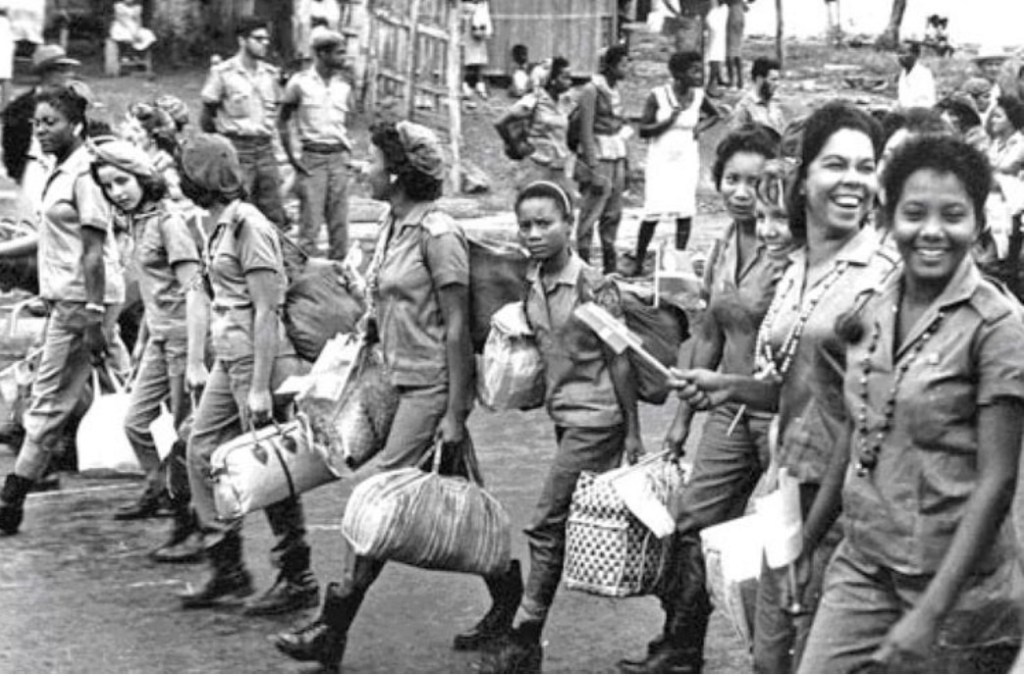
A Personal Prayer of Cuba

by ©️Leslye Joy Allen

The following below that is written in italics is partially a meditation on Cuba. It is a response I wrote to a piece about Cuba’s current crisis exacerbated by American neglect and cruelty that was written by Arturo Dominguez. A link to his exceptional article is at the very end of this essay. What’s in italics is a rumination I wrote to Arturo:

“I still remember reading that when Afro-Cuban musical artists came to perform in the United States that they had to perform in the U.S. for free. When asked why they were willing to perform for nothing, the answer was always the same: “We want to see where Dizzy Gillespie was born.”

Thanks for this report Arturo Dominguez because every time there is a sanction, a deprivation, I am reminded that no one suffers in Cuba but the people themselves. I still remember the heinous and wretched Helms-Burton Act which banned ships who docked in Cuba’s ports from docking in the United States for several months.

I remember my professors having to fly out of Atlanta to Canada and then taking a flight from some airport in Canada to Havana to do whatever research they were performing on their visits.

The United States has done nothing but made an example of Cuba as a message to other countries in Latin America and the Caribbean that says “This is how far we’ll go; this is how bad we’ll treat you, if you don’t fall in line.”

I might just turn this comment into a meditation.”

A few moments after reading Arturo’s essay I stumbled on one of my favorite thinkers Vijay Prashad who also was offering his thoughts on the viciousness of the United States government against the Cuban people because it is the people that suffer—No one else. (A link to Vijay’s essay is at the end.)
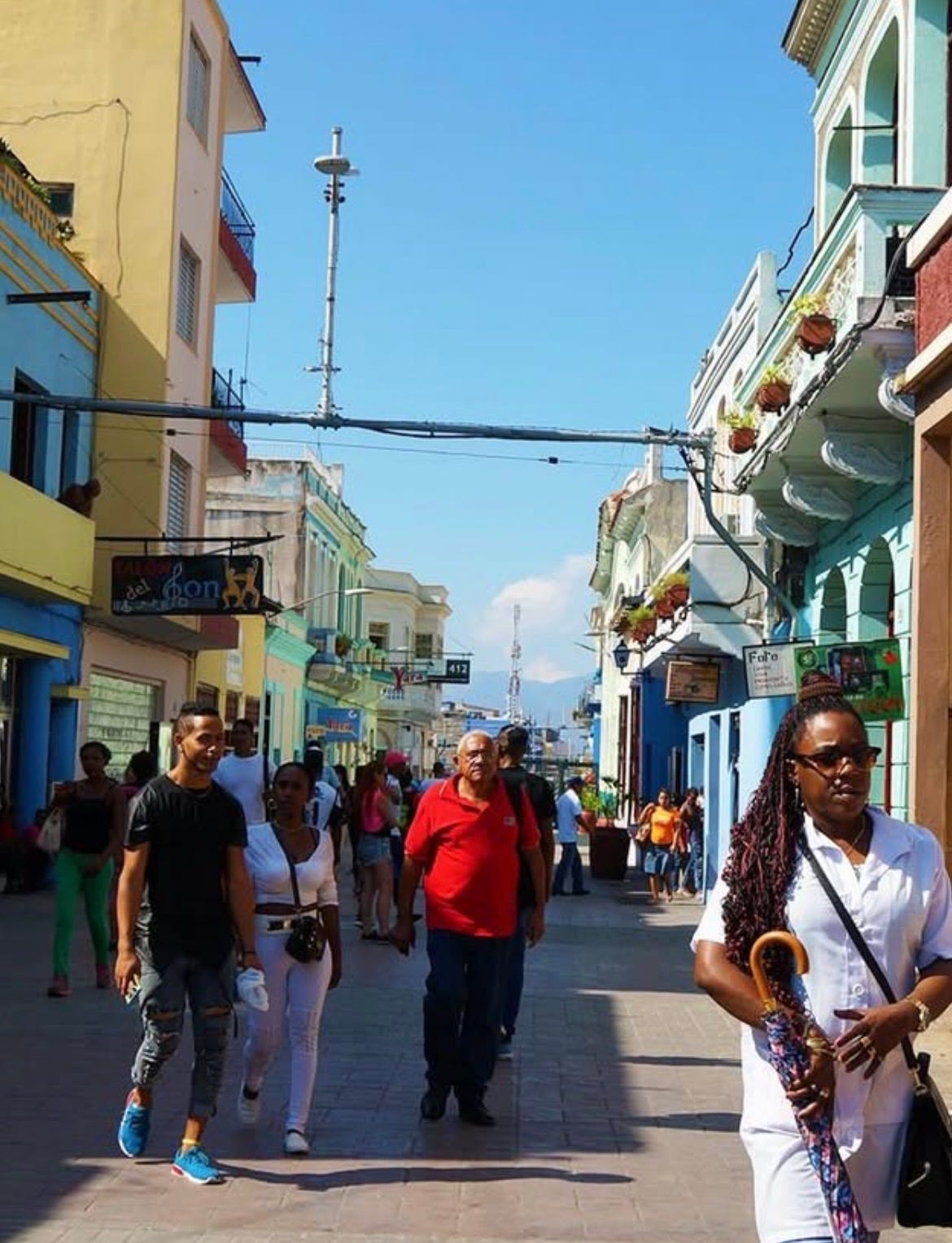
I don’t have the strength to comment on Prashad’s piece right now except that it is brilliant and accurate. I will leave it to you dear reader to examine both his and Arturo’s essays at your leisure. I have only one thing to say.

One line of my paternal family was sold as slaves from Santiago de Cuba to the mainland United States during the period of slavery in this Western hemisphere. My paternal great grandmother was born a slave named Mollie Laws. Her previous family surname was Layende. 

Like most people during the 1700s and 1800s, when one moved (or was sold) some place else the last name was changed to adapt to the new culture one was inhabiting. In the United States, it was typically expected that you Anglicize your name to something that English speakers could pronounce. So “Layende” became “Laws.”

Anyhow I used to relay my personal history to my History students in an effort to make sure that they understood that Chattel slavery took place throughout the Western world. Importantly, what we now call the United States received less than 6 percent of all the Africans transported to this hemisphere during the trans-Atlantic slave trade. The majority of Africans (around 95 percent) landed in what is now named Latin America and the Caribbean. 

I don’t have any deep analysis here about how difficult Afro-American genealogy can be. I don’t have any deep commentary about the many cultures and cultural differences that exist between all of the descendants of Africa who occupy this hemisphere except I have always known that for better or worse I belong to them.

Right after I read Arturo’s essay and then Vijay’s essay, I recalled a favorite memory from the classroom. A student whose name escapes me now came to class after Spring Break with a faded photograph he took while out on the Atlantic ocean. 

He learned that I had roots in Cuba and so did he. He pulled out this faded photo taken on the water. Far off in the distance I saw something that looked like a line stretched across the water. 

“What is that long line in the water that I see in the distance?,” I asked. 

That line across the water in the distance is Cuba, Ms. Allen. I hope you get there someday.” 

©️Leslye Joy Allen

I am an Independent Historian, Oral Historian and Dramaturge. Please consider supporting my work and research with a few bucks for Coffee and Eggs via my CashApp or become a paid subscriber to me on Substack to help me sustain my research.

All blogs written by Leslye Joy Allen are protected by U. S. Copyright Law and licensed under a Creative Commons Attribution-NonCommercial-NoDerivs 3.0 Unported License. Any partial or total reference to any blog authored by Leslye Joy Allen, or any total or partial excerpt of any blog authored by Leslye Joy Allen must contain a direct reference to this hyperlink: https://leslyejoyallen.com with Leslye Joy Allen clearly stated as the author.  Postings or blogs placed here by other writers should clearly reference those writers.  All Rights Reserved.

Hyperlinks to additional articles are below photos.
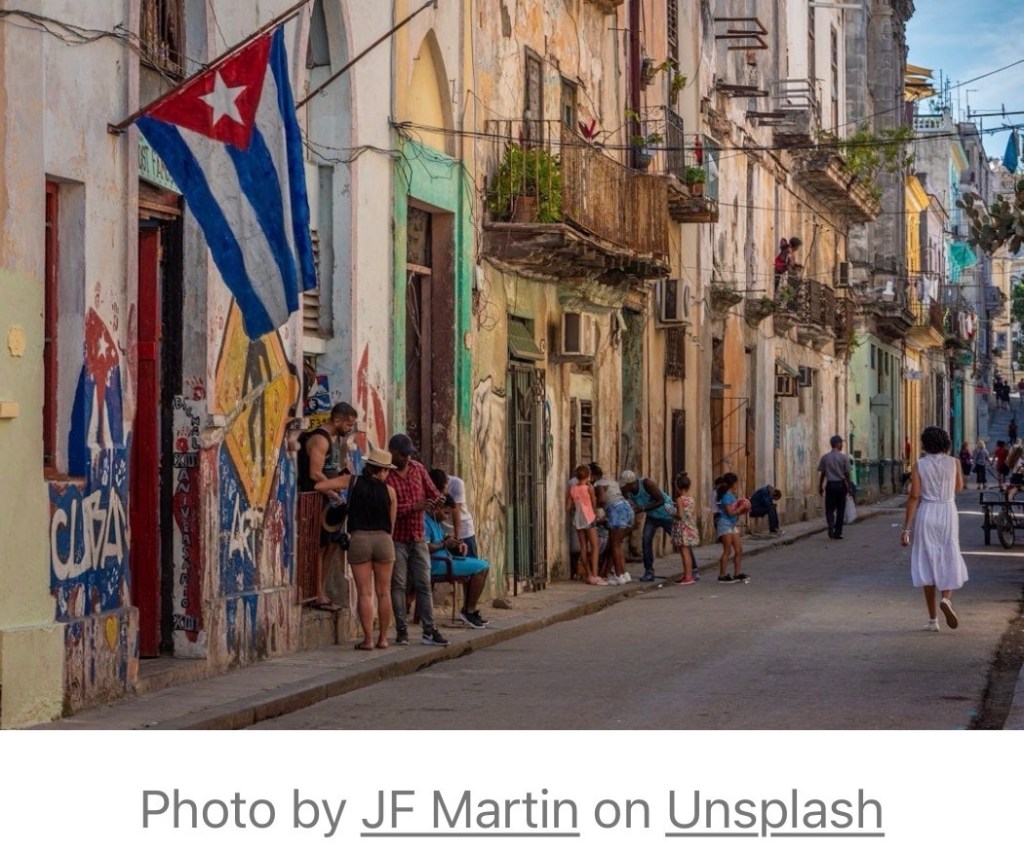
(from Analysis: Cuba on the Brink)

(from Why is the United States Afraid of Cuba?)

Sacred Places

By Leslye Joy Allen

Tropical Blue Ocean Water (public domain) Tropical Blue Ocean Water (public domain)

I was among the people supremely delighted at the decision of the Army Corps of Engineers to halt any further construction of the Dakota Pipeline on Sunday, December 4, 2016 until further study of its environmental impact on the water supply in that area. I am not going to preach about the fact that eventually that pipeline would have negatively affected the water supply. You can read my previous blog “A Time of Drought,” to get an idea.

For environmentalists, like myself, this was an incredible victory because for the first time, in a long time, the environment was front and center.  The many Native American nations, along with military servicemen and women, environmentalists, and peoples from around the globe were involved in this protest. Often protests of this nature compete with news stories about who-wore-what to some awards show or the endless stories that moan and groan about things some people obviously have no intention of doing anything about, else they would not spend so much time moaning and groaning about them in the first place…

This time something as precious as water was at the forefront; and access to clean water is something that everyone can understand, even when they are less informed about other matters related to the environment…

Now, what I am about to say here might stun a few folks…

What a lot of people often fail to recognize is that in almost every instance where the earth or air or water has been disturbed or polluted, whether it is to extract oil or some other resource or to build some structure, there has almost always been some violation of the sacred, some disturbing of something that meant something precious to someone or to some group of people…

For my Atlanta readers, you might know, or might need reminding, that underneath a portion of Interstate 75-South lies an old cemetery filled with the graves of Black folks, our brothers and sisters. Where Interstate 75-South meets Cleveland Avenue lies a marble marker that designates the graves of roughly 1,700 former slaves who were buried in Gilbert Cemetery which had been created as a burial place for slaves in the early 1840s.

Because the area around this grave came to be known as “Plunkett Town” which was still occupied by poor, rural Blacks as late as the 1960s, the graveyard there did not illicit much concern until work crews from the Georgia Department of Transportation discovered the damaged burial grounds while building Interstate 75.  By the time of the discovery, the graves had already been disturbed, and the plans and money to build that highway were already in place.  No one considered the graveyards to be more important than building a much-needed highway.  What has been left there is a marker letting people who bother to look know that they are driving over a graveyard…

This is exactly what we all have been doing to Native Americans’ sacred sites ever since Europeans arrived on these shores, eventually and forcibly transporting millions of Africans here to perform heavy labor as slaves…

This is not a moral judgement, but rather food for thought.  Too often we—and that includes environmentalists as well, and I am just as guilty—do not think of water as anything other than something that will come out of a faucet when we turn that faucet on.  And as long as we can pay our Water Bill, we seem assured that when we turn that knob, water will come out…

But go pour a glass of water.  Look at it!  Say a prayer to it!  Respect it!

The Standing Rock protest that has temporarily halted the Dakota Pipeline might not have converted any new environmentalists; I know too well from experience that a lot of people do not want to be inconvenienced in any way, even if that small inconvenience will help clean up the environment, or at least slow down the toxicity of the natural environment…

Yet, we all need to stay on guard because this battle may come up again as a new president moves into the White House in January 2017.  However, for the time being, recognize what this protest and this small victory has made us all pay attention to: respect for the dead and for the most precious resource on earth: water.  If you are not humbled by this, I do not know what else to tell you except that you will eventually be humbled by this, whether you want to be or not.

Àṣé.”

Copyright © 2016 by Leslye Joy Allen.  All Rights Reserved.

This blog was written by Leslye Joy Allen and is protected by U. S. Copyright Law and licensed under a Creative Commons Attribution-NonCommercial-NoDerivs 3.0 Unported License. Any partial or total reference to this or any blog authored by Leslye Joy Allen, or any total or partial excerpt of this or any blog by Leslye Joy Allen must contain a direct reference to this hyperlink: https://leslyejoyallen.com with Leslye Joy Allen clearly stated as the author. All Rights Reserved.


A Thought for the Old and New Year

By Leslye Joy Allen                                                                                                     Historian, Educator, Theatre and Jazz Advocate & Consultant, Ph.D. Candidate

Copyright © 2014 by Leslye Joy Allen.  All Rights Reserved.

One of the first things that came to mind shortly after Christmas and before the New Year was how much my Mom and Dad would have been thrilled and proud that a great film like 12 Years a Slave received great reviews and had enjoyed large viewing audiences.  I would have heard a litany of what they remembered about their childhoods and how far we Black folks have come.  And if they were still alive they would surely have warned me not to hyperventilate about whether or not Santa Claus was Black or some of the foolish and racist slips of the tongue that seem to dominate our current news cycles on most days.

Strangely, my mind goes back to that one scene in the film 12 Years a Slave where after a slave has literally dropped dead from exhaustion while laboring in the fields, you see the slaves standing around a gravesite that they have prepared for their fallen comrade.  Suddenly, a slave woman begins singing the old Negro spiritual “Roll, Jordan, Roll.”  Then all of the slaves joined in and they sang with a joyous abandon.  At this moment in the movie theater, I completely lost my composure.  I wept so loudly that I had to place my hand over my mouth to muffle the sound.  For days, I wondered why that scene—and not one of the other more horrible scenes where someone was beaten or tortured—caused me to cry like a two-year-old toddler.  Then it came to me.  This was a gift.  The gift was not simply my ancestors’ songs, but their decision that they had a right to sing their songs.

Their gift feels as familiar as a book of black poetry or history or the first time my parents took me to a Jazz concert or to see the Alvin Ailey American Dance Theatre or to a Broadway play.  Afterwards, they would always inform me that I must never forget that it was my people that had created the artistry and creative offerings that I had just witnessed.  The lesson was simple—I could perpetually cry about what white folks had done to my people or I could fight for and celebrate what my people had done for themselves and for me, all of which is a balancing act.  Yes, one must call out and fight against racism.  Yet, one cannot allow it too much space in one’s head, lest one descend into perpetual victimhood.  “How much of your energy are you gonna’ give THEM,” Daddy would ask without blinking?

I wept in the dark of that movie theatre, as the slaves on the screen sang with abandon and rejoicing.  It is difficult to count one’s blessings when the world and everyone in it seems to be your enemy.  Yet, that is exactly what the slaves did.  My slave ancestors did not sing with joy because they were happy and content, but rather because the singing allowed them to reclaim their humanity, to reclaim their right to joy.  No degree of inhumane treatment routinely meted out to them by white slave masters could make them surrender their own humanity, or their very human need for joyousness and a belief in the future even when that future was uncertain.  Their gift is still a gift that keeps on giving if you are willing to claim it.  This is what I hope to remember now, and in the New Year.

Peace.

Leslye Joy Allen is a perpetual and proud supporter of the good work of Clean Green Nation.  Visit the website to learn more about it: Gregory at Clean Green Nation!

Copyright © 2014 by Leslye Joy Allen.  All Rights Reserved.
Creative Commons License This Blog was written by Leslye Joy Allen and is protected by U. S. Copyright Law and licensed under a Creative Commons Attribution-NonCommercial-NoDerivs 3.0 Unported License.  Any partial or total reference to this blog, or any total or partial excerpt of this blog must contain a direct reference to this hyperlink: http://leslyejoyallen.com with Leslye Joy Allen clearly and visibly stated as the author.