A True Wino Story in Honor of August Wilson

by ©️Leslye Joy Allen

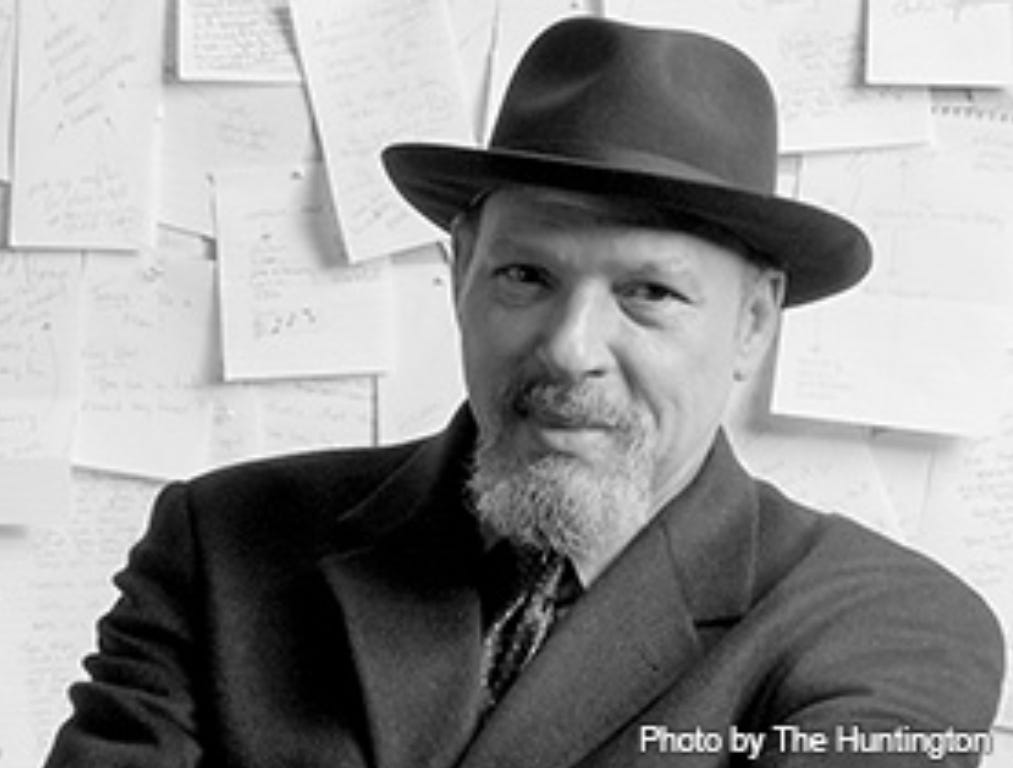
One of the things I loved most about the late playwright August Wilson’s work was that his plays on Black life insisted on the importance of every member of any given Black community. Wilson crafted his plays based on his experiences hanging out and observing the denizens of the Hill District of Pittsburgh. 

Cab drivers, beauticians, bums, architects, lawyers, bricklayers, members of the Nation of Islam, you name it—they all contributed to the love and humor that made up Black neighborhoods throughout the 1960s and 1970s of my childhood. 
I remember when I first read an excerpt of comedian-turned-activist Dick Gregory’s autobiography “N*gger.”  I was in 8th grade. I was impressed by Gregory’s statement that he was fond of winos because they never hurt anyone but themselves. I grew up watching and imbibing all of my people in all of their varieties at the corner of Hunter and Ashby Streets (now MLK Drive and Joseph E. Lowry Blvd.)

Back in the 1960s there was “Bo” the wino. Bo’s brain was so pickled that he never could understand that I was a girl. Never mind that I had two long braids with ribbons. When Dad ventured to that intersection of Hunter and Ashby Streets without me and he ran into Bo, the question was always the same, “How is that boy?” Daddy responded with the same information he always did. “Bo, I have a daughter.” 

My Aunt Ella who was called “Sister” or called by me “Aunt Sis,” owned and ran Top Cats Fish Market. I always loved the painting on the side of the building of the cartoon character “Top Cat.” Winos like Bo and Mumbles would stop by and sweep the floor or wash the windows for a few coins so that they could purchase their wine for the day. “Sister let me have a dime,” Bo would request.  “Bo, I don’t have a dime,” she would respond. “You a damn lie,” he would answer.

I never will forget the time Bo came by her fish market and there was a Black physician there who needed his car washed. Bo gladly offered to wash his car. Now, back in the day it was not uncommon to pour some expensive whiskey into a beautiful flask as a gift for a friend. It was also not uncommon to pay a wino anywhere from 10 cents to a few bucks to wash a car or sweep a floor.

Bo went out to wash the doctor’s car. When the doctor paid Bo a few dollars for washing his car, the doctor looked in the backseat of his car and discovered that his flask of whiskey was empty.

“Bo, what happened to my whiskey?!”

Bo replied, “I don’t know what happened. I don’t drink whiskey. I drink wine!”

The doctor looked at him and said, “Are you sure?”

Bo responded, lying through his teeth, “I DON’T DRINK WHISKEY. I DRINK WINE!”

The physician responded, “Well that’s good to know that you didn’t drink it because I was carrying that flask to the lab because I think there is some poison in it!!”

Bo mumbled to my Aunt Sis, “I ain’t dead yet.”

©️Leslye Joy Allen

I am an Independent Historian, Oral Historian and Dramaturge. Please consider supporting my work with a few bucks for Coffee and Eggs via my CashApp.

You can also subscribe to my writings on Substack and stay in the loop with the best new research, history, journalism, prose, poetry, and etcetera.

All blogs written by Leslye Joy Allen are protected by U. S. Copyright Law and licensed under a Creative Commons Attribution-NonCommercial-NoDerivs 3.0 Unported License. Any partial or total reference to any blog authored by Leslye Joy Allen, or any total or partial excerpt of any blog authored by Leslye Joy Allen must contain a direct reference to this hyperlink: https://leslyejoyallen.com with Leslye Joy Allen clearly stated as the author.  Postings or blogs placed here by other writers should clearly reference those writers.  All Rights Reserved.

Buzz About Boycotts

by ©️ Leslye Joy Allen

I’m delighted that folks have decided not to shop on February 28th as an act of solidarity to demonstrate to businesses what our buying power means. It’s a great beginning, but to have real impact boycotts need to last for months or years.

Let me share the following. The image on the left is the now boarded up storefront of what was Buzz Coffee and Winehouse in my hometown Atlanta. The image on the right is from a few years ago. It’s myself and my brother-from-another-mother, actor, writer, poet, cultural curator, and James Baldwin expert Charles Reese. We took this photo sitting at Buzz’s tables on the sidewalk drinking hot coffee out of big mugs.

Buzz was a neighborhood hangout where you might get to view a photo or art exhibit. You might stop by for a breakfast sandwich or piece of pastry. You ran into people you knew and you met people you didn’t know but soon found out the trip was worth it in order to meet them.

Buzz closed a few years ago because the money-grubbing c*nt that owned this little strip of property where Buzz was located raised the rent until the owner of Buzz could no longer afford to stay open. The owner has vowed to reopen somewhere, but so far I haven’t seen any signs of a new location.

Now, there’s a Starbucks about a mile down the street further southwest. I have nothing against Starbucks or people who enjoy Starbucks coffee. Yet, I won’t be going there to get a cup of coffee, just like I won’t be buying Folgers that supports Project 2025.

I only suggest this. When you’re keeping your money in your pocket, take a good hard look at the small businesses in your neighborhood and ask yourself how you can help them? Ask yourself what products can you do without permanently? Then just do it.

©️ Leslye Joy Allen

All blogs written by Leslye Joy Allen are protected by U. S. Copyright Law and licensed under a Creative Commons Attribution-NonCommercial-NoDerivs 3.0 Unported License. Any partial or total reference to any blog authored by Leslye Joy Allen, or any total or partial excerpt of any blog authored by Leslye Joy Allen must contain a direct reference to this hyperlink: https://leslyejoyallen.com with Leslye Joy Allen clearly stated as the author.  Postings or blogs placed here by other writers should clearly reference those writers.  All Rights Reserved.

Bookstores & Librarians & Libraries Rock: Writers & Readers, Pay Attention

by ©️Leslye Joy Allen

I love bookstores & libraries and librarians, but particularly librarians. They are natural allies to historians or anyone doing research. When you tell them what you are looking for they can point you right to it. I love archivists for the same reason, but archivists deal with materials that are older, and rarer than the books you see on the shelves in bookstores and in public, school and university libraries. This blog, however, is more than a shout out to the folks who handle books, it is for anyone who has written or who plans to write a book.

Here’s a tip. Do your best to get your book reviewed by a librarian. Here’s why.

While most scholarly articles and many scholarly books are peer-reviewed (which means exactly what it says: reviewed by one’s academic peers), the majority of novels, memoirs, some scholarly works, and popular authors’ books are not reviewed by their peers or by librarians.

There is one advantage that a librarian-reviewed book has: If the librarians responsible for purchasing books like the book and recommend the book, they will buy it and other libraries will buy it too! Library sales are not like other purchases. Let me explain.

Let’s say you are a new author. You and/or your publisher (if you have one) get a local bookstore to buy 100 copies of your book for 50 percent off of the retail price of each book. The typical timeline to return copies of books that did not sell is around 6 months. Let’s say, all but 20 copies of your book sold, so the bookstore returns the unsold books for a refund. Now, you certainly sold more books to the local bookstore than to a public or university library, BUT libraries’ sales are final and books are never returned unless there’s some physical damage to the actual book.

So, here’s a suggestion. Scholars and Librarians rarely review books that do not appear to have some scholarly value. Yet, you can always send your manuscript—whether it is a Science Fiction Thriller, a Memoir, or a Book of Poetry—along with a Cover Letter, requesting a review of your book.

Library Journals like Kirkus Reviews (librarians read this one all the time), Library Journal, Booklist, School Library Journal are some of the journals that librarians read and publish in. If you get a positive review in any one of these, you are bound to sell a few books and potentially earn another audience of readers because Bookstores and Libraries and Librarians Rock!

“If libraries order your book, you’re golden, because those sales are non-returnable—an author and publisher’s dream.” — from Returns 101: What New Authors Need to Know

©️Leslye Joy Allen

Vice-President Kamala Harris at Bold Fork Books, on Small Business Saturday, November 30, 2024. Bold Fork Books is a Culinary Bookstore located in Washington, D. C.

#MakeAmericaLiterateAgain

Blogs written by Leslye Joy Allen are protected by U. S. Copyright Law and licensed under a Creative Commons Attribution-NonCommercial-NoDerivs 3.0 Unported License. Any partial or total reference to any blog authored by Leslye Joy Allen, or any total or partial excerpt of any blog authored by Leslye Joy Allen must contain a reference to this hyperlink: https:/leslyejoyallen.com with Leslye Joy Allen clearly stated as the author. Postings or blogs placed here by other writers should clearly reference those writers.  All Rights Reserved.
I Celebrate Them

cropped-10311780_10202865095520823_7587379838691260173_n_wm.jpg

By Leslye Joy Allen

Copyright © 2017 by Leslye Joy Allen.

People that know me well (and some people that barely know me), know that I am a huge advocate for theatre.  I’m a Historian, an Oral Historian, and at the insistence of actors Margo Moorer and Keith Arthur Bolden, I’m also a dramaturge.

I saw the play “FENCES” that was written by the magnificent and late August Wilson decades ago.  Wilson was that rare African-American playwright that thought the particular culture of ordinary Black Americans was as worthy of a story to tell as any other story on earth…And he was right…He was damned right…

One of the joys of being an Oral Historian is interviewing people, many of who will never see their names in a book or newspaper.  Yet, what they can tell us about any particular period of history is invaluable precisely because they will tell you the truth about how any public policy affected them or did not affect them…which is why I always celebrate them…because they are so very important…and sometimes their stories are told in books and in films when most people least expect to see their stories told…So…

I am celebrating the fact that Denzel Washington and Viola Davis have brought the stage play FENCES to life as a film…and I am not going to lecture about how many people need to go to see this film or to see plays…

And I am positively, deliriously delighted to see Viola Davis win the Golden Globe for FENCES; and I am delighted that the story of the African American FEMALE scientists who helped put a man on the moon is now brilliantly portrayed in the film HIDDEN FIGURES. Now, what I am about to say in the next few lines matters to me and to a lot of women…

It is rare when Black women (or women in general) receive any visible, tangible praise or remuneration for having brains. Women get called on for advice and to listen to people’s problems; and women get praised for their physical beauty and politeness and tact, but we rarely get praised for being smart…and we rarely get paid for being smart…

Now, while I can almost hear all the good men I personally know getting ready to challenge me on this, I want to remind everybody of one important thing…

President Barack Obama actually awarded the Medal of Freedom to Dr. Katherine Coleman Johnson who is the subject of the film HIDDEN FIGURES, a film that traces her and many other Black women’s mathematical and scientific contributions to the race to place a man on the moon.  The Medal of Freedom is the highest award a president can give to a civilian American.  Actor Taraji P. Henson portrayed Dr. Katherine Coleman Johnson in the film HIDDEN FIGURES.  However, Dr. Johnson won this Medal in December of 2015 and it was featured in a news story in the New York Times and in a few other mainstream newspapers…But

this Medal of Freedom award did not particularly resonate and become viral news with too many folks…Hell, even I stumbled on it much later in mid-2016 and I wondered why I did not know much about this Black woman, myself…But I’m not angry with anybody…and I’m not calling any names because…

When I was a little Black girl growing up in Atlanta, a beautiful and regal and talented and supremely intelligent and gloriously Black woman named Diahann Carroll received death threats from White folks via mail because she was a Black woman who portrayed a widowed nurse named “Julia Baker” on a TV show called “JULIA” back in the late 1960s…and there are folks that think I ought to forget about that…but I will not forget it…and

I, and so many other young Black girls from that era, dreamed of a day when young Black women like Ava DuVernay and Taraji P. Henson and Viola Davis and so many other glorious sisters would occupy places in the sun and tell great stories…and I know I am leaving out about three dozen names of some other wonderful sisters, but I am going to ask you all to fill in those extra blanks and go support these young women whenever you can…and I can say that after witnessing my sisters with talent and brains be too often ignored that…

I lived long enough to see enough of them shine without asking anybody’s permission…and I am going to live even longer to see them shine even more and tell some more great stories, and ask no one’s permission to do so…Àṣé.

Copyright © 2017 by Leslye Joy Allen.  All Rights Reserved.

This blog was written by Leslye Joy Allen and is protected by U. S. Copyright Law and licensed under a Creative Commons Attribution-NonCommercial-NoDerivs 3.0 Unported License. Any partial or total reference to this or any blog authored by Leslye Joy Allen, or any total or partial excerpt of this or any blog by Leslye Joy Allen must contain a direct reference to this hyperlink: https://leslyejoyallen.com with Leslye Joy Allen clearly stated as the author. All Rights Reserved.


Black and Latino Playwrights Conference…

A quick conversation between Artistic Director and Actor Eugene Lee and Leslye Joy Allen

Copyright © 2016 by Leslye Joy Allen. All Rights Reserved.

Joy:  Hello Eugene.  Tell me how and why you became an actor; and when did you start writing plays?

Eugene:  I chose Theatre and Political Science as my majors in college and began my studies of the craft of acting there.  I started writing plays while in New York in between gigs.

Joy:  Who trained you as an actor, writer, etc.?  Who among your teachers remains the most important and influential to you and why?

Eugene:  My professors at Southwest Texas State.  I’ve studied in professional classes and workshops on both coasts as well.  I’ve learned from a broad spectrum of theatre artists along the way and could never lessen anyone’s impact or contribution to my smorgasbord education.

Joy:  How did you become involved in the Black and Latino Playwrights Conference?  Why is this conference important?

Eugene:  I was approached by my alma mater about taking the helm of this phenomenon.  It’s sort of patterned after the Eugene O’Neill playwrights conference at Yale University for development of new plays.  This conference fills a void in that it provides some much needed resources to help writers find their play and their voice as a writer.  The mission statement for the conference is “To study the Craft.  To nurture the Writer.  To celebrate the work.” Simple.  There is a need to nourish our storytellers, else we end up with more revisionist history.  WE have to tell our stories and to do so we much develop the skill set.  The collaborative aspect of finding a play involves bringing together resources like director, actor, dramaturgical support, stage management, etc.

Joy:  What has changed about writing plays from when you began writing until today?

Eugene:  I don’t know.  All the basic fundamental elements of playwriting are pretty much the same, though some writers find creative ways to tweak and turn those to fit the needs of their storytelling and style etc.

Joy:  What advice would you give to young playwrights of color?

Eugene:  Learn the craft.  Dare to care.  Write.  That’s the secret to writing.  Write.  Writers write.  Great stories in your head don’t have export until they’re on a page. Writers read probably more than they write. These are short responses.  I’m in the throes of tech rehearsals here in Boston.  I can probably elaborate more after my plate empties a bit. Thank you Joy, for all you do.

Joy:  Thanks Eu-genius!  Looking forward to a more extensive conversation, once you have a bit more time, my friend.


Copyright © 2016 by Leslye Joy Allen. All Rights Reserved.

This interview was conducted by Leslye Joy Allen and is protected by U. S. Copyright Law and licensed under a Creative Commons Attribution-NonCommercial-NoDerivs 3.0 Unported License.   Any partial or total reference to this or any interview or blog authored by Leslye Joy Allen, or any total or partial excerpt of this or any interview or blog by Leslye Joy Allen must contain a direct reference to this hyperlink: http://leslyejoyallen.com with Leslye Joy Allen clearly stated as the author.  Postings, interviews, or blogs placed here by other writers should clearly reference those writers. All Rights Reserved.