Chronic Ignorance

by ©️Leslye Joy Allen
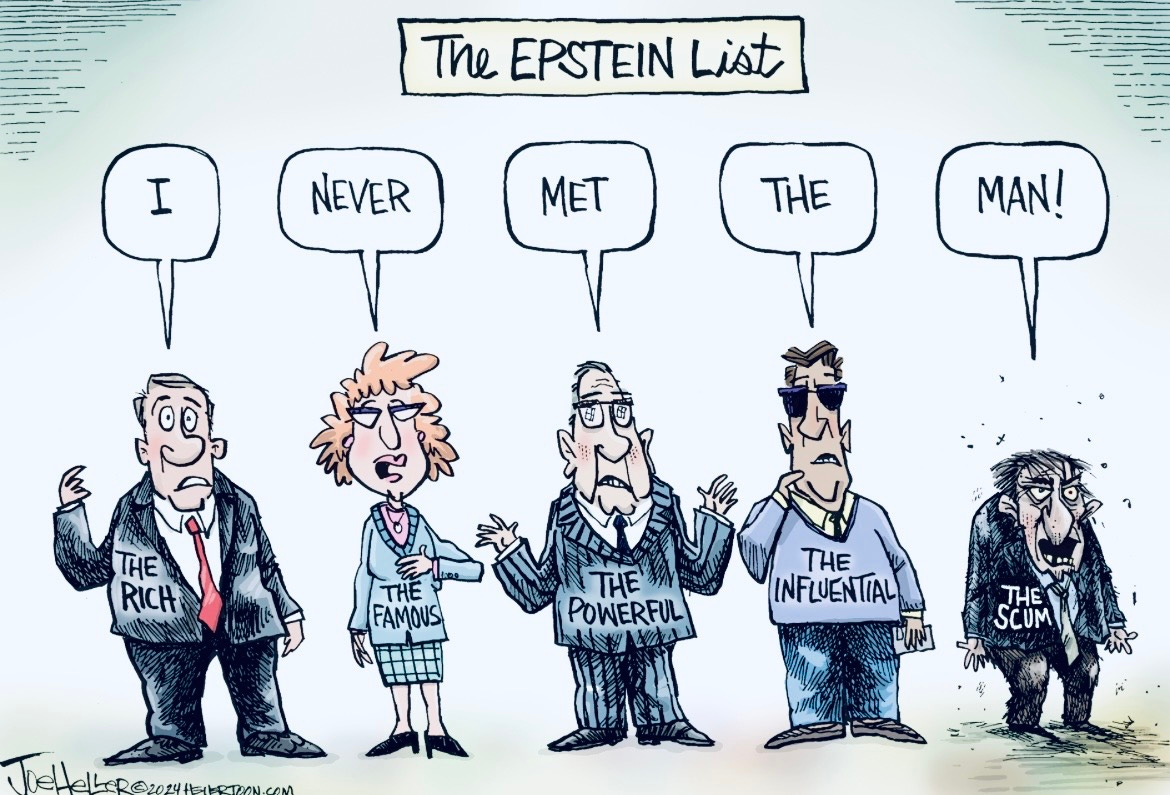
Felon 47 was recently stunned to hear a Liberian official speak good English when the fact is the state that became the nation of Liberia was established by former African-American slaves with the assistance of the American Colonization Society in 1822. 

In 1847, the state of Liberia established itself as a Republic and was recognized as such by several European nations.

Yet, Trumpolini was amazed to hear a Liberian speak grammatically correct English when English has been Liberia’s official language ever since its inception as a settlement, then later as a country over 200 years ago.

It gets worse. Back when George W. Bush was president he admitted to Condoleeza Rice that he didn’t know that there were Black people in Brazil. Brazil has more people of African descent than any other nation outside of the continent of Africa itself.

During the trans-Atlantic slave trade 4.9 million Africans were transported to Brazil. Yet, George W. Bush—never the sharpest crayon in the box—was surprised that there were Black folks in Brazil. 

This kind of ignorance ranks right up there with the people who don’t know and never knew that the majority of Africans were not transported to the American Colonies/United States, but were transported primarily to Latin America and the Caribbean. 

And the worst ignorance of all is the notion that Africans learned specific skills once they left the continent. Africans in the Senegambia region of Africa had been planting rice for over 2,000 years before Yeshu’a ben Yosef (aka “Jesus”) was born. For the record, there is no letter “J” in the Hebrew and Aramaic languages that he spoke.

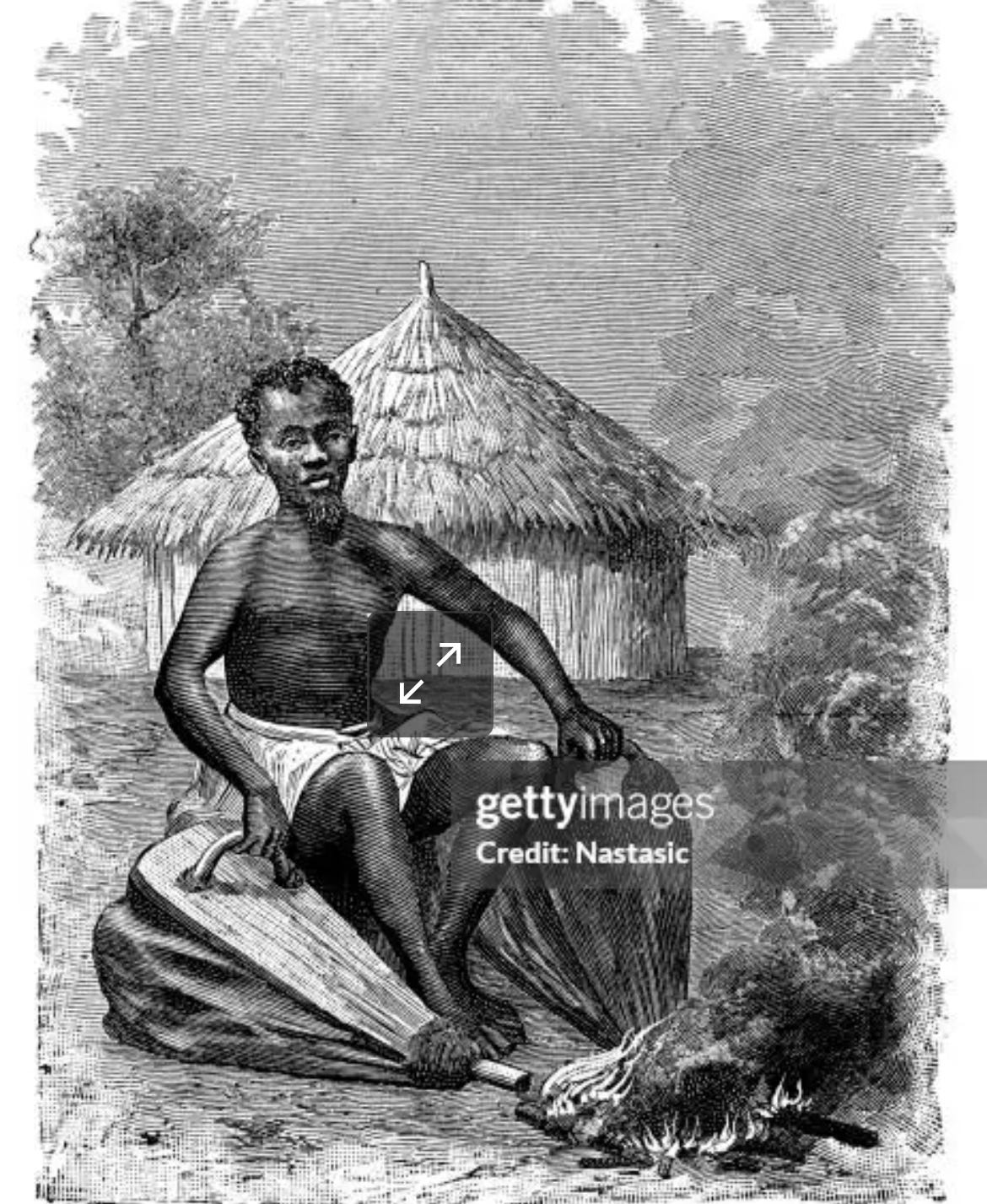
(Graphic of an African Blacksmith)

The Nok culture, the Kingdom of Kush and the Shona people of the continent of Africa were specialists in Iron smeltingthousands of years before there was any trans-Atlantic slave trade. Many African ethnic groups arrived here as Blacksmiths. Africans were transported to what Europeans called the “New World” or the “Americas” to do two things—perform the work Europeans did not want to do and the work Europeans could not do.

Now, just look at what is sitting in the White House: a man meaner than a rattlesnake and dumber than a box of rocks who doesn’t know how to do anything but mistreat people.

©️Leslye Joy Allen

I am an Independent Historian, Oral Historian and Dramaturge. Please consider supporting my work with a few bucks for Coffee and Eggs via my CashApp.

You can also subscribe to my writings on Substack and stay in the loop with the best new research, history, journalism, prose, poetry, and etcetera.

All blogs written by Leslye Joy Allen are protected by U. S. Copyright Law and licensed under a Creative Commons Attribution-NonCommercial-NoDerivs 3.0 Unported License. Any partial or total reference to any blog authored by Leslye Joy Allen, or any total or partial excerpt of any blog authored by Leslye Joy Allen must contain a direct reference to this hyperlink: https://leslyejoyallen.com with Leslye Joy Allen clearly stated as the author.  Postings or blogs placed here by other writers should clearly reference those writers.  All Rights Reserved.
Dads and Public Spaces

by ©️Leslye Joy Allen

When I was a little girl I went everywhere my Daddy. I often had solo trips to a store, a library, and the park with my school teacher Mama too, but I was a Daddy’s Girl. I remember when it was just the two of us and I had to use the restroom, Daddy and I would often run into a woman who was a friend of our family and she would take me into the women’s restroom so I could do my business.

On many occasions when I was small and I had to use the restroom, Daddy would place his hands over my eyes, walk into the men’s restroom and yell, “Father coming in with his daughter; zip it up or hide it!” He would find a stall with a door, line the toilet seat with paper and then sit me on it. 

I bring this up because public spaces like restrooms were not designed for fathers and daughters nor fathers with infants. A mother could take her little ones of any gender and age into the women’s restroom. Dads could certainly take sons into the men’s restroom. My Daddy, like so many other Black fathers I knew defied the limitations of public spaces. He never once said that he couldn’t take me with him somewhere because he wasn’t sure if I could use the restroom. 

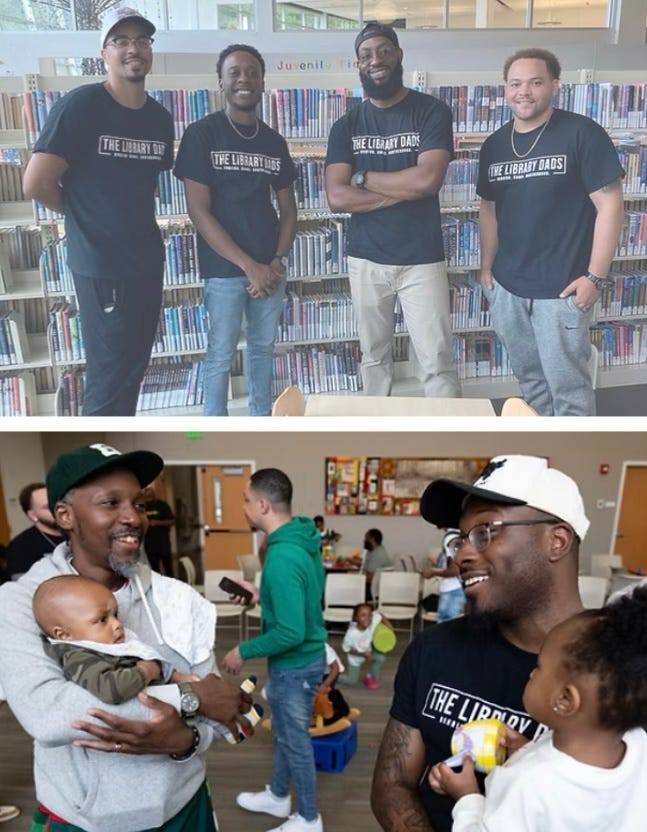
If you are one of my subscribers on Substack, you have probably seen a few videos on my feed of The Library Dads, which is a non-profit organization that has scheduled weekly library visits for Dads with their children at the public library. It was founded in Atlanta by a young father named Khari Arnold who took his 4-month-old daughter to the library to familiarize her with books. That was her first of many visits.

Arnold noticed a strikingly advanced development of his daughter’s cognitive skills over the course of a year because he read to her all the time. This program is designed to help fathers become involved in the educational and literacy development of their children; and to deepen their bonds with their children. That’s Khari Arnold on the far left in the top photo.

What struck me about The Library Dads was not just their active engagement with their offspring every Saturday at the public library, but also their pushback against the limits of certain public spaces that are less accommodating for fathers and their small children.

My Mama and Daddy took me to the library regularly as did many of the Black parents I knew growing up. I know they both would be impressed with The Library Dads for a variety of reasons. Yet, I must add one more reason that helps us all… 

In addition to these young men taking responsibility for their children’s education and development, they also shift the narrative that tends to center on mothers as almost solely responsible for their children’s development. They are a most welcome pushback on the confining and inaccurate gender definitions that the Western world imposes on us all. Go Library Dads!

©️Leslye Joy Allen

I am an Independent Historian, Oral Historian and Dramaturge. Please consider supporting my work with a few bucks for Coffee and Eggs via my CashApp.

You can also subscribe to my writings on Substack and stay in the loop with the best new research, history, journalism, prose, poetry, and etcetera.

All blogs written by Leslye Joy Allen are protected by U. S. Copyright Law and licensed under a Creative Commons Attribution-NonCommercial-NoDerivs 3.0 Unported License. Any partial or total reference to any blog authored by Leslye Joy Allen, or any total or partial excerpt of any blog authored by Leslye Joy Allen must contain a direct reference to this hyperlink: https://leslyejoyallen.com with Leslye Joy Allen clearly stated as the author.  Postings or blogs placed here by other writers should clearly reference those writers.  All Rights Reserved.
DEI: Flipping the Script With ARRAY

by ©️Leslye Joy Allen

I remember when master filmmaker Ava DuVernay started AFFRM which stood for African-American Film Festival Releasing Movement. Later she modified it and renamed it ARRAY which has gone on to release one masterpiece independent film after another by Black women, Women of Color, white Women filmmakers and other Black filmmakers.

Goddess knows that Ava’s television series Queen Sugar remains my all time favorite television series of all time, right up there with POSE. Her film ORIGIN completely shattered every boundary of how a film infused with activism and history could be made and change minds. If you haven’t seen that film, I really don’t consider you a member of the Left if you haven’t done so. If you watch it, you will not be the same. You will never think the same; and every assumption you ever had, you will rethink it.

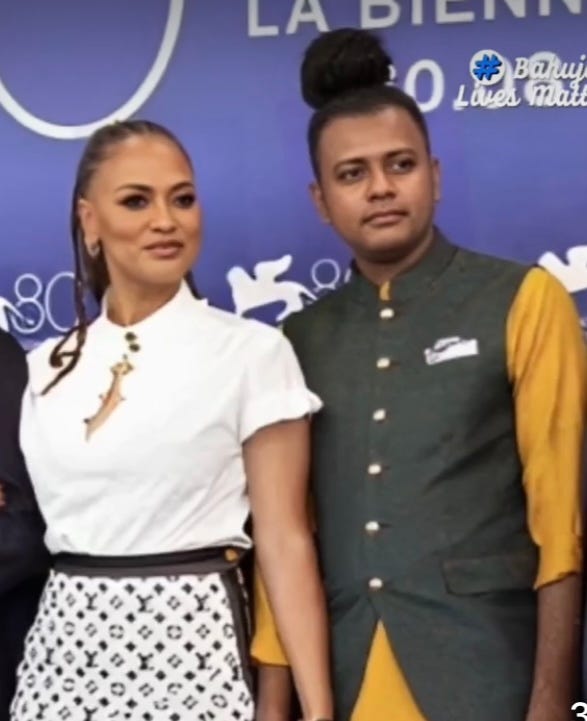
(Ava DuVernay here with Dr. Suraj Yengde who portrayed himself in the film ORIGIN. The film received a 9-minute standing ovation at the Vienna Film Festival in 2023.)

There was one thing Ava did when Queen Sugar hit the airwaves. She decided that only women, and particularly Black and other women of color, would direct the show. She gave over 40 women directors their television directorial debuts because, she reasoned, if she did not do it they would never be given the chance. 

The irony is that DuVernay’s production of Queen Sugar earned recognition as one of the most ethnically and racially diverse crews in television history. Ain’t that something?

So, here’s something to think about. Ava DuVernay has some real badass men around her. Yet, ARRAY was and still is staffed primarily with women; and this company has run like a top since its inception.

So, here’s something else to ponder. Since Felon 47 is hellbent on controlling women, eliminating the histories of Black people and other POC from the record, and granting companies the right to not give a good Got-damned whether any of us will be hired for any job, isn’t it just as plausible for us to not hire or phuck with any of them?

I mean, if I am a Black woman running a successful business and I don’t want to be bothered with sexism or racism, then I can simply not hire any man of any color and not hire any white person of any gender. And what I will be doing will be perfectly legal under the administration of this president. Marinate on that for a moment.

©️Leslye Joy Allen

I am an Independent Historian, Oral Historian and Dramaturge. Please consider supporting my work with a few bucks for Coffee and Eggs via my CashApp.

All blogs written by Leslye Joy Allen are protected by U. S. Copyright Law and licensed under a Creative Commons Attribution-NonCommercial-NoDerivs 3.0 Unported License. Any partial or total reference to any blog authored by Leslye Joy Allen, or any total or partial excerpt of any blog authored by Leslye Joy Allen must contain a direct reference to this hyperlink: https://leslyejoyallen.com with Leslye Joy Allen clearly stated as the author.  Postings or blogs placed here by other writers should clearly reference those writers.  All Rights Reserved.
The Intersectionality of Suffragist & Abolitionist Lucy Stone

by ©️Leslye Joy Allen

“Intersectionality is a metaphor for understanding the ways that multiple forms of inequality or disadvantage sometimes compound themselves and create obstacles that often are not understood among conventional ways of thinking.” — Kimberlé Crenshaw

Recently, I responded to a question about the factors that stymied women’s quest for suffrage during the mid-to-late 19th century. I brought up the pragmatism and egalitarianism of suffragist and abolitionist Lucy Stone whose legacy remains largely overlooked. And therein lies the problem.

Susan B. Anthony and Elizabeth Cady Stanton have rightfully earned their place in Women’s history. They battled for the vote in ways almost unimaginable. Yet, they both held racist and classist views. Now before you start yelling about how both of them worked in the abolitionist movement, spare me. You can be anti-slavery and still not think the slave is your social or political equal. The inability to shake off one’s sense of entitlement has extreme consequences for everyone.

When lawmakers decided to include Black men as voters in the 15th Amendment without including the franchise for white women, both Stanton and Anthony were rightfully livid, but livid to the point where they then fought against the passage of the 15th Amendment altogether. It passed, however, in 1869 and was ratified in 1870.

Stanton wrote that it was unconscionable and dangerous to give the vote to Black, Chinese or Irish men because they were inferior. Anyone that did not fit a strict Anglo-Saxon and native-born status was considered inferior. Additionally, neither Stanton nor Anthony had thought about Black women voting at all. 

Stone broke with Anthony and Stanton over their racism. Orator, writer, abolitionist and former slave Frederick Douglass cut his ties to Anthony and Stanton as well. The tragedy was that Douglass had attended the Women’s Conference at Seneca Falls in 1848 and had been a huge and early advocate for women’s rights. Moreover, it was Lucy Stone’s brilliant oratory that had inspired Susan B. Anthony to join the suffrage movement.

Stone read the political winds correctly. She formed the American Woman Suffrage Association which concentrated on gaining women the right to vote on a state-by-state basis. She knew that Congress was not going to grant the franchise to everyone. 

Stone believed that the enfranchisement of Black men was progress. Although she was disappointed that the 15th Amendment did not include women’s suffrage, she did not believe that denying the franchise to others would help women in the long run.

Black men, rather than white women, were granted the right to vote first for a variety of reasons. As a historian, I know that the Republican Party in the 1860s was the party of Lincoln (not the sh*t show it is now) that freed Black American slaves. They controlled both the House and the Senate in 1867 to 1869. They knew that recently freed and enfranchised Black men would inevitably vote Republican and increase the party’s political dominance.

Granting the franchise to white women would have mixed political results as many white women still believed in the lost cause of the South in spite of its loss during the Civil War. They would have voted Democrat which was then the favored party of the former slave-holding South.

Some of Stone’s ideas were tied to her upbringing. She came from a hardworking farming family in Massachusetts. Both of her parents were abolitionists. While quite young, she, along with Lucretia Mott and Abby Kelly Foster helped William Lloyd Garrison establish the American Anti-slavery Society which was founded in 1833.

All of her brothers attended college. Yet, Stone had to postpone her education. She taught school for several years and was able to scrape up enough money to attend Oberlin College, the first college in the nation to accept Black people and women. When she graduated in 1847, she became the first woman in Massachusetts to earn a college degree.

Stone had planned to remain a single woman because she feared losing her independence to a husband. She finally yielded to Henry Browne Blackwell’s persistence. Blackwell was also an abolitionist and women’s rights advocate. Blackwell would learn years later that Stone finally decided to marry him after he met and aided a young slave with her owners while traveling on a train.

When Blackwell asked the girl would she rather be free, she answered “yes.” Blackwell and an accomplice helped get the young girl off of the train and away from her owners. It was that act of liberation that won Stone over.

When Blackwell and Stone married their written protest against laws that denied women equal rights was read before the ceremony. The promise “to obey” was removed from their wedding vows. Stone retained her maiden name and refused to pay taxes as long as she was denied her equal rights.

While neither Stone nor her contemporaries Anthony and Stanton lived long enough to see women receive the right to vote, their different approaches and beliefs underscored a perpetual problem in the quest for women’s equality and the right to vote.

Stone never stopped fighting for the rights of Black people as she continued her fight to get the vote for women. She believed that both causes were interrelated. The same cannot be said of Anthony and Stanton. 

The fight for the right to vote for women was often fractured by racism well into the 20th century. Stone’s stances on racial equality and equal rights for women cost her some popularity among some white women. Anthony and Stanton emerged as the face of white women’s suffrage. Yet, Anthony and Stanton also emerged as suspect to Black men and women. 

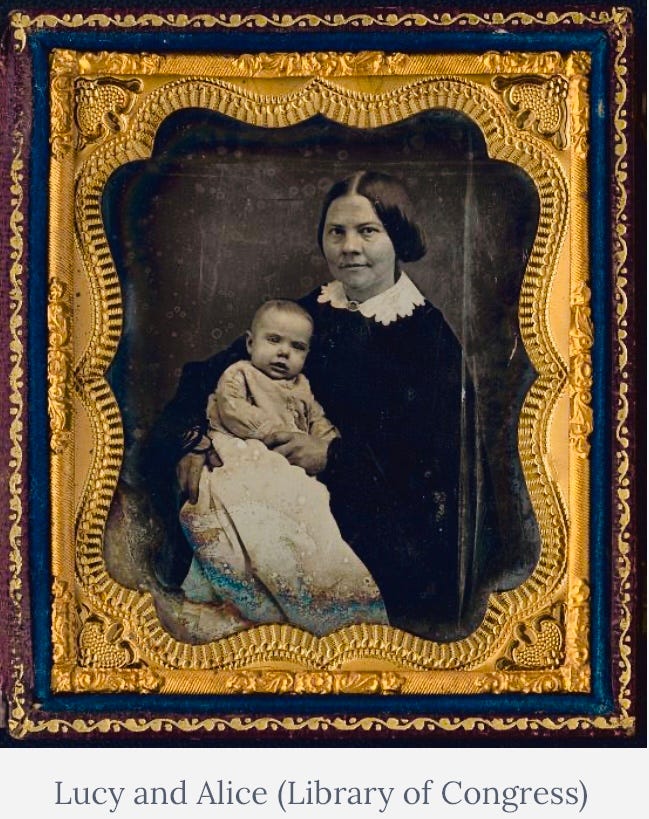
After Lucy Stone died of stomach cancer in 1893, her only child, Alice Stone Blackwell reached out to the daughter of Elizabeth Cady Stanton and began the process of repairing the divided women’s suffrage movement. They created a new coalition. Alice Stone Blackwell followed her mother’s mantra to make the world better.

Lucy Stone deserves more historical attention than she receives. Her example should be emulated precisely because she understood the “intersectionality” of gender and race (and the political implications that go along with it) long before Black scholar and lawyer Kimberlé Crenshaw coined the term and defined the theory in the late 20th century. Stone recognized that, no matter how different gender and race may appear, women’s equality was inextricably linked to racial equality. You must fight for both, not just one or the other.

©️Leslye Joy Allen

I am an Independent Historian, Oral Historian and Dramaturge. Please consider supporting my work with a few bucks for Coffee and Eggs via my CashApp.

All blogs written by Leslye Joy Allen are protected by U. S. Copyright Law and licensed under a Creative Commons Attribution-NonCommercial-NoDerivs 3.0 Unported License. Any partial or total reference to any blog authored by Leslye Joy Allen, or any total or partial excerpt of any blog authored by Leslye Joy Allen must contain a direct reference to this hyperlink: https://leslyejoyallen.com with Leslye Joy Allen clearly stated as the author.  Postings or blogs placed here by other writers should clearly reference those writers.  All Rights Reserved.
A Quick Word to Millennial (and Younger) Protesters and Activists

by ©️Leslye Joy Allen

The photo below is of a creation titled “The World is Watching.”  The artist is not known. It is located at the Library of Congress which has a long history of collecting Protest Art and Protest Photography. Visually stunning and a reminder that protests and activism change with the technology of the times.

I was born during the last years of what was called the Baby Boom. As a Baby Boomer, I did not grow up from Childhood to Early adulthood with a Personal Computer, the Internet, and definitely not Social Media or a cellphone with a camera.

I learned of protest marches and various forms of activism via word-of-mouth, letters, signs on school and church bulletin boards, and via Black-owned newspapers. Sometimes these protests were featured on the 6 O’Clock News.

Fast forward to the late 20th and early 21st centuries and you have young adults who grew up with everything we Baby Boomers grew up without. Millennials get messages out there in cyberspace in a matter of seconds. They can rally thousands (even millions) of people with brief blurbs and blogs in a matter of a couple of days and occasionally a couple of minutes. There are, however, a few drawbacks.

In addition to creating mediums that make it seem as if a few “likes” on social media has resolved the problem, it also exposes certain tactics that should not be seen by everyone. Social Media exposes protest tactics to our enemies as much as it exposes those tactics to our friends. So let me share the following history. Ignore it; modify it; and/or adapt this in any way you see fit.

The Black American Civil Rights Movement typically had a 3-pronged approach. 

  1. Back in the day, you had a set of individuals who could not physically participate in protest marches because they were the folks who were designated to bail you out of jail if you were arrested. The folks who were part of the Black community who had a degree of affluence and wealth were often in this position. Although many of them were out there in the streets protesting. 
  2. Another group was the observers. These were individuals who lined routes of marches who watched and recorded what they saw. Sometimes they would stand on sidewalks and pretend to be window shoppers or they would sit near the windows inside places of business so that they could see what was going on outside in order to report what they saw. There were no cellphones with cameras in them back then. Their hardest role was to not intervene when they saw any physical violence. They had to record what they saw.
  3. Finally, there were the Black protesters themselves who were trained in non-violent resistance in order to highlight the sheer brutality of their oppressors. They were trained to endure and not fight back.

Now, I am not at all advocating for any of you to quietly endure any form of brutality and violence as you fight against this onslaught of abuse from the administration of Felon 47. What I am suggesting is that you create a 3 or even 4 or 5-pronged approach to how you protest and advocate for the causes you believe in.

Right now, activism is highly tied to how much press and social media presence one can generate. That’s not a bad strategy, but the limitations of that approach is that almost anyone can see it. You win most against enemies when enemies do not know EXACTLY what is coming at them all the time. And that is not my original idea. It actually comes from Sun Tzu, a Chinese General and Strategist born around 544 B.C.E. Some ideas stand the test of time. Study those ideas. Onward!

©️Leslye Joy Allen

I am an Independent Historian, Oral Historian and Dramaturge. Please consider supporting my work with a few bucks for Coffee and Eggs via my CashApp.

All blogs written by Leslye Joy Allen are protected by U. S. Copyright Law and licensed under a Creative Commons Attribution-NonCommercial-NoDerivs 3.0 Unported License. Any partial or total reference to any blog authored by Leslye Joy Allen, or any total or partial excerpt of any blog authored by Leslye Joy Allen must contain a direct reference to this hyperlink: https://leslyejoyallen.com with Leslye Joy Allen clearly stated as the author.  Postings or blogs placed here by other writers should clearly reference those writers.  All Rights Reserved.