A True Wino Story in Honor of August Wilson

by ©️Leslye Joy Allen

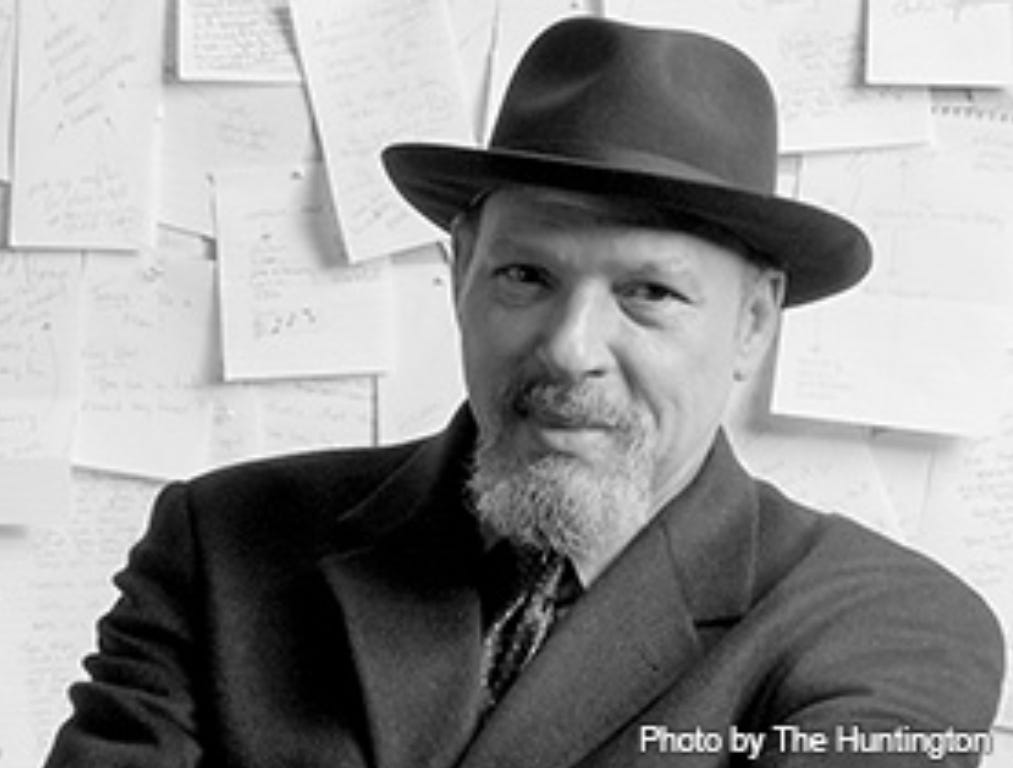
One of the things I loved most about the late playwright August Wilson’s work was that his plays on Black life insisted on the importance of every member of any given Black community. Wilson crafted his plays based on his experiences hanging out and observing the denizens of the Hill District of Pittsburgh. 

Cab drivers, beauticians, bums, architects, lawyers, bricklayers, members of the Nation of Islam, you name it—they all contributed to the love and humor that made up Black neighborhoods throughout the 1960s and 1970s of my childhood. 
I remember when I first read an excerpt of comedian-turned-activist Dick Gregory’s autobiography “N*gger.”  I was in 8th grade. I was impressed by Gregory’s statement that he was fond of winos because they never hurt anyone but themselves. I grew up watching and imbibing all of my people in all of their varieties at the corner of Hunter and Ashby Streets (now MLK Drive and Joseph E. Lowry Blvd.)

Back in the 1960s there was “Bo” the wino. Bo’s brain was so pickled that he never could understand that I was a girl. Never mind that I had two long braids with ribbons. When Dad ventured to that intersection of Hunter and Ashby Streets without me and he ran into Bo, the question was always the same, “How is that boy?” Daddy responded with the same information he always did. “Bo, I have a daughter.” 

My Aunt Ella who was called “Sister” or called by me “Aunt Sis,” owned and ran Top Cats Fish Market. I always loved the painting on the side of the building of the cartoon character “Top Cat.” Winos like Bo and Mumbles would stop by and sweep the floor or wash the windows for a few coins so that they could purchase their wine for the day. “Sister let me have a dime,” Bo would request.  “Bo, I don’t have a dime,” she would respond. “You a damn lie,” he would answer.

I never will forget the time Bo came by her fish market and there was a Black physician there who needed his car washed. Bo gladly offered to wash his car. Now, back in the day it was not uncommon to pour some expensive whiskey into a beautiful flask as a gift for a friend. It was also not uncommon to pay a wino anywhere from 10 cents to a few bucks to wash a car or sweep a floor.

Bo went out to wash the doctor’s car. When the doctor paid Bo a few dollars for washing his car, the doctor looked in the backseat of his car and discovered that his flask of whiskey was empty.

“Bo, what happened to my whiskey?!”

Bo replied, “I don’t know what happened. I don’t drink whiskey. I drink wine!”

The doctor looked at him and said, “Are you sure?”

Bo responded, lying through his teeth, “I DON’T DRINK WHISKEY. I DRINK WINE!”

The physician responded, “Well that’s good to know that you didn’t drink it because I was carrying that flask to the lab because I think there is some poison in it!!”

Bo mumbled to my Aunt Sis, “I ain’t dead yet.”

©️Leslye Joy Allen

I am an Independent Historian, Oral Historian and Dramaturge. Please consider supporting my work with a few bucks for Coffee and Eggs via my CashApp.

You can also subscribe to my writings on Substack and stay in the loop with the best new research, history, journalism, prose, poetry, and etcetera.

All blogs written by Leslye Joy Allen are protected by U. S. Copyright Law and licensed under a Creative Commons Attribution-NonCommercial-NoDerivs 3.0 Unported License. Any partial or total reference to any blog authored by Leslye Joy Allen, or any total or partial excerpt of any blog authored by Leslye Joy Allen must contain a direct reference to this hyperlink: https://leslyejoyallen.com with Leslye Joy Allen clearly stated as the author.  Postings or blogs placed here by other writers should clearly reference those writers.  All Rights Reserved.
Chronic Ignorance

by ©️Leslye Joy Allen

Felon 47 was recently stunned to hear a Liberian official speak good English when the fact is the state that became the nation of Liberia was established by former African-American slaves with the assistance of the American Colonization Society in 1822. 

In 1847, the state of Liberia established itself as a Republic and was recognized as such by several European nations.

Yet, Trumpolini was amazed to hear a Liberian speak grammatically correct English when English has been Liberia’s official language ever since its inception as a settlement, then later as a country over 200 years ago.

It gets worse. Back when George W. Bush was president he admitted to Condoleeza Rice that he didn’t know that there were Black people in Brazil. Brazil has more people of African descent than any other nation outside of the continent of Africa itself.

During the trans-Atlantic slave trade 4.9 million Africans were transported to Brazil. Yet, George W. Bush—never the sharpest crayon in the box—was surprised that there were Black folks in Brazil. 

This kind of ignorance ranks right up there with the people who don’t know and never knew that the majority of Africans were not transported to the American Colonies/United States, but were transported primarily to Latin America and the Caribbean. 

And the worst ignorance of all is the notion that Africans learned specific skills once they left the continent. Africans in the Senegambia region of Africa had been planting rice for over 2,000 years before Yeshu’a ben Yosef (aka “Jesus”) was born. For the record, there is no letter “J” in the Hebrew and Aramaic languages that he spoke.

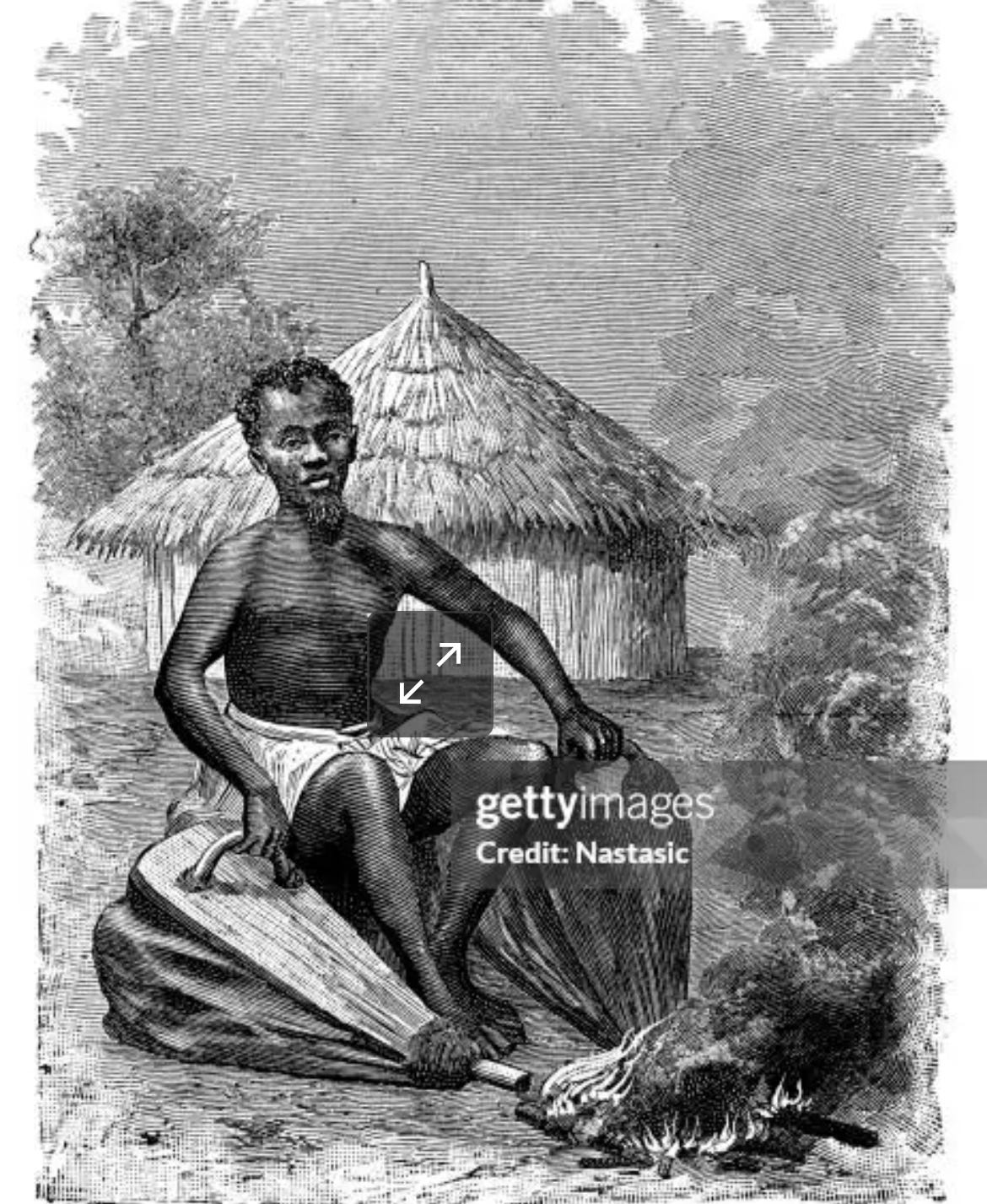
(Graphic of an African Blacksmith)

The Nok culture, the Kingdom of Kush and the Shona people of the continent of Africa were specialists in Iron smeltingthousands of years before there was any trans-Atlantic slave trade. Many African ethnic groups arrived here as Blacksmiths. Africans were transported to what Europeans called the “New World” or the “Americas” to do two things—perform the work Europeans did not want to do and the work Europeans could not do.

Now, just look at what is sitting in the White House: a man meaner than a rattlesnake and dumber than a box of rocks who doesn’t know how to do anything but mistreat people.

©️Leslye Joy Allen

I am an Independent Historian, Oral Historian and Dramaturge. Please consider supporting my work with a few bucks for Coffee and Eggs via my CashApp.

You can also subscribe to my writings on Substack and stay in the loop with the best new research, history, journalism, prose, poetry, and etcetera.

All blogs written by Leslye Joy Allen are protected by U. S. Copyright Law and licensed under a Creative Commons Attribution-NonCommercial-NoDerivs 3.0 Unported License. Any partial or total reference to any blog authored by Leslye Joy Allen, or any total or partial excerpt of any blog authored by Leslye Joy Allen must contain a direct reference to this hyperlink: https://leslyejoyallen.com with Leslye Joy Allen clearly stated as the author.  Postings or blogs placed here by other writers should clearly reference those writers.  All Rights Reserved.

For Henry G. Sanders

by ©️Leslye Joy Allen

I know a lot of great actors and Henry G. Sanders is one of them. I have watched him perform for over 50 years from “The Killer of Sheep” to “Dr. Quinn Medicine Woman” to “Selma” and beyond. His most recent and notable role has been the character “Prosper Denton” on Ava DuVernay’s “QUEEN SUGAR.”

Yesterday I was relieved when Henry, who lives in Altadena, California, texted me to let me know that he and his family were okay, but “We lost the house.”

It hurt to think of this gracious man, at age 82, having to rebuild. And contrary to popular belief most actors are not rich. The stories about how Henry and his wife have taken in so many struggling young people are too numerous to mention in a single blog. His generosity with his time to me will never be forgotten.

One of his relatives has started a Go Fund Me campaign to help Henry and his family. Here’s the hyperlink: https://www.gofundme.com/f/help-my-family-rebuild-after-eaton-canyon-fire.

I hope you will give generously.

©️Leslye Joy Allen

Ava DuVernay asks for help for Henry G. Sanders and his family.

All blogs written by Leslye Joy Allen are protected by U. S. Copyright Law and licensed under a Creative Commons Attribution-NonCommercial-NoDerivs 3.0 Unported License. Any partial or total reference to any blog authored by Leslye Joy Allen, or any total or partial excerpt of any blog authored by Leslye Joy Allen must contain a direct reference to this hyperlink: https://leslyejoyallen.com with Leslye Joy Allen clearly stated as the author.  Postings or blogs placed here by other writers should clearly reference those writers.  All Rights Reserved.

How I Maintain Peace and Equilibrium

by Leslye Joy Allen

Copyright © 2017 by Leslye Joy Allen. All Rights Reserved.

Adire Eleko cloth (Yorùbá, circa 1960)

The following is simply a few of my methods for maintaining a sense of balance and a sense of peace.  This is not for everyone, nor should it be.  Each individual must find where their sense of balance is…The following I learned from my late mother and father, a few late cousins, several former professors, some friends, and from my students and the young people I mentor:

I believe in spending time with and listening to young people. Children, adolescents and young adults not only need guidance but I also need their guidance. Only they can tell me how they feel or how they arrived at a particular opinion. I ask them to teach me something and they always do; and just as I learn something new, they also feel empowered because an older person needed their assistance and advice and respected their capacity to give it.

I avoid negative people. That person (or people) who never has anything nice to say about anything or anyone can ruin an otherwise great day. I avoid them as much as possible or altogether.  (Included in this group are whiners, complainers, moochers, and those who are chronically lazy.)

I expect good treatment and greet almost everyone with a smile; and 99 times out of 100 I get that good treatment and friendliness back. Most people will smile back and speak, but even if they do not smile back, I do not lose anything by smiling and being friendly.  A kind word to a waiter or customer service representative has often gotten me a few perks.

I stop from time-to-time to take a snapshot of a flower, a sunset or a view that catches my attention. Occasionally, I have pulled over on the side of the road to do this. When I look for beauty I often find it.

I turn off the news. I have purged myself of the affliction of addiction to bad news, to horrifying news, to doom and gloom.  Yes, there are plenty of problems that need and should have my attention and my activism. Yet, a combination of activism and cynicism does not work for me; neither does feeding off of the gore and bad policies that have overtaken most news outlets.

I pick my battles. Not every battle is worth the tension and heat it generates. If the battle only allows me to blow off steam, if it resolves nothing nor makes me any income nor pushes me any closer to my goals, then I do not need to participate in that battle. When the battle helps me or someone else, then I might fight it.

I maintain an inquisitiveness about spirituality, the arts, about my ancestors, and I do the research.  For example, I love the idea that the Yorùbá people (along with their many Afro-American descendants in the Americas) believe that procreation is also a form of art.  A sense of wonder about creation and creativity (artistic and otherwise) without the rigid dogmas of organized religions is a better path for me to stay connected to my Creator, and all of creation.

I hope anyone who reads this finds (or has found) his or her own path to peace.

Àṣé!

Copyright © 2017 by Leslye Joy Allen.  All Rights Reserved.

This blog was written by Leslye Joy Allen and is protected by U. S. Copyright Law and licensed under a Creative Commons Attribution-NonCommercial-NoDerivs 3.0 Unported License. Any partial or total reference to this or any blog authored by Leslye Joy Allen, or any total or partial excerpt of this or any blog by Leslye Joy Allen must contain a direct reference to this hyperlink: https://leslyejoyallen.com with Leslye Joy Allen clearly stated as the author. All Rights Reserved.


Rituals, Theatre, and Transformative Goodness

Adinkra symbol of transformation.

Adinkra symbol of transformation.

By Leslye Joy Allen

Copyright © 2017 by Leslye Joy Allen

The first time I met theatre expert Paul Carter Harrison, he distinguished “theatre” from “drama” as theatre being the story that always contained some form of ritual and symbolism whereas drama simply told a story.  It was a bit more complicated than that, but I still remember that discussion.  It made me think of essays I read about how theatre began among us humans as rituals and performances designed to appease the gods or God.  Theatre was birthed in belief, in belief in something higher and more potent than ourselves, and that we all had a responsibility to this entity or entities higher than ourselves.  This thought has popped in my head off and on for the last two weeks…and today I think I discovered why this notion of ritual as theatre and theatre as ritual all designed to bring favor from the gods or God is so potent and timely…

Today I met a fiftyish White woman from Minnesota who told me that several cities in Minnesota solved their transportation problems by “building freeways through Black neighborhoods and business districts.”  Then she said, “they destroyed those neighborhoods.  There is a documentary about this but I can’t remember the name of it.” I then mentioned a former classmate who was writing his thesis about such a topic.  She was genuinely angry about it and talked about how unethical it all was.  “I’ll take Atlanta’s traffic to that kind of destruction any day of the week,” she said.

After she and I exchanged a few mutual comments about the late Minneapolis-born Prince, she asked me what was my discipline and I told her “History” and that my dissertation topic was about theatre.  Then she mentioned the Penumbra Theatre in Saint Paul, Minnesota and our conversation was off to the races.  I also had a conversation with a young man from South Africa that had moved here and lived on my side of town.  “I love it, here!” he said.  He and I had a conversation that ranged from the problems of the old South African government to recent politics to the status of women.  He also mentioned that he had a hard time with sexism since everyone came from the body of a woman.  I reiterated that I always meet talented, respectful young Black people every single day.  So what does this have to do with theatre and rituals?

Here is something I would like you to think about, and it ties in with theatre as ritual, and the rituals found in theatre and everyday life.  When one attends the theatre, one typically leaves with a different perspective.  No one leaves a theatre the same way that they came in.  Sitting in the dark of that theatre and watching performers suspend reality and portray characters other than themselves is in and of itself a ritual for performer and audience member alike.  One is literally transformed by witnessing what is done on stage.  One can get into the habit of going to the theatre, but a ritual is not a habit.  A habit is something you do almost by reflex, almost involuntarily, and it may or may not have any particular benefit to you.  You just do it because, well, you’re in the habit of doing it; and that might not be a bad thing, but a habit does not originate from the same source as a ritual.

A ritual is deliberately done; it follows a deliberate pattern in order to produce specific results.  Rituals create order, or at least make us feel that there is some order to the universe and the world we inhabit even in the midst of chaos, which is why human beings created rituals in the first place; and also why human beings can become so alarmed when certain rituals are not followed to the letter.

Today I discovered my own ritual.  Someone asked me how I end up having these stimulating conversations with people who are often complete strangers like the woman from Minnesota and the young man from South Africa.  Well, maybe it is because I don’t really meet strangers.  Yet, it is also due to my determination to not become a news junkie that feeds on bad news and controversy.  And to avoid bad news and controversy these days, one must deliberately turn off the television and internet and smart phone, and look for the truth, or at least find some balance between the real truth and the truth that is often manufactured for us.  So consider this…

The word “theatre” comes from a Greek word meaning “the seeing place.”  The seeing place was where you went to witness performers deliver the truth and wisdom.  Well, the truth is that, in spite of what you see in the media, there are so many nice, thoughtful people out there. Most of these people will never be on the news.  You have to look for them where you are; and you often find what you deliberately look for.  Make that a ritual.  Àṣé.

Copyright © 2017 by Leslye Joy Allen.  All Rights Reserved.


This blog was written by Leslye Joy Allen and is protected by U. S. Copyright Law and licensed under a Creative Commons Attribution-NonCommercial-NoDerivs 3.0 Unported License. Any partial or total reference to this or any blog authored by Leslye Joy Allen, or any total or partial excerpt of this or any blog by Leslye Joy Allen must contain a direct reference to this hyperlink: https://leslyejoyallen.com with Leslye Joy Allen clearly stated as the author. All Rights Reserved.