1. Never deliberately hurt anyone unless you are also prepared to hurt yourself in the process.
2. Never expect to change anyone but yourself. Try changing someone and see how many times you bash your head against a wall.
3. Never believe that there is a substitution for hard and dedicated work.
4. Never make anyone your sole reason for living. All attempts at centering your life on the wishes, whims, potential, and/or approval of an offspring, spouse, parent, friend, or anyone else will fail—always.
5. Never believe that your racial and/or ethnic identity does not matter. It is imperative to the psychological and social well-being of all humans that we belong to some group of people, no matter what changes occur in the socio-political landscape. Embrace your people and then maybe others will truly embrace you.
6. Never assume that if you are dishonest with yourself, that no one else knows it—everyone knows it; and worse, your inability to be honest with yourself also renders you incapable of accurately judging the character of others.
7. There is no substitute for spending quality time with your child (children); if you do not spend quality time with your child (children) on a regular basis, you will regret it and all of us will pay for your negligence.
8. Never believe that you can “have your cake and eat it to.” Ask anyone who has ever cheated on a mate (or been cheated on) or anyone deluded into believing that there are no real limitations (and real hurts) in so-called “open relationships.”
9. Believe you are important, but not essential. The work you were supposed to do might not get done anytime soon, but the sun will rise tomorrow and the world will keep turning even if you decide to not get out of bed.
10. You will not grow—spiritually, professionally, intellectually, financially, and otherwise—if you refuse to GROW UP.
“If you plant it in the earth, give it just enough sunlight, just enough water, and just enough nurturing, it will yield something.” – Syble Wilson Allen Williams (1921 -2013)
Now, when I think of teaching, I think about my Mama’s gardens and the first time I read the quote by author Gail Godwin who said that, “Good teaching is one-fourth preparation and three-fourths pure theatre.”
A while back, I did not exactly understand the connection between teaching and theatre or any connection to my Mama’s conceptualization of gardening. After all, was it not possible to be a gardener or agriculturalist without being an artist? Even further, when I thought of theatre or any performance art, I thought and continue to think of people trained to act, sing, dance (or all of the above), and who are on stage for the sole purpose of entertaining and enlightening a receptive audience.
The idea that a teacher and students were engaged in any kind of performance art escaped me until I stood in front of a classroom and gave a lecture without reading from any notes. My Mama, Syble Wilson Allen Williams, understood the performance element in teaching the first time she set foot in a classroom to teach.
Only after she died, however, did I begin to understand some other things about the “pure theatre” or the creativity of teaching that was not readily apparent to me when she was alive.
I remember how she would begin to count to ten in order to get her kindergarteners to take their seats. “One…Two…Three…” she would say slowly and deliberately. The objective was to have all of her students seated BEFORE she reached the number ten. They would scramble to their chairs, each one determined not to be the last child to make it to his or her seat.
Then there were Mama’s famous gold stars that she posted next to the names of those kids who ate all of their lunch—they were the fabulous members of the “Clean Plate Club.” Many children decided to sample a vegetable that they really did not want to eat in order to earn that gold star. Yet, she was at her most creative with her classroom gardens and her trips to the farm.
After Mama’s funeral service, our cousin James—who served as one of her pallbearers—told me that before her funeral began, four of her pallbearers were discussing their trips to farms and the gardens they helped to plant and tend when they were mere kindergarteners in her class.
Four of Mama’s pallbearers were her former kindergarten students. I remember when she made the switch from teaching third grade to kindergarten. I also recall her comments about children who grew up in the city. While she loved city life, she noted that children in cities rarely got much, if any, exposure to farm life.
Mama was born on a working farm in a tiny Georgia hamlet about forty minutes away by car from Atlanta. She lived there until she was about nine years old. Around her ninth birthday, her family migrated to Atlanta, as did so many Black rural families during and after the Great Depression. The beauty is that Mama’s appreciation for her agricultural roots ultimately became a wonderful lesson for her students.
Back in the 1970s when she started teaching kindergarten, she told me one day that too many of her students really did not know anything about where their food came from or the teamwork required to run a farm.
Eventually she located a nice man—whose name escapes me now—who had a small working farm in McDonough, Georgia complete with crops, chickens, pigs, and cows. I only remember him as a middle aged, brown-skinned man who seemed tickled to death that the work he did as a farmer had some intrinsic value to Mama and her young students.
Every year she taught kindergarten she included a trip to that farm in McDonough, Georgia so that “her children” could witness the interaction of farmer and crop and cows and chickens. The cows’ manure fertilized the soil that yielded the crops. It was all organic and interactive. Every year, she would have her five-year-olds plant a garden in their classroom.
She would gleefully remark how they would become mesmerized when they would see something that they had planted in the soil begin to grow. “Their eyes just light up at the first sight of the smallest bud,” she would say. For me, the strongest memory was her garden at our house and her household plants.
Each year she grew tomatoes, cabbage, collards, and squash on a strip of land in our backyard. I also recall one year she grew the hottest jalapeño peppers ever grown in the history of humankind—I remember it well; I ate one of those peppers and needed a couple of pitchers of ice water to cool the heat.
Then there was her endless sea of green plants that lined our porch and windowsills. She often noted that the tomatoes might not grow as big as you wished, but if you nurtured those seeds, you would still get tomatoes. This was her lesson to her kindergarteners and to me: you always get something back if you plant something and nurture it.
Mama’s gardens and farming adventures were lessons in sheer creativity. In these activities were a science lesson, another lesson that taught respect for animals’ contributions to our welfare and an appreciation for our natural environment, a lesson in how any one of us who had patience could nurture a plant from a seed or seedling to full bloom. Even further, when I think of how many people never want to revisit their childhoods, I am comforted.
Mama found beauty, resilience, and lifelong lessons in her own childhood, a childhood that she spent helping her parents and grandparents tend to plants and animals on the old family farm. Her students got a chance to share in a part of her upbringing.
On a nearly cloudless, sunny day in February of 2013, Mama had six pallbearers: one was a dear cousin, another was a family friend, and four were her former kindergarteners. These six dignified, hardworking, respectable, responsible, and well-educated Black men—all over the age of forty—donned white gloves, and hoisted Mama’s coffin and took her to her final place of rest in the soil—soil she respected.
Proudly, I watched them, as I am sure she did. And then I thought, “If you plant it in the earth, give it just enough sunlight, just enough water, and just enough nurturing, it will yield something.”
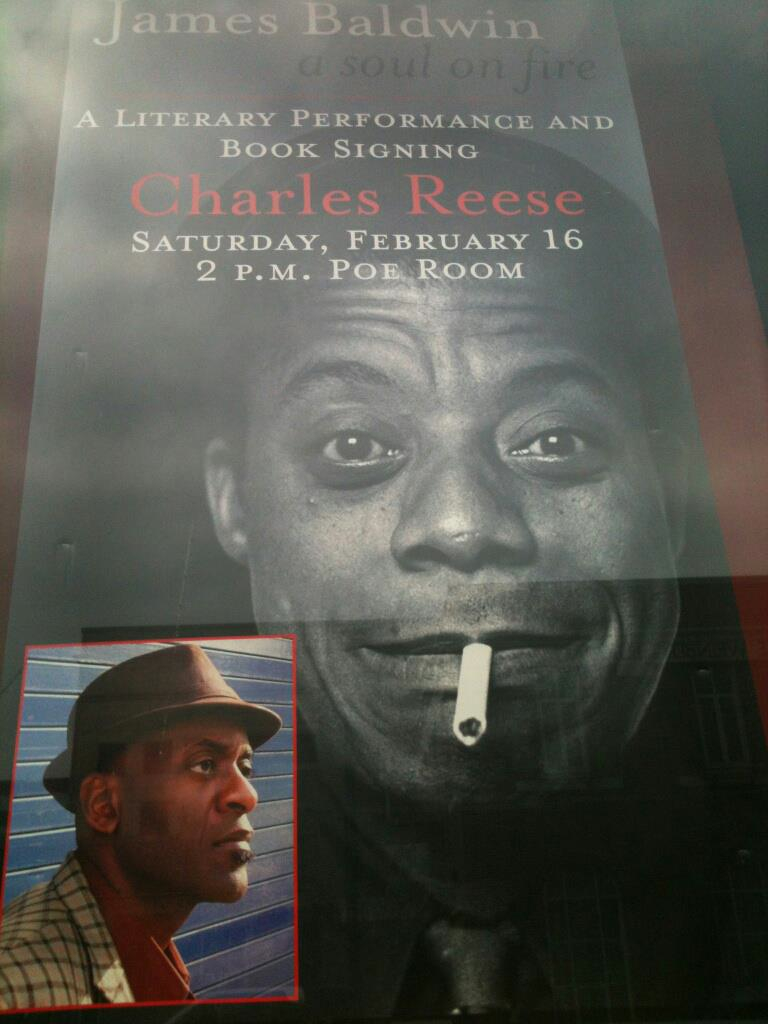
My friend Charles Reese wrote this poem in honor of my late mother Syble Allen Williams (March 1, 1921 – February 9, 2013). Thanks Charles for this rare gift; it makes her passing a little bit easier to bear. — Leslye Joy Allen
“Scales of Justice” by Jon Sullivan, photographer. Copyright: Public domain image, not copyrighted, no rights reserved, royalty free stock photo. Available from Public-Domain-Image.com
By Leslye Joy Allen
Historian, Educator, Theatre and Jazz Advocate & Consultant
For those of you who are unfamiliar with the late Ralph McGill (1898-1969), he was a White journalist and publisher of the old Atlanta Constitution (now the Atlanta Journal Constitution). He was also a well-known liberal who wrote about racial discrimination in society at large and within the criminal justice system. He did this long before the Civil Rights Movement reached its apogee in the 1960s. Martin Luther King, Jr. mentioned McGill in his eloquent “Letter From a Birmingham Jail.” King wrote that McGill and some other White journalists, “have written about our struggle in eloquent, prophetic and understanding terms.” Indeed, McGill was a man who watched, learned, and evolved into one of the most progressive voices in the American South and the nation when it came to race relations, civil rights, and the penal system. With that said, it is important for you to understand that I did not learn about Ralph McGill from a newspaper or a book, but rather from my schoolteacher mother.
Mama remembered that he emphasized that when a Black person killed another Black person they typically received very light jail or prison sentences—that is, if they received any jail time at all. It was just the opposite if they had killed a White person. He noted that because of this failure to properly punish Black people who killed other Black people, the judicial system literally encouraged those individuals to carry out their anger to its fullest possible extreme. He accused the judicial system of encouraging Black folks to kill each other. Mama said that there was an unsettling joke going around in Atlanta during the 1940s that said: if you were a Black man that killed another Black man you would be out of jail in time to go to your victim’s funeral. Indeed, in his column in the Atlanta Constitution on September 17, 1941, McGill wrote:
“In the first place our courts, to our shame and, although no one seems to see it, to our very great financial cost, never take Negro crime seriously. A Negro murderer, killing another Negro, rarely receives any severe punishment. Juries and prosecutors have, for years, viewed them lightly as just another Negro killing, and therefore, of not much importance.” (Ralph McGill – Crime, Standards, Methods 9-17-1941)
He remained one of a handful of White journalists that understood that any law or process or social practice that devalued Black life also made Black people the more likely targets of violence by killers of all races. He also noted that many members of Atlanta’s then all-White police department had poor training and were “quick-on-the-trigger.”
I thought about Ralph McGill after the tragic killing of Trayvon Martin in Sanford, Florida in February of 2012. When Jordan Davis of Atlanta, Georgia was killed in Jacksonville, Florida later in November, I again thought about McGill, arguably one of the most vocal writers who paid serious attention to Black-on-Black and White-on-Black violence and the institutionalized racism in the criminal justice systems of Georgia and the nation. I will not recount how Jordan Davis and Trayvon Martin died needless and preventable deaths. I will leave it to you to read the details of Davis’ death on your own. (Take a minute and read Madison Gray’s very brief Time Magazine report “With Echoes of Trayvon Martin, Florida Man Claims Self Defense in Shooting Death of Teen.”) Yet, I wonder what McGill might have said about the horrible killings of these two unarmed Black teenagers by two men—One of Peruvian and Jewish extraction and the other a White man. I am sure he would have had much to say about the racial dynamics surrounding these two killings and the law known as “Stand Your Ground.”
Nearly half the states in this country have “Stand Your Ground” laws. At minimum, these laws allow an individual the right to use deadly force if that individual has a reasonable belief that their lives are threatened. Importantly, the law typically states that it is not necessary for a threatened individual to retreat from the perceived danger. The jury is still out on whether this kind of law has reduced crime rates anywhere. It is important to note, however, that there is nothing in these laws that give citizens the right to provoke and/or create a potentially volatile scenario where they place themselves in danger and then use deadly force in response to the dangerous scenario they created.
The fact that George Zimmerman, charged with second degree murder of Trayvon Martin, was told by a 911 operator not to follow Martin, has forced Zimmerman’s attorneys to drop the use of “Stand Your Ground” as a part of his defense is cause for all of us to pause. The fact that Michael Dunn, charged with the murder of Jordan Davis (and also charged with attempted murder of the other teens in the SUV), told these kids to turn their music down at a gas station is also problematic. Most people do not stay at a gas station for very long. Is it safe or even logical to tell total strangers what to do or what not to do while they are seated in their own vehicles at a public place like a gas station at 7:30 in the evening? Think about it. Will Florida lawmakers ever understand that the state’s “Stand Your Ground” laws are not always working in the best interests of its citizens? McGill would have recognized the counterproductive and dangerous potential for abuse in “Stand Your Ground” legislation.
When I finally got the opportunity to read some of the newspaper columns written by McGill, I noticed some important qualities: He spoke his mind about what was going on in the city and the world at that moment. Yet, he did so with an eye on the future. Like many of Atlanta’s early boosters, he always prescribed the course of action that he believed was best for the city of Atlanta—the entire city of Atlanta. He knew that crime, racial discrimination, racial virulence, and the like, were bad for the city. He was as practical and he was ethical.
I do not know exactly what McGill might have said or asked about the killings of Trayvon Martin and Jordan Davis. Yet, I have little doubt that he would understand and endorse the necessity of raising the following questions about how citizens interpret their rights as defined in “Stand Your Ground” law: How does the “Stand Your Ground” law define “feeling threatened”? If you look menacing or say something that makes me feel afraid, will the law allow me the right to use deadly force against you based solely on my assumption of what I think you might do? Do citizens need more than the basic right of self-defense? What might an angry person do if they are armed and know that they might be able to get away with killing someone because, by law, they do not have to retreat from danger? Much like Atlanta in 1941, does not this law encourage people to choose to kill one another? Don’t these kind of laws eventually breed a flagrant disregard for the law? McGill wrote that, “Anything that breeds contempt for the law is costly.” He was right.
When I asked my Mama why she liked Ralph McGill, she simply said,
“He made sense and he was always, always fair. He always asked for justice and the fair treatment of all citizens. Justice and fair treatment were the only things Black people wanted.”


 This Blog was written by Leslye Joy Allen and is protected by U. S. Copyright Law and licensed under a Creative Commons Attribution-NonCommercial-NoDerivs 3.0 Unported License. Any partial or total reference to this blog, or any total or partial excerpt of this blog must contain a direct reference to this hyperlink: http://leslyejoyallen.com with Leslye Joy Allen clearly stated as the author.


 Leslye Joy Allen