A True Wino Story in Honor of August Wilson

by ©️Leslye Joy Allen

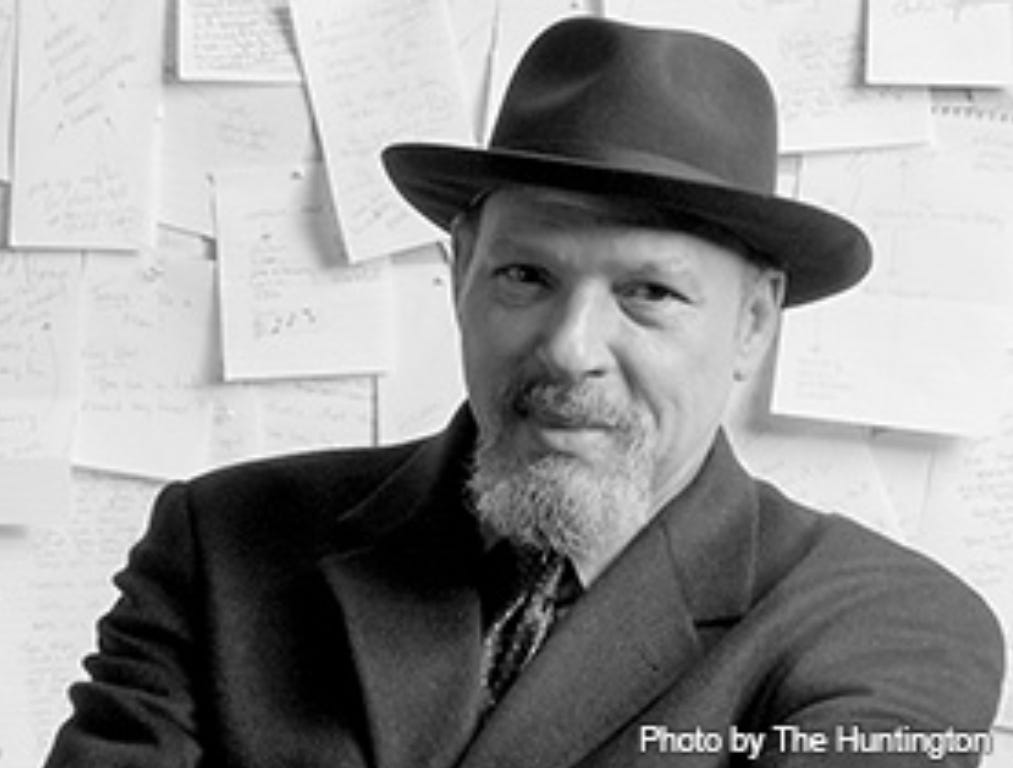
One of the things I loved most about the late playwright August Wilson’s work was that his plays on Black life insisted on the importance of every member of any given Black community. Wilson crafted his plays based on his experiences hanging out and observing the denizens of the Hill District of Pittsburgh. 

Cab drivers, beauticians, bums, architects, lawyers, bricklayers, members of the Nation of Islam, you name it—they all contributed to the love and humor that made up Black neighborhoods throughout the 1960s and 1970s of my childhood. 
I remember when I first read an excerpt of comedian-turned-activist Dick Gregory’s autobiography “N*gger.”  I was in 8th grade. I was impressed by Gregory’s statement that he was fond of winos because they never hurt anyone but themselves. I grew up watching and imbibing all of my people in all of their varieties at the corner of Hunter and Ashby Streets (now MLK Drive and Joseph E. Lowry Blvd.)

Back in the 1960s there was “Bo” the wino. Bo’s brain was so pickled that he never could understand that I was a girl. Never mind that I had two long braids with ribbons. When Dad ventured to that intersection of Hunter and Ashby Streets without me and he ran into Bo, the question was always the same, “How is that boy?” Daddy responded with the same information he always did. “Bo, I have a daughter.” 

My Aunt Ella who was called “Sister” or called by me “Aunt Sis,” owned and ran Top Cats Fish Market. I always loved the painting on the side of the building of the cartoon character “Top Cat.” Winos like Bo and Mumbles would stop by and sweep the floor or wash the windows for a few coins so that they could purchase their wine for the day. “Sister let me have a dime,” Bo would request.  “Bo, I don’t have a dime,” she would respond. “You a damn lie,” he would answer.

I never will forget the time Bo came by her fish market and there was a Black physician there who needed his car washed. Bo gladly offered to wash his car. Now, back in the day it was not uncommon to pour some expensive whiskey into a beautiful flask as a gift for a friend. It was also not uncommon to pay a wino anywhere from 10 cents to a few bucks to wash a car or sweep a floor.

Bo went out to wash the doctor’s car. When the doctor paid Bo a few dollars for washing his car, the doctor looked in the backseat of his car and discovered that his flask of whiskey was empty.

“Bo, what happened to my whiskey?!”

Bo replied, “I don’t know what happened. I don’t drink whiskey. I drink wine!”

The doctor looked at him and said, “Are you sure?”

Bo responded, lying through his teeth, “I DON’T DRINK WHISKEY. I DRINK WINE!”

The physician responded, “Well that’s good to know that you didn’t drink it because I was carrying that flask to the lab because I think there is some poison in it!!”

Bo mumbled to my Aunt Sis, “I ain’t dead yet.”

©️Leslye Joy Allen

I am an Independent Historian, Oral Historian and Dramaturge. Please consider supporting my work with a few bucks for Coffee and Eggs via my CashApp.

You can also subscribe to my writings on Substack and stay in the loop with the best new research, history, journalism, prose, poetry, and etcetera.

All blogs written by Leslye Joy Allen are protected by U. S. Copyright Law and licensed under a Creative Commons Attribution-NonCommercial-NoDerivs 3.0 Unported License. Any partial or total reference to any blog authored by Leslye Joy Allen, or any total or partial excerpt of any blog authored by Leslye Joy Allen must contain a direct reference to this hyperlink: https://leslyejoyallen.com with Leslye Joy Allen clearly stated as the author.  Postings or blogs placed here by other writers should clearly reference those writers.  All Rights Reserved.
DEI: Flipping the Script With ARRAY

by ©️Leslye Joy Allen

I remember when master filmmaker Ava DuVernay started AFFRM which stood for African-American Film Festival Releasing Movement. Later she modified it and renamed it ARRAY which has gone on to release one masterpiece independent film after another by Black women, Women of Color, white Women filmmakers and other Black filmmakers.

Goddess knows that Ava’s television series Queen Sugar remains my all time favorite television series of all time, right up there with POSE. Her film ORIGIN completely shattered every boundary of how a film infused with activism and history could be made and change minds. If you haven’t seen that film, I really don’t consider you a member of the Left if you haven’t done so. If you watch it, you will not be the same. You will never think the same; and every assumption you ever had, you will rethink it.

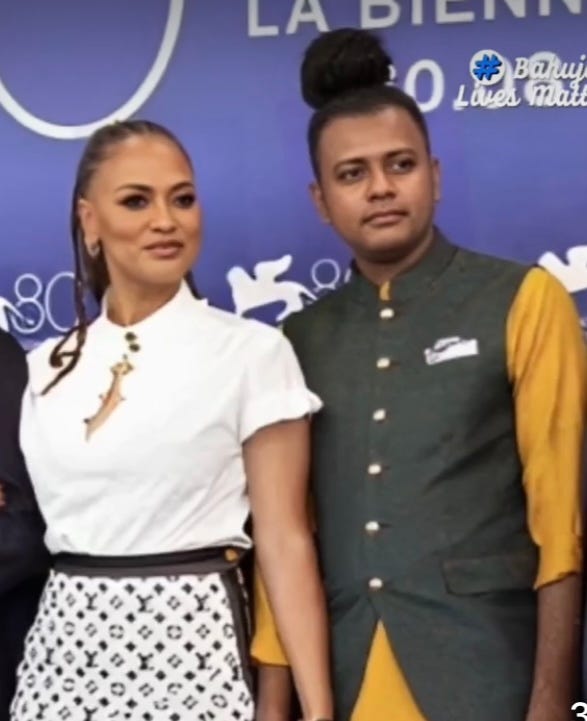
(Ava DuVernay here with Dr. Suraj Yengde who portrayed himself in the film ORIGIN. The film received a 9-minute standing ovation at the Vienna Film Festival in 2023.)

There was one thing Ava did when Queen Sugar hit the airwaves. She decided that only women, and particularly Black and other women of color, would direct the show. She gave over 40 women directors their television directorial debuts because, she reasoned, if she did not do it they would never be given the chance. 

The irony is that DuVernay’s production of Queen Sugar earned recognition as one of the most ethnically and racially diverse crews in television history. Ain’t that something?

So, here’s something to think about. Ava DuVernay has some real badass men around her. Yet, ARRAY was and still is staffed primarily with women; and this company has run like a top since its inception.

So, here’s something else to ponder. Since Felon 47 is hellbent on controlling women, eliminating the histories of Black people and other POC from the record, and granting companies the right to not give a good Got-damned whether any of us will be hired for any job, isn’t it just as plausible for us to not hire or phuck with any of them?

I mean, if I am a Black woman running a successful business and I don’t want to be bothered with sexism or racism, then I can simply not hire any man of any color and not hire any white person of any gender. And what I will be doing will be perfectly legal under the administration of this president. Marinate on that for a moment.

©️Leslye Joy Allen

I am an Independent Historian, Oral Historian and Dramaturge. Please consider supporting my work with a few bucks for Coffee and Eggs via my CashApp.

All blogs written by Leslye Joy Allen are protected by U. S. Copyright Law and licensed under a Creative Commons Attribution-NonCommercial-NoDerivs 3.0 Unported License. Any partial or total reference to any blog authored by Leslye Joy Allen, or any total or partial excerpt of any blog authored by Leslye Joy Allen must contain a direct reference to this hyperlink: https://leslyejoyallen.com with Leslye Joy Allen clearly stated as the author.  Postings or blogs placed here by other writers should clearly reference those writers.  All Rights Reserved.

For Henry G. Sanders

by ©️Leslye Joy Allen

I know a lot of great actors and Henry G. Sanders is one of them. I have watched him perform for over 50 years from “The Killer of Sheep” to “Dr. Quinn Medicine Woman” to “Selma” and beyond. His most recent and notable role has been the character “Prosper Denton” on Ava DuVernay’s “QUEEN SUGAR.”

Yesterday I was relieved when Henry, who lives in Altadena, California, texted me to let me know that he and his family were okay, but “We lost the house.”

It hurt to think of this gracious man, at age 82, having to rebuild. And contrary to popular belief most actors are not rich. The stories about how Henry and his wife have taken in so many struggling young people are too numerous to mention in a single blog. His generosity with his time to me will never be forgotten.

One of his relatives has started a Go Fund Me campaign to help Henry and his family. Here’s the hyperlink: https://www.gofundme.com/f/help-my-family-rebuild-after-eaton-canyon-fire.

I hope you will give generously.

©️Leslye Joy Allen

Ava DuVernay asks for help for Henry G. Sanders and his family.

All blogs written by Leslye Joy Allen are protected by U. S. Copyright Law and licensed under a Creative Commons Attribution-NonCommercial-NoDerivs 3.0 Unported License. Any partial or total reference to any blog authored by Leslye Joy Allen, or any total or partial excerpt of any blog authored by Leslye Joy Allen must contain a direct reference to this hyperlink: https://leslyejoyallen.com with Leslye Joy Allen clearly stated as the author.  Postings or blogs placed here by other writers should clearly reference those writers.  All Rights Reserved.
A Word About “A Wrinkle in Time”


By Leslye Joy Allen

This is a musing about the film A Wrinkle in Time directed by Ava DuVernay.  This is not exactly a review, but it is a set of thoughts that happened as I read the mixed reviews; and then watched the energy and wanderlust of children I saw in the movie theater watching the film.  I’m not going to spoil it for you, but A Wrinkle in Time is not the same rollercoaster that Black Panther is. These are two different films. Yet, it is ironic (and heartwarming) that Ryan Coogler, the director of Black Panther, has designated Ava DuVernay his “Big Sister.”  Coogler wrote a beautiful public letter to her; and he also noted in an interview that Ava had to go through some mess that she won’t ever talk about publicly.  I know what Coogler—who I plan to adopt as my son if his parents will share him—meant when he said that Ava DuVernay had gone through some stuff…She is the first Black woman to helm a big budget film and she was adapting Madeleine L’Engle’s children’s book that has been in circulation since the early 1960s. And L’Engle herself had to suffer through 26 rejections from publishers and self-righteous Christians that disliked the fact that she aligned Jesus with the Buddha and other “saviors” in the same book.  So go figure?

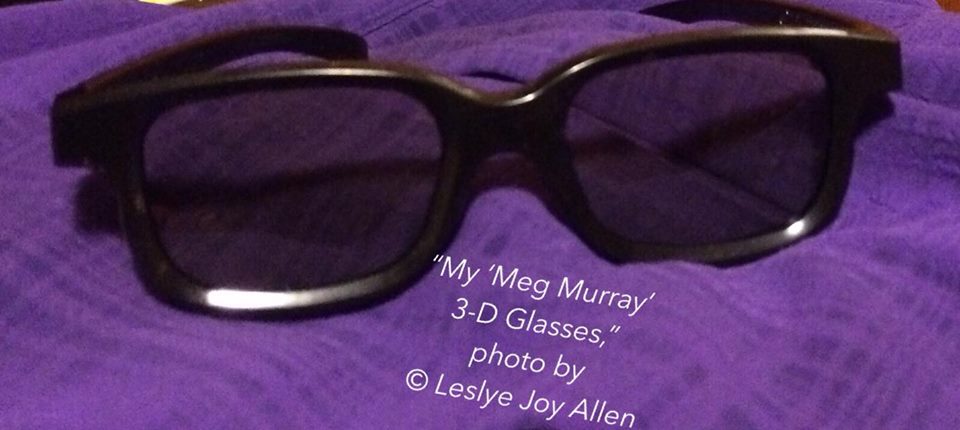
Now with that said, let me tell you what I got from A Wrinkle in Time.  First, the hero (or heroine) of the story is a little Black girl named “Meg Murray” (played by the incredible Storm Reid).  Meg Murray is the adopted daughter of an interracial couple, both of whom are scientists.  The first thing you notice about her is that her father’s disappearance is weighing her down socially. Both she and her younger brother “Charles Wallace  Murray” (portrayed by the adorable Deric McCabe) are getting into trouble at school.  Meg wears glasses; the kids tease her; and her grades have slipped.  What also shines through is her love for her father and her occasional doubts about whether or not she will ever find him.  Eventually, she heads out with the help of “Mrs Which,” “Mrs Who,” and “Mrs Whatsit”**, with her little brother “Charles Wallace” and friend “Calvin” (played by Levi Z. Miller) along for the ride.

Before the film was over, I watched little girls and boys of all shades and ethnicities in the movie theater watch a little Black girl literally save the world.  WE have never had a Black girl be this kind of hero in a film.  I watched two little girls get up in the theater and dance their own little dance to Sade, who came out of semi-retirement to lend her musical gifts to this film. I watched a young 40-something Black father sit with his 11-year-old daughter; and I watched him glance at her like my own father did when he was watching to see if I was enjoying a movie.  I had my moments of nostalgia and I would be lying if I said you shouldn’t bring along a few tissues.  Yet, what the film delivers most is staunch warnings against uniformity, against not believing in yourself, and against making decisions solely based on fear.  Before it’s over you think about everything from those times when you were jealous, when you were mean to someone or when you underestimated others or yourself. It is, as one person wrote, “A love letter to children.” And in this moment it was a little Black girl that delivered it.

Now, a few reviewers got it right when they said that this film is a family movie where kids are the primary and central audience.  (A reviewer named Mark Hughes wrote an incredibly insightful review of A Wrinkle in Time for Forbes Magazine which honestly surprised me. He thought so much more about the intersections of race and gender than most white or black movie reviewers that I have ever read, so I read what he wrote twice.)  Children need their own space and their own entertainment.  In an increasingly ADULT-centric world of self-absorbed adults, it is mandatory.  But for me, the film meant so much more.

I haven’t been a little Black girl for a long time.  I’m now an AARP Black woman.  But like “Meg Murray,” I know what it means when your father believes in your intellectual abilities.  We still live in a male-dominated world; and with less than 7 percent of CEOs being female and only 14 percent of films in Hollywood directed by women and even fewer directed by women of color, the numbers reinforce this domination, which is why director Ryan Coogler’s support of Ava DuVernay and his acknowledgement of what he knows she and women go through matters tremendously.  WE don’t get this kind of support and acknowledgement too often.  And girls and women get judged all the time based on nothing more than their physical appearance.  In this film we see what that looks like and how it feels. Importantly, Black women and girls who are assertive, who give themselves permission to be righteously angry, and insist on their right to take charge of their lives are often called the typical “Angry Black Woman” or worse; they’re/we’re called “B*tches.”

In A Wrinkle in Time, Meg Murray’s alleged faults become what she uses to change the world she inhabits. Those faults become her strengths. The film, like few others, gives young females the right to have flaws like all other human beings. For a change, and for a couple of hours, little Black girls in particular, and girls in general are not forced into those tragic two-dimensional “either/or” boxes. Instead, it becomes okay, even if only in fantasy, to be exactly who one is rather than some stultifying version of what the world and society expects one to be.  That’s all I’m going to tell you except take a child with you to see this film. If you have forgotten what it feels like to be a kid, I am so very sorry for your tragic loss.  Kids have an uncanny way of seeing things clearly when the adults miss the lessons or avoid the lessons altogether.  That’s why I love children and hang around them every chance I get…Without them, I/we would be amoral and dumb as a box of rocks!

**Author Madeleine L’Engle insisted that the abbreviation “Mrs” have no period in her book A Wrinkle in Time.  That idiosyncracy has been respected in this blog.

This blog was written by Leslye Joy Allen and is protected by U. S. Copyright Law and licensed under a Creative Commons Attribution-NonCommercial-NoDerivs 3.0 Unported License. Any partial or total reference to this or any blog authored by Leslye Joy Allen, or any total or partial excerpt of this or any blog by Leslye Joy Allen must contain a direct reference to this hyperlink: https://leslyejoyallen.com with Leslye Joy Allen clearly stated as the author. All Rights Reserved.

A Thought About Black Panther

By Leslye Joy Allen

Copyright © 2018 by Leslye Joy Allen.  All Rights Reserved.

“Royal Purple” by © Leslye Joy Allen

This is not a review of the film Black Panther.  This is a brief musing about what crossed my mind after I saw this film.  First, Black Panther is unapologetically “Black.” I use “Black” here to indicate that while the film is set in the fictional African nation of Wakanda, it also includes Africans of a variety of ethnicities, African Americans and a genuine nod to the entire African Diaspora most of whom are descendants of former slaves in the West.  I am a member of that African Diaspora. The film also gives a few cultural nods to the Ndebele, Yorùbá, Maasai, and Akan peoples on the African continent (thank you, actor-vocalist-friend Saycon Sengbloh for pointing this out first).  The film gets the multi-facted roles of African women so very right.  The film also has some serious messages unlike any messages you have ever heard in a Marvel Super Hero movie.  Don’t worry, if you have not seen it yet, I’m not going to ruin it for you.  All I can say is that it is an entertaining joy ride of a film that will make you think…really, really think.  With that said, here’s what I thought about immediately after I saw Black Panther.

Black Panther has stirred up a genuine sense of pride in Black Americans that we don’t get to feel with this much enthusiasm too often.  It has taken decades of hard work to undo some of the psychic and spiritual damage done to Africa’s descendants in the West who have endured brutal chattel slavery, Jim Crow, systematic racism and discrimination, police brutality, you-name-it.  It has taken decades of hard work and scholarship to undo some of the psychic and spiritual damage done to Africa’s descendants in the West who, for centuries, were told that Africa had no real history, no real contributions to civilization when all of what these descendants were told is/was/remains patently false.  However, it is dangerous to over-romanticize any history; to make any and every description of our African ancestors totally positive. Black Panther, in its own unique way through fiction, de-romanticizes history by showing us a multi-ethnic, multi-generational Wakanda with all the friction and righteous compromise and conflict such diversity can foster.  You leave the movie theater proud, but fully aware that Africans (and we African descendants) have tremendous gifts and flaws not because we are or ever have been inferior or superior, but rather because we are human.

I remember a lecture given by the late African scholar, Dr. Ali Mazrui back in 1996 where he stated that to deny Africans the ability to be wrong was also the same as denying them their humanity.  Dr. Mazrui was always controversial.  He said the only African-American activist that he had any real respect for was Randall Robinson, the founder of Trans-Africa. When asked why he only dug Robinson, Dr. Mazrui said, “Robinson not only raises his voice when Whites do something wrong to Africans, Robinson speaks out when Africans are doing something to wrong to other Africans.”  I’ve never forgotten that statement and what that statement truly means.

When you love your people, you praise them when they are right and you don’t make excuses for them when they are wrong.  You work to correct them.  You speak out against racism, colonialism, and the exploitation of your people no matter who the adversary is.  That lecture by Dr. Mazrui, and so many lectures given by visiting and former professors drove home that I could not afford to care as much about how Africans and African-descended peoples looked to the rest of the world more than I cared about how well or how poorly they/we all were doing.  If you love your people you don’t worry about what their image is and how it affects you as much as you worry about their well-being, period.  Black Panther shows just how difficult that can be, but it also shows that it can be gloriously done…

Now, if you don’t exactly understand this post, it is probably because you have not seen Black Panther yet.  It could also be because you know very little about the continent of Africa’s very complicated history.  However, my points will be clearer once you’ve opened a few books and taken the ride to Wakanda.  So, get to the movie theater.  You won’t be disappointed.  Wakanda Forever.

Copyright © 2018 by Leslye Joy Allen.  All Rights Reserved.

This blog was written by Leslye Joy Allen and is protected by U. S. Copyright Law and licensed under a Creative Commons Attribution-NonCommercial-NoDerivs 3.0 Unported License. Any partial or total reference to this or any blog authored by Leslye Joy Allen, or any total or partial excerpt of this or any blog by Leslye Joy Allen must contain a direct reference to this hyperlink: https://leslyejoyallen.com with Leslye Joy Allen clearly stated as the author. All Rights Reserved.