I’m delighted that folks have decided not to shop on February 28th as an act of solidarity to demonstrate to businesses what our buying power means. It’s a great beginning, but to have real impact boycotts need to last for months or years.
Let me share the following. The image on the left is the now boarded up storefront of what was Buzz Coffee and Winehouse in my hometown Atlanta. The image on the right is from a few years ago. It’s myself and my brother-from-another-mother, actor, writer, poet, cultural curator, and James Baldwin expert Charles Reese. We took this photo sitting at Buzz’s tables on the sidewalk drinking hot coffee out of big mugs.
Buzz was a neighborhood hangout where you might get to view a photo or art exhibit. You might stop by for a breakfast sandwich or piece of pastry. You ran into people you knew and you met people you didn’t know but soon found out the trip was worth it in order to meet them.
Buzz closed a few years ago because the money-grubbing c*nt that owned this little strip of property where Buzz was located raised the rent until the owner of Buzz could no longer afford to stay open. The owner has vowed to reopen somewhere, but so far I haven’t seen any signs of a new location.
Now, there’s a Starbucks about a mile down the street further southwest. I have nothing against Starbucks or people who enjoy Starbucks coffee. Yet, I won’t be going there to get a cup of coffee, just like I won’t be buying Folgers that supports Project 2025.
I only suggest this. When you’re keeping your money in your pocket, take a good hard look at the small businesses in your neighborhood and ask yourself how you can help them? Ask yourself what products can you do without permanently? Then just do it.
I remember a conversation with my late cousin Billie Allen, who was an actor, dancer and stage director. She was here in Atlanta in 2003 directing her close friend, actor Ruby Dee in “Saint Lucy’s Eyes,” a play written by Bridgette Wimberly.
The play was about a woman who performed back room abortions for young women who were in serious trouble. The protagonist named “Old Woman” performed abortions out of mercy and out of a sense that those pregnant women were having their futures derailed by unplanned pregnancies.
Billie mailed me a copy of the play before it came to Atlanta’s Alliance Theatre, and not long after it had a successful off-Broadway premiere at New York’s Women’s Project Theater in 2001. Turning me into her personal dramaturge again, she and I discussed the hot topic of abortion. Then she shared with me something I did not know.
She told me that back in the 1940s and 1950s, when a Hollywood actress became pregnant and had too many professional and contractual obligations to a studio, she typically went to Puerto Rico to have an abortion.
I soon learned that in 1937, the Puerto Rican legislature made abortion and contraception legal. It also made sterilization legal. That’s the kicker—sterilization. An island with a population of people, many of who have Indian, African, and Spanish ancestry were often seen as expendable.
Puerto Rico’s legislature voted with all of the eugenicist and racist taint that emanated from the United States’ highly racist sterilization programs that were completely in line with the eugenics (racial cleansing) going on in Nazi Germany.
I mentioned to Billie that I had seen a short documentary called “La Operación,” by Ana María García back in the early 1980s. It was a documentary about how people involved with “population control” arrived in Puerto Rico in the 1950s and 1960s and sterilized about a third of the island’s women who were of childbearing age.
While there were certainly Puerto Rican women who no longer wanted to have more children, many women were sterilized without knowing exactly what was being done to them.
Puerto Rico was the location of where the first large scale trials of birth control pills took place before “the pill” debuted in 1960 in the United States. Various pills were first tested on a tiny group of women in Boston. Yet, the largest group of clinical guinea pigs were Puerto Rican women; other women of color in the Western hemisphere soon followed.
In 1933 Margaret Sanger, long heralded as a leader in the birth control movement, wrote in Birth Control Review that “Eugenic sterilization is an urgent need …We must prevent multiplication of this bad stock.” People of color were the bad stock.
In 1939 in a letter to Dr. Clarence Gamble, one of the architects of the United States’ eugenics movement (and heir to the Proctor & Gamble fortune), Sanger wrote that they should use Black male ministers to appeal to Black women to get them to agree to be sterilized. She sought to use Black women’s typical deference to Black clergy to accomplish her mission.
By 1955 biologist Gregory Pincus visited Puerto Rico and found it the best location to test birth control pills. After all, the island had no laws preventing contraception. Pincus and his partner John Rock, a gynecologist, promoted their work as poverty-prevention by making it possible for poor Puerto Rican women to have fewer babies.
And here we cisgender women are right now in 2025. We all worry about losing the right to make decisions about our own bodies; and we should. Yet, early birth control and abortion initiatives were never about women having the right to make their own reproductive choices.
The primary objective was to slow or stop the biological reproduction of any woman who did not belong to an accepted class or status of women classifiable as “white.”
Without fully understanding the racist origins of the state’s reproductive control over women, you will miss its original intent. Reproductive procedures, no matter how necessary they are, remain a political football; and Puerto Rican women, and other women of color were its first sacrifices.
I remember the first time I heard someone say, “If you want to hide something, hide it in a book.” The comment depressed me.
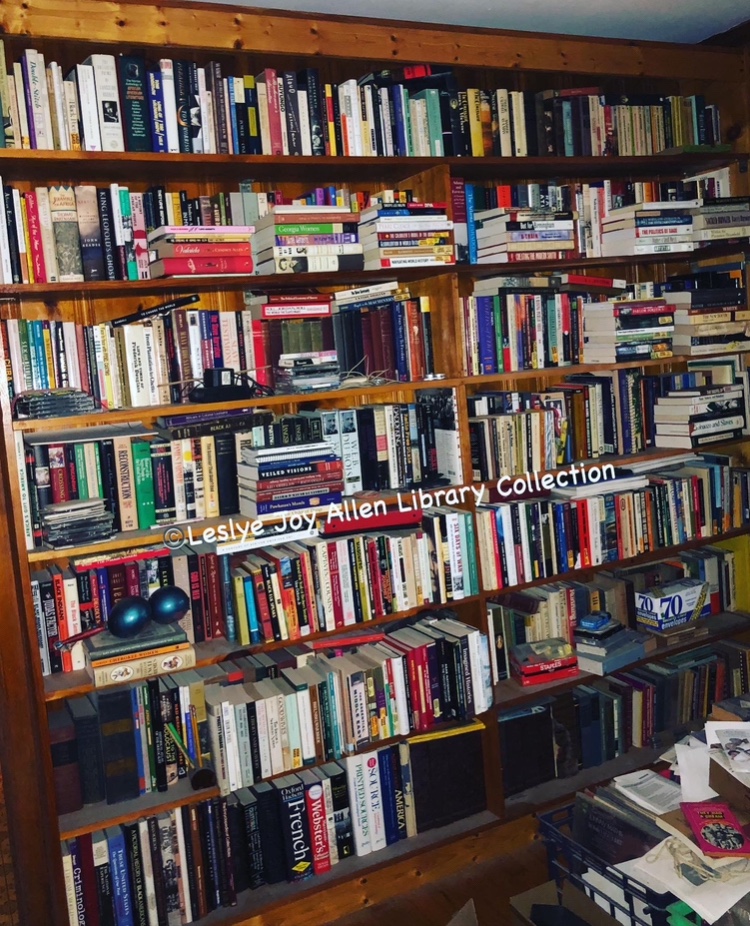
When you are a historian, you have books everywhere. You have to read all the time. I have not seen the top of my dining room table in nearly 15 years as it is covered with stacks of books. Books occupy every nook and cranny of my home.
With the United States ranking 36th in the world for literacy, with a 79% literacy rate, with only 25% of literate adults reading above the 6th grade level, we are already dumb. We can expect to see more decline in literacy with Felon 47 living on Pennsylvania Avenue.
So, I have a proposal. It might not change anything, but it is worth a try. Walk out of your door with a book in your hand or tucked under your arm everyday for at least a month.
Let kids and other adults see you walk with that book. And don’t say you can’t do this. You have carried books before when you were in grade school.
Make your book/s visible at your job, on a trip to a store. Hell, go for a walk with your book until someone asks you why you always have a book in your hand or under your arm. And then have the audacity to tell them why.
I have more than a few favorite writers, journalists, and/or activists on Substack. One of them is Lorissa Rinehart. When she wrote that too many children are addicted to social media, I got the impression that she drew on scientific studies and her own observations.
She delivered a good hard punch to catch our attention. She wrote:
You should be aware that an addiction to substances like Crystal Meth are among the most difficult of all habits to kick. Rinehart waxed poetic about how the Zuckerbergs and the Musks of this world prey on the minds of our children in much the same way drug dealers pounce on entire communities.
Her statement reminded me that addiction to social media is one thing that aided and abetted our current political climate. She reminded me that our children are particularly vulnerableto social media propaganda pushed by the Far Right.
So, here are some family practices I suggest that I learned from a friend of mine over 15 years ago. My friend limited TV viewing to one night a week with the whole family watching together. Her kids were only allowed 3 days per week to surf the web at home for 1 hour each day with parental controls on.
The rest of the week she and her offspring discussed Art, Music, Current Events, School and Books at the dinner table. After dinner there was homework. After homework they would pick a topic to discuss or a book to read together over the coming week. I must say she now has some of the smartest young adults I have met in quite a while.
Now, before you say that all of this is too difficult to do; that your work schedule is too difficult to navigate around in order to do any of this; or that you are not sure if you can get your kids to participate in anything like this, answer a few questions for yourself.
When is the last time you read a book or visited a library? How often do you have face-to-face conversations with friends and family, with everyone’s cellphone silenced or turned off and put away out of sight?
If you have not done any of the above in quite some time or you have stopped doing most of it regularly, consider how social media has altered how you communicate with others. Come to think of it, social media has altered nearly everybody’s way of communicating.
Social media is not inherently evil nor inherently good. Social media’s information, however, is the easiest information to manipulate and the fastest to spread. Now think of how easy it can manipulate your children’s ideas about the world and themselves, often before you know anything about the ideas that have formed in their heads. Before I say anything else about Meth addiction, think about social drinking.
If you are a social drinker who is not an alcoholic, you tend to know your limit. You might feel a mild buzz, feel a bit relaxed, but not drunk. In your youth you probably learned the hard way when to say “I have had enough.” Long term Meth addicts don’t have any moments of “I have had enough.” They often suffer from everything from depression, psychotic episodes, an inability to sleep, and tooth decay.
Unlike addictions to controlled substances—legal and illegal—social media addiction has no noticeable physical symptoms. So, when it comes to social media, do you know when enough is enough for yourself? More importantly, do you know when enough is enough for your kids? Think about that for a while.
We historians often find data in some file in an obscure archive, in letters written by someone’s grandmother, in photos, newspaper clippings, legal records. Our discipline demands that we dig, analyze, rethink and revise, constantly. I liken our work to studying the function of each piece in a Chess game. We get different perspectives about the same set of circumstances depending on which Chess piece we examine.
I was a mediocre Chess player. I had a few friends who played like champions. So, I often just watched them play. I remain, however, fascinated by the game’s objectives and, specifically, the roles of Pawns and Queens.
Pawns are the most numerous pieces in Chess; they are the foot soldiers. Each player has eight Pawns. A Pawn can move one or two squares forward if that move is its first move. After the first move, a Pawn can only move one square forward unless the square is blocked by some other piece. A Pawn can capture or attack another piece, however, by moving diagonally to the left or right.
The Pawn is the only piece in a Chess game that can change ranks. Depending on the skill of a Chess player, a Pawn can become a Bishop, a Rook or a Queen. In spite of a Pawn’s ability to advance to a higher rank, it is still considered the lowest ranking piece in the game. It is only worth one point.
The objective of the game is to capture your opponent’s King where that King has no way out, which means Checkmate. While the King is considered the most important piece in the game, it is the Queen that is considered the most powerful piece.
Queens are the only pieces that can move across the board in any manner as long as they are not successfully blocked by other pieces. If you lose, it is highly likely that you lost because your opponent’s Queen checkmated your King. Chess players feel much more confident when they have successfully captured or blocked her.
You can still win the game without capturing the Queen, but you have to be extremely strategic and precise to do so. You can also win without making good moves with your Pawns, but it is highly unlikely.
Chess is now over 1,500 years old. While there is some skepticism about its precise origins, many Chess historians believe that the Indian board game called “Chaturanga” was the earliest predecessor of Chess. There were many other versions that followed, but are too numerous to mention here.
In early versions of Chess, there was a piece called “Vizier” or “Advisor” for centuries. In the 1500s, in the era of great and powerful Queens in Europe, like Spain’s Isabella and England’s Elizabeth, “Viziers” or “Advisors” were redesigned and renamed “Queens.” You can learn an awful lot of world history just by examining Chess.
So here’s the deal: There is no such thing as a Chess game where Queens/Women Heads of State/Women in general are not powerful and flexible while the Kings/Men Heads of State/Men in general are highly important but who have or exercise fewer tactical moves.
There is also no such thing as a Chess game where Pawns/Foot Soldiers/Laborers are not essential to success, even while they are considered less important.
Apply any and all of the above to what you see happening in the United States and the world right now. I refuse to tell you how to analyze and interpret this history because there are so many interpretations and analogies that can be extrapolated from this board game.
All I will say is that nothing is going to change or be corrected without the skill of devoted Pawns, and the power and daring of Queens.




 Leslye Joy Allen