The Souls of Poets

What a Hiatus From Social Media Can Do

by©️Leslye Joy Allen

I have taken brief three to four-day hiatuses from all forms of social and electronic media before and been rejuvenated and recalibrated. I still remember a psychiatrist who openly questioned whether 24 hour news or 24 hour headlines and blurbs online were healthy or whether they really got a message out. That was about 20 years ago.

I have watched stories that trend for days and even weeks. Anything repeated long and often enough can usually be memorized or even absorbed, but whether you understand it intricately or not remains to be seen. Whether you feel anything after a certain point also remains to be seen. 

I need not be told that our current sitting president is a racist and a sexist and a sexual predator and a crazy man for the got-damned 10,000th time when slightly over half the population that voted in this country voted for him. He is an easy topic because he’s a shock show designed to distract. You may learn something new that just happened, but I never learn anything new about him. He was an abomination beneath being classified as human when I first learned anything about him back in 1989.  He was then, and remains, like so many of the soulless, including those who never knew and still don’t know that they never had a soul.

When someone decided to try to be a copycat of my Substack account on Monday, September 14, 2026, several wonderful people on Substack jumped into gear to report the imposter; and soon the duplicate was gone. Yet, after taking some days away from all social media my brain processed the offense differently. 

Some people hack, copy, falsify, pretend and troll much of the time for kicks; and to get jobs (hackers get hired); and to breach people’s bank accounts; and also because they have little else to do. They duplicate pages and names and images, but my gray matter—my brain belongs to me. 

I spoke with an old boyfriend from high school a few days after the incident who said, “If I put on a blindfold and someone read me two paragraphs of yours, I would know it was you.” We laughed and reminisced about when we were both young and inquisitive and now we are much older and inquisitive.  Aging is a blessing denied to many people. Good memories are also denied, as so many folks never have any because they never go offline long enough to make any.
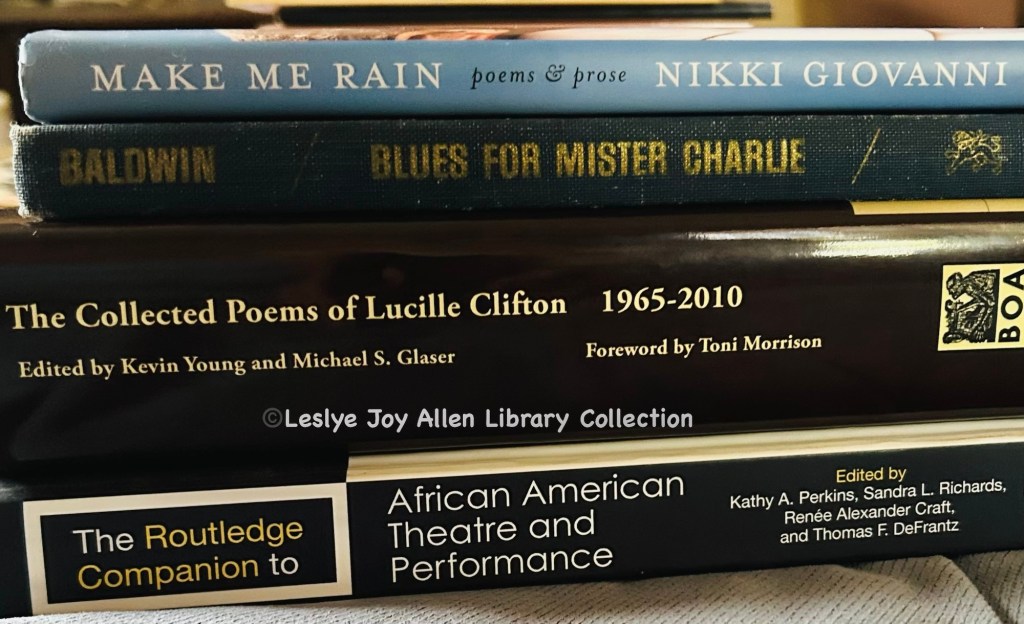
When I hung up the phone it occurred to me that I never liked, loved or befriended any boy or man that didn’t have the soul of a poet whether he could write poetry or not. To be able to or just to want to be able to take a phrase that, on the surface, seems abstract and make it mean something else or several something else’s is a gift, a gift that requires that you not just look at the world and your circumstances, but that you have the capacity to see the beauty or joy or even the sadness or terror in those circumstances. 

My quartet of college English professors: Dr. Waqas Ahmad Khwaja, Dr. Willie Tolliver, Dr. Christine Cozzens and Dr. Steven Guthrie taught me that a historian was a much better historian if that historian loved or could write poetry or fiction. The idiosyncrasies of being a human being are detailed, clothed and disrobed in haiku, sonnets, odes, elegies, cinquain, and free verse the way a couple whose marriage is over, but who cannot completely let go, so they create an ongoing argument, a conflict that lasts their lifetimes just so they can hold on to a piece of what can no longer be.

While away from the grind of scrolling on social media I finished reading three books and one stage play that was so good I couldn’t put it down. I peeked out my window long enough to watch my neighbors’ two small children giggling and playing with their two dogs in their front yard. A father and daughter passed by on their bicycles.

Then when I returned to the internet I saw a headline from a three-day-old news story where the U. S. Military used A. I. to write a report that, in error caused the United States military to begin preparations to militarily strike China and/or to prepare itself to be struck by China. Whatever. The cataclysm was averted. For a nanosecond I felt fear.

Then my fear completely disappeared because the job was done. I have written this before, but this oxymoron bears repeating: Anything intelligent cannot be artificial; and anything artificial cannot be intelligent. The underlying purpose of A. I. is confusion and fear, to convince citizens that machines and algorithms can wreak havoc in a split second. The constructors of A. I. are in testing mode—one week it may pose a threat to a forest, a water supply, a military base, a foreign enemy, or to a specific group of people. 

Then after enough non-thinking humans are reasonably subdued to the whims of A.I., the plans to make it safer, less invasive will come along. Jobs will be offered where those who are employed can deliver well-crafted messages about how it is now under control with dozens of benefits to humans that no one realized in its infancy. 

The only problem is that the ones who crafted A.I., who designed it, who will propagate it and implant its alleged benefits and its alleged problems in susceptible brains will not be creators who are able to write a poem or even murmur a few words and phrases that come from the heart or the gut. Emotions, perhaps even love itself, could be rendered suspect because love has never followed a formula. 

If there are any deaths that could come from the whims and malfunctions of machines, the deaths on fields of battle or the obliteration of entire towns will come much, much later, if they come at all. The first deaths will be slow, caused by the absence of the souls of poets, those that can still find their way in the dark; those that know when to refrain from saying something; those that can say it another way to make people feel better without telling a lie instead; those that can remember childhood games and youthful romances and mischief well enough to care about the young ones who will outlive them, not just care about themselves or the here and now.

©️Leslye Joy Allen

I am an Independent Historian, Oral Historian and Dramaturge. Please consider supporting my work and research with a few bucks for Coffee and Eggs via my CashApp or PayPal; or become a paid subscriber to me on Substack to help me sustain my research and commentary.

All blogs written by Leslye Joy Allen are protected by U. S. Copyright Law and licensed under a Creative Commons Attribution-NonCommercial-NoDerivs 3.0 Unported License. Any partial or total reference to any blog authored by Leslye Joy Allen, or any total or partial excerpt of any blog authored by Leslye Joy Allen must contain a direct reference to this hyperlink: https://leslyejoyallen.com with Leslye Joy Allen clearly stated as the author.  Postings or blogs placed here by other writers should clearly reference those writers.  All Rights Reserved.
Zelensky, Strategic Minerals, and the US Economy Redux

by ©️Leslye Joy Allen

I originally wrote about this on Christmas Eve, 2024:

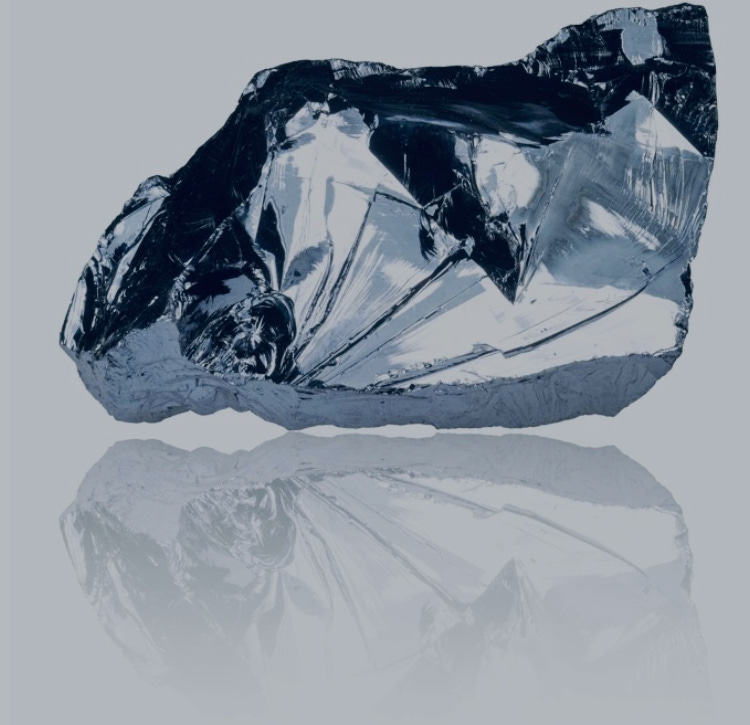
The United States imports most of its strategic minerals. China is our largest supplier. Polysilicon, Geranium, Palladium are vital to semiconductors. Magnesium metals, and etcetera all come from China.

We also import critical minerals from Australia, South Africa, Chile, Brazil and Peru.

Out of the 35 critical minerals that are absolutely essential to our economy and to the efficacy of our military, we only produce 4 of those necessary minerals. The other 31 are imported.

While folks in Canada and Greenland and Panama are naturally and rightfully insulted and concerned about Felon 47’s bluster about invading their countries to bring them under the US umbrella; it’s not likely to happen. It is the USA that better be concerned.

(Photo by Martin Konopka, EyeEm/Getty Images)

The only thing that would need to happen is for the United States to be isolated by both its enemies and its friends where no nation sells us any critical minerals anymore. With a weakened economy and weakened military we are ripe for the pickings.

China has already banned the sale of critical minerals to the United States. That’s what all that early “let’s ban Tiktok” mess from the U. S. Congress was about. Congress already knows that China can thumb its nose at the USA. Elon and his demented minion Trumpolini can fool around and they will find out.

Today on March 2, 2025, I had a great exchange with one of the best young minds out there challenging us to think. His name is Kahlil Greene—look him up. He waxed poetically and flawlessly about this past week’s fiasco of a talk between Ukraine’s president Volodymyr Zelensky and our bully-in-chief that I personally refer to as Felon 47. Greene brought up the striking contrast between Biden and Felon 47.

After I brought up the USA’s ongoing need for strategic minerals, he reiterated that US dependence on these strategic minerals had serious repercussions for our natural environment and for our indigenous Native American nations. 

Here’s another age-related reminder that I wrote to him: 

“Kahlil, you may be too young to remember these protests: But back in the late 1980s when we were clamoring and protesting to get universities, companies, and etcetera to divest from the racist apartheid regime in South Africa, the response from Washington was often ‘South Africa supplies many of our strategic minerals that support our military.’

At the time, I was quite young and did not know what a strategic mineral was, but I started paying attention.

Ukraine is about as mineral rich as any country you can find on earth. Without certain minerals, the USA cannot be militarily secure and we cannot build semiconductors that support our electronics industries. You made a damned good point about the environment and what this could mean for our First Nation brothers and Sisters. I am going to leave this discussion right here.”

Pay Attention Folks and inform yourselves please:

Critical and Strategic Minerals Importance to the US Economy

Seven Recommendations for the New Administration and Congress: Building U.S. Critical Minerals Security

Tech wars: Why has China banned exports of rare minerals to US?

©️Leslye Joy Allen

I am an Independent Historian, Oral Historian and Dramaturge. Please consider supporting my work with a few bucks for Coffee and Eggs via my CashApp.

All blogs written by Leslye Joy Allen are protected by U. S. Copyright Law and licensed under a Creative Commons Attribution-NonCommercial-NoDerivs 3.0 Unported License. Any partial or total reference to any blog authored by Leslye Joy Allen, or any total or partial excerpt of any blog authored by Leslye Joy Allen must contain a direct reference to this hyperlink: https://leslyejoyallen.com with Leslye Joy Allen clearly stated as the author.  Postings or blogs placed here by other writers should clearly reference those writers.  All Rights Reserved.

Pawns and Queens: Analogies For a New Era

by ©️Leslye Joy Allen

We historians often find data in some file in an obscure archive, in letters written by someone’s grandmother, in photos, newspaper clippings, legal records. Our discipline demands that we dig, analyze, rethink and revise, constantly. I liken our work to studying the function of each piece in a Chess game. We get different perspectives about the same set of circumstances depending on which Chess piece we examine.

I was a mediocre Chess player. I had a few friends who played like champions. So, I often just watched them play. I remain, however, fascinated by the game’s objectives and, specifically, the roles of Pawns and Queens.

Pawns are the most numerous pieces in Chess; they are the foot soldiers. Each player has eight Pawns. A Pawn can move one or two squares forward if that move is its first move. After the first move, a Pawn can only move one square forward unless the square is blocked by some other piece. A Pawn can capture or attack another piece, however, by moving diagonally to the left or right.

The Pawn is the only piece in a Chess game that can change ranks. Depending on the skill of a Chess player, a Pawn can become a Bishop, a Rook or a Queen. In spite of a Pawn’s ability to advance to a higher rank, it is still considered the lowest ranking piece in the game. It is only worth one point.

The objective of the game is to capture your opponent’s King where that King has no way out, which means Checkmate. While the King is considered the most important piece in the game, it is the Queen that is considered the most powerful piece.

Queens are the only pieces that can move across the board in any manner as long as they are not successfully blocked by other pieces. If you lose, it is highly likely that you lost because your opponent’s Queen checkmated your King. Chess players feel much more confident when they have successfully captured or blocked her.

You can still win the game without capturing the Queen, but you have to be extremely strategic and precise to do so. You can also win without making good moves with your Pawns, but it is highly unlikely.

Chess is now over 1,500 years old. While there is some skepticism about its precise origins, many Chess historians believe that the Indian board game called “Chaturanga” was the earliest predecessor of Chess. There were many other versions that followed, but are too numerous to mention here.

In early versions of Chess, there was a piece called “Vizier” or “Advisor” for centuries. In the 1500s, in the era of great and powerful Queens in Europe, like Spain’s Isabella and England’s Elizabeth, “Viziers” or “Advisors” were redesigned and renamed “Queens.” You can learn an awful lot of world history just by examining Chess.

So here’s the deal: There is no such thing as a Chess game where Queens/Women Heads of State/Women in general are not powerful and flexible while the Kings/Men Heads of State/Men in general are highly important but who have or exercise fewer tactical moves.

There is also no such thing as a Chess game where Pawns/Foot Soldiers/Laborers are not essential to success, even while they are considered less important.

Apply any and all of the above to what you see happening in the United States and the world right now. I refuse to tell you how to analyze and interpret this history because there are so many interpretations and analogies that can be extrapolated from this board game.

All I will say is that nothing is going to change or be corrected without the skill of devoted Pawns, and the power and daring of Queens.

©️Leslye Joy Allen

Shutterstock photo of a Pawn and a Queen on a Chessboard.

All blogs written by Leslye Joy Allen are protected by U. S. Copyright Law and licensed under a Creative Commons Attribution-NonCommercial-NoDerivs 3.0 Unported License. Any partial or total reference to any blog authored by Leslye Joy Allen, or any total or partial excerpt of any blog authored by Leslye Joy Allen must contain a direct reference to this hyperlink: https://leslyejoyallen.com with Leslye Joy Allen clearly stated as the author.  Postings or blogs placed here by other writers should clearly reference those writers.  All Rights Reserved.

A Messed-Up Religious Narrative

by Leslye Joy Allen, Copyright © 2016. All Rights Reserved.

“Self Portrait” by Copyright © 2015 Leslye Joy Allen.  All Rights Reserved.

“Self Portrait” by Copyright © 2015 Leslye Joy Allen. All Rights Reserved.

On Easter Sunday morning, 27 March 2016, I received a rather cryptic text message from Facebook.  It read as:

“Facebook Safety Check: Are you affected by the explosion?

Reply SAFE if you’re ok or OUT if you aren’t in the area.”

I got nervous.  I went online to look up if there had been any explosions.  I did not find anything on the Internet that said anything about a recent explosion.  I found older stories about bombings and terrorist attacks in other parts of the world from last year, but not one for Easter Sunday in 2016.  Then I really got paranoid…

I rarely use my smart phone for anything other than an occasional phone call.  I almost never use apps—don’t exactly trust them—and I was slightly worried that this Facebook text might be some hoax going around to see how many people would respond to such a strange message.  If I respond, I thought, I am going to end up with some computer virus…

Reluctantly, I replied “OUT” to the Facebook text. Whoever (or whatever) sent the text would know that I was not in or near this explosion wherever it was, I thought to myself.

I checked the Internet again in about an hour.  The news reports began coming in, stating that some group of Muslim terrorists was claiming responsibility for an explosion in Lahore, Pakistan that killed a minimum of 72 people, and injured over 300 people who were celebrating the Christian holiday of Easter, which commemorates the resurrection of Jesus (Yeshua), the Christ.  The murder of Christians by Muslims would again frame much of the news coverage. The religious narrative would—at least superficially—be a Muslim versus Christian narrative.  That narrative is messed-up…

I have never visited Lahore, Pakistan.  Yet, one of my former professors was born there. Indirectly, my association with him, a man who I consider a mentor and good friend, has introduced me to many people located in or from Pakistan.  I am proud to say that I have given academic advice and encouragement via my Facebook inbox to many young men in Lahore who are either going to college or planning to attend graduate school.   So, Facebook, for what it is worth, obviously assumed that I, an African American woman who is from and located in the United States, might actually be located in or near Lahore, Pakistan.  This time Social Media’s interpretation of who (or even what) I was taught me a lesson via an obvious scan of my Facebook Friend list…

I am not Muslim.  The natives of Pakistan that I personally know and those I am in contact with are all Muslims.  They are Muslims who constantly pray for peace, and who condemn the heinous acts of extremists and terrorists, and who also speak out against racism and sexism and religious intolerance. The American news media, however, has conveniently forgotten to tell Americans that the splinter group that broke away from the Taliban, named “Jamaat-ul-Ahrar,” killed as many Muslims as it has Christians. In fact, the majority of those Pakistanis who died in the attacks on Easter Sunday in Lahore, Pakistan happened to be Muslim.

CNN’s provocative and rather misleading headline was “In Pakistan, Taliban’s Easter Bombing, targets, kills scores of Christians.”  To be sure, scores of Christians died in that awful attack.  Yet, to ignore the random acts of violence by groups like this (including ISIS or ISIL) that have, honestly, killed more Muslims than Christians is to perpetuate a religious narrative that can get us all killed, have all of us turning on each other instead of talking to each other.

If you have half a brain, you know that to single out any group of people as the sole source of your problems is to also invite a group (any group) outside of that definition to do all manner of harm to you.  This all reminds me of the time when one of my history students hipped me to a video where all of a particular department store’s security guards were watching all of the store’s African-American customers.  Yet, while those same security guards were scrutinizing the Black customers, there was a small band of White patrons who were shoplifting at the store. 

I am only a historian and academic.  Yet, I am one who knows that when people do not do their research, when they fail to look below the surface, when they do not think outside the box, when they succumb to easy answers and easy stereotypes because those stereotypes make them feel safe or superior, all of us suffer.  With an Internet that contains volumes of information—some tainted information, and some that is accurate—there is really no excuse for you or I not knowing anything and not questioning those easy answers that our bought-and-paid-for media and politicians and pundits hand to us on a regular basis.  

Do not be a fool.  Do your work.  Do your research.  Now some people reading this will be upset or annoyed by my comments.  Religion for many people is, after all, a cultural, national, and often racial marker.  After all, the first terrorists my people knew were so-called Christians wearing sheets, lynching and torturing Black bodies and burning crosses on Black families’ lawns.  I would hate to think about my ancestors enduring that on Easter Sunday.   Àṣé!

Leslye Joy Allen, Copyright © 2016.  All Rights Reserved.


This blog was written by Leslye Joy Allen and is protected by U. S. Copyright Law and licensed under a Creative Commons Attribution-NonCommercial-NoDerivs 3.0 Unported License.   Any partial or total reference to this or any blog authored by Leslye Joy Allen, or any total or partial excerpt of this or any blog by Leslye Joy Allen must contain a direct reference to this hyperlink: http://leslyejoyallen.com with Leslye Joy Allen clearly stated as the author. All Rights Reserved.

The Paper Yet to be Returned

by Leslye Joy Allen                                                                                                               Historian, Educator, Theatre & Jazz advocate, Doctoral Student

Copyright © 2012 by Leslye Joy Allen. All Rights Reserved.

My last blog for Cascade Patch attempted to remind everyone that Tuskegee Airman, one Lt. Col. Charles W. Dryden had a clear vision about what and whom he was fighting against when he valiantly fought in World War II.

Yet, another group of soldiers now struggle with what it meant to be in the military in Iraq; and some are still trying to understand the complicated mission of remaining in Afghanistan.  The following is a personal story about one of my former students:

Back in 2008 when I was teaching United States and World History courses at a local junior college, I encountered a young 20-something male student who I initially feared might earn an “F” in my class.  Like many students I have encountered in recent years, writing was not his forte; and history is research and writing intensive.  However, much like many other students, he performed much better on his second paper after he followed the directions, suggestions, and criticisms I wrote on his first paper.

It is a thrill to watch a struggling student take off at top speed and make real, concrete progress.  This student, who I will refer to here as “M,” did just that.  There is still only one problem: M has not yet been able to pick up his final paper, a paper where he worked like a trooper to earn an “A.”

A few weeks before that semester in 2008 ended, M approached me after class to let me know that he was in the U. S. Army Reserves.  He was part of a reserve troops that would soon go to Iraq.  His deployment could occur at any time and at a moment’s notice.  He feared he would have to leave for Iraq before the semester ended.  He worried about missing his final examinations.  I told him not to worry.  He had enough graded assignments for me to figure out his grade point average if it became necessary.

Since educators and employers are required by law to accommodate, as best we can, those employees and students who may be called to military service, I had to come up with the best possible solution for M.  After discussing the matter with my department head, I decided to wave his having to take my final examination.  After a careful review of all of his grades, he averaged a solid “B.”  He left for Iraq, however, before I could return his last paper.

A few days after his departure, he emailed me to let me know that he had safely arrived.  He thanked me for all that I had taught him, and asked me to remember him in my prayers.  He also told me that I had taught him to “think outside of the box.”  I freely admit that I can be a bit radical and unorthodox.  I would never have survived even working in the post office in Uncle Sam’s army.  When M made that comment, I wondered how my teaching him to “think outside the box” would actually help him in Iraq.

I quickly responded and asked that he email me and his other instructors to let us know how he was doing.  He responded that he would try to stay in touch, but that his commanding officer had warned him about sending too many emails.  Because of where he was located in Iraq, it might be dangerous to regularly contact too many United States citizens by email as the area was potentially teeming with internet-savvy terrorists.  Emails, he wrote, were particularly vulnerable to enemy infiltration.  That worried me.

Sure enough, his emails abruptly stopped.  Months after his departure, I wondered if he was still alive.  I even caught myself paying extra attention to news reports of casualties in Iraq.  Then, I misplaced the last paper I graded for him.  Misplacing the paper felt like a bad omen.  Then in 2009, I ran across a blog where a blogger had spoken with Paul Rieckhoff, the author of the Iraq Memoir Chasing Ghosts.  Of soldiers in Iraq, Rieckhoff stated:

“This is not a drafted army, it’s a professional force, so folks are staying in longer, they’re older and they’re more likely to have families…But those who are being killed and injured are disproportionately young — the people you played soccer with and went to high school with.”  (For the full article, go to: http://stand-up-4-veterans.tressugar.com/Toll-Iraq-US-Soldiers-3294102)

After I read the blog, I felt worse.  I knew that any war almost always consists of young soldiers, but exactly how young?  How often had military service in Iraq or Afghanistan interrupted college students’ educations?

Another year passed and soon, I briefly forgot about M.  Then, in 2010, I got a phone call from a former co-worker.  She received news that one of her former students was killed in Iraq.  I did not know this particular student well, but she did.  With both of us weeping over lives lost too young, I thought about M again.  I did not email him for fear that I would not receive a reply email and again wonder if he was still alive.  I could not and cannot imagine what the families of these young women and men have gone through during the course of the Iraq war and the seemingly endless problems in Afghanistan.

Right before this past Christmas 2011, I decided to sort through the tons of papers and assorted items that had accumulated into a small mountain on my dining room table.  There were stacks of papers, books, photographs, and notebooks on the table and in boxes around the table and elsewhere in my house.  We historians are the world’s most notorious packrats, always afraid that we might throw away some document we might need later for our research.  Yet, enough was enough.

After sorting through all of the excess and deciding what might go into the recycling bin, I found the last paper M wrote that I graded at the bottom of one of my many boxes.  Early Christmas morning, I summoned the nerve to email him to ask how he was doing, noting that I had just stumbled across the last paper he turned in for my World History class.  FYI: M’s paper was about one of the Zanj revolts that took place in the Afro-Arabic world (Look it up if you do not know what I am talking about because I am not even going to define “Zanj” for any reader younger than M.)

Later that Christmas night, I received an email from M stating that he was well, but still in Afghanistan.  The military has now deployed him OVER FIVE TIMES.  Scheduled to return home in the summer of 2012, he noted that he felt like Iraq and Afghanistan were recipes for civil war.  Indeed, he said, Afghanistan already was engaged in what he believed to be a civil conflict that neither the United States military’s presence (or absence) could remedy.  Later on January 10, 2012, I stumbled on an article that described how the Taliban attempted to invade a government building in East Afghanistan.  I worried again.

As a historian, I study and lecture about politics, the performance arts, racism, social change, and war all the time.  Yet, nothing prepared me to watch a young scholar go off to war with his education interrupted or to contemplate that he might not make it back home.

M emailed me that the military had taught him how to think one way, but he emphasized that I had taught him another way to look at and examine the world.

“You taught me to see things for more than what is put in front of me,” he wrote.  In the last weeks of 2011 and the first month or so of 2012, when we Black folks have lost so many of our brothers and sisters in so many ways, I am thankful, grateful, and rather proud of M’s compliment.

Yet, as far as I am concerned, U. S. military involvement in Afghanistan and Iraq can only officially end for me when I can put M’s final graded paper in his hand.

Peace.

Copyright © 2012 by Leslye Joy Allen. All Rights Reserved.

Leslye Joy Allen is proud to support the good work of Clean Green Nation.  Visit the website to learn more about it: Gregory at Clean Green Nation!

Creative Commons License This Blog was written by Leslye Joy Allen and is protected by U. S. Copyright Law and licensed under a Creative Commons Attribution-NonCommercial-NoDerivs 3.0 Unported License.  Any partial or total reference to this blog, or any total or partial excerpt of this blog must contain a direct reference to this hyperlink: http://leslyejoyallen.com with Leslye Joy Allen clearly stated as the author.