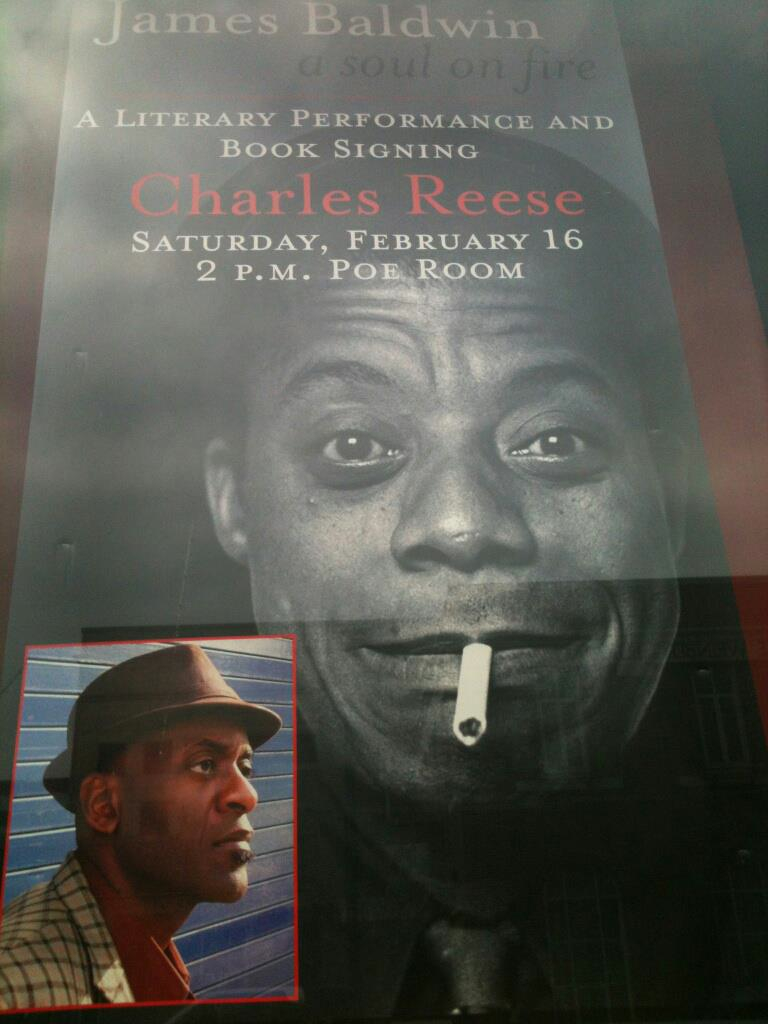
My friend Charles Reese wrote this poem in honor of my late mother Syble Allen Williams (March 1, 1921 – February 9, 2013). Thanks Charles for this rare gift; it makes her passing a little bit easier to bear. — Leslye Joy Allen
“Scales of Justice” by Jon Sullivan, photographer. Copyright: Public domain image, not copyrighted, no rights reserved, royalty free stock photo. Available from Public-Domain-Image.com
By Leslye Joy Allen
Historian, Educator, Theatre and Jazz Advocate & Consultant
For those of you who are unfamiliar with the late Ralph McGill (1898-1969), he was a White journalist and publisher of the old Atlanta Constitution (now the Atlanta Journal Constitution). He was also a well-known liberal who wrote about racial discrimination in society at large and within the criminal justice system. He did this long before the Civil Rights Movement reached its apogee in the 1960s. Martin Luther King, Jr. mentioned McGill in his eloquent “Letter From a Birmingham Jail.” King wrote that McGill and some other White journalists, “have written about our struggle in eloquent, prophetic and understanding terms.” Indeed, McGill was a man who watched, learned, and evolved into one of the most progressive voices in the American South and the nation when it came to race relations, civil rights, and the penal system. With that said, it is important for you to understand that I did not learn about Ralph McGill from a newspaper or a book, but rather from my schoolteacher mother.
Mama remembered that he emphasized that when a Black person killed another Black person they typically received very light jail or prison sentences—that is, if they received any jail time at all. It was just the opposite if they had killed a White person. He noted that because of this failure to properly punish Black people who killed other Black people, the judicial system literally encouraged those individuals to carry out their anger to its fullest possible extreme. He accused the judicial system of encouraging Black folks to kill each other. Mama said that there was an unsettling joke going around in Atlanta during the 1940s that said: if you were a Black man that killed another Black man you would be out of jail in time to go to your victim’s funeral. Indeed, in his column in the Atlanta Constitution on September 17, 1941, McGill wrote:
“In the first place our courts, to our shame and, although no one seems to see it, to our very great financial cost, never take Negro crime seriously. A Negro murderer, killing another Negro, rarely receives any severe punishment. Juries and prosecutors have, for years, viewed them lightly as just another Negro killing, and therefore, of not much importance.” (Ralph McGill – Crime, Standards, Methods 9-17-1941)
He remained one of a handful of White journalists that understood that any law or process or social practice that devalued Black life also made Black people the more likely targets of violence by killers of all races. He also noted that many members of Atlanta’s then all-White police department had poor training and were “quick-on-the-trigger.”
I thought about Ralph McGill after the tragic killing of Trayvon Martin in Sanford, Florida in February of 2012. When Jordan Davis of Atlanta, Georgia was killed in Jacksonville, Florida later in November, I again thought about McGill, arguably one of the most vocal writers who paid serious attention to Black-on-Black and White-on-Black violence and the institutionalized racism in the criminal justice systems of Georgia and the nation. I will not recount how Jordan Davis and Trayvon Martin died needless and preventable deaths. I will leave it to you to read the details of Davis’ death on your own. (Take a minute and read Madison Gray’s very brief Time Magazine report “With Echoes of Trayvon Martin, Florida Man Claims Self Defense in Shooting Death of Teen.”) Yet, I wonder what McGill might have said about the horrible killings of these two unarmed Black teenagers by two men—One of Peruvian and Jewish extraction and the other a White man. I am sure he would have had much to say about the racial dynamics surrounding these two killings and the law known as “Stand Your Ground.”
Nearly half the states in this country have “Stand Your Ground” laws. At minimum, these laws allow an individual the right to use deadly force if that individual has a reasonable belief that their lives are threatened. Importantly, the law typically states that it is not necessary for a threatened individual to retreat from the perceived danger. The jury is still out on whether this kind of law has reduced crime rates anywhere. It is important to note, however, that there is nothing in these laws that give citizens the right to provoke and/or create a potentially volatile scenario where they place themselves in danger and then use deadly force in response to the dangerous scenario they created.
The fact that George Zimmerman, charged with second degree murder of Trayvon Martin, was told by a 911 operator not to follow Martin, has forced Zimmerman’s attorneys to drop the use of “Stand Your Ground” as a part of his defense is cause for all of us to pause. The fact that Michael Dunn, charged with the murder of Jordan Davis (and also charged with attempted murder of the other teens in the SUV), told these kids to turn their music down at a gas station is also problematic. Most people do not stay at a gas station for very long. Is it safe or even logical to tell total strangers what to do or what not to do while they are seated in their own vehicles at a public place like a gas station at 7:30 in the evening? Think about it. Will Florida lawmakers ever understand that the state’s “Stand Your Ground” laws are not always working in the best interests of its citizens? McGill would have recognized the counterproductive and dangerous potential for abuse in “Stand Your Ground” legislation.
When I finally got the opportunity to read some of the newspaper columns written by McGill, I noticed some important qualities: He spoke his mind about what was going on in the city and the world at that moment. Yet, he did so with an eye on the future. Like many of Atlanta’s early boosters, he always prescribed the course of action that he believed was best for the city of Atlanta—the entire city of Atlanta. He knew that crime, racial discrimination, racial virulence, and the like, were bad for the city. He was as practical and he was ethical.
I do not know exactly what McGill might have said or asked about the killings of Trayvon Martin and Jordan Davis. Yet, I have little doubt that he would understand and endorse the necessity of raising the following questions about how citizens interpret their rights as defined in “Stand Your Ground” law: How does the “Stand Your Ground” law define “feeling threatened”? If you look menacing or say something that makes me feel afraid, will the law allow me the right to use deadly force against you based solely on my assumption of what I think you might do? Do citizens need more than the basic right of self-defense? What might an angry person do if they are armed and know that they might be able to get away with killing someone because, by law, they do not have to retreat from danger? Much like Atlanta in 1941, does not this law encourage people to choose to kill one another? Don’t these kind of laws eventually breed a flagrant disregard for the law? McGill wrote that, “Anything that breeds contempt for the law is costly.” He was right.
When I asked my Mama why she liked Ralph McGill, she simply said,
“He made sense and he was always, always fair. He always asked for justice and the fair treatment of all citizens. Justice and fair treatment were the only things Black people wanted.”
1. Do not spend one dime at anything owned or managed by Donald Trump. Trump is within his rights to dislike President Obama; he is within his rights to criticize President Obama’s policies. He should not be allowed, however, to disrespect the office of the president simply because the person who occupies that office is a person of African descent. He can call his behavior whatever he wants to call it, but if you are Black, you know exactly what Trump’s problem is. Do not spend your money with him or with any person or organization that does business with him. Here’s an extra history lesson on Donald Trump for you: When Trump filed for bankruptcy over a decade ago because his casinos lost money, he tried to blame federal and state laws that have little control over Native American casinos. Because Native American Nations are technically sovereign nations within the United States, states and the federal government have not exercised a high degree of regulation on these casinos when they are operated on lands owned by Native American Reservations. Trump voiced opposition to some states and the federal government’s lack of interference and regulation of Native American casinos because he wanted to monopolize the casino industry. What kind of a person would deny Native Americans—arguably the most oppressed group of people in the United States—a means of self-determination?
2. Boycott Florida. Keep your Black behinds off its beaches and out of its hotels. Stay out of Disneyland. Do not even buy Florida oranges and orange juice. Here’s another history lesson: In 1990 White Cubans in Miami and other Florida cities designated South African leader Nelson Mandela persona non grata because he dared praise Fidel Castro for supporting him when Mandela was fighting against an apartheid system that demoralized and murdered hundreds of thousands of South African Blacks. Do not misunderstand—White Cubans have the right to hate Fidel Castro. He stripped many of them and their ancestors of their property in the early days of the Cuban Revolution. Other individuals were imprisoned and brutalized. To diminish or disregard Castro’s persecution of them is not fair. However, many of these same White Cubans also persecuted and routinely discriminated against Afro-Cubans. Moreover, when any group of people suffer persecution—particularly as long and as virulently as Black South Africans—you would think that Mandela, a man wrongly imprisoned for 27 years, would receive some level of understanding and empathy from other persecuted individuals. Mandela did not receive that kind of consideration in Florida.
Florida has also had a lot of trouble with voting procedures. Remember the state needed federal and Supreme Court intervention to settle the 2000 presidential election. Florida is also the same state that spent much of 2012 trying to disenfranchise voters to the point where it angered so many voters that they came out in record numbers to vote in the presidential election. That number included entire communities of Latinx, African Americans, Jews, women, and etcetera. It also took the state three days to finish counting the votes.
This is also the state where in February 2012 Trayvon Martin, a 17-year-old Black boy, was killed walking home from a store, unarmed. We can grant George Zimmerman, his killer, the right to call the police and say that Martin looked suspicious. Yet, until he actually saw Martin do something, Zimmerman should have stayed in his car as the 911 Operator told him to do. Do you need me to keep going? Do not give Florida your money; and demand this boycott of Florida from all Black organizations, performance artists, politicians, clergy, you name it. We have earned the right to protect our interests.
3. Keep your money in your pocket and in your bank account as much as possible. Many of President Obama’s enemies think that WE Black folks only take handouts from the government rather than earning a combined $836 billion dollars a year working on a variety of jobs and in a variety of professions. So many of the President’s enemies do not know or believe that WE Black folks place a minimum of over $500 billion dollars (or more) back into the United States economy every year. Since so many folks assume WE contribute nothing, let us hold on to our money and spend it wisely and only with those businesses, corporations, and individuals that put something tangible back in our communities. If you want to know where our money goes, visit: Target Market Newsand read the best consumer and spending reports on Black Americans on the web.
4. Face the reality that we need to cut federal spending. Some social programs need a serious overhaul or elimination. For example, the Housing Voucher Program (formerly called “Section 8 housing”) demands that the people that qualify for such housing must have an income that is at least 50% less than the average income in the neighborhood where the house of their choice is located. Rental rates are based on the average rental rates in the neighborhood where the houses are located. Typically Housing voucher renters pay 30 per cent of that average rental rate, with the Department of Housing and Urban Development (HUD) paying the remaining 70 percent to the owner of the property. Occasionally renters’ portion of rents are raised should they begin to earn higher salaries. However, there is no time limit on how long an individual can remain in this kind of housing. There is no concrete incentive in this program for participants to seek higher-paying jobs and risk disqualification from participation in the program. Even worse, if property values suddenly go up in a neighborhood where some Housing Voucher renters live, these same renters have another risk: they might be priced out of the houses they currently rent and live in. Why continue to rent to a Housing Voucher Renter if you can acquire another renter that can afford the higher rents without the assistance of HUD? It is time to set some limits.
5. For that percentage of Black Americans who have problems with Latinos and other immigrants, remember that a considerable number of Latinos and other immigrants are also people with African ancestry (whether they admit it or not). While I have certainly met many folks who would rather die than highlight or admit any African ancestry, I have also met many more who freely acknowledge and embrace their African ancestry! Many of them have lived here in this country for a long time and many others who are recent arrivals are here to stay, so you would do well to build or continue building coalitions with them and find ways to work together.
6. Do not put up with racism, but do not hyperventilate about it either. Some White folks are not going to change. Stop wasting your time, efforts and energy trying to change them. And those White folks that you know that are always so nice to you, but who always try to look the other way when you or someone else brings up a racist incident; and when they can no longer ignore what happened they try to act like that kind of incident is so unusual—Be courteous to them, but keep them at arms length. No matter how seemingly innocuous and/or well-meaning and/or kind and/or generous they may be, any person or group of people that attempts to deny the obvious are part of the problem. It is not your job to teach them or fix them. No one can fix anything if one refuses to look at it for what it is.
7. Invest in Africa! Hell, the Chinese are already heavily invested and building in several developing African countries. You might as well join the effort.
8. Global Warming is not a joke; and we as a people contribute as much or more to the problem as anyone. Read everything you can from the National Resources Defense Council (NRDC) (I have been a member for 15 years). Study the reports on the household and cosmetic products you use at Environmental Working Group (EWG) Make sure you read their report “Pollution in Minority Newborns,” if you want to know how serious this is. Check out my old blog “Mercy, Mercy Me: Black, Clean and Green!” plugging a younger and progressive Black man who runs a business that offers products that help clean up the environment and save you money in the process.
9. Talk to people and listen to people who do some kind of work or express ideas that are different from the work you do and from the ideas you express and believe in. This is how new ideas are born and it is also the best way to find out what is truly going on with people you may someday have to rely on. I recently met a group of young academics that only socialized with each other. These same academics also wrote some of the most useless scholarly work I have ever read. I also have met many younger performance artists (35 and under) who do the same thing—they only interact with one another and still cannot figure out why no one comes to see the show! If you do not communicate with folks outside your profession and inadvertently imply that those other folks’ contributions are not as important as your own contributions, then you cannot expect them to follow you or support you. The current Republican Party and Mitt Romney’s failed presidential campaign provides a good lesson—They lost the election for a variety of reasons. Yet, they truly lost the bid for the presidency because they only talked to each other and they believed that their opinions were the only ones that mattered; everybody else had to have been wrong. Do not stay in the same kind of cocoon, that is unless you want to resemble the current Republican Party.
10. This line is for you to add your own personal goal. You know what you want to do. You know what you are capable of doing. Do it!

 Syble Allen Williams in 2007 at age 86.