Revisiting “The Color Curtain”

by ©️Leslye Joy Allen

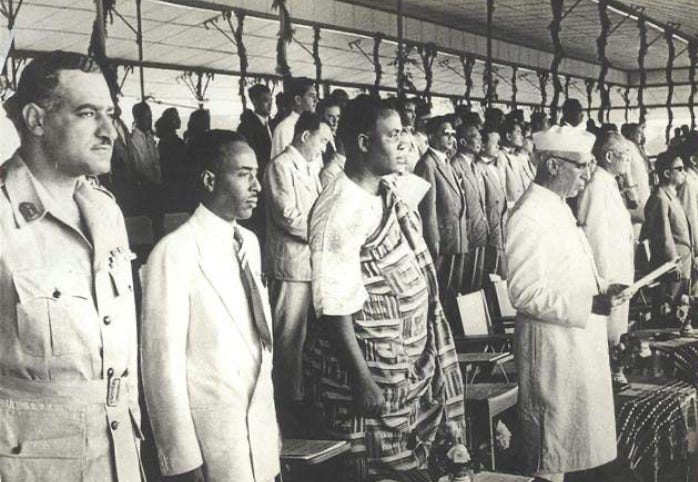
The Bandung Conference was held in April of 1955. It was a meeting of representatives from 29 nations that then contained 65 percent of the world’s population, which were peoples of color that had been colonized or interfered with by European powers. 

This conference was commonly known as the Asian-African Conference. Indonesia, India, Pakistan, Burma and Ceylon organized it and then invited 25 more countries to send representatives and observers. The invited countries were (in alphabetical order here): Afghanistan, Cambodia, China, Egypt, Ethiopia, Ghana (then called “The Gold Coast”), Iran, Iraq, Japan, Jordan, Laos, Lebanon, Liberia, Libya, Nepal, the Philippines, Saudi Arabia, Sudan, Syria, Thailand, Turkey, Vietnam Democratic Republic, South Vietnam, and Yemen. 

After World War II ended, the only two military superpowers were the United States and the U.S.S.R. which competed with each other for influence in the Third World.  The United States was initially invited to the conference but refused to send a representative. The USA denounced this conference. While these newly independent nations did not want to align with the Eastern bloc or the West, the Soviet Union (U.S.S.R.) did gain considerable influence in the region. Black Americans Richard Wright, and US Congressman Adam Clayton Powell, Jr., however, did attend. 

Black novelist Richard Wright recorded what he witnessed at this conference where Africans, Asians, Black Americans, East Indians, Indigenous Peoples and other peoples of color met in Bandung, Indonesia to figure out a way forward in the new post-colonial era. No European nations were invited.
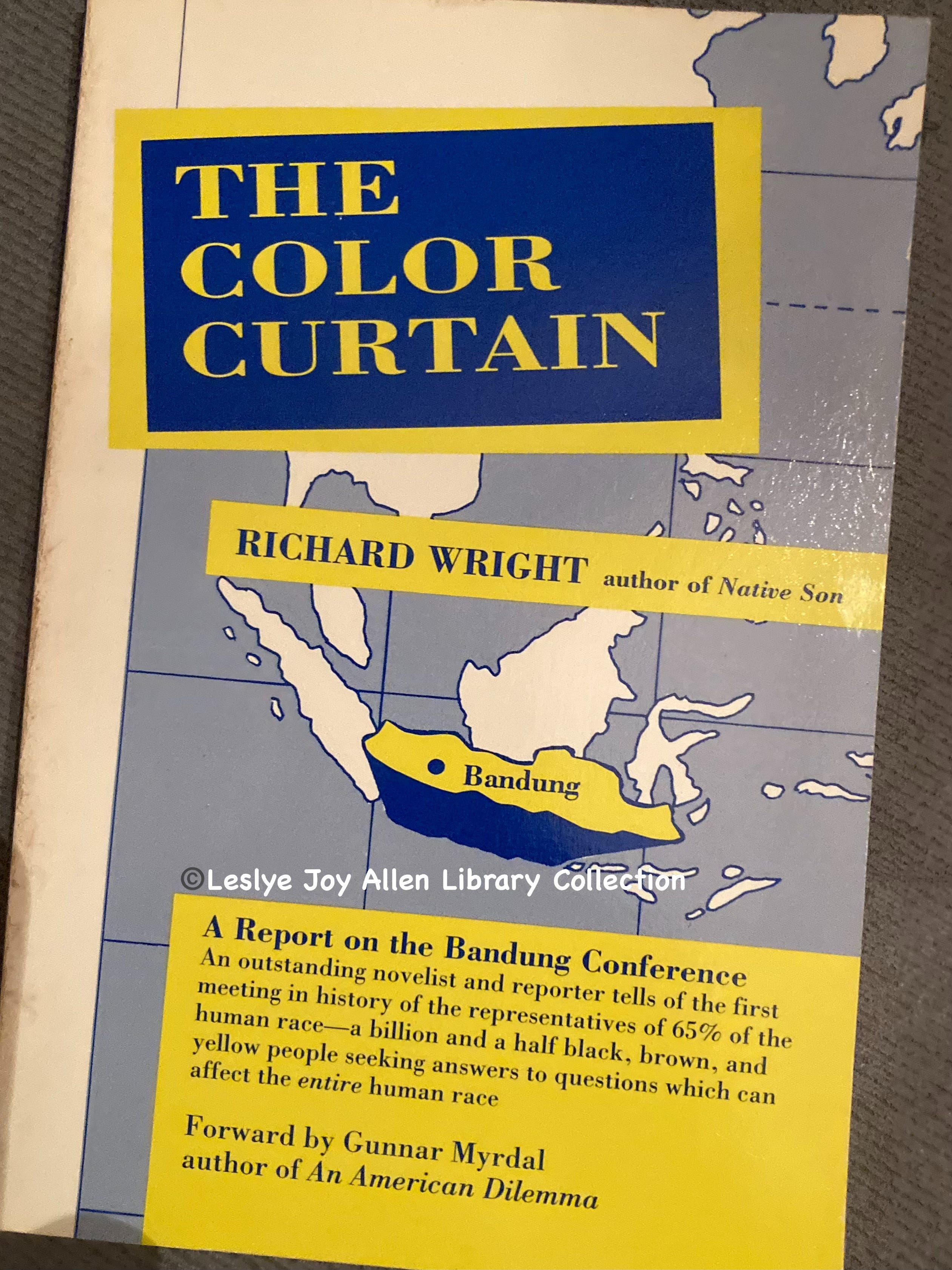
The conference allowed newly independent nations to assert their sovereignty. European colonialism’s oppression and exploitation and interference in African and Asian countries engendered a need for these nations to meet so that they could successfully deal with each other. 

The outcome of this conference was the Non-Aligned Movement which discouraged countries in attendance from aligning with First World and Second World nations. It also produced an agreement called “The Ten Principles of Peaceful Coexistence” which emphasized cooperation, respect for boundaries and sovereignty, non-interference in each country’s affairs, and resistance to any aggression from the Western World.
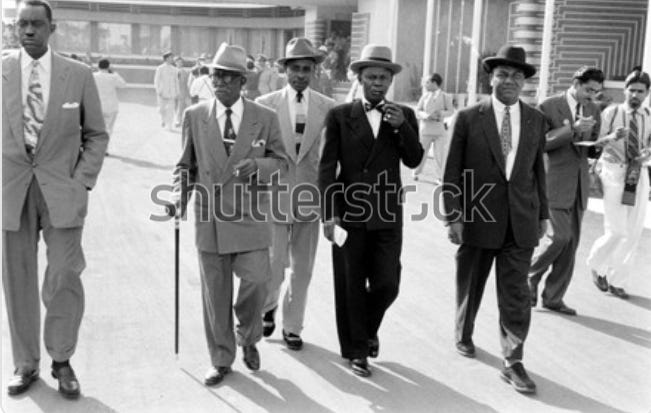
I encourage everyone to read author Richard Wright’s observations about Bandung and recognize that not only are all of these nations of color much more geopolitically complex than they were 70 years ago, they are also more heavily populated today with much younger populations than Europe. 
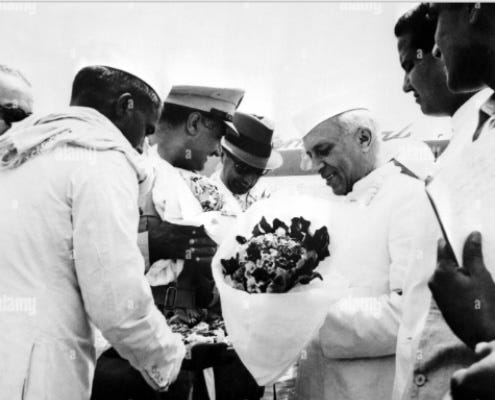
Referred to now as The Global Community, people of color now make up roughly 85 percent of all the people on this earth. Felon 47 and his yes-people know what these numbers mean which is why they want to stave off the inevitable by attempting to occupy and place Canada and Greenland under the US umbrella. Yet, the United States is disadvantaged in numerous ways.

Even though the USA still has perhaps the most skilled military in the world, China has the largest military. The USA is now seen as a pariah by most of the world courtesy of the person sitting in the Oval Office and his inept Defense Secretary Pete Hegseth, who may soon be replaced. Even worse, most of the US population is unilingual whereas many individuals in The Global Community are multilingual. That does not bode well for this nation that is slowly becoming isolationist to the point where we could lose allies, or worse, we lose knowledge about what the rest of the world is planning.

It would be interesting if another Asian-African conference, such as the one held in 1955, were held today or sometime in the near future. I also wonder which nations would not be invited.

©️Leslye Joy Allen

I am an Independent Historian, Oral Historian and Dramaturge. Please consider supporting my work with a few bucks for Coffee and Eggs via my CashApp.

You can also subscribe to my writings on Substack and stay in the loop with the best new research, history, journalism, prose, poetry, and etcetera.

All blogs written by Leslye Joy Allen are protected by U. S. Copyright Law and licensed under a Creative Commons Attribution-NonCommercial-NoDerivs 3.0 Unported License. Any partial or total reference to any blog authored by Leslye Joy Allen, or any total or partial excerpt of any blog authored by Leslye Joy Allen must contain a direct reference to this hyperlink: https://leslyejoyallen.com with Leslye Joy Allen clearly stated as the author.  Postings or blogs placed here by other writers should clearly reference those writers.  All Rights Reserved.
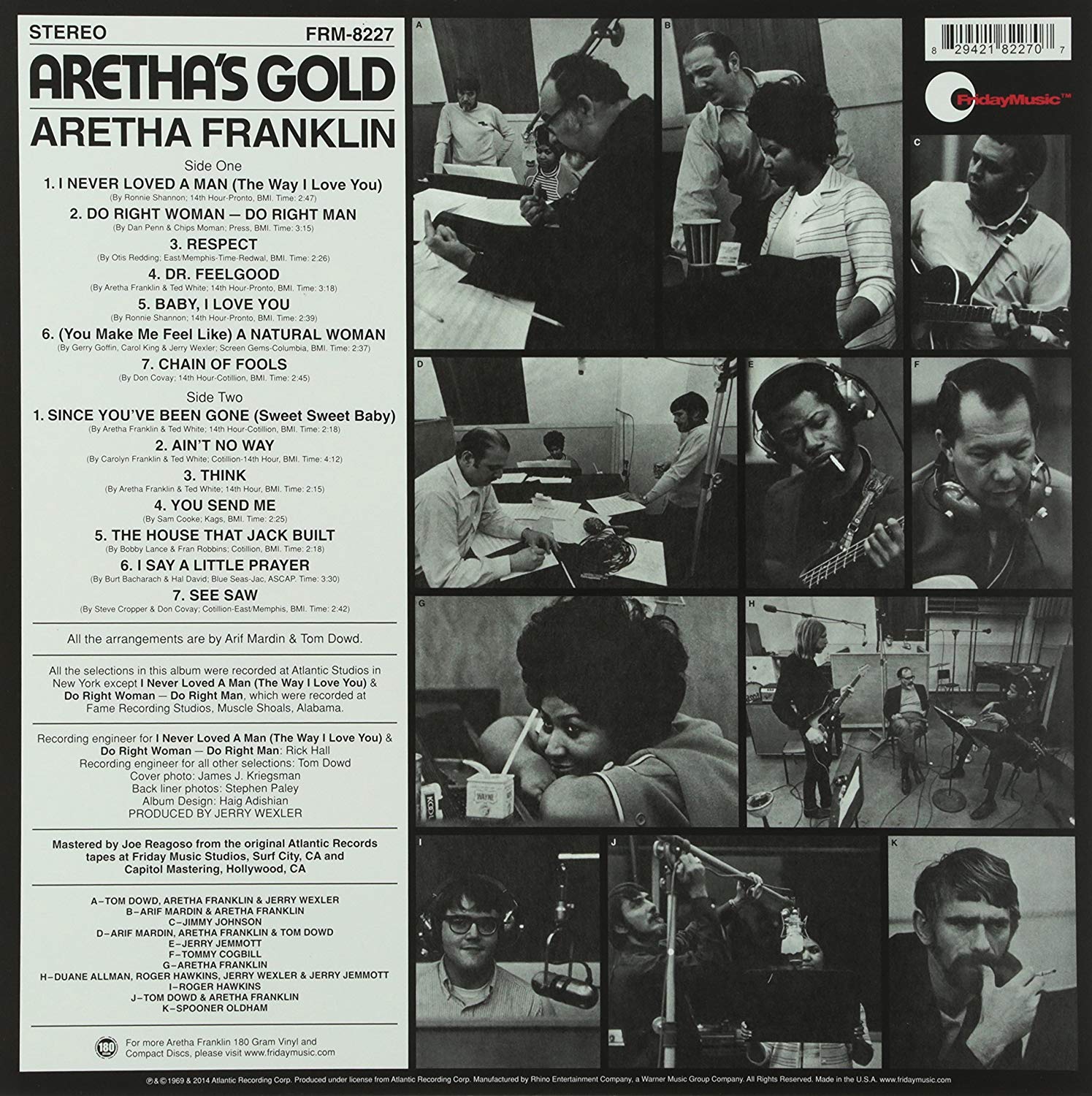
Aretha: A Mini-Multi-Ethnic History Lesson

by Leslye Joy Allen

Copyright © Leslye Joy Allen.  All Rights Reserved

Aretha is/was international and global and pro-Black and pro-people of color long before those phrases became buzz words. But you already know Aretha. She’s part of the soundtrack of my/your life. If you were paying attention, you know about her activism, her once offering to pay Angela Davis’ bail; and the hurt in her voice at Martin Luther King, Jr.’s funeral.  My Dad was there.

When he got home he said, “This is the only time I’ve ever heard Aretha sound so destroyed.”  But let’s consider the setting at Atlantic Records that nurtured her after her dad, the Reverend C. L. Franklin decided that Aretha’s voice was as secular as it was sacred; that her piano-playing was as inventive as anyone out there. I always, always wanted Aretha to make an instrumental album of nothing but her on piano, but I digress…

Ahmet Ertegün, our brother from Turkey, along with Jerry Wexler, founded Atlantic Records with the mission to produce some of the best Rhythm and Blues and Soul music ever. They succeeded. Not long after they made Ray Charles a household name, they signed Aretha Franklin, who reigned as Queen on a record label that had no shortage of music luminaries: Big Joe Turner, Ruth Brown, Otis Redding, Wilson Pickett, The Drifters, The Spinners, The Pointer Sisters, The Modern Jazz Quartet, Crosby, Stills, Nash, & Young, Donny Hathaway, Roberta Flack, The Bee Gees, and the list goes on.  

The early days for Aretha consisted of recording sessions with musicians, the majority of whom were young white men from Muscle Shoals, Alabama, a tiny town that still does not have 15,000 residents. The Black brothers in the band grew up with Rhythm and Blues, but these white musicians took a turn toward the Blues and Soul Music and never, ever looked back. These cats backing Aretha produced some of the most poignant, memorable, timeless, and soulful music in the twentieth century.

Beginning in the early 1960s, Arif Mardin served as Aretha’s principle producer for over two decades at Atlantic Records. Mardin, another musical genius from Istanbul, Turkey impressed the hell out of Dizzy Gillespie and Quincy Jones, so much so that after meeting these two Black American musical giants in 1956 after a State Department-sponsored concert, he became the first recipient of the Quincy Jones Scholarship at the Berklee School of Music in Boston. After Mardin graduated in 1961, he went to work for Atlantic Records. Aretha acknowledged him as the positive turning point in her career.  Together they churned out the hits all of us already know.  He produced that incredible gospel album “Amazing Grace” that everybody still talks about, and still plays.

So what is my point?  Well, the whole concept of globalization has always existed in music and the arts; and it, for damned sure existed with Aretha; and for people of color.  That multi-ethnic colored world that some white folks fear, the one that seems to be suddenly upon us has always been here.  You’ve been grooving to it, remember?

But know this: I don’t just know my people when I see them; I know them when and where I hear them. Marinate on that for a while. Rest in Paradise Queen of Soul, Aretha Louise Franklin.

Copyright © Leslye Joy Allen.  All Rights Reserved.

This blog was written by Leslye Joy Allen and is protected by U. S. Copyright Law and licensed under a Creative Commons Attribution-NonCommercial-NoDerivs 3.0 Unported License. Any partial or total reference to this or any blog authored by Leslye Joy Allen, or any total or partial excerpt of this or any blog by Leslye Joy Allen must contain a direct reference to this hyperlink: https://leslyejoyallen.com with Leslye Joy Allen clearly stated as the author. All Rights Reserved.

A Turk Talks Atlanta: Another Perspective of Race and America

Weary Self-Portrait 2

Wear Self-Portrait 2 (Copyright © 2014 by Leslye Joy Allen. All Rights Reserved.)

By Leslye Joy Allen

Copyright © 2014 by Leslye Joy Allen. All Rights Reserved.

On Wednesday, September 10, 2014, I boarded the MARTA train here in Atlanta heading home from teaching a morning class and having a brief meeting with a professor. When I entered the train station, the humidity was overpowering. A man in a business suit that appeared to me to be either Arab or Turkish, pulled off his jacket. He looked at me and smiled and said in a thick accent, “HOT-LANTA is not just a nickname, eh?”

We laughed and began to exchange pleasantries about the weather and the city. He informed me that he has to travel all around the United States quite a bit, but he said something that struck me.

He said rather seriously, “Your young people, the students and the school children, are so much more polite and friendly. They are nowhere near as noisy or ill mannered as I have seen in so many other cities around the country. I like Atlanta, except for these humid days.”

We laughed as we both boarded the southbound train. I asked him where he was from. He was originally from Turkey. Then I asked him why he thought Atlanta students were so much quieter. He said that in some places around the world, people consider Americans to be rather loud or at least that is the general stereotype. “In fact,” he said, “I saw a restaurant once with a sign that said, No Loud Americans, please.”

He saw a look on my face that suggested to him that I had another question. He said, “I am always flying in to the Atlanta airport and taking your train to downtown, and almost all the kids and young people I see are Black and polite. Some of them dress funny, but all have been friendly and rather quiet compared to what I have seen elsewhere.”

I had to scratch my head. For while I deal with large numbers of respectable, hard-working young Black students all the time, the perception from many quarters of Atlanta and throughout the United States is that to be in the company of young Black people means you will be constantly annoyed by loud music and loud conversation. Truthfully, I have encountered loud and rude behavior from young folks of all races and ethnicities right here in Atlanta, but it has not been nearly as severe or as often as some people might think.

This Turkish man taught me something about perspective and why I am glad I now strongly insist that my students and friends read foreign news reports as often as possible. The view from some place else is not the same as when you routinely see the same folks all the time, even when those folks are your own people.

Importantly, this Turkish man decided to look at Atlanta and Black people with eyes and ears that have not been trained to only focus on the disasters that are regularly reported on the six o’clock news. He has been observant enough to notice that when people encountered Americans overseas who were loud, that the loud American—stereotype or not—was not a racial stereotype, but a national one.

In the weeks and months ahead as we Black folk all process so much of the bad news about domestic abuse, gender discrimination, racial profiling, violence and war, I hope that we remember that perspectives about who and what we are as a people are not always as negative as the pundits would have us believe.  I hope we also realize that the constant worry about our image is unnecessary.  People here and around the globe are either intelligent enough and informed enough to form a reasonable opinion or they are not.  No degree of sugar-coating or covering up anything will change perspectives in the United States or abroad.

Yet, I also hope we remember that the perspectives of people who are on the outside looking in, who do not live with us constantly, have much to tell us if we bother to listen to and look for those perspectives. Yet, the only way to listen to those perspectives and look for those other opinions abroad is to make sure we are not the loud and brass Americans that only think our perspectives matter.  Peace.

Copyright © 2014 by Leslye Joy Allen. All Rights Reserved.

This Blog was written by Leslye Joy Allen & is protected by U. S. Copyright Law and licensed under a Creative Commons Attribution-NonCommercial-NoDerivs 3.0 Unported License. Any partial or total reference to this blog, or any total or partial excerpt of this blog must contain a direct reference to this hyperlink: http://leslyejoyallen.com with Leslye Joy Allen clearly and visibly stated as the author. All Rights Reserved.