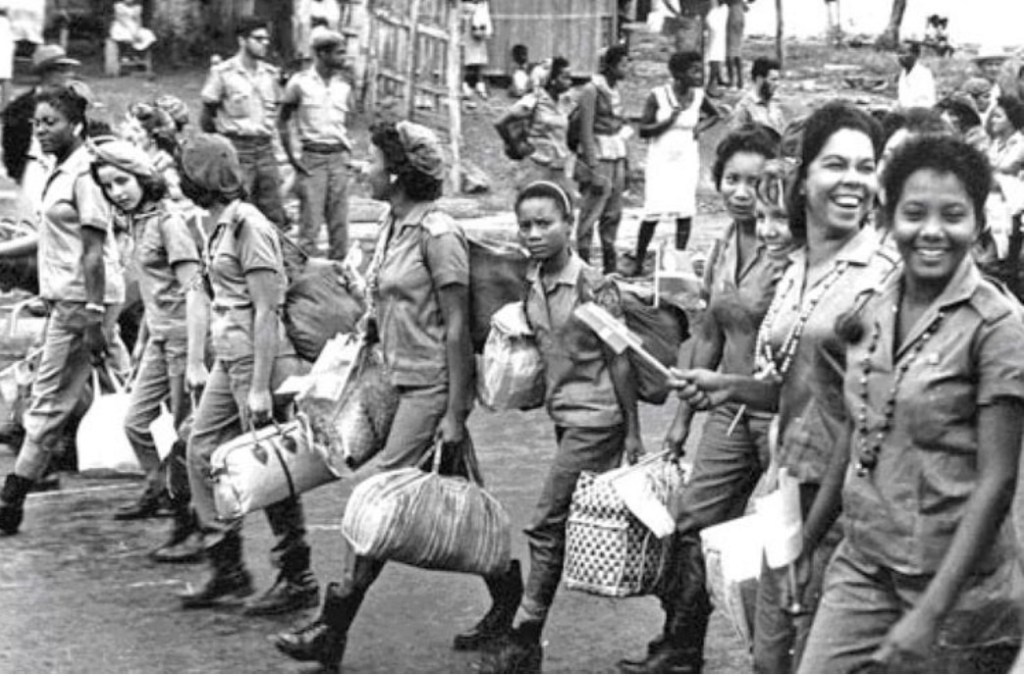
A Personal Prayer of Cuba

by ©️Leslye Joy Allen

The following below that is written in italics is partially a meditation on Cuba. It is a response I wrote to a piece about Cuba’s current crisis exacerbated by American neglect and cruelty that was written by Arturo Dominguez. A link to his exceptional article is at the very end of this essay. What’s in italics is a rumination I wrote to Arturo:

“I still remember reading that when Afro-Cuban musical artists came to perform in the United States that they had to perform in the U.S. for free. When asked why they were willing to perform for nothing, the answer was always the same: “We want to see where Dizzy Gillespie was born.”

Thanks for this report Arturo Dominguez because every time there is a sanction, a deprivation, I am reminded that no one suffers in Cuba but the people themselves. I still remember the heinous and wretched Helms-Burton Act which banned ships who docked in Cuba’s ports from docking in the United States for several months.

I remember my professors having to fly out of Atlanta to Canada and then taking a flight from some airport in Canada to Havana to do whatever research they were performing on their visits.

The United States has done nothing but made an example of Cuba as a message to other countries in Latin America and the Caribbean that says “This is how far we’ll go; this is how bad we’ll treat you, if you don’t fall in line.”

I might just turn this comment into a meditation.”

A few moments after reading Arturo’s essay I stumbled on one of my favorite thinkers Vijay Prashad who also was offering his thoughts on the viciousness of the United States government against the Cuban people because it is the people that suffer—No one else. (A link to Vijay’s essay is at the end.)
I don’t have the strength to comment on Prashad’s piece right now except that it is brilliant and accurate. I will leave it to you dear reader to examine both his and Arturo’s essays at your leisure. I have only one thing to say.

One line of my paternal family was sold as slaves from Santiago de Cuba to the mainland United States during the period of slavery in this Western hemisphere. My paternal great grandmother was born a slave named Mollie Laws. Her previous family surname was Layende. 

Like most people during the 1700s and 1800s, when one moved (or was sold) some place else the last name was changed to adapt to the new culture one was inhabiting. In the United States, it was typically expected that you Anglicize your name to something that English speakers could pronounce. So “Layende” became “Laws.”

Anyhow I used to relay my personal history to my History students in an effort to make sure that they understood that Chattel slavery took place throughout the Western world. Importantly, what we now call the United States received less than 6 percent of all the Africans transported to this hemisphere during the trans-Atlantic slave trade. The majority of Africans (around 95 percent) landed in what is now named Latin America and the Caribbean. 

I don’t have any deep analysis here about how difficult Afro-American genealogy can be. I don’t have any deep commentary about the many cultures and cultural differences that exist between all of the descendants of Africa who occupy this hemisphere except I have always known that for better or worse I belong to them.

Right after I read Arturo’s essay and then Vijay’s essay, I recalled a favorite memory from the classroom. A student whose name escapes me now came to class after Spring Break with a faded photograph he took while out on the Atlantic ocean. 

He learned that I had roots in Cuba and so did he. He pulled out this faded photo taken on the water. Far off in the distance I saw something that looked like a line stretched across the water. 

“What is that long line in the water that I see in the distance?,” I asked. 

That line across the water in the distance is Cuba, Ms. Allen. I hope you get there someday.” 

©️Leslye Joy Allen

I am an Independent Historian, Oral Historian and Dramaturge. Please consider supporting my work and research with a few bucks for Coffee and Eggs via my CashApp or become a paid subscriber to me on Substack to help me sustain my research.

All blogs written by Leslye Joy Allen are protected by U. S. Copyright Law and licensed under a Creative Commons Attribution-NonCommercial-NoDerivs 3.0 Unported License. Any partial or total reference to any blog authored by Leslye Joy Allen, or any total or partial excerpt of any blog authored by Leslye Joy Allen must contain a direct reference to this hyperlink: https://leslyejoyallen.com with Leslye Joy Allen clearly stated as the author.  Postings or blogs placed here by other writers should clearly reference those writers.  All Rights Reserved.

Hyperlinks to additional articles are below photos.
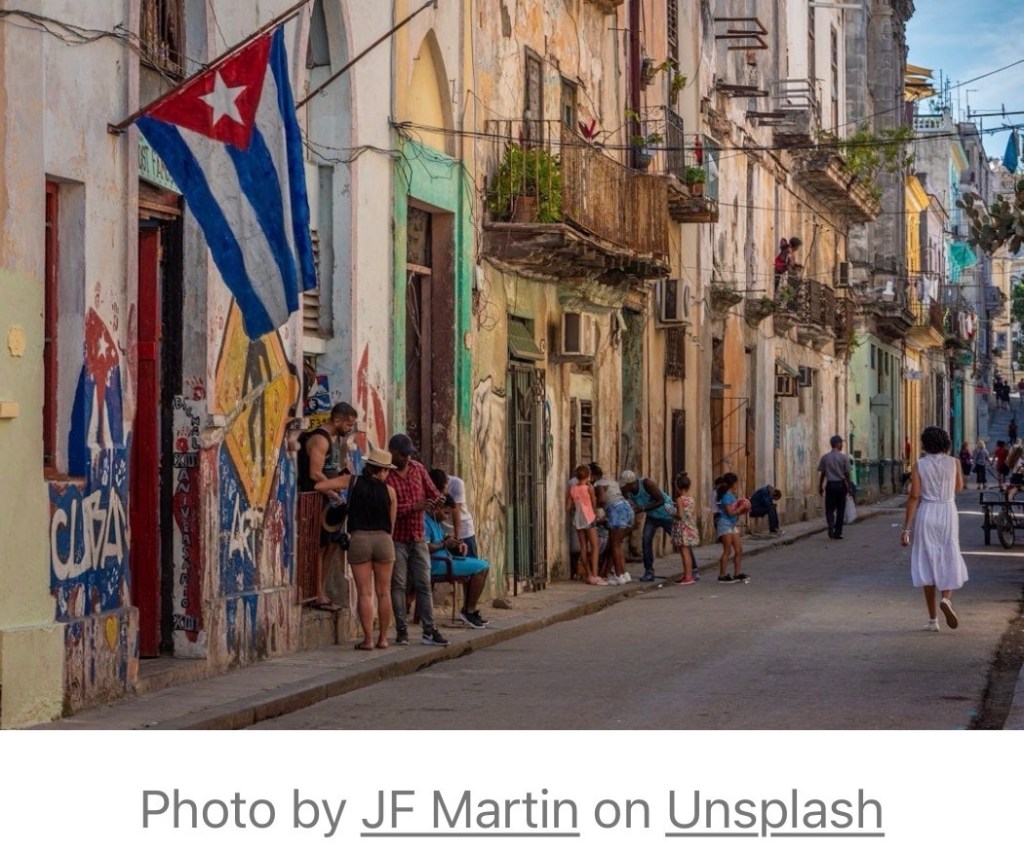
(from Analysis: Cuba on the Brink)

(from Why is the United States Afraid of Cuba?)

18 Days Earlier We Marched and then We Lost…

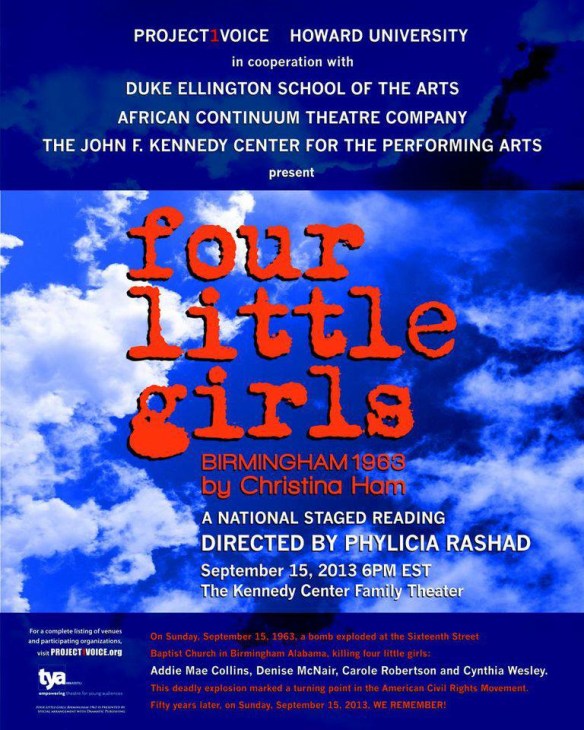
A staged reading of the play "Four Little Girls" streaming live online from the Kennedy Center on September 15, 2013 at 6:00 PM EST.

A staged reading of the play “Four Little Girls” streaming live online from the Kennedy Center on September 15, 2013 at 6:00 PM EST.

…FOUR LITTLE GIRLS

By Leslye Joy Allen

Historian, Educator, Theatre and Jazz Advocate & Consultant, and Doctoral Student

Copyright © 2013 by Leslye Joy Allen.  All Rights Reserved.

There were four little Black girls whose lives were snuffed out on Sunday morning, September 15, 1963 when a bomb planted by racist White terrorists exploded in the Sixteenth Street Baptist Church in Birmingham, Alabama.  They were, Denise McNair who was the youngest at age 11, Carol Robertson aged 14, Cynthia Wesley** aged 14 (**Real and Birth name is “CYNTHIA MORRIS”), and Addie Mae Collins was aged 14.  When that bomb went off, most Black Birmingham citizens and most Black Americans forgot about the “March on Washington,” held a mere eighteen days earlier on August 28.  Not long after the blast, all hell broke loose.  The New York Times headline on the following day read (click here for article): “Birmingham Bomb Kills 4 Negro Girls in Church; Riots Flare; 2 Boys Slain.

Birmingham, then nicknamed “Bombingham,” had an ugly history it would take decades to live down.  A middle class neighborhood in the city had suffered so many bombings that it was nicknamed “Dynamite Hill,” because angry Whites bombed homes to stop Black people from moving into the area.  Dynamite Hill was the neighborhood that honed and developed future Phi Beta Kappa scholar, radical activist, and author Angela Davis.  Yet, that is a story for another essay.  There are those of us, however, who think the story of what and who we lost on that fateful Sunday morning deserves its place in all the national narratives of American history.  I am one of those people; so is actor and activist Erich McMillan-McCall.

My friend, Erich is the founder of Project1Voice, an organization devoted to preserving Black theatre companies and our important historical legacies.  I should add that not only is he a multitalented performance artist with credits on Broadway, national stages, and television, he is also a visionary.  I say he is a visionary, however, with a very important acknowledgement of the type of communities that both of us grew up in as children.  Black women, he emphasizes, were at the center of these communities.  Yet, in several of our usual marathon-long telephone conversations, he has lamented that he is bothered by how Black women’s voices are not only muted or unacknowledged in the historical narratives, but also on the stage, and in the arts.

Erich and I are products of a time when to be young and Black and living in the American South did not necessarily mean that everywhere you went there was danger; what it tended to mean was the Black community in which you grew up was supportive, filled with a great deal of love and encouragement.  There were threats to our wellbeing, to be sure.  Yet, those threats largely came from outside the neighborhoods where we lived.  As much as some very sympathetic White liberal folks and some younger Black Americans have erroneously assumed otherwise, our Black parents and elders made sure we had normal childhoods with school, church, piano lessons, baseball games, concerts, plays, parties, and family picnics.  They did all of this for us in spite of the racism and the perpetual threat of (and often real) racial violence that characterized much of life for us during the 1960s and 1970s.  Erich understands this type of upbringing.

His proactive approach, that provides greater visibility to financially struggling Black theatre companies while engaging educational, civic, and political organizations in this collective struggle for artistic, political, educational, economic, and historical viability is not exactly a new way of doing things.  The Black community that I grew up in was filled with folks who could sing, dance, act, organize, who taught school, practiced medicine, ran businesses, and helped elect Black people to political office—This is what we were/are.  I loved this Black community, and the activism and the theatre it produced.  I still live in the neighborhood my family moved to when I was around the age of eleven.  It has not entirely lost those same qualities that it had during my childhood.  However, I fear that these types of communities become more rare with each passing decade.  At the same time, I am gratified and encouraged by Erich’s embrace of the old collaborative efforts of our neighborhoods and organizations that we remember about our childhoods; and his insistence that those qualities can be modified and used to great affect in the information age.  I hope this is the beginning of a new trend.

Sunday, September 15, 2013, is the 50th anniversary of one of our worst tragedies.  On this date, Project1Voice, in collaboration with Howard University, African Continuum Theatre Company, the Duke Ellington School of the Arts, and the John F. Kennedy Center for the Performing Arts will present a reading of the play “Four Little Girls,” written by Christina Ham, directed by Phylicia Rashad.  It will stream live online at 6:00 PM EST via the Kennedy Center’s website.

Targeted toward young audiences, this will be one of those wonderful opportunities to sit down in front of your computer screens with your children and your friends to watch this important piece of theatre and history—Free of Charge.  You should also check for viewing parties around the country.  Additionally, over thirty Black theatre companies around this nation will be presenting “Four Little Girls” simultaneously on the fiftieth anniversary of this national tragedy.

Erich and I both remember neighborhoods where middle class and working class Black families looked out for each other and each other’s children.  These facts, however, are precisely why the slaughter of Denise McNair, Carol Robertson, Cynthia Wesley** (**born as “Cynthia Morris,” but cited in the historiography and in most news reports as “Cynthia Wesley“) and Addie Mae Collins was so devastating to Birmingham’s Black community and other Black communities throughout the nation.  The reading of this play is not only a way to honor these dead children, but to also recall and remember the kind of stable and warm neighborhoods where all of them and us grew up.  Let us honor these little girls by going home again.  Peace.

Please visit: Project1Voice and the Kennedy Center for the Performing Arts for more information about this play; how to access the play via the internet on Sept. 15, 2013 at 6 PM EST; and for information about other great performances and programs.

Leslye Joy Allen is also a perpetual  and proud supporter of the good work of Clean Green Nation.  Visit the website to learn more about it: Gregory at Clean Green Nation!

Copyright © 2013 by Leslye Joy Allen.  All Rights Reserved.

Creative Commons License This Blog was written by Leslye Joy Allen and is protected by U. S. Copyright Law and licensed under a Creative Commons Attribution-NonCommercial-NoDerivs 3.0 Unported License.  Any partial or total reference to this blog, or any total or partial excerpt of this blog must contain a direct reference to this hyperlink: http://leslyejoyallen.com with Leslye Joy Allen clearly stated as the author.

** Shortly after this blog was published, I, Leslye Joy Allen, was contacted by Fate Morris, the brother of the young girl commonly known in historical and news records as “Cynthia Wesley.”  Fate Morris insisted that his sister’s real name is “CYNTHIA DIANE MORRIS,” and that authorities recorded her name incorrectly the day of the explosion.  Mr. Morris also informed me that he has decided to accept the Congressional Medal for his sister.  Originally he and Sarah Collins Rudolph (sister of Addie Mae Collins) had declined this medal.  Please read the following article about the survivors of this tragedy: “Survivor of ’63 Bombing Seeks Funds”** 

Please join Project1Voice‘s commemoration of the lives of these four little girls: