The Black Study Group That Transformed a Generation: The Afro-American Association

by © Leslye Joy Allen

The photo below of Don Warden is from the archives of Khalid and Jamila al Mansour. Don Warden was one of the founders of the Afro-American Association at the University of California at Berkeley. The other founding members were Donald Hopkins, Otho Green, and Henry Ramsey. 

This organization formed in late 1961 and began as a student study group in 1962 at the University of California at Berkeley when there were literally no identifiable Afro-American and African Studies programs on any U. S. college and university campus. The group devoured works by Ralph Ellison, W.E.B. DuBois and other Black scholars that were left out of many colleges curricula. Study meetings of its members initially began at the off-campus home of a UC Berkeley student, and grew from there. In fact, chapters of this organization appeared on hundreds of college campuses in the United States with members numbering in the thousands by the mid-1960s.
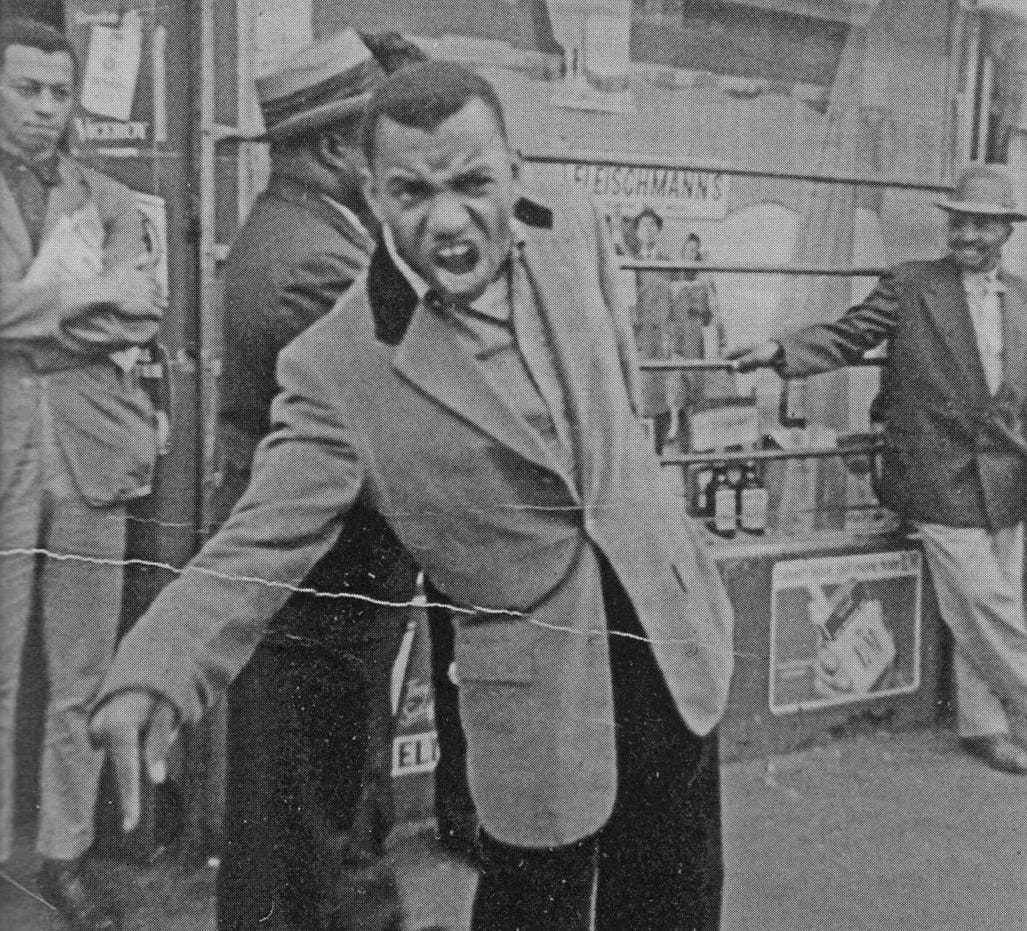
The objective of the group was to read and study about the Afro-American, African, and Afro-Diasporic past in order to confront the institutional racism, colonialism and bigotry found in the United States and throughout the world. 

Warden, a UC Berkeley law student, regularly went into Black neighborhoods and literally spoke to young Black citizens directly on street corners or wherever they were. He encouraged them to study about Afro-American and African history in order to fight against their feelings of worthlessness that often accompanied experiencing chronic racism. 

He listened to them tell him about their problems of unemployment, poor housing, you name it. He, like most of his members, espoused that in order to change all systems of oppression, one needed to study about the past in order to do so. Warden eventually became a lawyer for the Black Panther Party of Self-Defense as well as granting legal assistance to the Nation of Islam when Malcolm X was still a member of the group.

The Afro-American Association was heavily influenced by the ideologies of Black American activists Robert F. Williams and Malcolm X. The AAA understood that only sustained study of Black people/s would foster the kind of thinking and strategies for combating systems that sought to suppress and control Black and Brown communities all over the world. Only deep research would correct the far-too-often feelings of inadequacy that came with being Black and oppressed. 

In 1962 when this study group, that was soon named the Afro-American Association, began its study group meetings at UC Berkeley there were roughly only about 100 Black students out of 20,000 white students. And in 1962 there were only two members of the group that were not born in the United States. One was from Jamaica; the other was from India.

In 1962 this tall, skinny, young Black man from Orange Hill, Jamaica and this petite and short, very brown young woman from Chennai, Tamil Nadu (in Southern India) dressed in her Sari and sandals met in an AAA group meeting.

The young man from Jamaica gave a pristine evaluation of how Great Britain had created a rather stiff and proper group of elite Black Jamaicans that often mimicked the mores and habits of British society. It was done, he said, to shield the world from knowing how racist the British empire actually was. The young man was calm, studious with very edgy ideas about the colonization of Black people/s around the world. 

The young brown woman in her Sari and sandals was intrigued. She too had been a British subject in her native state of Tamil Nadu in southern India. She knew something about what this young man spoke of, but not all of it. Back then, the typical path for academically talented Indian and Jamaican students was to study in England, that is if they could secure a path to graduate school. 

She rejected that path because there was no major in Biochemistry in India or in the UK that would have been available to a female. The skinny guy from Jamaica also rejected the educational path to the UK. His decision was so unusual that the approval for his exit from Jamaica took so long that he arrived at UC Berkeley two weeks after the Fall 1961 semester begun.

He, Dr. Donald Harris became a leading economist and she, Dr. Shyamala Gopalan-Harris became a leading biomedical scientist, a contributor to the identification of the function of rMNA, which greatly improved treatments for breast cancer. 

The early members of the Afro-American Association described her as warm, funny, “down for the cause” of Civil Rights and an end to colonialism, and also a fiery debater. At first one member of the AAA noted that some of them thought she was royalty because of the way she carried herself. Yet, she fit right in, several members noted. He was described as professorial even though he was in his early 20s. While their eventual marriage didn’t last (they married roughly 10 months after meeting), their firstborn daughter Kamala noted that she knew they loved each other and felt that if they had been a bit older and a bit more emotionally mature they might have made it. 

She cited them both as activists, and remembers going to protest marches with her parents in a stroller. The blueprint for their activism and for the creation of Afro-American and African Studies as disciplines were rooted in the activities in the Afro-American Association. While at UC Berkeley, Shyamala met and influenced arguably, one of Afro-America’s most important philosophers, Cedric Robinson.

Robinson’s book Black Marxism, first published in 1983, remains one of the most brilliant critiques and reassessments of the Eurocentric theories of Marxism. It has become a must-read in the literary canons of both Afro-American and African Studies.

It was Robinson who coined the phrase “Racial Capitalism.” He argued that capitalism was always based on race and race came before capitalism. Importantly there never was a clean break from European feudalism. He was one of the first Black scholars to identify “race,” as a component that European empires used when feudalism morphed into capitalism. 

Any study he maintained had to be central to Black people/s’ lived experiences wherever they were in the world. When I first read him, it became apparent that European Marxist scholars either forgot or tried to ignore that the peoples of Europe were once considered “races,” races and national identities that were eventually erased in exchange for their being identified as “white” which served the interests of European countries in their quest to colonize and dominate large portions of the world.

In 1959, Shyamala Gopalan was standing in line behind Cedric Robinson while they were both registering for classes. Both became members of the Afro-American Association. In the first edition of Black Marxism, there was only one person who was not a Black American listed in his group of early friends that Robinson acknowledged as influential on the development of his ideas. That person was Dr. Shyamala Gopalan-Harris.

So here’s a brief mini-history of the continuing of the Afro-American Association of University of California at Berkeley. Huey Newton and Bobby Seale who founded the Black Panther Party became members. Huey dared to show up at a meeting of AAA without having read the book assigned for that session. The members sent him home. He never showed up again unprepared. 

Future Congressman Ron Dellums was a member of the AAA at one time as was Kenny Freeman, a contributor to the Black Panthers 10-Point Plan. The AAA literally laid the academic groundwork for Afro-American and African Studies programs throughout the nation as underscored by historian and author Donna Jean Murch who traced the evolution and development of the Black Panther Party from its roots in the Afro-American Association. None of it began without the required reading and research and the on-the-ground grassroots activism that met Black communities in the Oakland area where they were.

I could go on about how police monitored the group’s members particularly when they spoke on street corners, or visited high schools to encourage reading and research among members of the Black community. Yet, I will not do that mainly because well-meaning, good people have started to use the internet like an online set of Cliffnotes

If you’re old enough to remember Cliffnotes you also remember that occasionally they were used instead of reading the actual book or doing the actual research. Yet, your ass was grass when a teacher or professor asked you a highly specific question that Cliffnotes did not cover and you hadn’t bothered to read the whole book.

So there’s a small bibliography below with a list of books that are worth your time. The message is clear: Either you put in the time and read or you remain a dilettante on matters that you need to know both for your safety and your sanity.

© Leslye Joy Allen

This essay was previously posted on Substack on January 22, 2026.

I am an Independent Historian, Oral Historian and Dramaturge. Please consider supporting my work and research with a few bucks for Coffee and Eggs via my CashApp or become a paid subscriber to me on Substack to help me sustain my research.

Recommended Readings:

Living For the City: Migration, Education, and the Rise of the Black Panther Party in Oakland, California by Donna Jean Murch

Fanon for Beginners by Deborah Baker Wyrick

Remaking Black Power: How Black Women Transformed an Era by Ashley D. Farmer

Black Marxism: The Making of the Black Radical Tradition by Cedric Robinson

Oregon Police Department Surveillance Files on Donald Warden and the Afro-American Association which kept surveillance documents on Donald Warden when he visited Oregon to encourage students to read and research.

The Afro-American Association: Forerunner to the Panthers

“How Kamala Harris’ Immigrant Parents Found a Home, and Each Other, in a Black Study Group” by Ellen Barry, September 13, 2020, New York Times.

The Truths We Hold: An American Journey by Kamala Harris

Remembering Cedric Robinson: Humanistic Imaginaries and the Black Radical Tradition

All blogs written by Leslye Joy Allen are protected by U. S. Copyright Law and licensed under a Creative Commons Attribution-NonCommercial-NoDerivs 3.0 Unported License. Any partial or total reference to any blog authored by Leslye Joy Allen, or any total or partial excerpt of any blog authored by Leslye Joy Allen must contain a direct reference to this hyperlink: https://leslyejoyallen.com with Leslye Joy Allen clearly stated as the author.  Postings or blogs placed here by other writers should clearly reference those writers.  All Rights Reserved.
Privilege Can Make You Really Dumb

by ©️Leslye Joy Allen

A few years ago, I received an email from a Black male performance artist that I know who is now retired. He dogged out another Black male performance artist after having attended a function. Don’t ask. I am not naming any names.

In this particular email he had nothing but vitriol for the other artist. I read his jealousy in every line because there was a time when the writer of this email was a hot topic of conversations. Yet, that ship had long since passed. 

The performance artist that criticized the other performance artist did not know that who he was criticizing was loved by one of my most beloved and righteous late cousins. She was a cousin who helped damned near every Black performer who ever entered her orbit. You have seen her acting mentees, because they are everywhere. My cousin was one of the founders of The League of Professional Theatre Women.

The man doing all of this unnecessary critiquing did not know that the artist he criticized spoke at my cousin’s memorial services. For him to not know that simple fact basically meant he never listened to me. Men do that quite often. He never realized how completely offensive he was because I never bothered to respond to his unnecessary email. He never did any research before he opened his mouth. Or maybe he did know everything and just didn’t care.

An intelligent, well-educated Black woman not only does her background work but she also assesses what is best left unsaid as well as said. If she is in the process of cutting a good business deal with your Uncle, and she knows that you are on the outs with your Uncle, she will never mention you in any conversation with him.

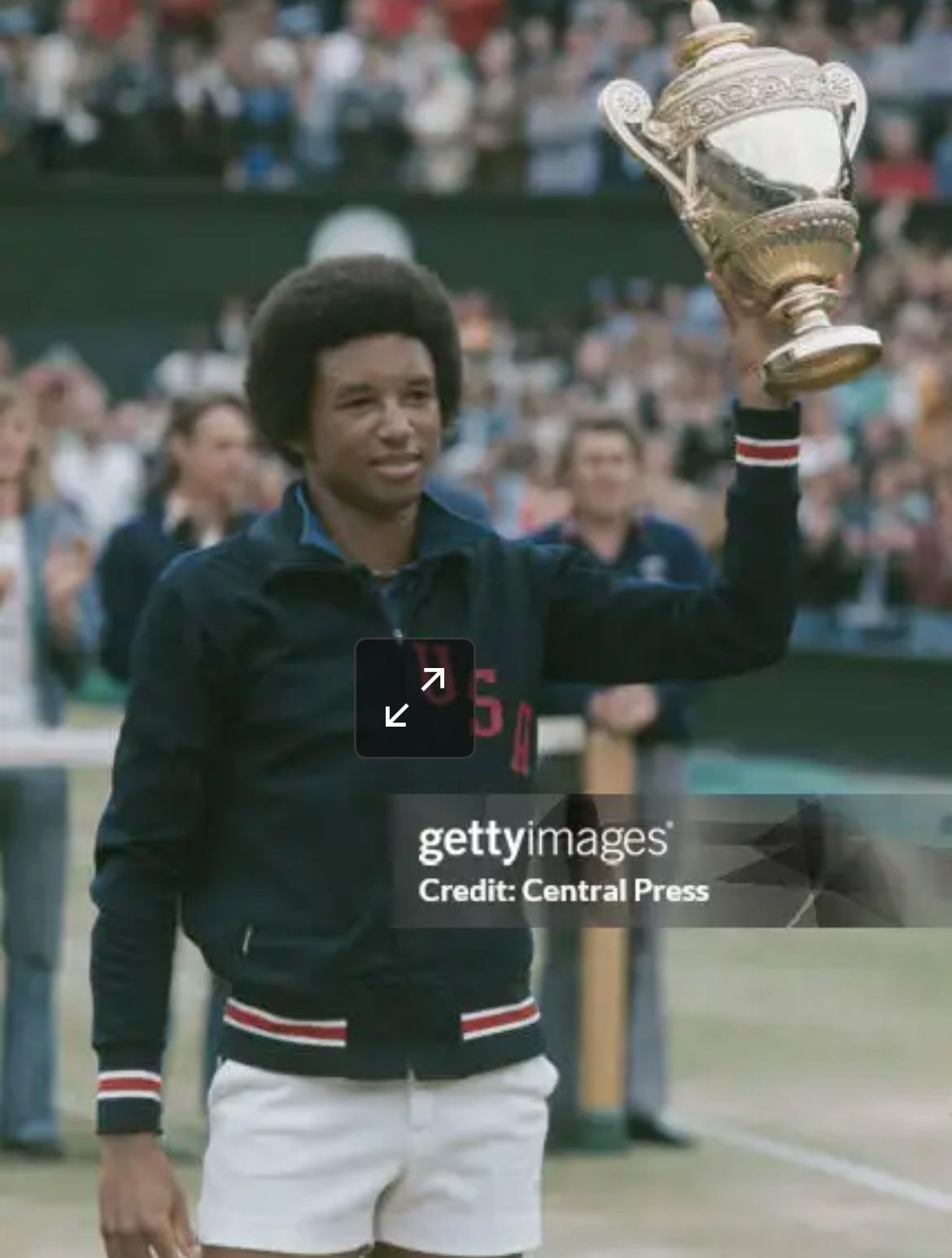
Male privilege in any man of any color or race or ethnicity teaches men that they don’t really have to be all that concerned with the ideas or issues that women are interested in. Male privilege teaches that it is not really necessary for men to pay that much attention to the ideas or issues important to women in order to function. One of the men who did not succumb to the effects of male-centricity was the late tennis champion Arthur Ashe.

Ashe (above) was the only Black male athlete I ever heard who said things like, “The average man who talks about how many women he has bedded can’t even explain the hormonal changes that occur when a woman is menstruating.”  I never forgot that because when he said it I knew that he could explain a woman’s menstrual cycle. He was a scholar, and an athlete that thought further than the head of his dick or the size of it. 

Well, white privilege operates the same way as male privilege. Many white people assumed that they knew/know all they needed to know about Black folks, Latinos, Native Americans, and other peoples of color. Yet, now many of the most honorable among them are groping in the dark as to how they arrived at this moment in time in the United States where democracy and their liberties are at stake.

Have you ever wondered why school shooters in the United States are 95 percent male (and roughly 52 percent white males) and damned near no one raises the question “Is there something wrong with young males?”? You hear or read the occasional commentary or the occasional essay raising this point, but the obvious problems affecting boys and young men are swept under the rug for the sake of the illusion of male supremacy while the malevolence these crazy bastards inflict on children and adolescents are treated like isolated incidents. 

If you do a quick Google search about the American population you will learn that Americans of every color, race, gender, and ethnicity only make up roughly 4.2 to 5 percent of the world’s population. 

Let me repeat it another way. Roughly 95 percent of the population of the entire world exists outside of US borders; and 85 percent of the world’s population are people of color. There’s a little chart in Consumption by the United States that compares our consumption to other countries. Although this analysis was conducted in 2008, it does paint a disturbing picture of American excess.

There is a severe penalty for not paying any real attention to the thoughts and circumstances of people of color, and of people who are not Americans. There’s a penalty for not paying attention to the thoughts and circumstances of women, and particularly of women of color. I have written about American-centricity before; and the perils that go along with it.

As I write this, Felon 47 is in Scotland trying to fend off every question from Scottish journalists who want to know why he will not release the Epstein Files. Americans of all stripes need not think this will not reflect badly on all of us. 

News is not always reported American-style everywhere in the world. What is important to us here in the United States is not always a headline somewhere else. Add the fact that Americans are primarily unilingual, and you can be sure there will be those moments when we just don’t know how damaged and inept we appear to the rest of the world because for most of us, all we speak is English. 

The penalty is that we automatically know less than the people who we believe are less important than us; and we don’t find out how in the dark we are until we’re all in trouble. It is not Felon 47 that we need to worry about, but rather the future he is designing for us long after he is gone.

©️Leslye Joy Allen

I am an Independent Historian, Oral Historian and Dramaturge. Please consider supporting my work with a few bucks for Coffee and Eggs via my CashApp.

You can also subscribe to my writings on Substack and stay in the loop with the best new research, history, journalism, prose, poetry, and etcetera.

All blogs written by Leslye Joy Allen are protected by U. S. Copyright Law and licensed under a Creative Commons Attribution-NonCommercial-NoDerivs 3.0 Unported License. Any partial or total reference to any blog authored by Leslye Joy Allen, or any total or partial excerpt of any blog authored by Leslye Joy Allen must contain a direct reference to this hyperlink: https://leslyejoyallen.com with Leslye Joy Allen clearly stated as the author.  Postings or blogs placed here by other writers should clearly reference those writers.  All Rights Reserved.
Chronic Ignorance

by ©️Leslye Joy Allen

Felon 47 was recently stunned to hear a Liberian official speak good English when the fact is the state that became the nation of Liberia was established by former African-American slaves with the assistance of the American Colonization Society in 1822. 

In 1847, the state of Liberia established itself as a Republic and was recognized as such by several European nations.

Yet, Trumpolini was amazed to hear a Liberian speak grammatically correct English when English has been Liberia’s official language ever since its inception as a settlement, then later as a country over 200 years ago.

It gets worse. Back when George W. Bush was president he admitted to Condoleeza Rice that he didn’t know that there were Black people in Brazil. Brazil has more people of African descent than any other nation outside of the continent of Africa itself.

During the trans-Atlantic slave trade 4.9 million Africans were transported to Brazil. Yet, George W. Bush—never the sharpest crayon in the box—was surprised that there were Black folks in Brazil. 

This kind of ignorance ranks right up there with the people who don’t know and never knew that the majority of Africans were not transported to the American Colonies/United States, but were transported primarily to Latin America and the Caribbean. 

And the worst ignorance of all is the notion that Africans learned specific skills once they left the continent. Africans in the Senegambia region of Africa had been planting rice for over 2,000 years before Yeshu’a ben Yosef (aka “Jesus”) was born. For the record, there is no letter “J” in the Hebrew and Aramaic languages that he spoke.

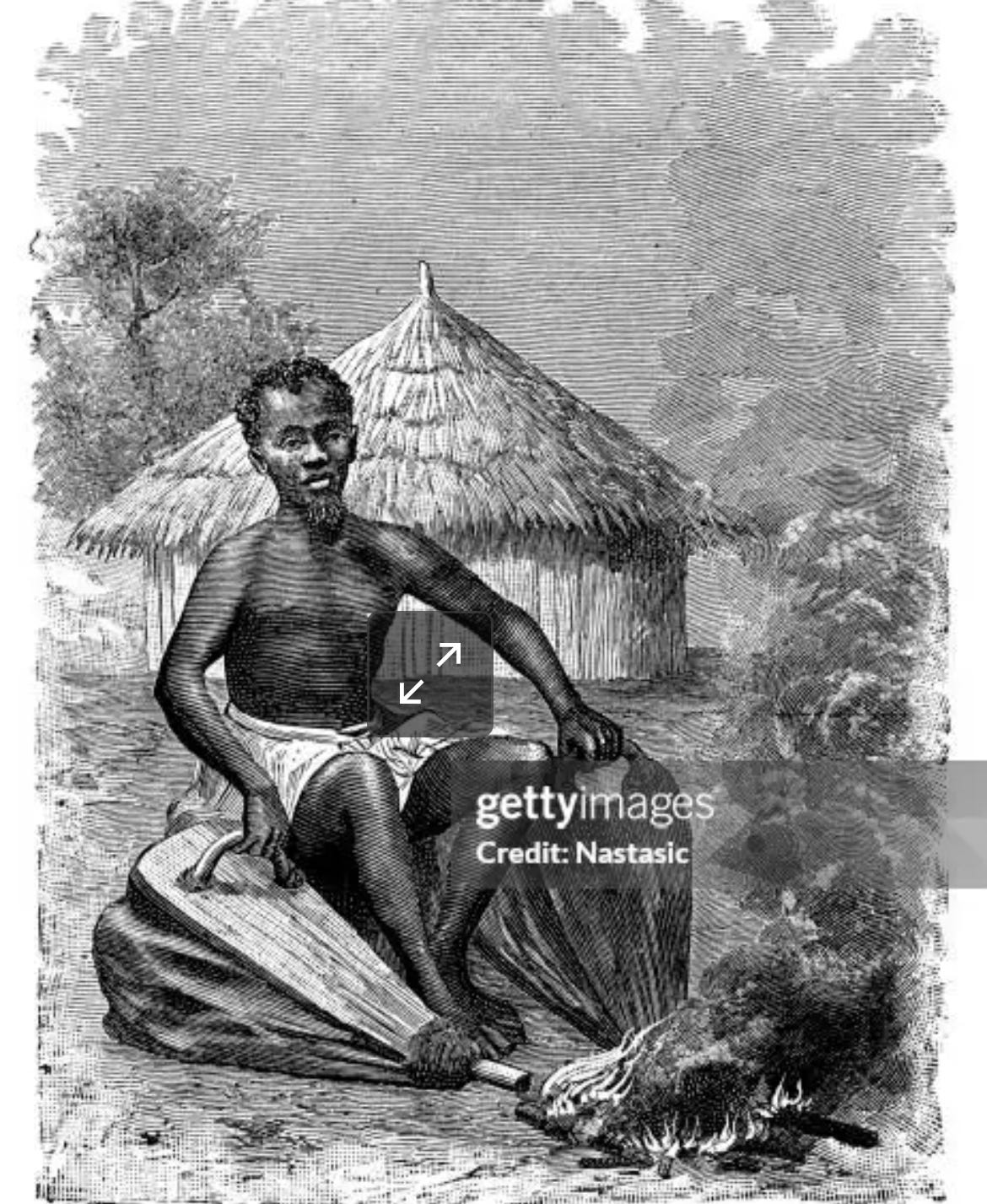
(Graphic of an African Blacksmith)

The Nok culture, the Kingdom of Kush and the Shona people of the continent of Africa were specialists in Iron smeltingthousands of years before there was any trans-Atlantic slave trade. Many African ethnic groups arrived here as Blacksmiths. Africans were transported to what Europeans called the “New World” or the “Americas” to do two things—perform the work Europeans did not want to do and the work Europeans could not do.

Now, just look at what is sitting in the White House: a man meaner than a rattlesnake and dumber than a box of rocks who doesn’t know how to do anything but mistreat people.

©️Leslye Joy Allen

I am an Independent Historian, Oral Historian and Dramaturge. Please consider supporting my work with a few bucks for Coffee and Eggs via my CashApp.

You can also subscribe to my writings on Substack and stay in the loop with the best new research, history, journalism, prose, poetry, and etcetera.

All blogs written by Leslye Joy Allen are protected by U. S. Copyright Law and licensed under a Creative Commons Attribution-NonCommercial-NoDerivs 3.0 Unported License. Any partial or total reference to any blog authored by Leslye Joy Allen, or any total or partial excerpt of any blog authored by Leslye Joy Allen must contain a direct reference to this hyperlink: https://leslyejoyallen.com with Leslye Joy Allen clearly stated as the author.  Postings or blogs placed here by other writers should clearly reference those writers.  All Rights Reserved.
The Intersectionality of Suffragist & Abolitionist Lucy Stone

by ©️Leslye Joy Allen

“Intersectionality is a metaphor for understanding the ways that multiple forms of inequality or disadvantage sometimes compound themselves and create obstacles that often are not understood among conventional ways of thinking.” — Kimberlé Crenshaw

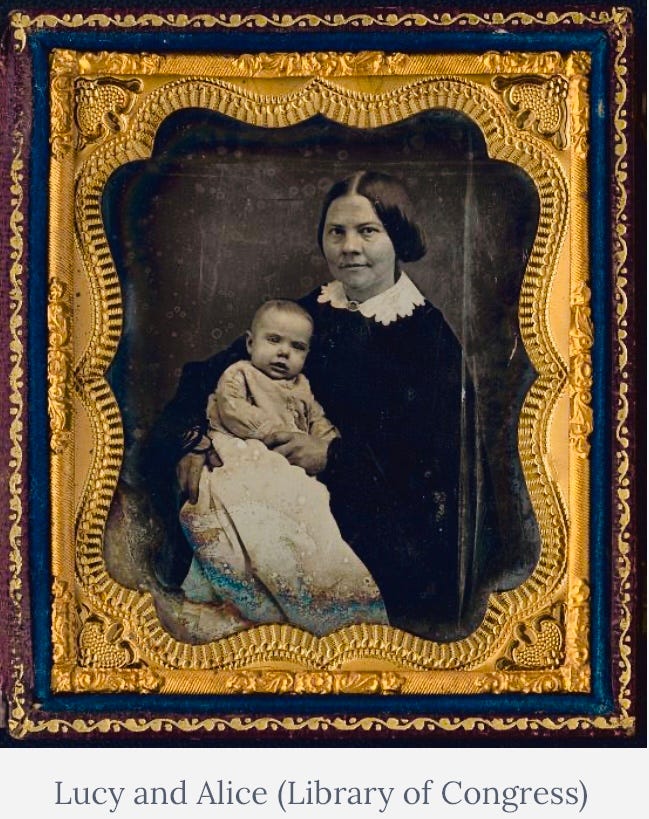
Recently, I responded to a question about the factors that stymied women’s quest for suffrage during the mid-to-late 19th century. I brought up the pragmatism and egalitarianism of suffragist and abolitionist Lucy Stone whose legacy remains largely overlooked. And therein lies the problem.

Susan B. Anthony and Elizabeth Cady Stanton have rightfully earned their place in Women’s history. They battled for the vote in ways almost unimaginable. Yet, they both held racist and classist views. Now before you start yelling about how both of them worked in the abolitionist movement, spare me. You can be anti-slavery and still not think the slave is your social or political equal. The inability to shake off one’s sense of entitlement has extreme consequences for everyone.

When lawmakers decided to include Black men as voters in the 15th Amendment without including the franchise for white women, both Stanton and Anthony were rightfully livid, but livid to the point where they then fought against the passage of the 15th Amendment altogether. It passed, however, in 1869 and was ratified in 1870.

Stanton wrote that it was unconscionable and dangerous to give the vote to Black, Chinese or Irish men because they were inferior. Anyone that did not fit a strict Anglo-Saxon and native-born status was considered inferior. Additionally, neither Stanton nor Anthony had thought about Black women voting at all. 

Stone broke with Anthony and Stanton over their racism. Orator, writer, abolitionist and former slave Frederick Douglass cut his ties to Anthony and Stanton as well. The tragedy was that Douglass had attended the Women’s Conference at Seneca Falls in 1848 and had been a huge and early advocate for women’s rights. Moreover, it was Lucy Stone’s brilliant oratory that had inspired Susan B. Anthony to join the suffrage movement.

Stone read the political winds correctly. She formed the American Woman Suffrage Association which concentrated on gaining women the right to vote on a state-by-state basis. She knew that Congress was not going to grant the franchise to everyone. 

Stone believed that the enfranchisement of Black men was progress. Although she was disappointed that the 15th Amendment did not include women’s suffrage, she did not believe that denying the franchise to others would help women in the long run.

Black men, rather than white women, were granted the right to vote first for a variety of reasons. As a historian, I know that the Republican Party in the 1860s was the party of Lincoln (not the sh*t show it is now) that freed Black American slaves. They controlled both the House and the Senate in 1867 to 1869. They knew that recently freed and enfranchised Black men would inevitably vote Republican and increase the party’s political dominance.

Granting the franchise to white women would have mixed political results as many white women still believed in the lost cause of the South in spite of its loss during the Civil War. They would have voted Democrat which was then the favored party of the former slave-holding South.

Some of Stone’s ideas were tied to her upbringing. She came from a hardworking farming family in Massachusetts. Both of her parents were abolitionists. While quite young, she, along with Lucretia Mott and Abby Kelly Foster helped William Lloyd Garrison establish the American Anti-slavery Society which was founded in 1833.

All of her brothers attended college. Yet, Stone had to postpone her education. She taught school for several years and was able to scrape up enough money to attend Oberlin College, the first college in the nation to accept Black people and women. When she graduated in 1847, she became the first woman in Massachusetts to earn a college degree.

Stone had planned to remain a single woman because she feared losing her independence to a husband. She finally yielded to Henry Browne Blackwell’s persistence. Blackwell was also an abolitionist and women’s rights advocate. Blackwell would learn years later that Stone finally decided to marry him after he met and aided a young slave with her owners while traveling on a train.

When Blackwell asked the girl would she rather be free, she answered “yes.” Blackwell and an accomplice helped get the young girl off of the train and away from her owners. It was that act of liberation that won Stone over.

When Blackwell and Stone married their written protest against laws that denied women equal rights was read before the ceremony. The promise “to obey” was removed from their wedding vows. Stone retained her maiden name and refused to pay taxes as long as she was denied her equal rights.

While neither Stone nor her contemporaries Anthony and Stanton lived long enough to see women receive the right to vote, their different approaches and beliefs underscored a perpetual problem in the quest for women’s equality and the right to vote.

Stone never stopped fighting for the rights of Black people as she continued her fight to get the vote for women. She believed that both causes were interrelated. The same cannot be said of Anthony and Stanton. 

The fight for the right to vote for women was often fractured by racism well into the 20th century. Stone’s stances on racial equality and equal rights for women cost her some popularity among some white women. Anthony and Stanton emerged as the face of white women’s suffrage. Yet, Anthony and Stanton also emerged as suspect to Black men and women. 

After Lucy Stone died of stomach cancer in 1893, her only child, Alice Stone Blackwell reached out to the daughter of Elizabeth Cady Stanton and began the process of repairing the divided women’s suffrage movement. They created a new coalition. Alice Stone Blackwell followed her mother’s mantra to make the world better.

Lucy Stone deserves more historical attention than she receives. Her example should be emulated precisely because she understood the “intersectionality” of gender and race (and the political implications that go along with it) long before Black scholar and lawyer Kimberlé Crenshaw coined the term and defined the theory in the late 20th century. Stone recognized that, no matter how different gender and race may appear, women’s equality was inextricably linked to racial equality. You must fight for both, not just one or the other.

©️Leslye Joy Allen

I am an Independent Historian, Oral Historian and Dramaturge. Please consider supporting my work with a few bucks for Coffee and Eggs via my CashApp.

All blogs written by Leslye Joy Allen are protected by U. S. Copyright Law and licensed under a Creative Commons Attribution-NonCommercial-NoDerivs 3.0 Unported License. Any partial or total reference to any blog authored by Leslye Joy Allen, or any total or partial excerpt of any blog authored by Leslye Joy Allen must contain a direct reference to this hyperlink: https://leslyejoyallen.com with Leslye Joy Allen clearly stated as the author.  Postings or blogs placed here by other writers should clearly reference those writers.  All Rights Reserved.

Start With the Fast Food

by©️Leslye Joy Allen

This essay is not exactly what you think it is about. It is about that long list of companies that openly support Project 25, a 900 page plan which contains many controversial initiatives designed to reshape the United States government and much of American life.

If you are prepared to boycott, you can start with the food, namely fast food. Food and Ice Cream brands are on the list too, but let us focus first on the sodium content of fast food.

The daily recommended intake of sodium for healthy individuals, age 14 and older is 2,300 milligrams. If you already have high blood pressure, your daily intake should only be 1,500 milligrams or less.

You can improve your health while you boycott fast food establishments that support the racist, sexist, xenophobic, along with many other ultra conservative initiatives that make up Project 2025.

Here’s a list of the fast food establishments that support Project 2025 (see full list below this essay) while they simultaneously raise your blood pressure with high sodium levels:

Arby’s Sandwiches:

  • Classic Roast Beef 970 mg
  • Cravin’Chicken Roast 1,000 mg
  • Double Roast Beef Deluxe 2,150 mg
  • Double Roast Beef 1,390 mg
  • Classic Roast Beef Deluxe 1,810 mg

Buffalo Wild Wings:

  • 20 Traditional Wings 530 mg
  • 6 Boneless Wings w/Signature Sauce or Dry Rub 1,260 mg
  • 10 Boneless Wings w/Signature Sauce 2,090 mg

Dairy Queen:

  • Regular Hamburger 870 mg
  • Double Hamburger 1,030 mg
  • Double Flame Thrower Burger 1,430 mg
  • Triple Flame Thrower Burger 1,820 mg
  • 6-Piece Honey BBQ Glazed Chicken Strip Basket 4,150 mg

McDonald’s:

  • Big Mac 1,050 mg
  • Double Quarter Pounder w/Cheese 1,360 mg
  • Quarter Pounder w/Cheese and Bacon 1,470 mg

Papa John’s Pizza:

  • 1 slice of Pepperoni, Sausage & Six Cheese Pizza with Stuffed Crust has 1,220 mg
  • Papa John’s Varieties of Pizzas range from 490 mg to 1,220 mg per slice.

Wendy’s:

  • Single Hamburger w/o Cheese 861.1 mg
  • Single Hamburger w/Cheese 1,123 mg

Save your money. Raise your voice against Project 2025. Protect and Improve your health.

©️Leslye Joy Allen

Pizza photo by ©️Sahal Hameed, Chicken photo by ©️Brian Chan, Hamburger photo by ©️Haseeb Jamil
Companies & Brands Supporting Project 2025 (researched by Democrats Abroad)

All blogs written by Leslye Joy Allen are protected by U. S. Copyright Law and licensed under a Creative Commons Attribution-NonCommercial-NoDerivs 3.0 Unported License. Any partial or total reference to any blog authored by Leslye Joy Allen, or any total or partial excerpt of any blog authored by Leslye Joy Allen must contain a direct reference to this hyperlink: https://leslyejoyallen.com with Leslye Joy Allen clearly stated as the author.  Postings or blogs placed here by other writers should clearly reference those writers.  All Rights Reserved.