Revisiting “The Color Curtain”

by ©️Leslye Joy Allen

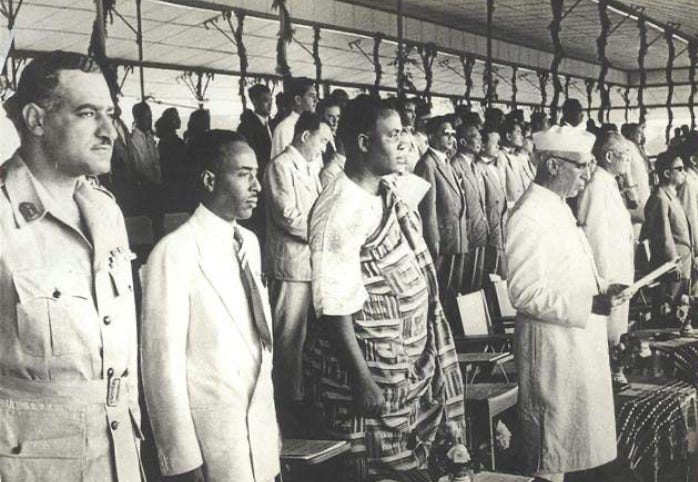
The Bandung Conference was held in April of 1955. It was a meeting of representatives from 29 nations that then contained 65 percent of the world’s population, which were peoples of color that had been colonized or interfered with by European powers. 

This conference was commonly known as the Asian-African Conference. Indonesia, India, Pakistan, Burma and Ceylon organized it and then invited 25 more countries to send representatives and observers. The invited countries were (in alphabetical order here): Afghanistan, Cambodia, China, Egypt, Ethiopia, Ghana (then called “The Gold Coast”), Iran, Iraq, Japan, Jordan, Laos, Lebanon, Liberia, Libya, Nepal, the Philippines, Saudi Arabia, Sudan, Syria, Thailand, Turkey, Vietnam Democratic Republic, South Vietnam, and Yemen. 

After World War II ended, the only two military superpowers were the United States and the U.S.S.R. which competed with each other for influence in the Third World.  The United States was initially invited to the conference but refused to send a representative. The USA denounced this conference. While these newly independent nations did not want to align with the Eastern bloc or the West, the Soviet Union (U.S.S.R.) did gain considerable influence in the region. Black Americans Richard Wright, and US Congressman Adam Clayton Powell, Jr., however, did attend. 

Black novelist Richard Wright recorded what he witnessed at this conference where Africans, Asians, Black Americans, East Indians, Indigenous Peoples and other peoples of color met in Bandung, Indonesia to figure out a way forward in the new post-colonial era. No European nations were invited.
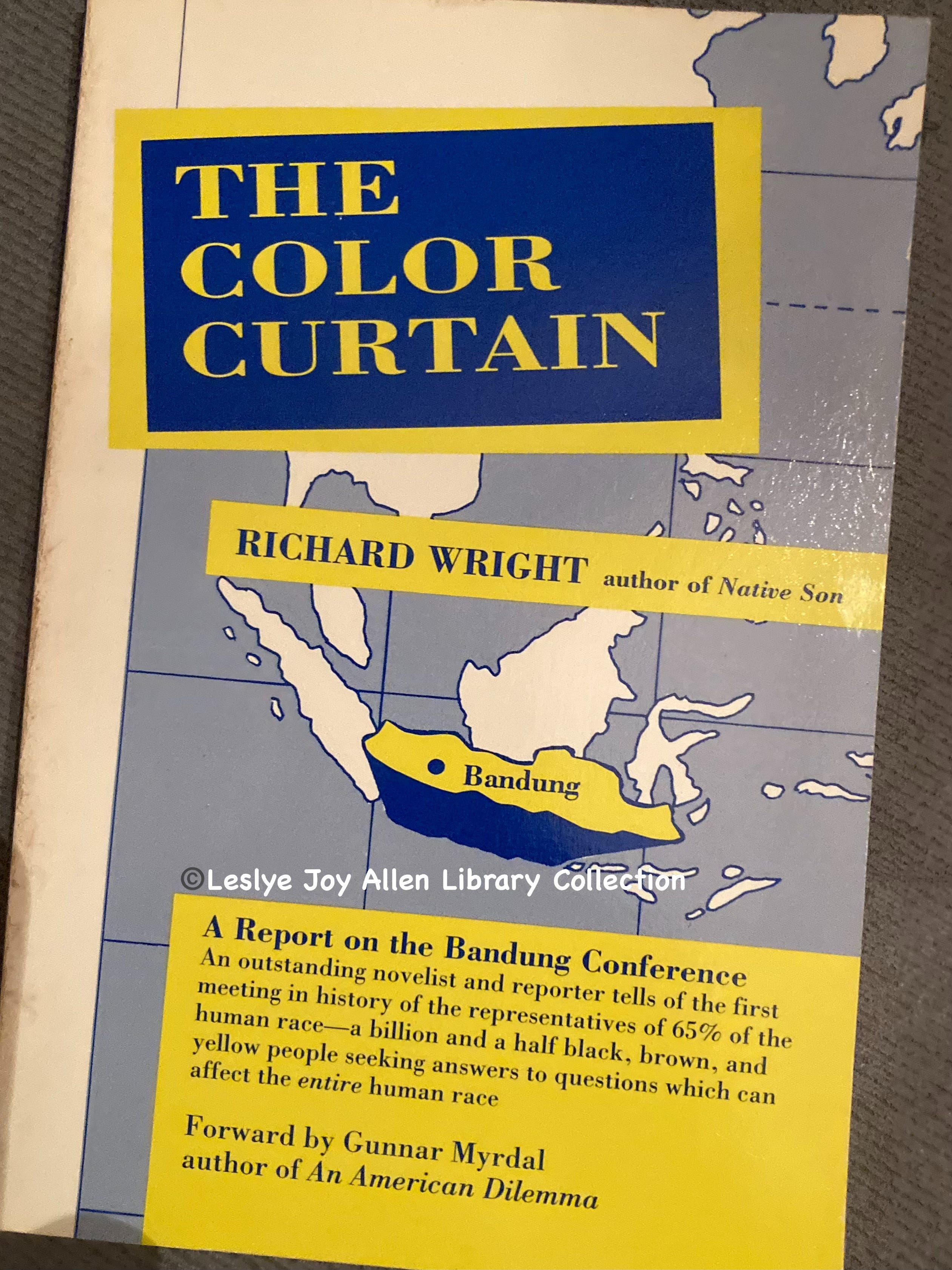
The conference allowed newly independent nations to assert their sovereignty. European colonialism’s oppression and exploitation and interference in African and Asian countries engendered a need for these nations to meet so that they could successfully deal with each other. 

The outcome of this conference was the Non-Aligned Movement which discouraged countries in attendance from aligning with First World and Second World nations. It also produced an agreement called “The Ten Principles of Peaceful Coexistence” which emphasized cooperation, respect for boundaries and sovereignty, non-interference in each country’s affairs, and resistance to any aggression from the Western World.
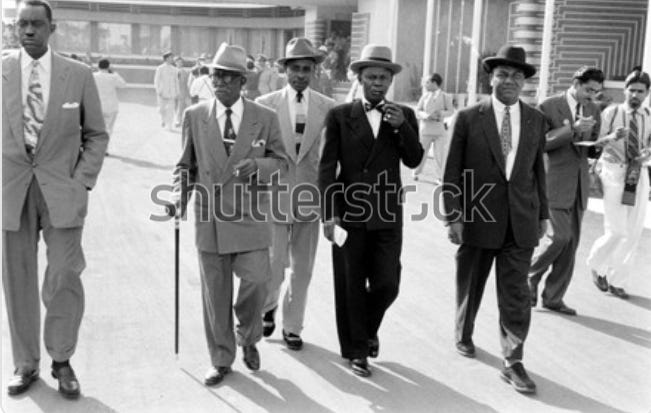
I encourage everyone to read author Richard Wright’s observations about Bandung and recognize that not only are all of these nations of color much more geopolitically complex than they were 70 years ago, they are also more heavily populated today with much younger populations than Europe. 
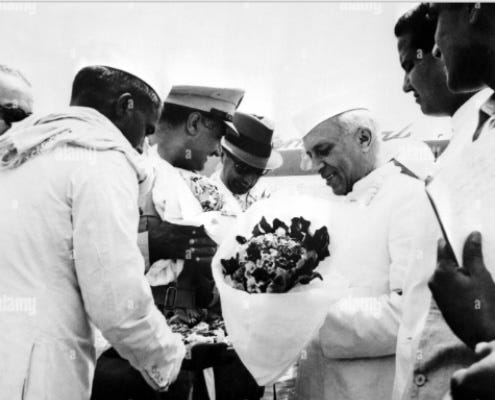
Referred to now as The Global Community, people of color now make up roughly 85 percent of all the people on this earth. Felon 47 and his yes-people know what these numbers mean which is why they want to stave off the inevitable by attempting to occupy and place Canada and Greenland under the US umbrella. Yet, the United States is disadvantaged in numerous ways.

Even though the USA still has perhaps the most skilled military in the world, China has the largest military. The USA is now seen as a pariah by most of the world courtesy of the person sitting in the Oval Office and his inept Defense Secretary Pete Hegseth, who may soon be replaced. Even worse, most of the US population is unilingual whereas many individuals in The Global Community are multilingual. That does not bode well for this nation that is slowly becoming isolationist to the point where we could lose allies, or worse, we lose knowledge about what the rest of the world is planning.

It would be interesting if another Asian-African conference, such as the one held in 1955, were held today or sometime in the near future. I also wonder which nations would not be invited.

©️Leslye Joy Allen

I am an Independent Historian, Oral Historian and Dramaturge. Please consider supporting my work with a few bucks for Coffee and Eggs via my CashApp.

You can also subscribe to my writings on Substack and stay in the loop with the best new research, history, journalism, prose, poetry, and etcetera.

All blogs written by Leslye Joy Allen are protected by U. S. Copyright Law and licensed under a Creative Commons Attribution-NonCommercial-NoDerivs 3.0 Unported License. Any partial or total reference to any blog authored by Leslye Joy Allen, or any total or partial excerpt of any blog authored by Leslye Joy Allen must contain a direct reference to this hyperlink: https://leslyejoyallen.com with Leslye Joy Allen clearly stated as the author.  Postings or blogs placed here by other writers should clearly reference those writers.  All Rights Reserved.

Why We Fail: Forgetting Malcolm and Martin’s Internationalism

Weary Self-Portrait 2 “Weary Self-Portrait 2” (Copyright © 2014 by Leslye Joy Allen. All Rights Reserved.)

by Leslye Joy Allen

Copyright © 2014 by Leslye Joy Allen. All Rights Reserved.


As bad as things are in the USA—in particular, the killing of a young Black man named Michael Brown in Ferguson, Missouri—what we Black Americans are enduring is “a cakewalk” by comparison to some of the tragedies that are currently taking place in India, parts of Africa, Iraq, Israel, and so many other places around the world.  Yet, our current Black leadership has been conspicuously silent on so many of these international matters, including the excessive policies of Israel against an already displaced Palestinian people.  Yet, Arab, Jewish, African, and African American women found enough of a unified voice to write a statement of solidarity with the Palestinian people.  I wonder why they could do it, but not our elected officials.  These women understand an important component of previous human rights struggles—including the Civil Rights and Freedom struggles that took place during the 1950s well into the 1970s in the United States—the international component.

Martin Luther King, Jr. and Malcolm X always placed Black American freedom struggles in an international context.  If you do not believe me, then read or listen to Malcolm X’s “Message to the Grass Roots” and listen to him rattle off the names of those nations and peoples that too many of us frequently ignore.  Listen to King speak poetically and prophetically against the Vietnam War.  These are only a few examples, often scary examples.  Yet, there are many others.

What happened to Michael Brown in Ferguson, Missouri is going to resonate with other people in other parts of the world.  When we lost Trayvon Martin, you found people across the globe putting on “hoodies” in solidarity.  And, if it were not for the women of Nigeria taking full advantage of social media, most of us would never have known anything about the kidnapping of the Nigerian girls, who have still not been returned to their families.  Yet, when was the last time you saw a massive movement of Black Americans speaking out against and lending assistance to anyone outside of the USA.  Arguably, there has been no massive international activity on OUR part, at least not since the zenith of an internationally led movement that demanded that colleges and businesses divest from South Africa in protest of the country’s brutal and virulent social system known as apartheid, and that was in the late 1970s into the 1980s.

The question is when are we going to get our international legs back, and stop looking at what and who we are as if we are isolated in one country called the United States.  Does it not matter that two teenage Indian girls were gang-raped, and then lynched just a few months ago in Bengal, India?  Does it not matter that several hundred Nigerian girls were kidnapped and—sorry to say this—will probably never return to their families?  Does it not matter that former UK Prime Minister Gordon Brown has stayed on top of the problem in Nigeria and spoken out about this problem of female trafficking in Nigeria and elsewhere, and more often than many Black American politicians and self-appointed pundits?  You are damned right it matters.

I can count on one of my former English professors to regularly post articles and his own occasional eloquent outbursts on his page on Facebook about many of the atrocities that happen to women worldwide and, also what happens to Black Americans—He, however, was born in Pakistan.  The Executive Director of Greenpeace International was born and raised in South Africa, and spent his teenage years in the anti-Apartheid movement.  He regularly articulates how women’s oppression, the problems with the environment and human rights struggles are tied together.  I knew something had become completely out-of-whack when the only men I could count on—with any real regularity—to lend their voices and support against sexism were men of color who were also NON-American.  The difference is, they can and do connect the dots and see environmental problems, discrimination and the persecution of women, and battles to end racism and/or ethnic violence as connected problems in ways that so many Americans simply do not.  Yet, a few Black Americans do connect the dots, but they are not part of what is traditional Black leadership, which is a good thing.

Ron Davis, the father of Jordan Davis—the Black teenage boy that was killed in Florida when a man shot into his vehicle over a quarrel about loud music—took his complaint about the senseless murders and expendability of young Black men to Geneva, Switzerland at the 85th annual meeting of the Committee on the Elimination of Racial Discrimination.  The talks in Geneva run from August 11 through August 29, 2014. This was a bold move by Mr. Davis, but proof positive that he was paying attention in the sixties and seventies when international opinion about the United States government’s slow response to discrimination and racial virulence damaged the USA’s image abroad.  Both Mr. Davis and the women of all colors and nations who signed that Solidarity Pledge fully understand what Malcolm X and Martin Luther King, Jr. tried to teach.  We can hope that some citizens in Ferguson, Missouri are paying attention.

Now, thinking internationally or being concerned with tragedies or the well-being of people outside of the United States will not stop police officers from killing unarmed Black male teenagers.  My interest and sadness over the senseless gang rape and lynching of two teenage girls in India several months ago will not stop the rape and abuse of women anywhere, neither will my continued anguish over the kidnapping of girls in Nigeria.  Yet, to be a Black woman born and raised in the American South is to understand that racism and sexism come from all quarters of the country of my birth, and indeed all quarters of the world itself.

To fail to see the connections I have with peoples who may or may not speak my language or belong to the same racial and/or ethnic and/or gender group is to forget the real lessons of the Civil Rights Movement—that WE are not alone if WE will simply acknowledge that WE need allies, and international allies at that.  Yet, WE will be alone if WE operate from the position that people in other parts of the world do not have anything to teach us.  WE cannot afford to function from the position that because WE dwell in the United States that no one else’s problems or persecution matters as much as ours matter.  If WE do, WE will have missed Martin and Malcolm’s most important lesson, namely that if WE labor alone, WE, and everybody else, will lose.

Copyright © 2014 by Leslye Joy Allen. All Rights Reserved.

CCThis Blog was written by Leslye Joy Allen & is protected by U. S. Copyright Law and licensed under a Creative Commons Attribution-NonCommercial-NoDerivs 3.0 Unported License. Any partial or total reference to this blog, or any total or partial excerpt of this blog must contain a direct reference to this hyperlink: http://leslyejoyallen.com with Leslye Joy Allen clearly and visibly stated as the author. All Rights Reserved.

The Paper Yet to be Returned

by Leslye Joy Allen                                                                                                               Historian, Educator, Theatre & Jazz advocate, Doctoral Student

Copyright © 2012 by Leslye Joy Allen. All Rights Reserved.

My last blog for Cascade Patch attempted to remind everyone that Tuskegee Airman, one Lt. Col. Charles W. Dryden had a clear vision about what and whom he was fighting against when he valiantly fought in World War II.

Yet, another group of soldiers now struggle with what it meant to be in the military in Iraq; and some are still trying to understand the complicated mission of remaining in Afghanistan.  The following is a personal story about one of my former students:

Back in 2008 when I was teaching United States and World History courses at a local junior college, I encountered a young 20-something male student who I initially feared might earn an “F” in my class.  Like many students I have encountered in recent years, writing was not his forte; and history is research and writing intensive.  However, much like many other students, he performed much better on his second paper after he followed the directions, suggestions, and criticisms I wrote on his first paper.

It is a thrill to watch a struggling student take off at top speed and make real, concrete progress.  This student, who I will refer to here as “M,” did just that.  There is still only one problem: M has not yet been able to pick up his final paper, a paper where he worked like a trooper to earn an “A.”

A few weeks before that semester in 2008 ended, M approached me after class to let me know that he was in the U. S. Army Reserves.  He was part of a reserve troops that would soon go to Iraq.  His deployment could occur at any time and at a moment’s notice.  He feared he would have to leave for Iraq before the semester ended.  He worried about missing his final examinations.  I told him not to worry.  He had enough graded assignments for me to figure out his grade point average if it became necessary.

Since educators and employers are required by law to accommodate, as best we can, those employees and students who may be called to military service, I had to come up with the best possible solution for M.  After discussing the matter with my department head, I decided to wave his having to take my final examination.  After a careful review of all of his grades, he averaged a solid “B.”  He left for Iraq, however, before I could return his last paper.

A few days after his departure, he emailed me to let me know that he had safely arrived.  He thanked me for all that I had taught him, and asked me to remember him in my prayers.  He also told me that I had taught him to “think outside of the box.”  I freely admit that I can be a bit radical and unorthodox.  I would never have survived even working in the post office in Uncle Sam’s army.  When M made that comment, I wondered how my teaching him to “think outside the box” would actually help him in Iraq.

I quickly responded and asked that he email me and his other instructors to let us know how he was doing.  He responded that he would try to stay in touch, but that his commanding officer had warned him about sending too many emails.  Because of where he was located in Iraq, it might be dangerous to regularly contact too many United States citizens by email as the area was potentially teeming with internet-savvy terrorists.  Emails, he wrote, were particularly vulnerable to enemy infiltration.  That worried me.

Sure enough, his emails abruptly stopped.  Months after his departure, I wondered if he was still alive.  I even caught myself paying extra attention to news reports of casualties in Iraq.  Then, I misplaced the last paper I graded for him.  Misplacing the paper felt like a bad omen.  Then in 2009, I ran across a blog where a blogger had spoken with Paul Rieckhoff, the author of the Iraq Memoir Chasing Ghosts.  Of soldiers in Iraq, Rieckhoff stated:

“This is not a drafted army, it’s a professional force, so folks are staying in longer, they’re older and they’re more likely to have families…But those who are being killed and injured are disproportionately young — the people you played soccer with and went to high school with.”  (For the full article, go to: http://stand-up-4-veterans.tressugar.com/Toll-Iraq-US-Soldiers-3294102)

After I read the blog, I felt worse.  I knew that any war almost always consists of young soldiers, but exactly how young?  How often had military service in Iraq or Afghanistan interrupted college students’ educations?

Another year passed and soon, I briefly forgot about M.  Then, in 2010, I got a phone call from a former co-worker.  She received news that one of her former students was killed in Iraq.  I did not know this particular student well, but she did.  With both of us weeping over lives lost too young, I thought about M again.  I did not email him for fear that I would not receive a reply email and again wonder if he was still alive.  I could not and cannot imagine what the families of these young women and men have gone through during the course of the Iraq war and the seemingly endless problems in Afghanistan.

Right before this past Christmas 2011, I decided to sort through the tons of papers and assorted items that had accumulated into a small mountain on my dining room table.  There were stacks of papers, books, photographs, and notebooks on the table and in boxes around the table and elsewhere in my house.  We historians are the world’s most notorious packrats, always afraid that we might throw away some document we might need later for our research.  Yet, enough was enough.

After sorting through all of the excess and deciding what might go into the recycling bin, I found the last paper M wrote that I graded at the bottom of one of my many boxes.  Early Christmas morning, I summoned the nerve to email him to ask how he was doing, noting that I had just stumbled across the last paper he turned in for my World History class.  FYI: M’s paper was about one of the Zanj revolts that took place in the Afro-Arabic world (Look it up if you do not know what I am talking about because I am not even going to define “Zanj” for any reader younger than M.)

Later that Christmas night, I received an email from M stating that he was well, but still in Afghanistan.  The military has now deployed him OVER FIVE TIMES.  Scheduled to return home in the summer of 2012, he noted that he felt like Iraq and Afghanistan were recipes for civil war.  Indeed, he said, Afghanistan already was engaged in what he believed to be a civil conflict that neither the United States military’s presence (or absence) could remedy.  Later on January 10, 2012, I stumbled on an article that described how the Taliban attempted to invade a government building in East Afghanistan.  I worried again.

As a historian, I study and lecture about politics, the performance arts, racism, social change, and war all the time.  Yet, nothing prepared me to watch a young scholar go off to war with his education interrupted or to contemplate that he might not make it back home.

M emailed me that the military had taught him how to think one way, but he emphasized that I had taught him another way to look at and examine the world.

“You taught me to see things for more than what is put in front of me,” he wrote.  In the last weeks of 2011 and the first month or so of 2012, when we Black folks have lost so many of our brothers and sisters in so many ways, I am thankful, grateful, and rather proud of M’s compliment.

Yet, as far as I am concerned, U. S. military involvement in Afghanistan and Iraq can only officially end for me when I can put M’s final graded paper in his hand.

Peace.

Copyright © 2012 by Leslye Joy Allen. All Rights Reserved.

Leslye Joy Allen is proud to support the good work of Clean Green Nation.  Visit the website to learn more about it: Gregory at Clean Green Nation!

Creative Commons License This Blog was written by Leslye Joy Allen and is protected by U. S. Copyright Law and licensed under a Creative Commons Attribution-NonCommercial-NoDerivs 3.0 Unported License.  Any partial or total reference to this blog, or any total or partial excerpt of this blog must contain a direct reference to this hyperlink: http://leslyejoyallen.com with Leslye Joy Allen clearly stated as the author.