Black Women and Police: One Day on My Way to Agnes Scott College

by ©️Leslye Joy Allen

This essay is a revisit and an edit to a memory I wrote about 10 years ago, but a memory I hope might help someone else, particularly a Black or Brown woman.

Most of my encounters with police have been rare and routine. Most of the police officers I have dealt with have been courteous and helpful. I have made the occasional phone call about the neighbor whose dog has been running around the neighborhood terrorizing a few people. The police come out, speak with the offender, and the matter is resolved. Yet, I remember this incident…

A police officer discovered I had a “First Insurance Cancellation Suspension” on my driver’s license. For those of you born late in the 20th century, let me explain. An insurance cancellation suspension was common if you changed cars or changed insurance companies. You used to get a form in the mail from the Department of Motor Vehicles instructing you to record your new insurance or your new car. Occasionally, however, you might not receive the form by mail, and you could easily forget about it. 

If your new car/new insurance data had not arrived at the Department of Motor Vehicles when you bought a new car or changed your car insurance, you could end up with this particular type of suspension. You typically had to go to the Department of Motor Vehicles, show them your new purchase, along with your new insurance card.

In what appeared to be a routine road check for driver’s license and insurance, the Decatur, Georgia Police held me for three hours only a few months after I purchased a car from my elderly uncle. This happened in the spring of 1998 when I was back in college to complete my Bachelor’s degree at Agnes Scott College

After checking my Driver’s License number the officer stated that I had a “First Insurance Cancellation Suspension” on the car I previously owned. I showed him my new insurance card on the car I was driving. I knew I would have to straighten out the suspension before I drove any car again. Since I was about a mile from the campus, I asked him if he could radio the Agnes Scott College Police and have someone from that police department drive down the street, and pick me (and the car) up.
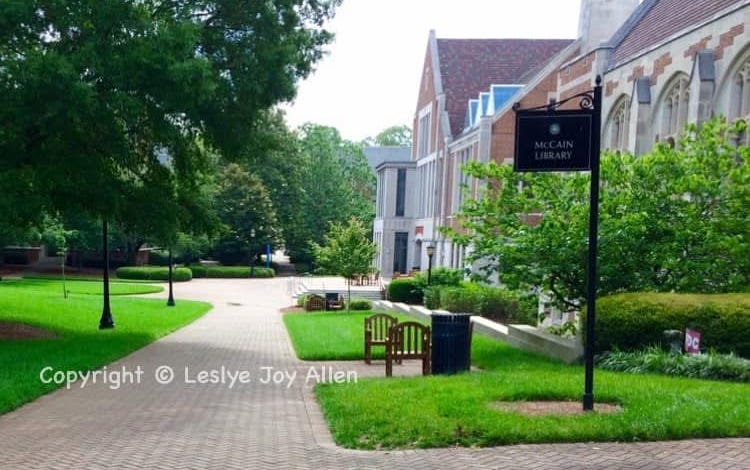
I explained that I would have my Mama come pick me up at Agnes Scott and we would go to the Department of Motor Vehicles and get the suspension problem cleared up. 

“I’m not calling anybody,” he yelled. I pulled out my student ID. He said, “I don’t need that. Girl, get out of the car.” I was a grown woman then in my thirties; and while I might not have looked as old as my birth certificate said I was, I was nobody’s “girl.” I kept my mouth closed, but I am sure he sensed my displeasure.

I got out of the car and he instructed me to lie down in the street. When I asked why are you doing this? He told me to shut up. While I lay down in the street for over 30 minutes, he and another two officers pulled the back seat out of my car. They searched the trunk. If it had not been for the little old man that came out of his house to watch, I do not know what else might have happened. I was terrified, but I suffer from something my Mama used to call, “Your Daddy’s Disease.”

She said my father never showed fear when under pressure. I don’t show it either. Daddy always looked fearless, even menacing, when some horrible event was going on. Then later when everything was all over, he would fall apart, shaking and reaching for a good stiff drink. “That kind of thing can get you killed, Joy,” Mama said, “When someone expects you to be afraid, sometimes the worst thing you can do is look like you have no fear.”

This event was before everyone had a cellphone. A female police officer appeared and asked me if I wanted to call my Mama using her phone. The first police officer decided to write me a simple ticket for driving with a suspended license and he left me standing there in the street. He drove off. 

That sweet little old man stood there and talked with me until Mama arrived. He told me he thought the Decatur police were doing some kind of sweep. “They’re looking for somebody that’s up to no good, and they’re tryin’ to find ‘em in these road blocks,” he said. Mama arrived in about 30 minutes and picked me up. My new best friend—that sweet observant little old Black man told me to leave my car where it was until the suspension problem was straightened out.

Them SOBs are probably waiting somewhere watching and waiting for you to drive off so they can give you another ticket or take you to jail. I’ll watch your car until you get back,” he said.

Mama asked me how my clothes got so dirty. I lied and told her I slipped and fell. She would have had a heart attack if I told her what really happened to her only child. We headed to the Department of Motor Vehicles. The clerk handed me a simple form that I filled out citing that I no longer owned the previous vehicle and therefore had no insurance on that vehicle. 

I had to write down the serial number and model of my current car and provide my proof of insurance. The clerk recorded my data and lifted my “First Insurance Cancellation Suspension.” All of this took about 20 minutes.

I did argue my case in traffic court. The police officer rolled his eyes at me as I explained in detail his refusal to call the Agnes Scott College police even after I showed him my student ID. I told the judge every detail and showed him my insurance card, the purchase of my car, and the statement from the Department of Motor Vehicles that lifted my insurance cancellation suspension. 

To add as much injury as I could, I said, “I missed my Latin Class because of this!” The judge dismissed my case. I paid no fine. I was lucky. Yet, I sensed that what happened to me was not rare. This kind of treatment happens to women, and particularly Black women and women of color, with a frequency that many people do not want to admit. 

Black women encounter more than our share of rudeness and physical intimidation from male police. This offending officer was Black. It’s easy to talk about racist cops, but it is not so easy to talk about SEXIST ones. And for the record, I don’t like Black men who are cops anymore than I like White men who are cops. Here’s the rub…

I consider myself to be an average size woman. By the time I was 50 years old, I managed to gain enough weight to make it to a whopping 135 pounds at 5 feet, 5 inches tall. At the time of this incident, I weighed only about 115 pounds. That police officer was at least 6’ 2” tall and weighed well over 200 pounds. He called me a girl. He told me to shut up. He did not throw me to the ground, Thank God. Yet, just imagine how easy it would have been for him to do so.

©️Leslye Joy Allen

I am an Independent Historian, Oral Historian and Dramaturge. Please consider supporting my work with a few bucks for Coffee and Eggs via my CashApp.

All blogs written by Leslye Joy Allen are protected by U. S. Copyright Law and licensed under a Creative Commons Attribution-NonCommercial-NoDerivs 3.0 Unported License. Any partial or total reference to any blog authored by Leslye Joy Allen, or any total or partial excerpt of any blog authored by Leslye Joy Allen must contain a direct reference to this hyperlink: https://leslyejoyallen.com with Leslye Joy Allen clearly stated as the author.  Postings or blogs placed here by other writers should clearly reference those writers.  All Rights Reserved.

Sacred Places

By Leslye Joy Allen

Tropical Blue Ocean Water (public domain) Tropical Blue Ocean Water (public domain)

I was among the people supremely delighted at the decision of the Army Corps of Engineers to halt any further construction of the Dakota Pipeline on Sunday, December 4, 2016 until further study of its environmental impact on the water supply in that area. I am not going to preach about the fact that eventually that pipeline would have negatively affected the water supply. You can read my previous blog “A Time of Drought,” to get an idea.

For environmentalists, like myself, this was an incredible victory because for the first time, in a long time, the environment was front and center.  The many Native American nations, along with military servicemen and women, environmentalists, and peoples from around the globe were involved in this protest. Often protests of this nature compete with news stories about who-wore-what to some awards show or the endless stories that moan and groan about things some people obviously have no intention of doing anything about, else they would not spend so much time moaning and groaning about them in the first place…

This time something as precious as water was at the forefront; and access to clean water is something that everyone can understand, even when they are less informed about other matters related to the environment…

Now, what I am about to say here might stun a few folks…

What a lot of people often fail to recognize is that in almost every instance where the earth or air or water has been disturbed or polluted, whether it is to extract oil or some other resource or to build some structure, there has almost always been some violation of the sacred, some disturbing of something that meant something precious to someone or to some group of people…

For my Atlanta readers, you might know, or might need reminding, that underneath a portion of Interstate 75-South lies an old cemetery filled with the graves of Black folks, our brothers and sisters. Where Interstate 75-South meets Cleveland Avenue lies a marble marker that designates the graves of roughly 1,700 former slaves who were buried in Gilbert Cemetery which had been created as a burial place for slaves in the early 1840s.

Because the area around this grave came to be known as “Plunkett Town” which was still occupied by poor, rural Blacks as late as the 1960s, the graveyard there did not illicit much concern until work crews from the Georgia Department of Transportation discovered the damaged burial grounds while building Interstate 75.  By the time of the discovery, the graves had already been disturbed, and the plans and money to build that highway were already in place.  No one considered the graveyards to be more important than building a much-needed highway.  What has been left there is a marker letting people who bother to look know that they are driving over a graveyard…

This is exactly what we all have been doing to Native Americans’ sacred sites ever since Europeans arrived on these shores, eventually and forcibly transporting millions of Africans here to perform heavy labor as slaves…

This is not a moral judgement, but rather food for thought.  Too often we—and that includes environmentalists as well, and I am just as guilty—do not think of water as anything other than something that will come out of a faucet when we turn that faucet on.  And as long as we can pay our Water Bill, we seem assured that when we turn that knob, water will come out…

But go pour a glass of water.  Look at it!  Say a prayer to it!  Respect it!

The Standing Rock protest that has temporarily halted the Dakota Pipeline might not have converted any new environmentalists; I know too well from experience that a lot of people do not want to be inconvenienced in any way, even if that small inconvenience will help clean up the environment, or at least slow down the toxicity of the natural environment…

Yet, we all need to stay on guard because this battle may come up again as a new president moves into the White House in January 2017.  However, for the time being, recognize what this protest and this small victory has made us all pay attention to: respect for the dead and for the most precious resource on earth: water.  If you are not humbled by this, I do not know what else to tell you except that you will eventually be humbled by this, whether you want to be or not.

Àṣé.”

Copyright © 2016 by Leslye Joy Allen.  All Rights Reserved.

This blog was written by Leslye Joy Allen and is protected by U. S. Copyright Law and licensed under a Creative Commons Attribution-NonCommercial-NoDerivs 3.0 Unported License. Any partial or total reference to this or any blog authored by Leslye Joy Allen, or any total or partial excerpt of this or any blog by Leslye Joy Allen must contain a direct reference to this hyperlink: https://leslyejoyallen.com with Leslye Joy Allen clearly stated as the author. All Rights Reserved.


Robocall Revenge!

By Leslye Joy Allen                                                                                                     Historian, Educator, Theatre and Jazz Advocate & Consultant, Ph.D. Candidate

Copyright © 2013 by Leslye Joy Allen.  All Rights Reserved.

After listening to nearly 100 robocalls over the past three weeks emanating from an assortment of imbeciles who have no better sense than to believe that they are fit to run for public office in my hometown of Atlanta, I had my own “Have-A-Laugh-Friday” on one of my social media pages.  Just one of the things I do occasionally to break the tension.  Now, this does not mean that I will be posting or blogging something funny every Friday, or that I or anyone else needs to wait for Friday to laugh.  And this is also not done to harm the good reputations of the many wonderful members of the City Council who love Atlanta and do really great work—people like Ceasar Mitchell and Keisha Lance Bottoms who are accessible the whole year, have a great staff that responds to you (and not just at election time.)

Now, this is not a political endorsement.  I do not publicly endorse political candidates.  My mention of those two people is my personal observation of them over several years.  Vote for the candidate that best represents your interests, but I am rambling.  Back to the matter at hand—these insufferable robocalls.

For the past three weeks every time I got ready to raise my fork to my mouth, the phone rang.  Typically, I did not recognize the number on the Caller ID, so I let it go to voicemail.  Then before I could swallow my food, I would see the light blinking on my telephone that indicated that I had a message.  I would ignore these blinking lights save for the fact that it might be important.  I also had little choice but to turn off the ringers on all of my telephones, that is if I planned to eat or get any work done.  Now, when I listened to these messages, they all tended to sound something like this:

“Hello, I am ______________________, and I am a father with two children.  I am running for the school board because our children are our future.”

Or

“Hello, I am ________________________, and I am supporting _____________________ , for Atlanta City Council.  Atlanta can do better than the current….”

You are damn right Atlanta can do better which is why I have to seriously consider whether or not I am voting for you or for any candidate that believes that a barrage of phone calls is going to earn any potential voter’s trust, to say nothing of their vote.  Exactly who told these candidates that a torrent of pre-recorded robocalls that always occur around meals or when I am writing or doing research would send me or anyone else to the polls?

I do not think these political candidates are that out of touch—I do think some of them are dumb, dumb as cat s**t, dumb as a stump, dumb as a box of rocks, and as vacant as a white wall.  Some of them probably qualify as doofus—Go look up “doofus.”  It is now in the dictionary, and I am sure at least a few of these candidates have helped the authorities at Merriam-Webster refine its definition.

Now I could not ever imagine not voting.  Too many of my people fought and died for me to have that privilege.  I have to say that when I do go to vote on November 5, I really wish the voting machine had an option to write-in candidates whose names ARE NOT on the ballot.  If that option was available, I might just write in the name “Daffy Duck,” or “Porky Pig,” for at least one of the offices.  Hey, I might as well vote for someone that I could actually have for dinner—literally!

Now I know this blog will be obsolete very soon because November 5, 2013 is almost upon us.  Very soon, a few of these candidates will hold public office in Atlanta.  They will create laws about zoning and be responsible for formulating policies that determine the education of your children, our children.  God help us all!

So here is my suggestion.  I know a few people who make it a habit to call their elected officials on a regular basis, but too many of us do not make that effort.  We complain in every day conversations about something that needs fixing in city government, but soon we move on to another topic.  Yet, this is an opportunity to give them tit-for-tat.  Call these representatives when there is a street sign pointing the wrong way.  Call them to complain about a pothole in the street.  Hell, call them if you have got a hangnail and you just want to complain about how it stings every time you put your hand in dishwater.  They have no qualms about calling you with pre-recorded asinine messages that repeat the same horse manure; and worse, they do not seem to know or care how annoying it is.  Return the favor and maybe some of them will do the jobs our tax money pays them to do!

Peace!

Leslye Joy Allen is a perpetual and proud supporter of the good work of Clean Green Nation.  Visit the website to learn more about it: Gregory at Clean Green Nation!

Copyright © 2013 by Leslye Joy Allen.  All Rights Reserved.
Creative Commons License This Blog was written by Leslye Joy Allen and is protected by U. S. Copyright Law and licensed under a Creative Commons Attribution-NonCommercial-NoDerivs 3.0 Unported License.  Any partial or total reference to this blog, or any total or partial excerpt of this blog must contain a direct reference to this hyperlink: http://leslyejoyallen.com with Leslye Joy Allen clearly stated as the author.

Ralph McGill Would Never Defend “Stand Your Ground”

Photographer: Jon Sullivan. Copyright: Public domain image, not copyrighted, no rights reserved, royalty free stock photo. “Scales of Justice” by Jon Sullivan, photographer. Copyright: Public domain image, not copyrighted, no rights reserved, royalty free stock photo. Available from Public-Domain-Image.com

By Leslye Joy Allen

Historian, Educator, Theatre and Jazz Advocate & Consultant

Copyright © 2012 by Leslye Joy Allen.  All Rights Reserved.

For those of you who are unfamiliar with the late Ralph McGill (1898-1969), he was a White journalist and publisher of the old Atlanta Constitution (now the Atlanta Journal Constitution).  He was also a well-known liberal who wrote about racial discrimination in society at large and within the criminal justice system.  He did this long before the Civil Rights Movement reached its apogee in the 1960s.  Martin Luther King, Jr. mentioned McGill in his eloquent “Letter From a Birmingham Jail.”  King wrote that McGill and some other White journalists, “have written about our struggle in eloquent, prophetic and understanding terms.”  Indeed, McGill was a man who watched, learned, and evolved into one of the most progressive voices in the American South and the nation when it came to race relations, civil rights, and the penal system.  With that said, it is important for you to understand that I did not learn about Ralph McGill from a newspaper or a book, but rather from my schoolteacher mother.

Mama remembered that he emphasized that when a Black person killed another Black person they typically received very light jail or prison sentences—that is, if they received any jail time at all.  It was just the opposite if they had killed a White person.  He noted that because of this failure to properly punish Black people who killed other Black people, the judicial system literally encouraged those individuals to carry out their anger to its fullest possible extreme.  He accused the judicial system of encouraging Black folks to kill each other.  Mama said that there was an unsettling joke going around in Atlanta during the 1940s that said: if you were a Black man that killed another Black man you would be out of jail in time to go to your victim’s funeral.  Indeed, in his column in the Atlanta Constitution on September 17, 1941, McGill wrote:

“In the first place our courts, to our shame and, although no one seems to see it, to our very great financial cost, never take Negro crime seriously.  A Negro murderer, killing another Negro, rarely receives any severe punishment.  Juries and prosecutors have, for years, viewed them lightly as just another Negro killing, and therefore, of not much importance.”  (Ralph McGill – Crime, Standards, Methods 9-17-1941)

He remained one of a handful of White journalists that understood that any law or process or social practice that devalued Black life also made Black people the more likely targets of violence by killers of all races.  He also noted that many members of Atlanta’s then all-White police department had poor training and were “quick-on-the-trigger.”

I thought about Ralph McGill after the tragic killing of Trayvon Martin in Sanford, Florida in February of 2012.  When Jordan Davis of Atlanta, Georgia was killed in Jacksonville, Florida later in November, I again thought about McGill, arguably one of the most vocal writers who paid serious attention to Black-on-Black and White-on-Black violence and the institutionalized racism in the criminal justice systems of Georgia and the nation.  I will not recount how Jordan Davis and Trayvon Martin died needless and preventable deaths.  I will leave it to you to read the details of Davis’ death on your own.  (Take a minute and read Madison Gray’s very brief Time Magazine report “With Echoes of Trayvon Martin, Florida Man Claims Self Defense in Shooting Death of Teen.”)  Yet, I wonder what McGill might have said about the horrible killings of these two unarmed Black teenagers by two men—One of Peruvian and Jewish extraction and the other a White man.  I am sure he would have had much to say about the racial dynamics surrounding these two killings and the law known as “Stand Your Ground.”

Nearly half the states in this country have “Stand Your Ground” laws.  At minimum, these laws allow an individual the right to use deadly force if that individual has a reasonable belief that their lives are threatened.  Importantly, the law typically states that it is not necessary for a threatened individual to retreat from the perceived danger.  The jury is still out on whether this kind of law has reduced crime rates anywhere.  It is important to note, however, that there is nothing in these laws that give citizens the right to provoke and/or create a potentially volatile scenario where they place themselves in danger and then use deadly force in response to the dangerous scenario they created.

The fact that George Zimmerman, charged with second degree murder of Trayvon Martin, was told by a 911 operator not to follow Martin, has forced Zimmerman’s attorneys to drop the use of “Stand Your Ground” as a part of his defense is cause for all of us to pause.  The fact that Michael Dunn, charged with the murder of Jordan Davis (and also charged with attempted murder of the other teens in the SUV), told these kids to turn their music down at a gas station is also problematic.  Most people do not stay at a gas station for very long.  Is it safe or even logical to tell total strangers what to do or what not to do while they are seated in their own vehicles at a public place like a gas station at 7:30 in the evening?  Think about it.  Will Florida lawmakers ever understand that the state’s “Stand Your Ground” laws are not always working in the best interests of its citizens?  McGill would have recognized the counterproductive and dangerous potential for abuse in “Stand Your Ground” legislation.

When I finally got the opportunity to read some of the newspaper columns written by McGill, I noticed some important qualities:  He spoke his mind about what was going on in the city and the world at that moment.  Yet, he did so with an eye on the future.  Like many of Atlanta’s early boosters, he always prescribed the course of action that he believed was best for the city of Atlanta—the entire city of Atlanta.  He knew that crime, racial discrimination, racial virulence, and the like, were bad for the city.  He was as practical and he was ethical.

I do not know exactly what McGill might have said or asked about the killings of Trayvon Martin and Jordan Davis.  Yet, I have little doubt that he would understand and endorse the necessity of raising the following questions about how citizens interpret their rights as defined in “Stand Your Ground” law:  How does the “Stand Your Ground” law define “feeling threatened”?  If you look menacing or say something that makes me feel afraid, will the law allow me the right to use deadly force against you based solely on my assumption of what I think you might do?  Do citizens need more than the basic right of self-defense?  What might an angry person do if they are armed and know that they might be able to get away with killing someone because, by law, they do not have to retreat from danger?  Much like Atlanta in 1941, does not this law encourage people to choose to kill one another?  Don’t these kind of laws eventually breed a flagrant disregard for the law?  McGill wrote that, “Anything that breeds contempt for the law is costly.”  He was right.

When I asked my Mama why she liked Ralph McGill, she simply said,

“He made sense and he was always, always fair.  He always asked for justice and the fair treatment of all citizens.  Justice and fair treatment were the only things Black people wanted.”

Justice and fair treatment are still all we want.


Copyright © 2012 by Leslye Joy Allen.  All Rights Reserved.

Leslye Joy Allen is proud to support the good work of Clean Green Nation.  Visit the website to learn more about it: Gregory at Clean Green Nation!

Creative Commons License This Blog was written by Leslye Joy Allen and is protected by U. S. Copyright Law and licensed under a Creative Commons Attribution-NonCommercial-NoDerivs 3.0 Unported License.  Any partial or total reference to this blog, or any total or partial excerpt of this blog must contain a direct reference to this hyperlink: http://leslyejoyallen.com with Leslye Joy Allen clearly stated as the author.