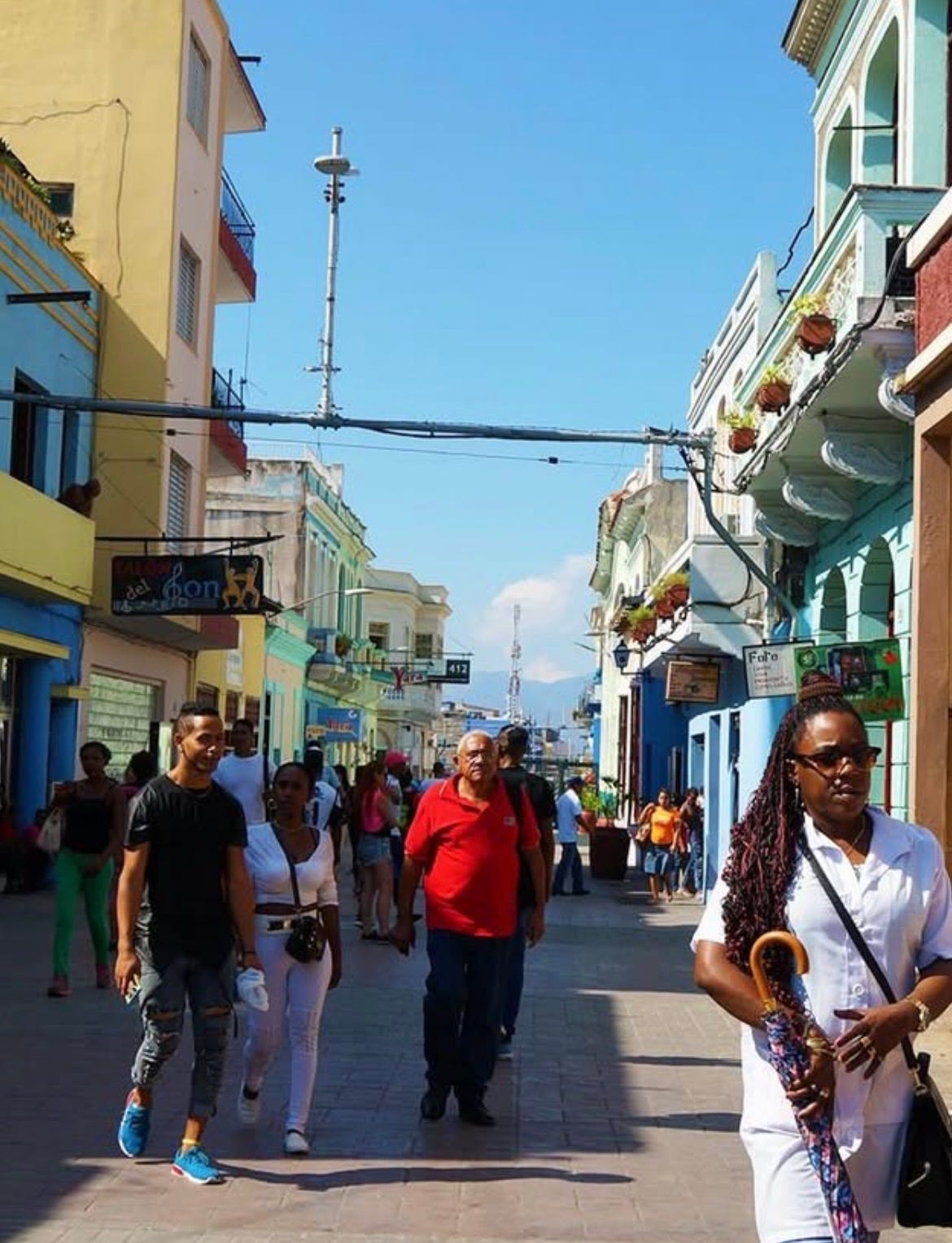
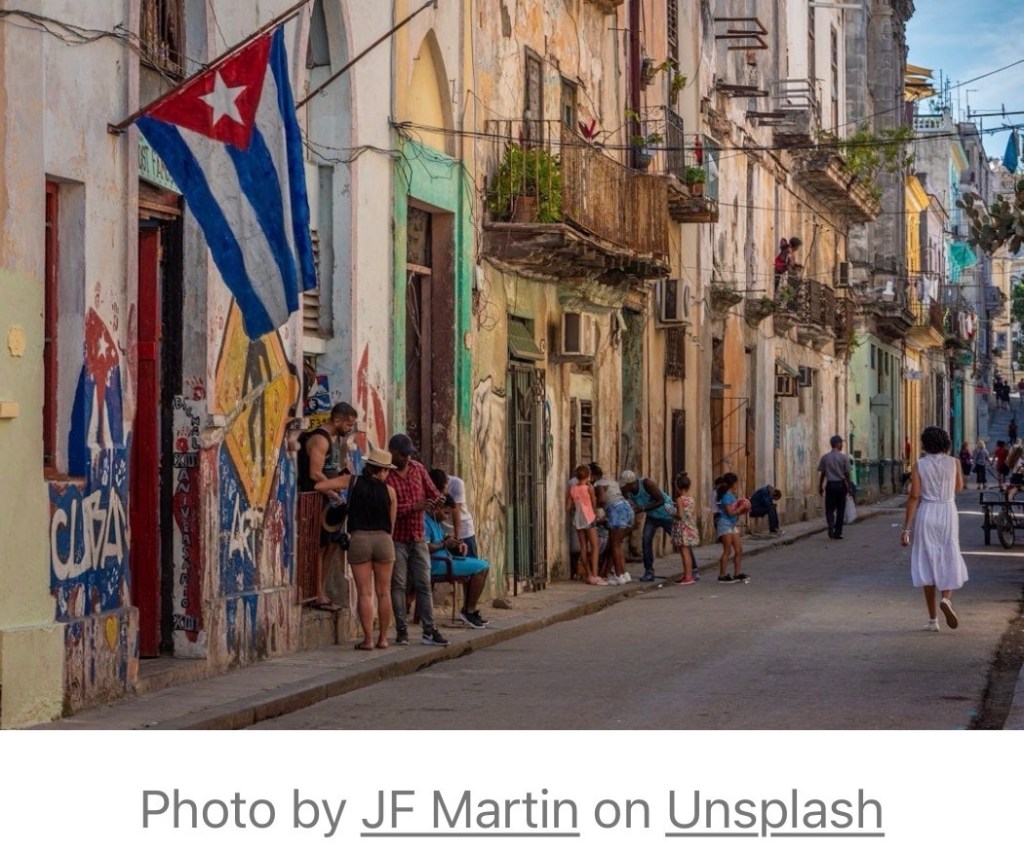
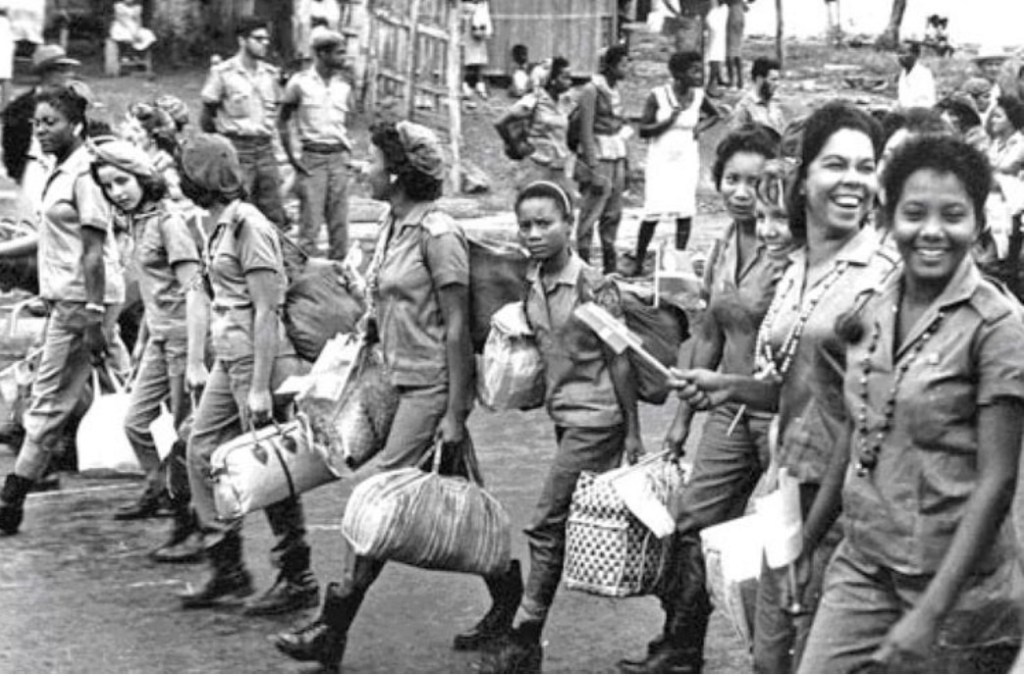
The following below that is written in italics is partially a meditation on Cuba. It is a response I wrote to a piece about Cuba’s current crisis exacerbated by American neglect and cruelty that was written by Arturo Dominguez. A link to his exceptional article is at the very end of this essay. What’s in italics is a rumination I wrote to Arturo:
“I still remember reading that when Afro-Cuban musical artists came to perform in the United States that they had to perform in the U.S. for free. When asked why they were willing to perform for nothing, the answer was always the same: “We want to see where Dizzy Gillespie was born.”
Thanks for this report Arturo Dominguez because every time there is a sanction, a deprivation, I am reminded that no one suffers in Cuba but the people themselves. I still remember the heinous and wretched Helms-Burton Act which banned ships who docked in Cuba’s ports from docking in the United States for several months.
I remember my professors having to fly out of Atlanta to Canada and then taking a flight from some airport in Canada to Havana to do whatever research they were performing on their visits.
The United States has done nothing but made an example of Cuba as a message to other countries in Latin America and the Caribbean that says “This is how far we’ll go; this is how bad we’ll treat you, if you don’t fall in line.”
I might just turn this comment into a meditation.”
A few moments after reading Arturo’s essay I stumbled on one of my favorite thinkers Vijay Prashad who also was offering his thoughts on the viciousness of the United States government against the Cuban people because it is the people that suffer—No one else. (A link to Vijay’s essay is at the end.)
I don’t have the strength to comment on Prashad’s piece right now except that it is brilliant and accurate. I will leave it to you dear reader to examine both his and Arturo’s essays at your leisure. I have only one thing to say.
One line of my paternal family was sold as slaves from Santiago de Cuba to the mainland United States during the period of slavery in this Western hemisphere. My paternal great grandmother was born a slave named Mollie Laws. Her previous family surname was Layende.
Like most people during the 1700s and 1800s, when one moved (or was sold) some place else the last name was changed to adapt to the new culture one was inhabiting. In the United States, it was typically expected that you Anglicize your name to something that English speakers could pronounce. So “Layende” became “Laws.”
Anyhow I used to relay my personal history to my History students in an effort to make sure that they understood that Chattel slavery took place throughout the Western world. Importantly, what we now call the United States received less than 6 percent of all the Africans transported to this hemisphere during the trans-Atlantic slave trade. The majority of Africans (around 95 percent) landed in what is now named Latin America and the Caribbean.
I don’t have any deep analysis here about how difficult Afro-American genealogy can be. I don’t have any deep commentary about the many cultures and cultural differences that exist between all of the descendants of Africa who occupy this hemisphere except I have always known that for better or worse I belong to them.
Right after I read Arturo’s essay and then Vijay’s essay, I recalled a favorite memory from the classroom. A student whose name escapes me now came to class after Spring Break with a faded photograph he took while out on the Atlantic ocean.
He learned that I had roots in Cuba and so did he. He pulled out this faded photo taken on the water. Far off in the distance I saw something that looked like a line stretched across the water.
“What is that long line in the water that I see in the distance?,” I asked.
“That line across the water in the distance is Cuba, Ms. Allen. I hope you get there someday.”
I am an Independent Historian, Oral Historian and Dramaturge. Please consider supporting my work and research with a few bucks for Coffee and Eggs via my CashApp or become a paid subscriber to me on Substack to help me sustain my research.
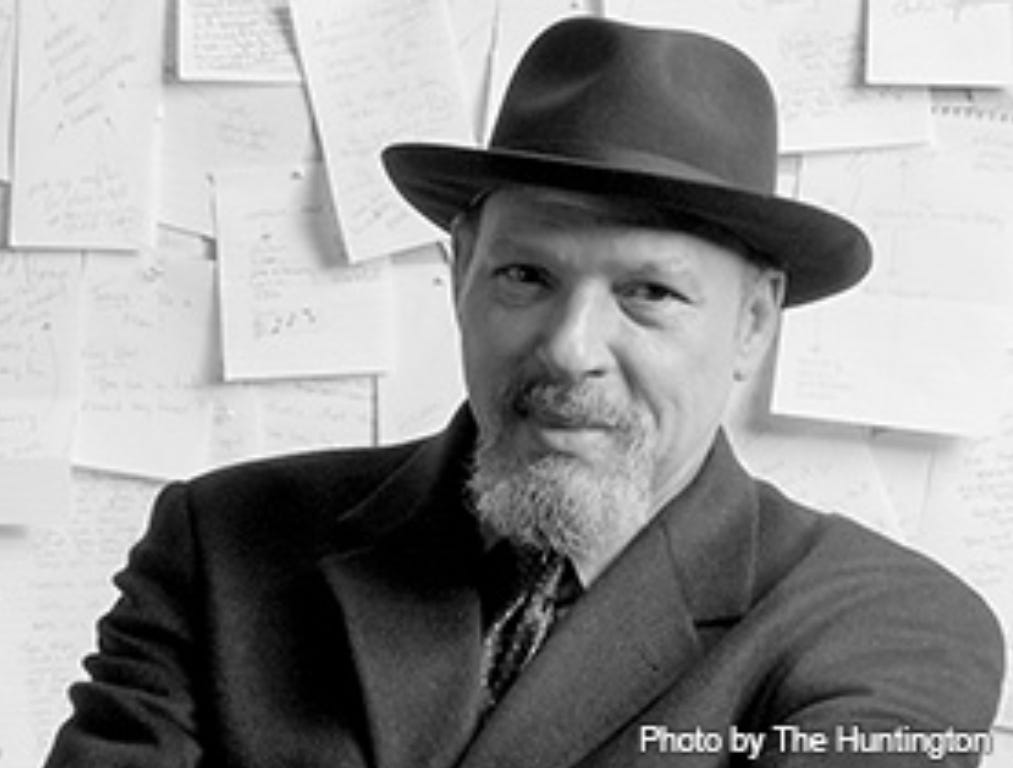
One of the things I loved most about the late playwright August Wilson’s work was that his plays on Black life insisted on the importance of every member of any given Black community. Wilson crafted his plays based on his experiences hanging out and observing the denizens of the Hill District of Pittsburgh.
Cab drivers, beauticians, bums, architects, lawyers, bricklayers, members of the Nation of Islam, you name it—they all contributed to the love and humor that made up Black neighborhoods throughout the 1960s and 1970s of my childhood.
I remember when I first read an excerpt of comedian-turned-activist Dick Gregory’s autobiography “N*gger.” I was in 8th grade. I was impressed by Gregory’s statement that he was fond of winos because they never hurt anyone but themselves. I grew up watching and imbibing all of my people in all of their varieties at the corner of Hunter and Ashby Streets (now MLK Drive and Joseph E. Lowry Blvd.)
Back in the 1960s there was “Bo” the wino. Bo’s brain was so pickled that he never could understand that I was a girl. Never mind that I had two long braids with ribbons. When Dad ventured to that intersection of Hunter and Ashby Streets without me and he ran into Bo, the question was always the same, “How is that boy?” Daddy responded with the same information he always did. “Bo, I have a daughter.”
My Aunt Ella who was called “Sister” or called by me “Aunt Sis,” owned and ran Top Cats Fish Market. I always loved the painting on the side of the building of the cartoon character “Top Cat.” Winos like Bo and Mumbles would stop by and sweep the floor or wash the windows for a few coins so that they could purchase their wine for the day. “Sister let me have a dime,” Bo would request. “Bo, I don’t have a dime,” she would respond. “You a damn lie,” he would answer.
I never will forget the time Bo came by her fish market and there was a Black physician there who needed his car washed. Bo gladly offered to wash his car. Now, back in the day it was not uncommon to pour some expensive whiskey into a beautiful flask as a gift for a friend. It was also not uncommon to pay a wino anywhere from 10 cents to a few bucks to wash a car or sweep a floor.
Bo went out to wash the doctor’s car. When the doctor paid Bo a few dollars for washing his car, the doctor looked in the backseat of his car and discovered that his flask of whiskey was empty.
“Bo, what happened to my whiskey?!”
Bo replied, “I don’t know what happened. I don’t drink whiskey. I drink wine!”
The doctor looked at him and said, “Are you sure?”
Bo responded, lying through his teeth, “I DON’T DRINK WHISKEY. I DRINK WINE!”
The physician responded, “Well that’s good to know that you didn’t drink it because I was carrying that flask to the lab because I think there is some poison in it!!”
For people who have been reading my posts, you may have noticed that I have written about the United States’ severe literacy crisis twice on this platform. If not, you can read them here: The USA Literacy Crisis & This Election and Literacy Crisis, Part II.
This essay is Part III. Let me point out a few things first. Some 65 years ago in 1960, the United States was one of the most literate nations in the world. In 1960, only a handful of states in this country had an illiteracy rate of 10% for people aged 14 and over. The rest of the states registered only about 3% illiteracy. Now we rank 36th in the world for literacy among industrialized nations. There are other sources that place the USA at a literacy rate much lower.
In 2025, 21% of American adults are completely illiterate while 54% of adults read below the 6th grade level. I want to share with you in this essay, however, what poor reading and writing skills look like when these circumstances are also combined with educational red tape.
I taught College History courses for roughly 7+ years, from 2007 to early 2015. My first 2 years, I taught at a Junior College that had several campuses outside the city limits of Atlanta in the outlying metropolitan areas. My last 5 years I taught at large state universities. Junior Colleges are structured for students who have some academic deficits. Students often attend Junior Colleges to fix a deficit in some academic discipline so that they can eventually qualify to attend a four-year institution to earn a Bachelor’s degree.
When I started teaching, I taught year round. After I taught on this particular campus for about two semesters, I noticed that this campus was slowly being converted into a cash cow. The school started accepting anyone who could pay tuition and occasionally referred to students as “customers.” That did not go down well with me and a lot of other Instructors and Professors.
Most of my History students had some problems with reading, writing, and critical thinking skills. I usually spent the first 3 weeks of every semester correcting grammar and insisting that they trust their answers and their own instincts.
When I asked a simple question, initially none of them could state the obvious answer. I demanded that my students give complete and well-thought out answers and opinions in class discussions instead of the abbreviated and one-word answers that chronic text messaging had fostered.
The majority of my students rose to the occasion. They did the work, read my comments, listened to my instructions and suggestions, and put in the extra time needed to get up to speed in writing and having in-depth discussions about History. I did have one student, whose identity I never knew, who complained about having to write 3 five-page long History papers. Imagine having to write 3 papers in a 16-week long semester in college.
I learned later through the grapevine that this student allegedly had an inappropriate relationship with some man in the Junior College’s administration to who that student complained. One day I was informed that I would have to attend a meeting with my Department Chair and the Ombudsman of the School.
During the meeting, both my Department Chair and the Ombudsman kept telling me things like “Many of these students might not know how to interpret what you tell them. They might not understand what you say to them or write on their papers. One student said you told him or her that they could not write!”
I was confused and raised these points: “I have NEVER told a student that they cannot write. I have told or wrote to many of them, however, that they needed to take a good writing course so that they can improve their writing skills and get more practice writing cogent papers. Also, I speak grammatically correct English in the classroom. How can I know when a student cannot understand grammatically correct English? What type of language or techniques are you asking me to use?”
They both stopped talking for about 30 seconds. I interrupted their silence. “Are you asking me to water down my curriculum?!” No one answered my question. They both began to reiterate how much the students might not understand what I asked students to do. I repeated the question FOUR more times. They NEVER answered my question.
When they suggested that I attend a seminar on Customer Service Skills, it was all I could do to hold my tongue. Then my Department Chair finally ruptured this charade of a meeting and asked me, “Do you want this job?”
I swallowed hard and paused for a good 20 seconds and responded, “That’s a rather loaded question, don’t you think? Obviously, when I applied for this job, I wanted and needed a job. I still do. However, anyone who might be offered a better job somewhere else would probably take the better job. That includes me too.”
When I walked out of that office, I was so angry I couldn’t see straight. The Department Chair’s secretary looked at me as I exited and said “Leslye, what did they do to you in there?! Please, please don’t look like that.” I told her I would come back later and fill her in on the details after the Department Chair went to lunch.
So, here was the dilemma. That handful of students that never had any intention of studying and improving their literacy and writing abilities were now expecting to receive passing grades when they were just as inept at the end of the semester as they were at the beginning of it. That meeting, however, was not my worst moment on that campus.
A young Black woman student emailed me and asked me, when the time came, to write her recommendation letter to Spelman College. She had sent in an application to Spelman and assumed that she would be accepted. When I checked her records, she only had a GPA of about 2.0.
Spelman College is a Historically Black College for women that has always teemed with academic brilliance. No girl graduating high school will even be considered for admission with a GPA less than a 3.5. The average GPA of students who are admitted is a 3.8. It is a highly competitive school with an admission rate of only about 34% of applicants.
I very delicately wrote to this young woman that she would need to pull her grades up in order to get into Spelman. I wrote that she should not be discouraged because, “I know you can do it if you work hard and apply yourself by taking some additional classes.” This was my attempt to tell her the hard truth without crushing her dreams or suggesting that she give up. I signed my name to the email, pressed the “Send” button, and sat and cried for about 15 minutes.
It took me years to understand that people who don’t read well or who rarely read at all constantly misinterpret the meanings in spoken and written language. They also assign their own meanings to what people say and write with little to no comprehension. They make decisions based on what they think or feel about something a person said or wrote.
That is where we are in the United States right now. We have a majority adult population that responds to most political propaganda with their emotions and assumptions, never exactly or entirely based on actual facts. Moreover, many don’t even know where or how to look for the facts.
If the Democrats do not figure out how to reach out to semi-literate people stumbling in the dark with information they can barely decipher, then the Democrats are in danger of losing elections for the next several decades. The Political Left is also doomed to be reduced to little more than a group of well-read, but also self-righteous, ideologues that do not know how to reach the people they need to reach who don’t fit the definition of “well-read.”
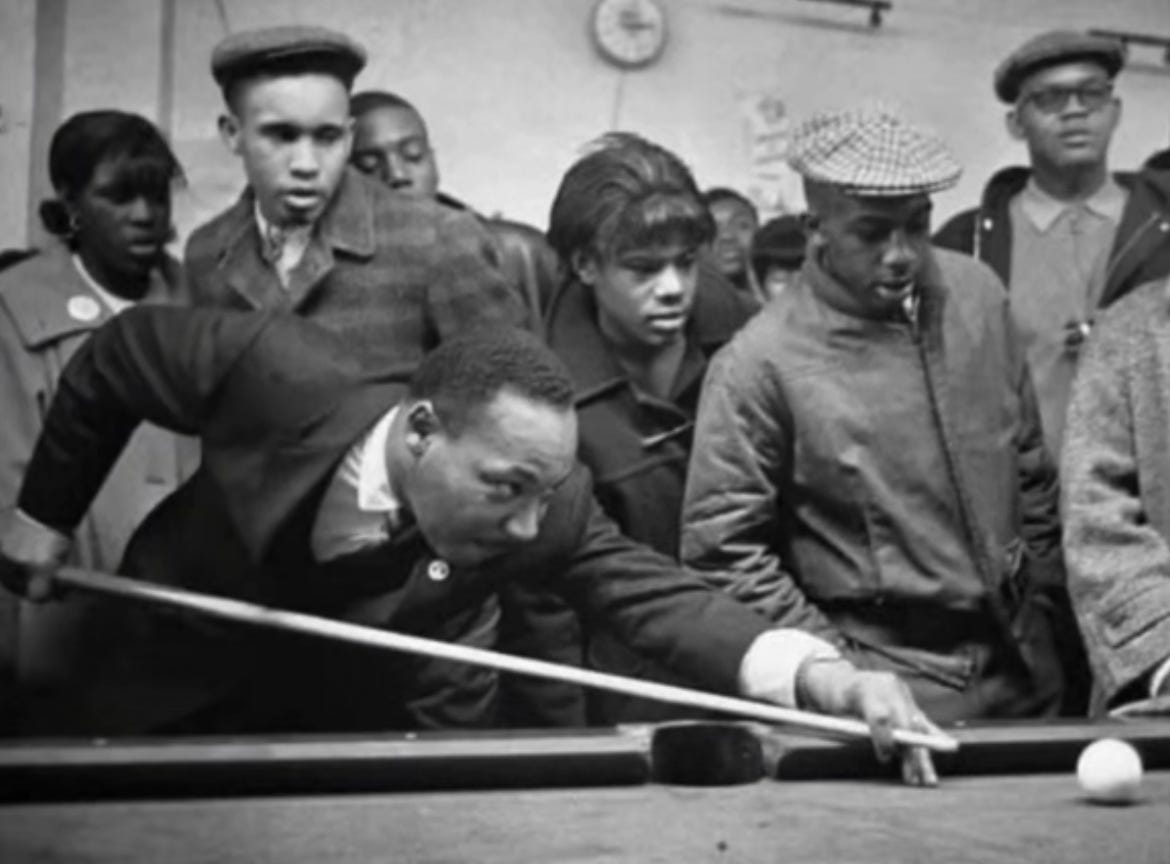
One of the things that made my home boy Dr. Martin Luther King, Jr. so effective was that he was a young man with a doctorate degree who could go hang out in a pool room and shoot pool and talk trash with the men who hung out there as easily as he could address heads-of-state. He could render presidents and prime ministers speechless because he was better educated and more in-tune with what people needed than the vast majority of them.
He could talk with ease to the poorly educated and to the best educated. For those who don’t know, Martin Luther King Jr. was an exceptional scholar who entered college at age 14 and who graduated Morehouse College at the age of 18 and had earned his doctorate by the time he was 25 years old. Kamala Harris’ Mama also had her doctorate degree by the age of 25. She was working in a laboratory when her water broke with her then soon-to-be-born first child that she named “Kamala.”
(Photo of M.L. shooting pool in Atlanta in 1966. The tall guy on the far right in the cap and glasses was then a Morehouse College Freshman named Samuel Leroy Jackson.)
What is my point? Education and literacy matters; and its singular purpose is to help people focus on what they need to be focused on. In 1960, a man or woman in the United States with little resources knew that the public library was still free and they made good use of it. Today, our semi-literate majority adult population that cannot stay still long enough to read a 5-minute article because they are always ready to look at something that is “trending,” is what we are confronted with now.
Long after I left the classroom, I ran into one of my former students from the Junior College where I once taught. He was attending Georgia State University and was about to graduate. Excited to run into me, he said, “I hated you back then. But you pushed me and demanded that I get the work done. Now, I can’t stop reading and doing research. I cannot read enough BOOKS!”
Hugging his neck I said, “Don’t ever stop. The more you dig the more you will know.
So, in the names of your favorite teachers, instructors and professors, please keep talking about the truths and the dangers of a largely illiterate and poor reading nation. Our welfare as a nation and as human beings depend on it.
I was am an Independent Historian, Oral Historian and Dramaturge. Please consider supporting my work with a few bucks for Coffee and Eggs via my CashApp.
You can also subscribe to my writings on Substack and stay in the loop with the best new research, history, journalism, prose, poetry, and etcetera.
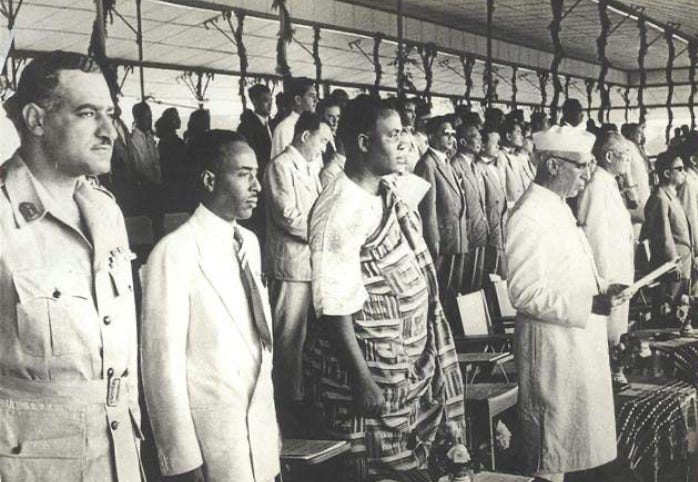
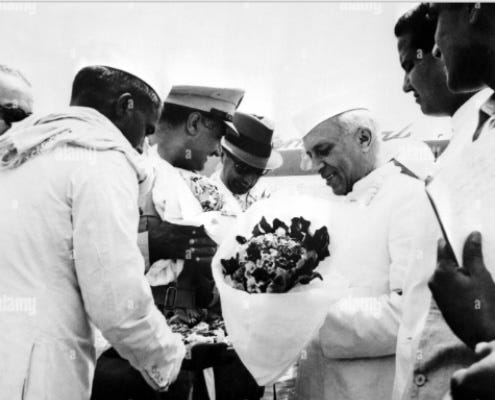
The Bandung Conference was held in April of 1955. It was a meeting of representatives from 29 nations that then contained 65 percent of the world’s population, which were peoples of color that had been colonized or interfered with by European powers.
This conference was commonly known as the Asian-African Conference. Indonesia, India, Pakistan, Burma and Ceylon organized it and then invited 25 more countries to send representatives and observers. The invited countries were (in alphabetical order here): Afghanistan, Cambodia, China, Egypt, Ethiopia, Ghana (then called “The Gold Coast”), Iran, Iraq, Japan, Jordan, Laos, Lebanon, Liberia, Libya, Nepal, the Philippines, Saudi Arabia, Sudan, Syria, Thailand, Turkey, Vietnam Democratic Republic, South Vietnam, and Yemen.
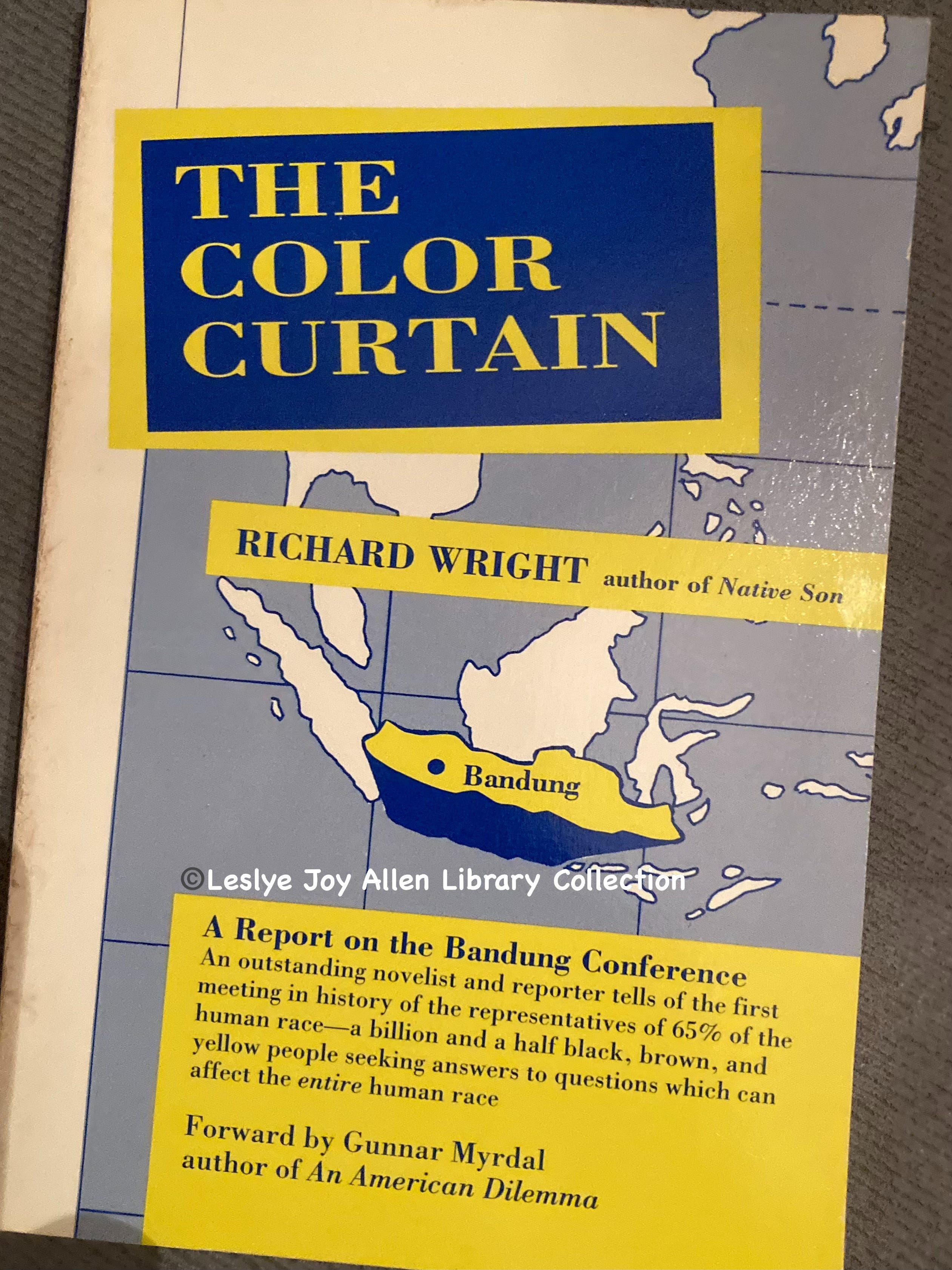
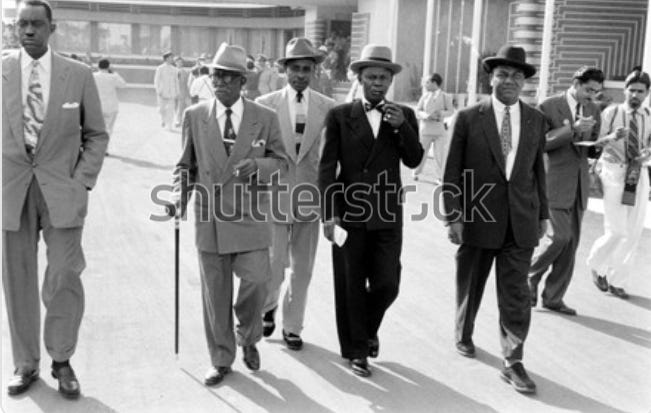
After World War II ended, the only two military superpowers were the United States and the U.S.S.R. which competed with each other for influence in the Third World. The United States was initially invited to the conference but refused to send a representative. The USA denounced this conference. While these newly independent nations did not want to align with the Eastern bloc or the West, the Soviet Union (U.S.S.R.) did gain considerable influence in the region. Black Americans Richard Wright, and US Congressman Adam Clayton Powell, Jr., however, did attend.
Black novelist Richard Wright recorded what he witnessed at this conference where Africans, Asians, Black Americans, East Indians, Indigenous Peoples and other peoples of color met in Bandung, Indonesia to figure out a way forward in the new post-colonial era. No European nations were invited.
The conference allowed newly independent nations to assert their sovereignty. European colonialism’s oppression and exploitation and interference in African and Asian countries engendered a need for these nations to meet so that they could successfully deal with each other.
The outcome of this conference was the Non-Aligned Movement which discouraged countries in attendance from aligning with First World and Second World nations. It also produced an agreement called “The Ten Principles of Peaceful Coexistence” which emphasized cooperation, respect for boundaries and sovereignty, non-interference in each country’s affairs, and resistance to any aggression from the Western World.
I encourage everyone to read author Richard Wright’s observations about Bandung and recognize that not only are all of these nations of color much more geopolitically complex than they were 70 years ago, they are also more heavily populated today with much younger populations than Europe.
Referred to now as The Global Community, people of color now make up roughly 85 percent of all the people on this earth. Felon 47 and his yes-people know what these numbers mean which is why they want to stave off the inevitable by attempting to occupy and place Canada and Greenland under the US umbrella. Yet, the United States is disadvantaged in numerous ways.
Even though the USA still has perhaps the most skilled military in the world, China has the largest military. The USA is now seen as a pariah by most of the world courtesy of the person sitting in the Oval Office and his inept Defense Secretary Pete Hegseth, who may soon be replaced. Even worse, most of the US population is unilingual whereas many individuals in The Global Community are multilingual. That does not bode well for this nation that is slowly becoming isolationist to the point where we could lose allies, or worse, we lose knowledge about what the rest of the world is planning.
It would be interesting if another Asian-African conference, such as the one held in 1955, were held today or sometime in the near future. I also wonder which nations would not be invited.
When I was a little girl I went everywhere my Daddy. I often had solo trips to a store, a library, and the park with my school teacher Mama too, but I was a Daddy’s Girl. I remember when it was just the two of us and I had to use the restroom, Daddy and I would often run into a woman who was a friend of our family and she would take me into the women’s restroom so I could do my business.
On many occasions when I was small and I had to use the restroom, Daddy would place his hands over my eyes, walk into the men’s restroom and yell, “Father coming in with his daughter; zip it up or hide it!” He would find a stall with a door, line the toilet seat with paper and then sit me on it.
I bring this up because public spaces like restrooms were not designed for fathers and daughters nor fathers with infants. A mother could take her little ones of any gender and age into the women’s restroom. Dads could certainly take sons into the men’s restroom. My Daddy, like so many other Black fathers I knew defied the limitations of public spaces. He never once said that he couldn’t take me with him somewhere because he wasn’t sure if I could use the restroom.
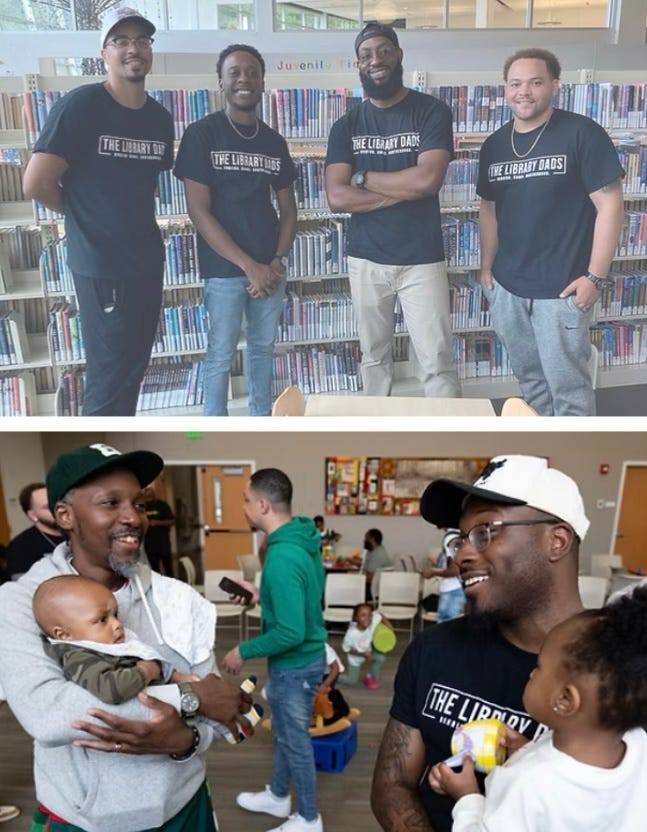
If you are one of my subscribers on Substack, you have probably seen a few videos on my feed of The Library Dads, which is a non-profit organization that has scheduled weekly library visits for Dads with their children at the public library. It was founded in Atlanta by a young father named Khari Arnold who took his 4-month-old daughter to the library to familiarize her with books. That was her first of many visits.
Arnold noticed a strikingly advanced development of his daughter’s cognitive skills over the course of a year because he read to her all the time. This program is designed to help fathers become involved in the educational and literacy development of their children; and to deepen their bonds with their children. That’s Khari Arnold on the far left in the top photo.
What struck me about The Library Dads was not just their active engagement with their offspring every Saturday at the public library, but also their pushback against the limits of certain public spaces that are less accommodating for fathers and their small children.
My Mama and Daddy took me to the library regularly as did many of the Black parents I knew growing up. I know they both would be impressed with The Library Dads for a variety of reasons. Yet, I must add one more reason that helps us all…
In addition to these young men taking responsibility for their children’s education and development, they also shift the narrative that tends to center on mothers as almost solely responsible for their children’s development. They are a most welcome pushback on the confining and inaccurate gender definitions that the Western world imposes on us all. Go Library Dads!



 Leslye Joy Allen