A Personal Prayer of Cuba

by ©️Leslye Joy Allen

The following below that is written in italics is partially a meditation on Cuba. It is a response I wrote to a piece about Cuba’s current crisis exacerbated by American neglect and cruelty that was written by Arturo Dominguez. A link to his exceptional article is at the very end of this essay. What’s in italics is a rumination I wrote to Arturo:

“I still remember reading that when Afro-Cuban musical artists came to perform in the United States that they had to perform in the U.S. for free. When asked why they were willing to perform for nothing, the answer was always the same: “We want to see where Dizzy Gillespie was born.”

Thanks for this report Arturo Dominguez because every time there is a sanction, a deprivation, I am reminded that no one suffers in Cuba but the people themselves. I still remember the heinous and wretched Helms-Burton Act which banned ships who docked in Cuba’s ports from docking in the United States for several months.

I remember my professors having to fly out of Atlanta to Canada and then taking a flight from some airport in Canada to Havana to do whatever research they were performing on their visits.

The United States has done nothing but made an example of Cuba as a message to other countries in Latin America and the Caribbean that says “This is how far we’ll go; this is how bad we’ll treat you, if you don’t fall in line.”

I might just turn this comment into a meditation.”

A few moments after reading Arturo’s essay I stumbled on one of my favorite thinkers Vijay Prashad who also was offering his thoughts on the viciousness of the United States government against the Cuban people because it is the people that suffer—No one else. (A link to Vijay’s essay is at the end.)
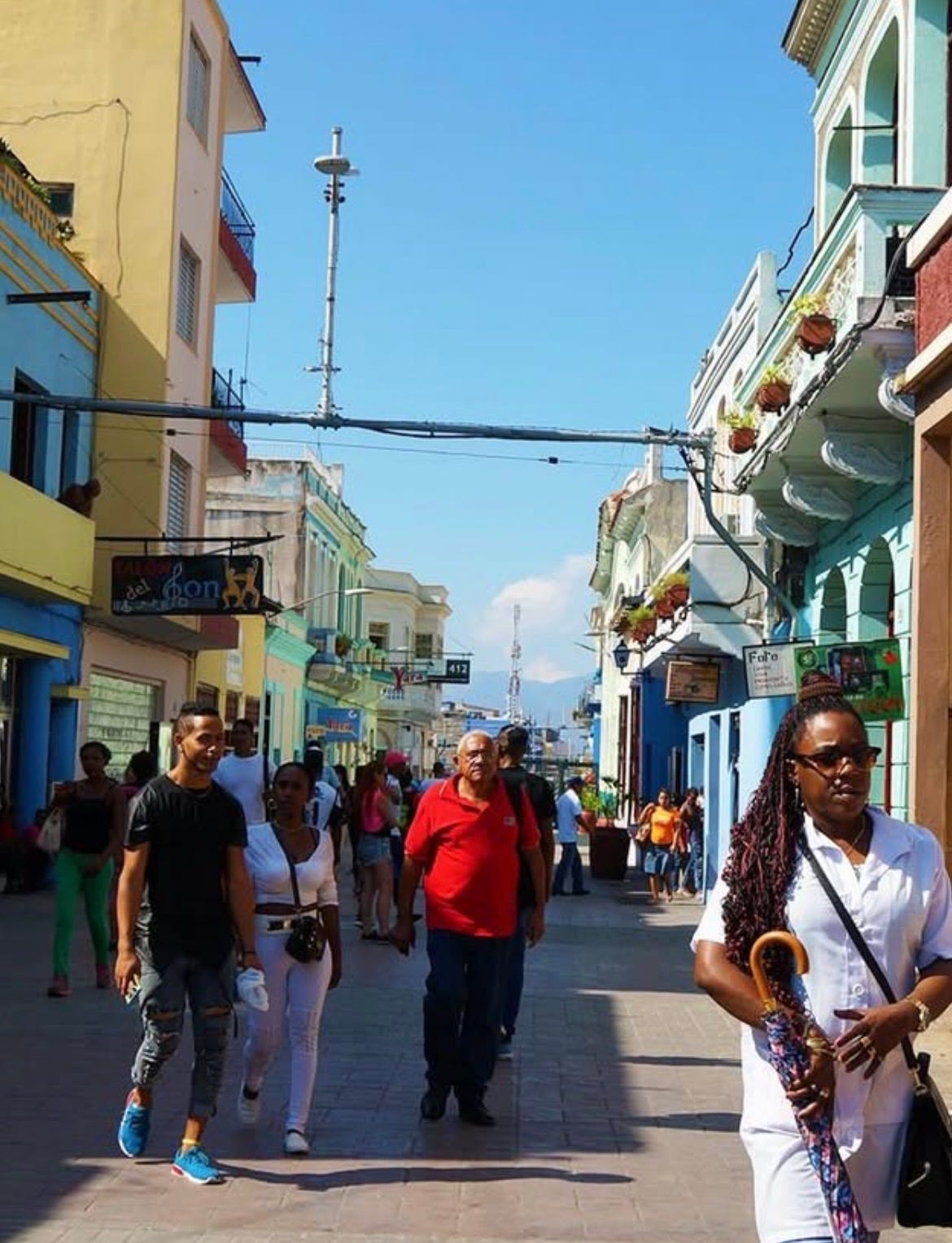
I don’t have the strength to comment on Prashad’s piece right now except that it is brilliant and accurate. I will leave it to you dear reader to examine both his and Arturo’s essays at your leisure. I have only one thing to say.

One line of my paternal family was sold as slaves from Santiago de Cuba to the mainland United States during the period of slavery in this Western hemisphere. My paternal great grandmother was born a slave named Mollie Laws. Her previous family surname was Layende. 

Like most people during the 1700s and 1800s, when one moved (or was sold) some place else the last name was changed to adapt to the new culture one was inhabiting. In the United States, it was typically expected that you Anglicize your name to something that English speakers could pronounce. So “Layende” became “Laws.”

Anyhow I used to relay my personal history to my History students in an effort to make sure that they understood that Chattel slavery took place throughout the Western world. Importantly, what we now call the United States received less than 6 percent of all the Africans transported to this hemisphere during the trans-Atlantic slave trade. The majority of Africans (around 95 percent) landed in what is now named Latin America and the Caribbean. 

I don’t have any deep analysis here about how difficult Afro-American genealogy can be. I don’t have any deep commentary about the many cultures and cultural differences that exist between all of the descendants of Africa who occupy this hemisphere except I have always known that for better or worse I belong to them.

Right after I read Arturo’s essay and then Vijay’s essay, I recalled a favorite memory from the classroom. A student whose name escapes me now came to class after Spring Break with a faded photograph he took while out on the Atlantic ocean. 

He learned that I had roots in Cuba and so did he. He pulled out this faded photo taken on the water. Far off in the distance I saw something that looked like a line stretched across the water. 

“What is that long line in the water that I see in the distance?,” I asked. 

That line across the water in the distance is Cuba, Ms. Allen. I hope you get there someday.” 

©️Leslye Joy Allen

I am an Independent Historian, Oral Historian and Dramaturge. Please consider supporting my work and research with a few bucks for Coffee and Eggs via my CashApp or become a paid subscriber to me on Substack to help me sustain my research.

All blogs written by Leslye Joy Allen are protected by U. S. Copyright Law and licensed under a Creative Commons Attribution-NonCommercial-NoDerivs 3.0 Unported License. Any partial or total reference to any blog authored by Leslye Joy Allen, or any total or partial excerpt of any blog authored by Leslye Joy Allen must contain a direct reference to this hyperlink: https://leslyejoyallen.com with Leslye Joy Allen clearly stated as the author.  Postings or blogs placed here by other writers should clearly reference those writers.  All Rights Reserved.

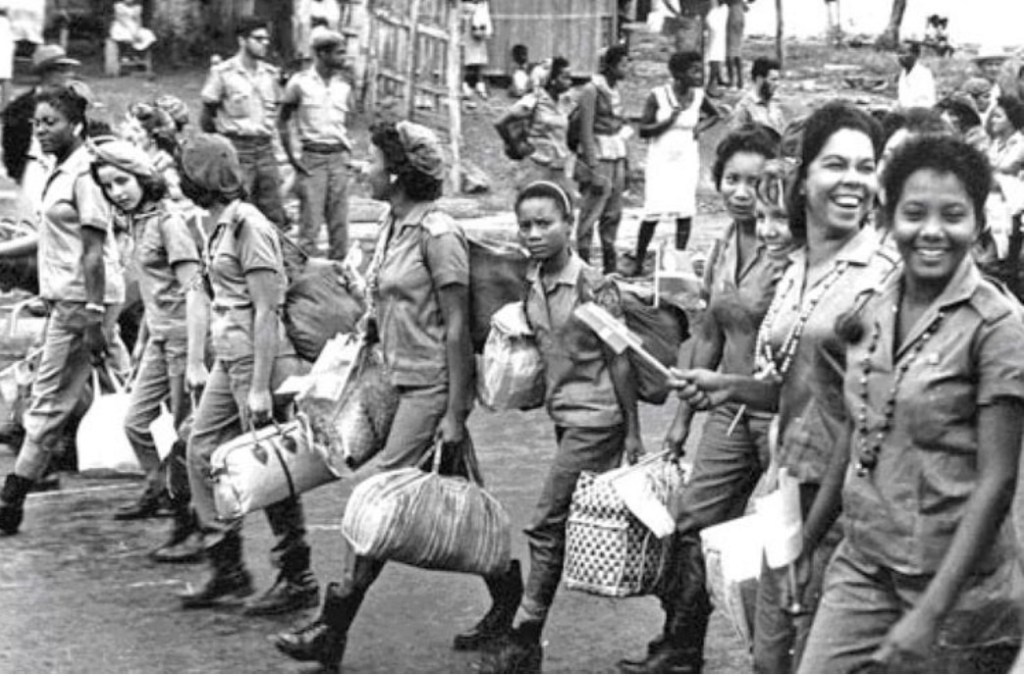
Hyperlinks to additional articles are below photos.
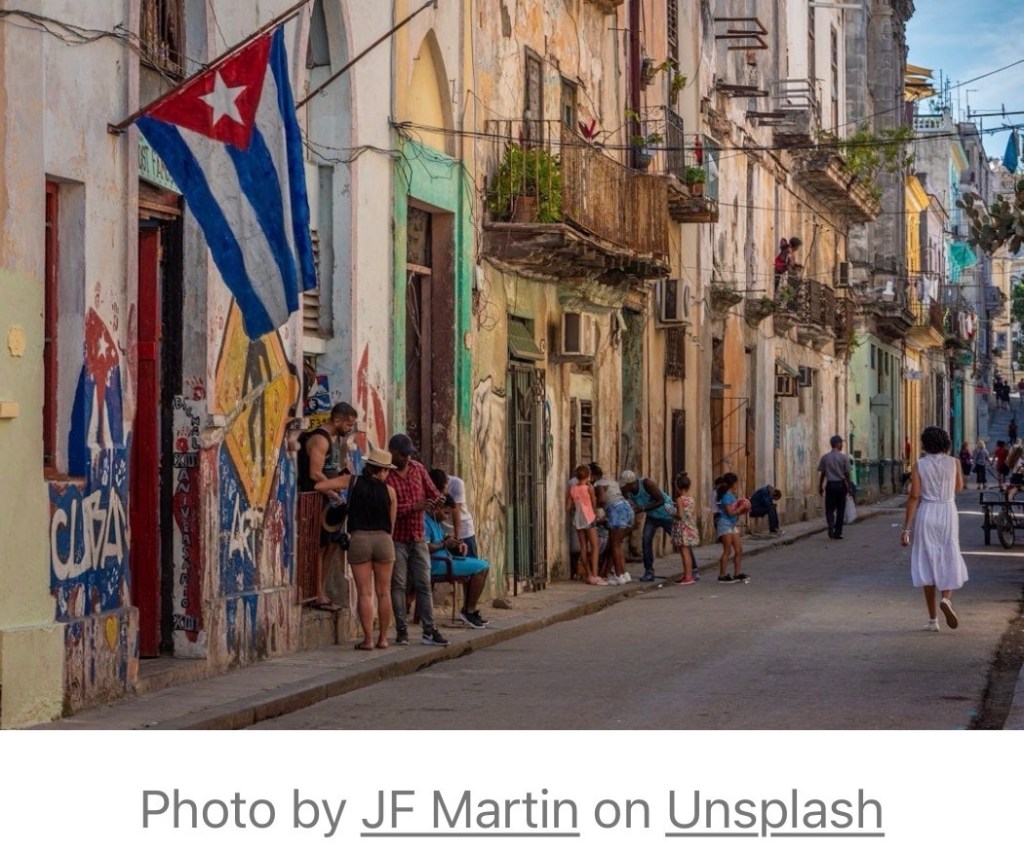
(from Analysis: Cuba on the Brink)

(from Why is the United States Afraid of Cuba?)

Chronic Ignorance

by ©️Leslye Joy Allen

Felon 47 was recently stunned to hear a Liberian official speak good English when the fact is the state that became the nation of Liberia was established by former African-American slaves with the assistance of the American Colonization Society in 1822. 

In 1847, the state of Liberia established itself as a Republic and was recognized as such by several European nations.

Yet, Trumpolini was amazed to hear a Liberian speak grammatically correct English when English has been Liberia’s official language ever since its inception as a settlement, then later as a country over 200 years ago.

It gets worse. Back when George W. Bush was president he admitted to Condoleeza Rice that he didn’t know that there were Black people in Brazil. Brazil has more people of African descent than any other nation outside of the continent of Africa itself.

During the trans-Atlantic slave trade 4.9 million Africans were transported to Brazil. Yet, George W. Bush—never the sharpest crayon in the box—was surprised that there were Black folks in Brazil. 

This kind of ignorance ranks right up there with the people who don’t know and never knew that the majority of Africans were not transported to the American Colonies/United States, but were transported primarily to Latin America and the Caribbean. 

And the worst ignorance of all is the notion that Africans learned specific skills once they left the continent. Africans in the Senegambia region of Africa had been planting rice for over 2,000 years before Yeshu’a ben Yosef (aka “Jesus”) was born. For the record, there is no letter “J” in the Hebrew and Aramaic languages that he spoke.

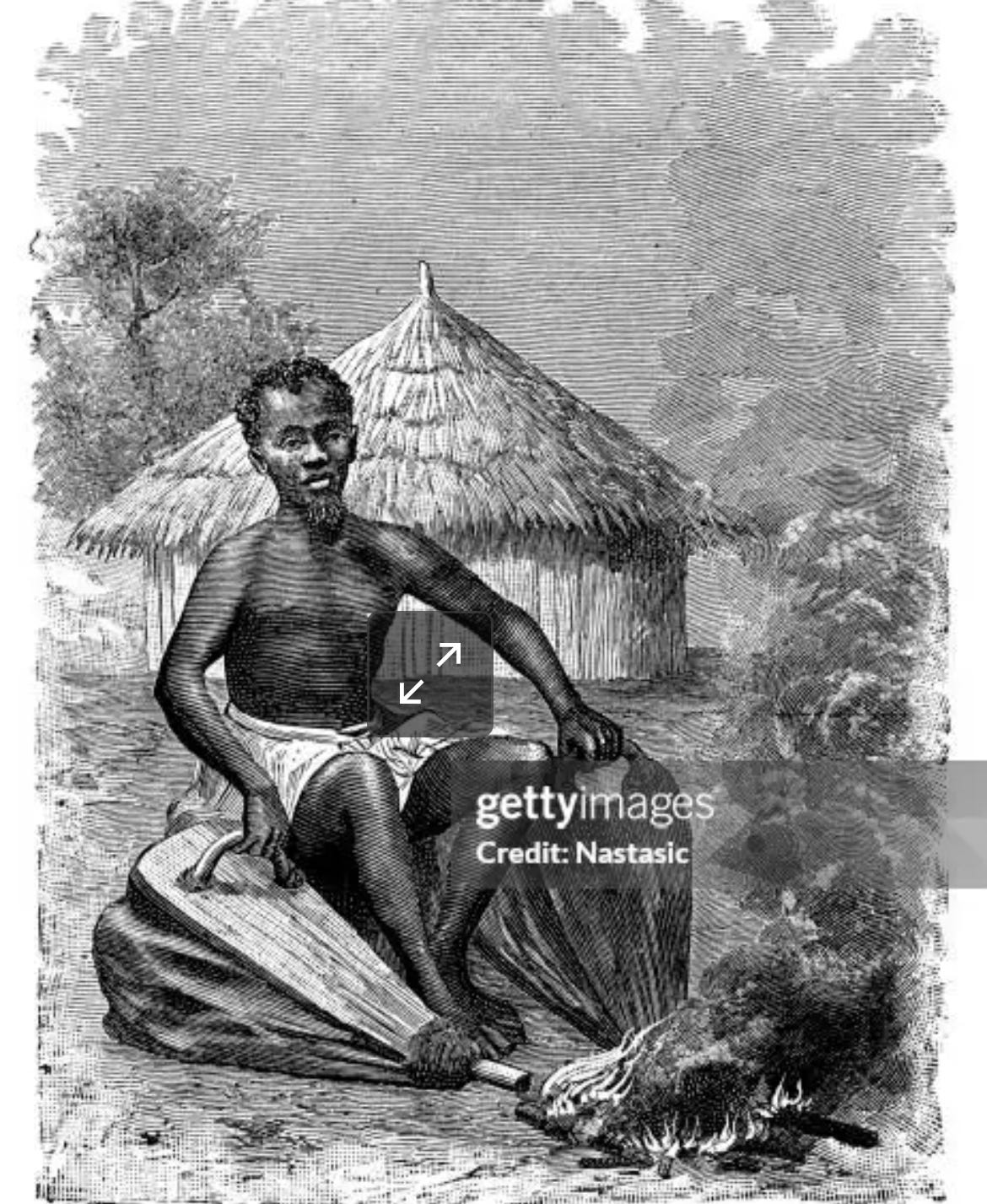
(Graphic of an African Blacksmith)

The Nok culture, the Kingdom of Kush and the Shona people of the continent of Africa were specialists in Iron smeltingthousands of years before there was any trans-Atlantic slave trade. Many African ethnic groups arrived here as Blacksmiths. Africans were transported to what Europeans called the “New World” or the “Americas” to do two things—perform the work Europeans did not want to do and the work Europeans could not do.

Now, just look at what is sitting in the White House: a man meaner than a rattlesnake and dumber than a box of rocks who doesn’t know how to do anything but mistreat people.

©️Leslye Joy Allen

I am an Independent Historian, Oral Historian and Dramaturge. Please consider supporting my work with a few bucks for Coffee and Eggs via my CashApp.

You can also subscribe to my writings on Substack and stay in the loop with the best new research, history, journalism, prose, poetry, and etcetera.

All blogs written by Leslye Joy Allen are protected by U. S. Copyright Law and licensed under a Creative Commons Attribution-NonCommercial-NoDerivs 3.0 Unported License. Any partial or total reference to any blog authored by Leslye Joy Allen, or any total or partial excerpt of any blog authored by Leslye Joy Allen must contain a direct reference to this hyperlink: https://leslyejoyallen.com with Leslye Joy Allen clearly stated as the author.  Postings or blogs placed here by other writers should clearly reference those writers.  All Rights Reserved.

The Loophole, the Farmer and the Lobbyist

by ©️Leslye Joy Allen

When I read comments by many people who express their shock and disgust at Felon 47, I share their pain. Yet, I am reminded of what they have not paid much attention to.

(In the year 2000, prisoners pick cotton at the Ferguson Unit in Texas in the prison’s cotton fields, Photo by Andrew Lichtenstein, Getty Images)

I taught my History students to think outside the box, and connect the dots. After establishing that American Chattel Slavery was an enormous agricultural enterprise that literally funded and built the United States, I would have my students read the 13th amendment to the U.S. Constitution which allegedly ended slavery in the United States:

“Section 1: Neither slavery nor involuntary servitude, except as a punishment for crime whereof the party shall have been duly convicted, shall exist within the United States, or any place subject to their jurisdiction.

Section 2: Congress shall have power to enforce this article by appropriate legislation.”

First, it was always possible to abolish slavery without it ever being justified as a punishment for a crime. The loophole stands out because it was deliberately placed there.

Second, Congress had the power to enforce the 13th amendment through further legislation. So, if Congress was silent about abuses of this amendment, one might get away with imprisoning and/or forcing the labor of just about anyone. Ava DuVernay’s documentary 13th brilliantly examines the loophole in the amendment, but I want to go just a bit further.

Now, how many of you on the Left have recently complained about Democrats in Congress not fighting hard enough against the policies of Felon 47? We can cherrypick the most vocal Democrats, can’t we? 

That leads me to something writer Carlyn Beccia wrote in her brilliant investigative essay “Don’t Tell MAGA, But Trump Plans to Increase Immigrant Labor.” (I highly, highly recommend reading this “free” essay ASAP.)

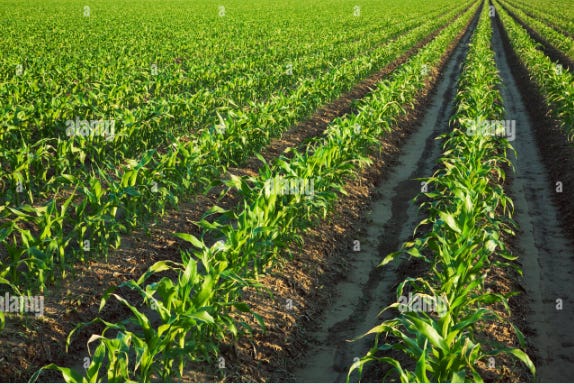
(Field of mid-growth grain Corn plants near England, Arkansas. Stock photo at Alamy)

Beccia noted that these days I.C.E. rarely shows up at American farms even though “six in ten agricultural workers are noncitizen immigrants.” She argued that Felon 47 is deporting Brown immigrants as a ruse to throw raw meat to his racist, stupid ass base. 

He pretends that he is cleaning up the country by putting alleged criminal riff-raff out of the country, while he capitalizes on a different type of immigrant status, namely H-2A visas that have been in use for years.

Here’s the rub as Beccia points out— Felon 47 did not start any of this. Mega agribusinesses like BayerAg, Syngenta, AcreTrader, Archer Daniels Midland Co., CHS, Inc., Freight Farmers, Heinz Seeds, Seedo Corporation, Sakata Seed Corporation, DOW, Rijk Zwaan and many others will reap in the profits while American farmers (many of whom are MAGA supporters) will still struggle financially. 

By using immigrants with H-2A visas, there is less money to be paid out, no pressure to guarantee permanent employment, and no negotiations to be made for poor immigrant workers if they are mistreated. 

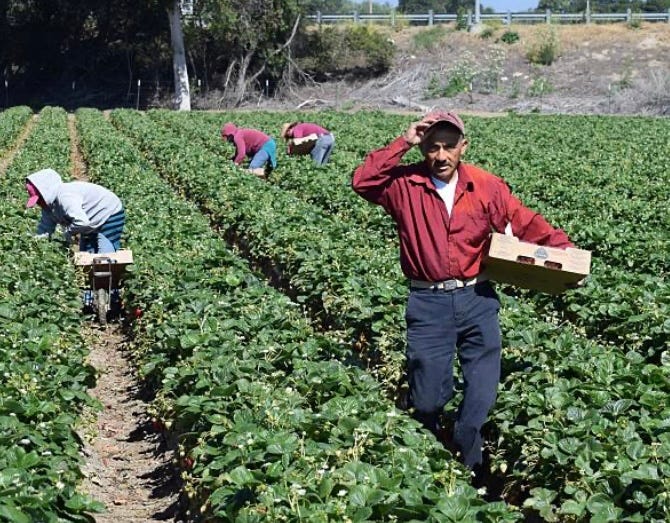
Unless you have your own garden and grow your own food, the French Fries you ordered at McDonald’s (made from a corn product, not a potato), and the food that sits on your table was produced by slave labor. Sidebar: H-2A visas allow businesses to hire foreign workers on a temporary basis when there are not enough American workers to fill the jobs.

(Salinas, CA, USA—June 19, 2015: Seasonal farm workers pick and package strawberries)

Agribusinesses are so brutally profit-driven that the countries of Ethiopia, Ghana, Kenya, Malawi, Nigeria, South Africa, Tanzania, Uganda, Zambia, and Zimbabwe have made it illegal for native and neighboring farmers to trade seeds with each other. 

Under pressure from agribusinesses to insure that the “intellectual property rights” of their seeds are not violated, agribusinesses pressured various African governments to eliminate farmers’ traditional farming methods in order to force farmers to purchase seeds rather than allowing them to trade their own. Their lobbyists threaten, cajole, and promise money to political parties and politicians in order to ensure these companies make a profit. 

So, students/readers as we think about all of this on our way out the door of my classroom, let’s consider the following. It would be fair to say that the average civic-minded American citizen would do well to contact their representatives to make their grievances and requests known. Many of us can and often do lobby our representatives to encourage them to represent our interests.

At the same time, multi-billion dollar businesses employ and pay lobbyists. The average citizen does not have that kind of wealth. So, here’s a few questions students/readers: Why is lobbying even legal? Have you figured out yet why some Democrats are just going along with the program as if nothing is happening?

Class dismissed.

©️Leslye Joy Allen

I am an Independent Historian, Oral Historian and Dramaturge. Please consider supporting my work with a few bucks for Coffee and Eggs via my CashApp.

You can also subscribe to my writings on Substack and stay in the loop with the best new research, history, journalism, prose, poetry, and etcetera.

All blogs written by Leslye Joy Allen are protected by U. S. Copyright Law and licensed under a Creative Commons Attribution-NonCommercial-NoDerivs 3.0 Unported License. Any partial or total reference to any blog authored by Leslye Joy Allen, or any total or partial excerpt of any blog authored by Leslye Joy Allen must contain a direct reference to this hyperlink: https://leslyejoyallen.com with Leslye Joy Allen clearly stated as the author.  Postings or blogs placed here by other writers should clearly reference those writers.  All Rights Reserved.

The 13th Amendment and El Salvador

by ©️Leslye Joy Allen

The first time I taught a US History class, I had my students study the wording of the 13th Amendment of the US Constitution and debate whether or not slavery had actually been abolished or had it simply been reconstructed: 

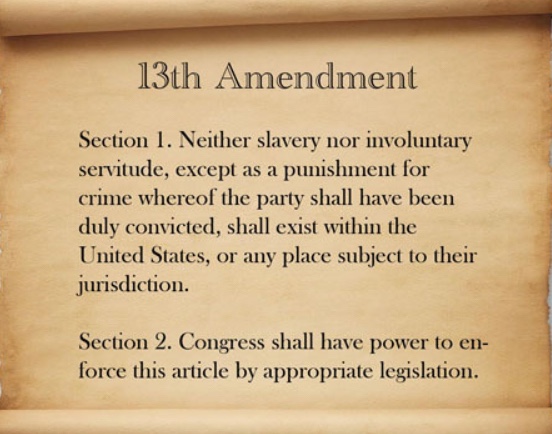
“Section 1. Neither slavery nor involuntary servitude, except as a punishment for crime whereof the party shall have been duly convicted, shall exist within the United States, or any place subject to their jurisdiction.

Section 2. Congress shall have power to enforce this article by appropriate legislation.”

By the time master filmmaker Ava DuVernay finished her documentary 13thI was salivating with anticipation. She did not and never does disappoint. She traced the origins of that loophole in the 13th Amendment that allowed for servitude to be imposed for crimes well into the 21st century. 

Slavery had/has gone away in some form. Yet, one of my favorite Black judges, the late New York Supreme Court Judge Bruce M. Wright noted the awful way Black and Brown defendants were treated. Wright earned the nickname “Turn ‘Em Loose Bruce” because he had witnessed one too many Black men and women end up in court because they stole something trying to feed their families only to be sentenced to anywhere from 10 to 20 years in prison. So, Wright gave them some minimal punishment, but he often turned them loose.

I remember his description of a case where a Black man had an extremely sick wife. Neither he nor his wife could afford her medicine. So, in desperation, the man stole a television set from the hotel where he worked. He pawned the television to purchase his wife’s medications. This man had never committed a crime before in his life, but he was sentenced to 10 years in prison.

Now here’s the next rub. For people old enough to remember, the only thing we knew for sure about prisoners when we were growing up was that prisoners pressed license plates. Well, folks that isn’t true anymore. Now American prisoners make…Clothing, Computers, Electronics, Furniture, and all that discounted stuff you find at Walmart and Target. US prisons generate anywhere from 2 to 5 billion a year in profit while prisoners who do the work never earn the standard minimum wage. 

So, as you rightly fight for and ponder the fate of Kilmar Abrego Garcia, an American citizen who sits unlawfully in a jail in El Salvador, think about Felon 47 and El Salvador’s Nayib Bukele giving each other a high-five and talking about not returning individuals who are wrongfully detained while they also discuss building more prisons in El Salvador. I’m going to leave it right there. 

©️Leslye Joy Allen

I am an Independent Historian, Oral Historian and Dramaturge. Please consider supporting my work with a few bucks for Coffee and Eggs via my CashApp.

You can also subscribe to my writings on Substack and stay in the loop with the best new research, history, journalism, prose, poetry, and etcetera.

All blogs written by Leslye Joy Allen are protected by U. S. Copyright Law and licensed under a Creative Commons Attribution-NonCommercial-NoDerivs 3.0 Unported License. Any partial or total reference to any blog authored by Leslye Joy Allen, or any total or partial excerpt of any blog authored by Leslye Joy Allen must contain a direct reference to this hyperlink: https://leslyejoyallen.com with Leslye Joy Allen clearly stated as the author.  Postings or blogs placed here by other writers should clearly reference those writers.  All Rights Reserved.

The Intersectionality of Suffragist & Abolitionist Lucy Stone

by ©️Leslye Joy Allen

“Intersectionality is a metaphor for understanding the ways that multiple forms of inequality or disadvantage sometimes compound themselves and create obstacles that often are not understood among conventional ways of thinking.” — Kimberlé Crenshaw

Recently, I responded to a question about the factors that stymied women’s quest for suffrage during the mid-to-late 19th century. I brought up the pragmatism and egalitarianism of suffragist and abolitionist Lucy Stone whose legacy remains largely overlooked. And therein lies the problem.

Susan B. Anthony and Elizabeth Cady Stanton have rightfully earned their place in Women’s history. They battled for the vote in ways almost unimaginable. Yet, they both held racist and classist views. Now before you start yelling about how both of them worked in the abolitionist movement, spare me. You can be anti-slavery and still not think the slave is your social or political equal. The inability to shake off one’s sense of entitlement has extreme consequences for everyone.

When lawmakers decided to include Black men as voters in the 15th Amendment without including the franchise for white women, both Stanton and Anthony were rightfully livid, but livid to the point where they then fought against the passage of the 15th Amendment altogether. It passed, however, in 1869 and was ratified in 1870.

Stanton wrote that it was unconscionable and dangerous to give the vote to Black, Chinese or Irish men because they were inferior. Anyone that did not fit a strict Anglo-Saxon and native-born status was considered inferior. Additionally, neither Stanton nor Anthony had thought about Black women voting at all. 

Stone broke with Anthony and Stanton over their racism. Orator, writer, abolitionist and former slave Frederick Douglass cut his ties to Anthony and Stanton as well. The tragedy was that Douglass had attended the Women’s Conference at Seneca Falls in 1848 and had been a huge and early advocate for women’s rights. Moreover, it was Lucy Stone’s brilliant oratory that had inspired Susan B. Anthony to join the suffrage movement.

Stone read the political winds correctly. She formed the American Woman Suffrage Association which concentrated on gaining women the right to vote on a state-by-state basis. She knew that Congress was not going to grant the franchise to everyone. 

Stone believed that the enfranchisement of Black men was progress. Although she was disappointed that the 15th Amendment did not include women’s suffrage, she did not believe that denying the franchise to others would help women in the long run.

Black men, rather than white women, were granted the right to vote first for a variety of reasons. As a historian, I know that the Republican Party in the 1860s was the party of Lincoln (not the sh*t show it is now) that freed Black American slaves. They controlled both the House and the Senate in 1867 to 1869. They knew that recently freed and enfranchised Black men would inevitably vote Republican and increase the party’s political dominance.

Granting the franchise to white women would have mixed political results as many white women still believed in the lost cause of the South in spite of its loss during the Civil War. They would have voted Democrat which was then the favored party of the former slave-holding South.

Some of Stone’s ideas were tied to her upbringing. She came from a hardworking farming family in Massachusetts. Both of her parents were abolitionists. While quite young, she, along with Lucretia Mott and Abby Kelly Foster helped William Lloyd Garrison establish the American Anti-slavery Society which was founded in 1833.

All of her brothers attended college. Yet, Stone had to postpone her education. She taught school for several years and was able to scrape up enough money to attend Oberlin College, the first college in the nation to accept Black people and women. When she graduated in 1847, she became the first woman in Massachusetts to earn a college degree.

Stone had planned to remain a single woman because she feared losing her independence to a husband. She finally yielded to Henry Browne Blackwell’s persistence. Blackwell was also an abolitionist and women’s rights advocate. Blackwell would learn years later that Stone finally decided to marry him after he met and aided a young slave with her owners while traveling on a train.

When Blackwell asked the girl would she rather be free, she answered “yes.” Blackwell and an accomplice helped get the young girl off of the train and away from her owners. It was that act of liberation that won Stone over.

When Blackwell and Stone married their written protest against laws that denied women equal rights was read before the ceremony. The promise “to obey” was removed from their wedding vows. Stone retained her maiden name and refused to pay taxes as long as she was denied her equal rights.

While neither Stone nor her contemporaries Anthony and Stanton lived long enough to see women receive the right to vote, their different approaches and beliefs underscored a perpetual problem in the quest for women’s equality and the right to vote.

Stone never stopped fighting for the rights of Black people as she continued her fight to get the vote for women. She believed that both causes were interrelated. The same cannot be said of Anthony and Stanton. 

The fight for the right to vote for women was often fractured by racism well into the 20th century. Stone’s stances on racial equality and equal rights for women cost her some popularity among some white women. Anthony and Stanton emerged as the face of white women’s suffrage. Yet, Anthony and Stanton also emerged as suspect to Black men and women. 

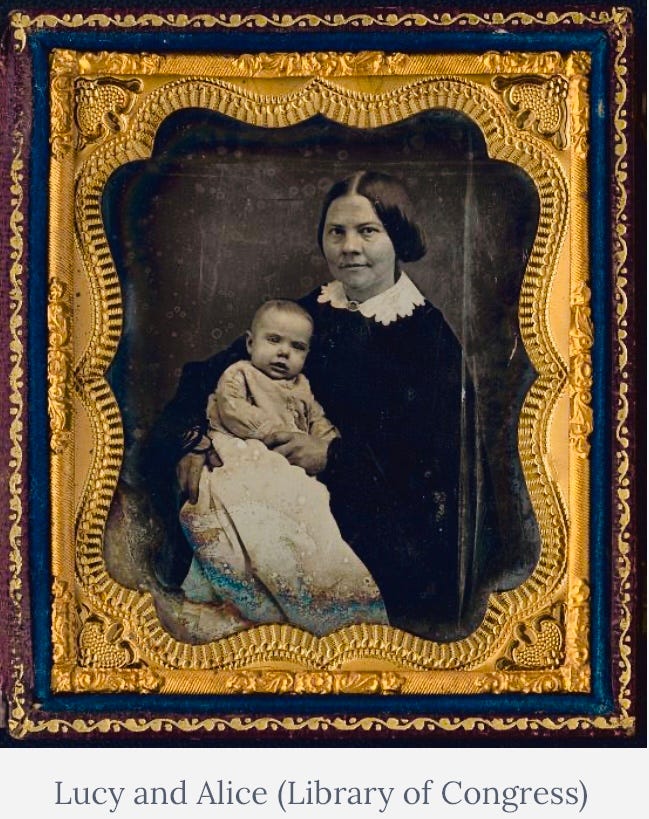
After Lucy Stone died of stomach cancer in 1893, her only child, Alice Stone Blackwell reached out to the daughter of Elizabeth Cady Stanton and began the process of repairing the divided women’s suffrage movement. They created a new coalition. Alice Stone Blackwell followed her mother’s mantra to make the world better.

Lucy Stone deserves more historical attention than she receives. Her example should be emulated precisely because she understood the “intersectionality” of gender and race (and the political implications that go along with it) long before Black scholar and lawyer Kimberlé Crenshaw coined the term and defined the theory in the late 20th century. Stone recognized that, no matter how different gender and race may appear, women’s equality was inextricably linked to racial equality. You must fight for both, not just one or the other.

©️Leslye Joy Allen

I am an Independent Historian, Oral Historian and Dramaturge. Please consider supporting my work with a few bucks for Coffee and Eggs via my CashApp.

All blogs written by Leslye Joy Allen are protected by U. S. Copyright Law and licensed under a Creative Commons Attribution-NonCommercial-NoDerivs 3.0 Unported License. Any partial or total reference to any blog authored by Leslye Joy Allen, or any total or partial excerpt of any blog authored by Leslye Joy Allen must contain a direct reference to this hyperlink: https://leslyejoyallen.com with Leslye Joy Allen clearly stated as the author.  Postings or blogs placed here by other writers should clearly reference those writers.  All Rights Reserved.