The Arbitrary Ages of Consent: The Epstein Files

by © Leslye Joy Allen

Any belief that is based on distorted facts or on lies will eventually swallow you whole. Any weird science that has been used to perpetuate myths and half truths can get you injured or killed. 

I read an abstract of an article from 2009 called Pedophilia, hebephilia and the DSM-V awhile back. DSM-V stands for Diagnostic and Statistical Manual of Mental Disorders, Fifth Edition. This quote from its abstract stood out:

“One possibility would be to replace the diagnosis of Pedophilia with Pedohebephilia and allow the clinician to specify one of three subtypes: Sexually Attracted to Children Younger than 11 (Pedophilic Type), Sexually Attracted to Children Age 11-14 (Hebephilic Type), or Sexually Attracted to Both (Pedohebephilic Type). We further recommend that the DSM-V encourage users to record the typical age of children who most attract the patient sexually as well as the gender of children who most attract the patient sexually.”

The abstract noted in 2009 that the term “hebephilia,” which described an adult that had a sexual preference for pubescent children ages 11 to 14, had not caught on. That term still has not caught on. 

Pedophilia, which describes someone who has a marked sexual preference for children who have not yet begun puberty is still the preferred term to designate adults who have a sexual preference for underage youth. I am going to play devil’s advocate here.

What is missing from these definitions is the alleged safety clauses for children aged 15 and older. What’s blatantly clear, at least it was in 2009, was that anyone aged 16 or older could be classified as a pedophile as long as their victim/s were at least 5 years younger. In other words a 16-year-old male classified as “pedophile” would necessarily be or attempt to be sexually active with a child/children 11-years-of-age or younger.

If you’re scratching your head, you should be. I can understand a grown man or grown woman looking at a 15 or 16 year old and thinking that those teenagers are awfully cute. Yet, propriety and ethics and morals and good old common sense should remind these same adults that these “teenagers” have no business climbing into bed with them for any reason. It’s called decency. 

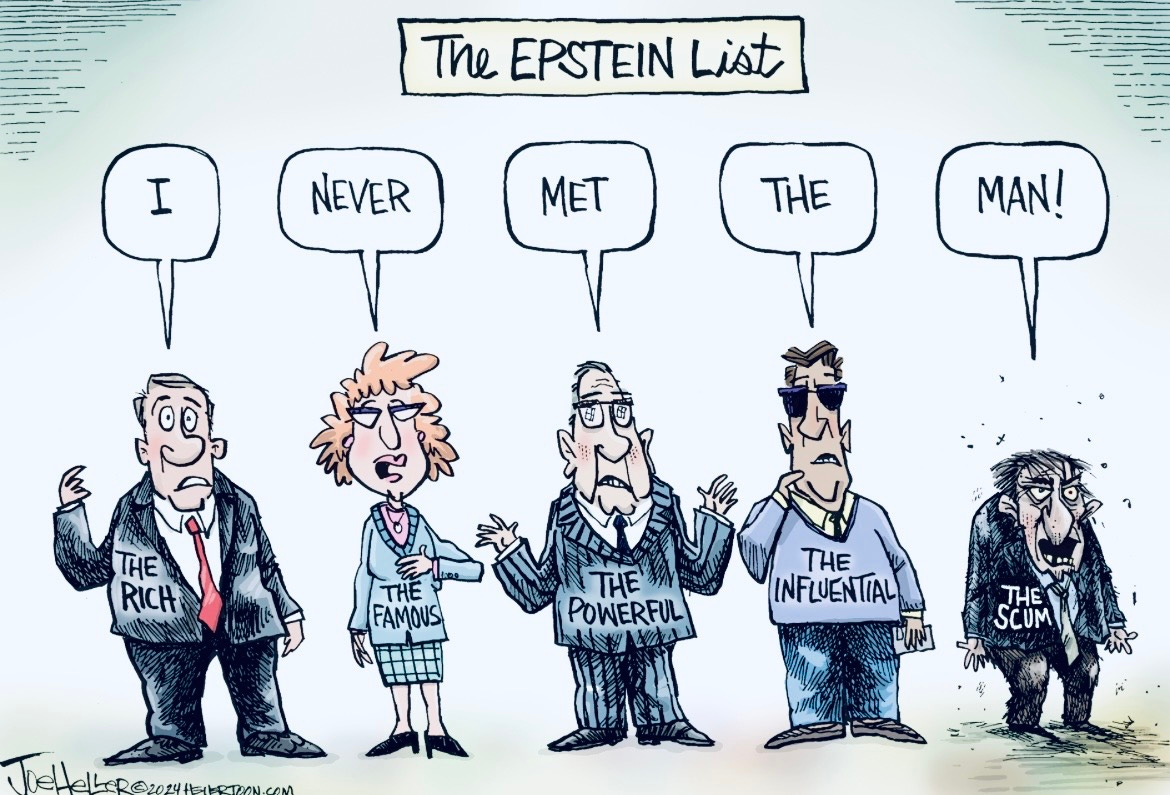
After I read the recent, pathetically weak reporting on what has been released so far from the Epstein Files, I knew I needed to revisit some of the data on pedophilia. Here’s why? 

White Western science has a tendency to describe any and all rotten ass behavior as some form of mental disorder rather than defining certain behavior for what it is: the “I-do-what-I-do-when-it-suits-me-and-when-I-can-stay-in-control-when-I-do-it” syndrome.  White male patriarchy, in all of its excesses and perversions, is protected by the science. 

The white or Black guy that cannot get any woman to have sex with him because he doesn’t know how to talk to or court well-educated adult women might end up in a sexual tryst with a vulnerable and impressionable 16-year-old because he found her attractive because she’s physically well-developed, but mentally she’s still a kid—and his sick, predatory, control freak ass already knows it. 

I am not willing to paint such men as “mentally ill” as much as I am willing to paint them as ethically and morally corrupt. In other words, they are rotten to the core. 

The revelation that there is in excess of over 1.7 million documents in the Epstein Files and that there were at least 10 co-conspirators that aided and abetted Epstein and other men of his ilk ought to tell you something. 

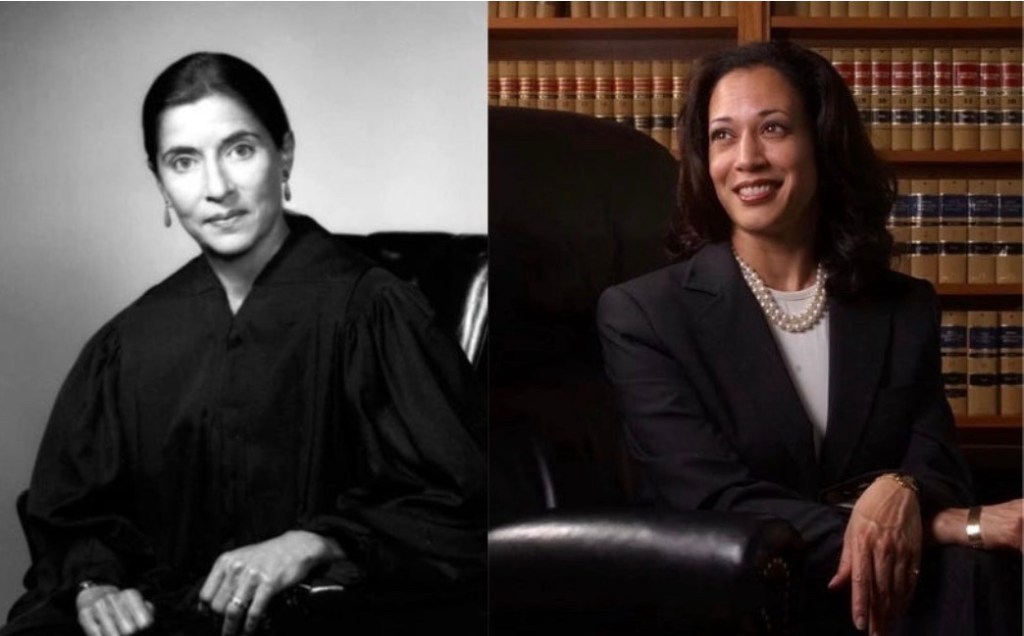
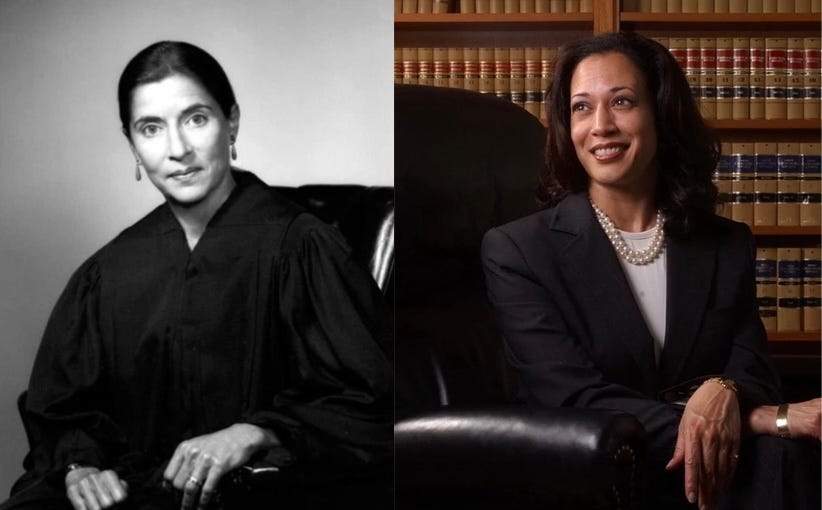
(Young Ruth Bader Ginsburg & Kamala Harris)

If the frontal cortex of your adult brain doesn’t reach full maturity until you are at least in your mid-to-late twenties, ask yourself the following questions: 

Why is the average age of sexual consent across 30 states in the United States only 16-years-of-age? Why do only a handful of states place the age of consent at age 17, with a remaining 11 states placing the age of consent at age 18? 

Do not tell yourself that lie that you were wise when you were between the ages of 16 and 18. It doesn’t matter if you remember that lovely moment when you and another 16 year old decided to do the deed because you were just a couple of horny teenagers. It does matter if that 35-year-old guy that you thought was so cool for being interested in you ran his hand up your dress and coerced you into a sexual scenario that you were not ready for. 

The Supreme Court was established in March of 1789. Yet, it wasn’t until Ruth Bader Ginsberg (long before she was appointed to the Supreme Court in 1993), argued in 1977 in “Sex Bias in the U. S. Code” that she co-authored for the Commission on Civil Rights, that boys and men could be and often were raped and/or sexually exploited. So many men were so damned caught up in patriarchy and male sexual prowess that they didn’t even know to look out for themselves. They still don’t.

The young prosecutor Kamala Harris remembered her high school best friend as having been molested by her father. She pressed her friend to tell her what was going on. Young Kamala remembered that her friend often did not want to go home. 

Kamala told her mother what was going on with her friend; they took this girl into their home. When Kamala made the decision to become a prosecutor she specialized in prosecuting pedophiles and rapists. Do you think if she were president we would be getting Epstein updates in dribs and drabs? I think not.

© Leslye Joy Allen

I am an Independent Historian, Oral Historian and Dramaturge. Please consider supporting my work and research with a few bucks for Coffee and Eggs via my CashApp or become a paid subscriber to me on Substack to help me sustain my research.

All blogs written by Leslye Joy Allen are protected by U. S. Copyright Law and licensed under a Creative Commons Attribution-NonCommercial-NoDerivs 3.0 Unported License. Any partial or total reference to any blog authored by Leslye Joy Allen, or any total or partial excerpt of any blog authored by Leslye Joy Allen must contain a direct reference to this hyperlink: https://leslyejoyallen.com with Leslye Joy Allen clearly stated as the author.  Postings or blogs placed here by other writers should clearly reference those writers.  All Rights Reserved.

A Quick Word to Millennial (and Younger) Protesters and Activists

by ©️Leslye Joy Allen

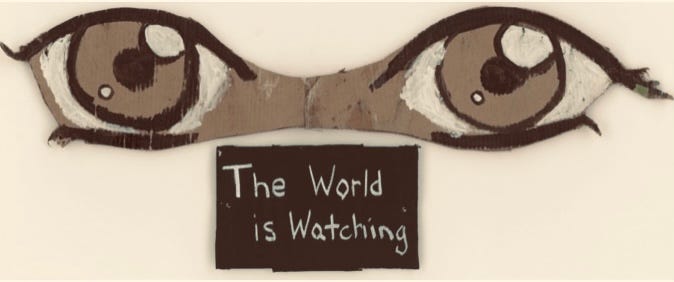
The photo below is of a creation titled “The World is Watching.”  The artist is not known. It is located at the Library of Congress which has a long history of collecting Protest Art and Protest Photography. Visually stunning and a reminder that protests and activism change with the technology of the times.

I was born during the last years of what was called the Baby Boom. As a Baby Boomer, I did not grow up from Childhood to Early adulthood with a Personal Computer, the Internet, and definitely not Social Media or a cellphone with a camera.

I learned of protest marches and various forms of activism via word-of-mouth, letters, signs on school and church bulletin boards, and via Black-owned newspapers. Sometimes these protests were featured on the 6 O’Clock News.

Fast forward to the late 20th and early 21st centuries and you have young adults who grew up with everything we Baby Boomers grew up without. Millennials get messages out there in cyberspace in a matter of seconds. They can rally thousands (even millions) of people with brief blurbs and blogs in a matter of a couple of days and occasionally a couple of minutes. There are, however, a few drawbacks.

In addition to creating mediums that make it seem as if a few “likes” on social media has resolved the problem, it also exposes certain tactics that should not be seen by everyone. Social Media exposes protest tactics to our enemies as much as it exposes those tactics to our friends. So let me share the following history. Ignore it; modify it; and/or adapt this in any way you see fit.

The Black American Civil Rights Movement typically had a 3-pronged approach. 

  1. Back in the day, you had a set of individuals who could not physically participate in protest marches because they were the folks who were designated to bail you out of jail if you were arrested. The folks who were part of the Black community who had a degree of affluence and wealth were often in this position. Although many of them were out there in the streets protesting. 
  2. Another group was the observers. These were individuals who lined routes of marches who watched and recorded what they saw. Sometimes they would stand on sidewalks and pretend to be window shoppers or they would sit near the windows inside places of business so that they could see what was going on outside in order to report what they saw. There were no cellphones with cameras in them back then. Their hardest role was to not intervene when they saw any physical violence. They had to record what they saw.
  3. Finally, there were the Black protesters themselves who were trained in non-violent resistance in order to highlight the sheer brutality of their oppressors. They were trained to endure and not fight back.

Now, I am not at all advocating for any of you to quietly endure any form of brutality and violence as you fight against this onslaught of abuse from the administration of Felon 47. What I am suggesting is that you create a 3 or even 4 or 5-pronged approach to how you protest and advocate for the causes you believe in.

Right now, activism is highly tied to how much press and social media presence one can generate. That’s not a bad strategy, but the limitations of that approach is that almost anyone can see it. You win most against enemies when enemies do not know EXACTLY what is coming at them all the time. And that is not my original idea. It actually comes from Sun Tzu, a Chinese General and Strategist born around 544 B.C.E. Some ideas stand the test of time. Study those ideas. Onward!

©️Leslye Joy Allen

I am an Independent Historian, Oral Historian and Dramaturge. Please consider supporting my work with a few bucks for Coffee and Eggs via my CashApp.

All blogs written by Leslye Joy Allen are protected by U. S. Copyright Law and licensed under a Creative Commons Attribution-NonCommercial-NoDerivs 3.0 Unported License. Any partial or total reference to any blog authored by Leslye Joy Allen, or any total or partial excerpt of any blog authored by Leslye Joy Allen must contain a direct reference to this hyperlink: https://leslyejoyallen.com with Leslye Joy Allen clearly stated as the author.  Postings or blogs placed here by other writers should clearly reference those writers.  All Rights Reserved.

Sacred Places

By Leslye Joy Allen

Tropical Blue Ocean Water (public domain) Tropical Blue Ocean Water (public domain)

I was among the people supremely delighted at the decision of the Army Corps of Engineers to halt any further construction of the Dakota Pipeline on Sunday, December 4, 2016 until further study of its environmental impact on the water supply in that area. I am not going to preach about the fact that eventually that pipeline would have negatively affected the water supply. You can read my previous blog “A Time of Drought,” to get an idea.

For environmentalists, like myself, this was an incredible victory because for the first time, in a long time, the environment was front and center.  The many Native American nations, along with military servicemen and women, environmentalists, and peoples from around the globe were involved in this protest. Often protests of this nature compete with news stories about who-wore-what to some awards show or the endless stories that moan and groan about things some people obviously have no intention of doing anything about, else they would not spend so much time moaning and groaning about them in the first place…

This time something as precious as water was at the forefront; and access to clean water is something that everyone can understand, even when they are less informed about other matters related to the environment…

Now, what I am about to say here might stun a few folks…

What a lot of people often fail to recognize is that in almost every instance where the earth or air or water has been disturbed or polluted, whether it is to extract oil or some other resource or to build some structure, there has almost always been some violation of the sacred, some disturbing of something that meant something precious to someone or to some group of people…

For my Atlanta readers, you might know, or might need reminding, that underneath a portion of Interstate 75-South lies an old cemetery filled with the graves of Black folks, our brothers and sisters. Where Interstate 75-South meets Cleveland Avenue lies a marble marker that designates the graves of roughly 1,700 former slaves who were buried in Gilbert Cemetery which had been created as a burial place for slaves in the early 1840s.

Because the area around this grave came to be known as “Plunkett Town” which was still occupied by poor, rural Blacks as late as the 1960s, the graveyard there did not illicit much concern until work crews from the Georgia Department of Transportation discovered the damaged burial grounds while building Interstate 75.  By the time of the discovery, the graves had already been disturbed, and the plans and money to build that highway were already in place.  No one considered the graveyards to be more important than building a much-needed highway.  What has been left there is a marker letting people who bother to look know that they are driving over a graveyard…

This is exactly what we all have been doing to Native Americans’ sacred sites ever since Europeans arrived on these shores, eventually and forcibly transporting millions of Africans here to perform heavy labor as slaves…

This is not a moral judgement, but rather food for thought.  Too often we—and that includes environmentalists as well, and I am just as guilty—do not think of water as anything other than something that will come out of a faucet when we turn that faucet on.  And as long as we can pay our Water Bill, we seem assured that when we turn that knob, water will come out…

But go pour a glass of water.  Look at it!  Say a prayer to it!  Respect it!

The Standing Rock protest that has temporarily halted the Dakota Pipeline might not have converted any new environmentalists; I know too well from experience that a lot of people do not want to be inconvenienced in any way, even if that small inconvenience will help clean up the environment, or at least slow down the toxicity of the natural environment…

Yet, we all need to stay on guard because this battle may come up again as a new president moves into the White House in January 2017.  However, for the time being, recognize what this protest and this small victory has made us all pay attention to: respect for the dead and for the most precious resource on earth: water.  If you are not humbled by this, I do not know what else to tell you except that you will eventually be humbled by this, whether you want to be or not.

Àṣé.”

Copyright © 2016 by Leslye Joy Allen.  All Rights Reserved.

This blog was written by Leslye Joy Allen and is protected by U. S. Copyright Law and licensed under a Creative Commons Attribution-NonCommercial-NoDerivs 3.0 Unported License. Any partial or total reference to this or any blog authored by Leslye Joy Allen, or any total or partial excerpt of this or any blog by Leslye Joy Allen must contain a direct reference to this hyperlink: https://leslyejoyallen.com with Leslye Joy Allen clearly stated as the author. All Rights Reserved.


A Thought for the Old and New Year

By Leslye Joy Allen                                                                                                     Historian, Educator, Theatre and Jazz Advocate & Consultant, Ph.D. Candidate

Copyright © 2014 by Leslye Joy Allen.  All Rights Reserved.

One of the first things that came to mind shortly after Christmas and before the New Year was how much my Mom and Dad would have been thrilled and proud that a great film like 12 Years a Slave received great reviews and had enjoyed large viewing audiences.  I would have heard a litany of what they remembered about their childhoods and how far we Black folks have come.  And if they were still alive they would surely have warned me not to hyperventilate about whether or not Santa Claus was Black or some of the foolish and racist slips of the tongue that seem to dominate our current news cycles on most days.

Strangely, my mind goes back to that one scene in the film 12 Years a Slave where after a slave has literally dropped dead from exhaustion while laboring in the fields, you see the slaves standing around a gravesite that they have prepared for their fallen comrade.  Suddenly, a slave woman begins singing the old Negro spiritual “Roll, Jordan, Roll.”  Then all of the slaves joined in and they sang with a joyous abandon.  At this moment in the movie theater, I completely lost my composure.  I wept so loudly that I had to place my hand over my mouth to muffle the sound.  For days, I wondered why that scene—and not one of the other more horrible scenes where someone was beaten or tortured—caused me to cry like a two-year-old toddler.  Then it came to me.  This was a gift.  The gift was not simply my ancestors’ songs, but their decision that they had a right to sing their songs.

Their gift feels as familiar as a book of black poetry or history or the first time my parents took me to a Jazz concert or to see the Alvin Ailey American Dance Theatre or to a Broadway play.  Afterwards, they would always inform me that I must never forget that it was my people that had created the artistry and creative offerings that I had just witnessed.  The lesson was simple—I could perpetually cry about what white folks had done to my people or I could fight for and celebrate what my people had done for themselves and for me, all of which is a balancing act.  Yes, one must call out and fight against racism.  Yet, one cannot allow it too much space in one’s head, lest one descend into perpetual victimhood.  “How much of your energy are you gonna’ give THEM,” Daddy would ask without blinking?

I wept in the dark of that movie theatre, as the slaves on the screen sang with abandon and rejoicing.  It is difficult to count one’s blessings when the world and everyone in it seems to be your enemy.  Yet, that is exactly what the slaves did.  My slave ancestors did not sing with joy because they were happy and content, but rather because the singing allowed them to reclaim their humanity, to reclaim their right to joy.  No degree of inhumane treatment routinely meted out to them by white slave masters could make them surrender their own humanity, or their very human need for joyousness and a belief in the future even when that future was uncertain.  Their gift is still a gift that keeps on giving if you are willing to claim it.  This is what I hope to remember now, and in the New Year.

Peace.

Leslye Joy Allen is a perpetual and proud supporter of the good work of Clean Green Nation.  Visit the website to learn more about it: Gregory at Clean Green Nation!

Copyright © 2014 by Leslye Joy Allen.  All Rights Reserved.
Creative Commons License This Blog was written by Leslye Joy Allen and is protected by U. S. Copyright Law and licensed under a Creative Commons Attribution-NonCommercial-NoDerivs 3.0 Unported License.  Any partial or total reference to this blog, or any total or partial excerpt of this blog must contain a direct reference to this hyperlink: http://leslyejoyallen.com with Leslye Joy Allen clearly and visibly stated as the author.

Ms. Allen’s U. S. History 2110: Songs of Social Consciousness and Protest, 1960s to 1980

By Leslye Joy Allen                                                                                                     Historian, Educator, Theatre and Jazz Advocate & Consultant, Ph.D. Candidate

Copyright © 2013 by Leslye Joy Allen.  All Rights Reserved.

One of the fun things about teaching history is not only helping young people discover new ideas, but also having them help you, the instructor, re-discover some of those ideas.  One of the things we did as a class this semester was revisit some of the music of the early 1960s up to 1980 that had socially conscious and/or protest lyrics.  Many of the songs on the following list were songs that I personally remembered and contributed.  Yet, many of the songs were discovered by several of my students, along with a few suggestions by a few friends.  My students and I had a good laugh about how some people upload music to YouTube in violation of copyright law.  Yet, we all agreed that when one video or recording of a song was removed, another video would take its place.  So, if any of the hyperlinks below have become inactive, I can only encourage you to do a quick search for the title of the song and/or artist.

My musical repertoire dates back to before Ragtime, thanks to my late birth to parents who were much older than the average age for first-time parents, and who were late born babies themselves.  I was tempted to create a mammoth song list that touched on every possible social or political concern for the last hundred years. This list is hardly comprehensive or even representative of all the music that I know of that can be counted as having lyrical content that speaks about some social or political issue.  Yet, it remains a great list when one considers that the music represented here is much, much older than the majority of my history students and that these songs still have relevance and meaning.  Also, a comprehensive list would be too long to be useful.  The idea of this assignment was to get students to look up and listen to music and access other art forms and discover that all of these art forms are important cultural markers which help tell so many stories and contribute to the history of any given era.

Many of my students have commented that too much of the music today seems empty of meaningful content.   I agree.  So, below is the list in date, rather than alphabetical, order. I hope you enjoy what my students discovered; and I hope you will make your own lists of songs of social consciousness and protest and then introduce those songs, musicians, songwriters, and messages to some young person that you know.  You may even learn something new in the process.  Peace.

(1962) “The Death of Emmitt Till” by Bob Dylan: http://www.youtube.com/watch?v=RVKTx9YlKls

(1963) “Masters of War” by Bob Dylan: http://www.youtube.com/watch?v=Mvr72uTd7kc

(early 1960s**) “Ain’t Gonna Let Nobody Turn Me Round” by Sweet Honey in the Rock: http://www.youtube.com/watch?v=c5Z1trynEHs  (**Many singers have sung “Ain’t Gonna Let Nobody Turn Me Round.”  It remains a Traditional Negro Folk Song, adapted by the SNCC Freedom Singers, who began singing it at rallies in the early 1960s.  Dr. Bernice Johnson Reagon, who founded the vocal group “Sweet Honey in the Rock” was an original member of the Freedom Singers.  The version above is a more recent version that she and the members of Sweet Honey in the Rock recorded for a PBS Series titled “Soundtrack for a Revolution.”)

(1963**) “Cotton Fields” by Odetta: http://www.youtube.com/watch?v=tXQDgqXnaT8 (**Odetta recorded this song live with Lawrence Mohr in 1954.  Yet, she released this studio-recorded version in 1963)

(1964) “Mississippi, Goddamn” by Nina Simone: http://www.youtube.com/watch?v=fVQjGGJVSXc

(1965) “I Ain’t Marching Anymore” by Phil Ochs: http://www.youtube.com/watch?v=gv1KEF8Uw2k

(1965) “Draft Dodger Rag” by Phil Ochs: http://www.youtube.com/watch?v=tFFOUkipI4U (This song has some very humorous lyrics.  It quickly became one of the anthems of the Anti-Vietnam Movement).

(1965) “People Get Ready” by The Impressions (featuring Curtis Mayfield): http://www.youtube.com/watch?v=l04yM7-BWbg

(1966) “Love Me, I’m A Liberal” by Phil Ochs: http://www.youtube.com/watch?v=u52Oz-54VYw

(1967) “We’re a Winner (Movin’ on Up)” by The Impressions (featuring Curtis Mayfield): http://www.youtube.com/watch?v=uLMRzDFMvEo

(1968) “Say It Loud, I’m Black and I’m Proud” by James Brown: https://www.youtube.com/watch?v=j0A_N-wmiMo

(1968) “Why? (The King of Love is Dead)” by Nina Simone: http://www.youtube.com/watch?v=Wh6R0BRzjW4

(1968) “Revolution” by The Beatles: http://www.youtube.com/watch?v=u2LKMogdjm8

(1969) “Freedom” by Richie Havens: http://www.youtube.com/watch?v=rynxqdNMry4

(1969) “Choice of Colors” by The Impressions (featuring Curtis Mayfield): http://www.youtube.com/watch?v=SNV1Y01xNk8

(1970) “Young, Gifted and Black” by Nina Simone: http://www.youtube.com/watch?v=PEMOxRxcJpo 

(1970) “War” by Edwin Starr: http://www.youtube.com/watch?v=dQHUAJTZqF0

(1970) “Ball of Confusion” by The Temptations: http://www.youtube.com/watch?v=JWtIvoub6XU 

(1970) “If There’s Hell Below, We’re All Gonna Go” by Curtis Mayfield: http://www.youtube.com/watch?v=l2cTc7DofrA&list=PL1AE86EA721372D55

(1970) “Heaven Help Us All” by Stevie Wonder : http://www.youtube.com/watch?v=_gOLnLz9KjY

(1971) “Bring the Boys Home” by Freda Payne: http://www.youtube.com/watch?v=–fFhunuUJM

(1971) “People Make the World Go Round” by The Stylistics: http://www.youtube.com/watch?v=8EDUBOGTVv0  (One of my students was amazed by the remarkably high falsetto voice of the lead singer.  His name is Russell Thompkins.)

(1971) “Inner City Blues (Make Me Wanna Hollar)” by Marvin Gaye: http://www.youtube.com/watch?v=X1uelY2SGmw

(1971) “What’s Going On?” by Marvin Gaye: http://www.youtube.com/watch?v=H-kA3UtBj4M

(1971) “Mercy, Mercy Me (The Ecology)” by Marvin Gaye: http://www.youtube.com/watch?v=EMuWmU1iNJo

(1972) “King Heroin” by James Brown: http://www.youtube.com/watch?v=NoLrrnXiRCk

(1972) “I’m Just Another Soldier” by The Staple Singers: http://www.youtube.com/watch?v=BdoPI3fjwMI

(1972) “I’ll Take You There” by The Staple Singers: http://www.youtube.com/watch?v=xO0Q3192Jrs

(1973) “We Were all Wounded at Wounded Knee” by Redbone: http://www.youtube.com/watch?v=2VB2LdOU6vo  (This song was only released in Europe in 1973.  It was released much later in the USA on a compilation.  Redbone was the only Native American Soul/Pop group to have a hit record during the 1970s.  That hit song was released in 1974 and titled “Come and Get Your Love.”)

(1973) “I Can’t Write Left-Handed” by Bill Withers: http://www.youtube.com/watch?v=l6qhfY-aLnk (This song was recorded live at Carnegie Hall in 1972 and released in 1973 on the album Bill Withers at Carnegie Hall.)

(1973) “Someday We’ll All Be Free” by Donny Hathaway: http://www.youtube.com/watch?v=mDHmhBjl70o

(1973) “Fish Ain’t Bitin’” Lamont Dozier: http://www.youtube.com/watch?v=DXnv71BRXU0

(1973) “If You’re Ready” by The Staple Singers: http://www.youtube.com/watch?v=HanwLunJau0

(1975) “I Am Woman” by Helen Reddy: http://www.youtube.com/watch?v=Zu4xpDuf84A

(1975) “Wake Up Everybody” by Harold Melvin & the Bluenotes (featuring Teddy Pendergrass on lead vocals): http://www.youtube.com/watch?v=-TDfPgd3Kyc

(1977) “A Real Mother For Ya'” by Johnny Guitar Watson: http://www.youtube.com/watch?v=IdTgyyUcAYQ

(1980) “At Peace With Woman” by The Jones Girls: http://www.youtube.com/watch?v=hGa8dK9GILk

Leslye Joy Allen is a perpetual and proud supporter of the good work of Clean Green Nation.  Visit the website to learn more about it: Gregory at Clean Green Nation!

Copyright © 2013 by Leslye Joy Allen.  All Rights Reserved.
Creative Commons License This Blog was written by Leslye Joy Allen and is protected by U. S. Copyright Law and licensed under a Creative Commons Attribution-NonCommercial-NoDerivs 3.0 Unported License.  Any partial or total reference to this blog, or any total or partial excerpt of this blog must contain a direct reference to this hyperlink: http://leslyejoyallen.com with Leslye Joy Allen clearly stated as the author.