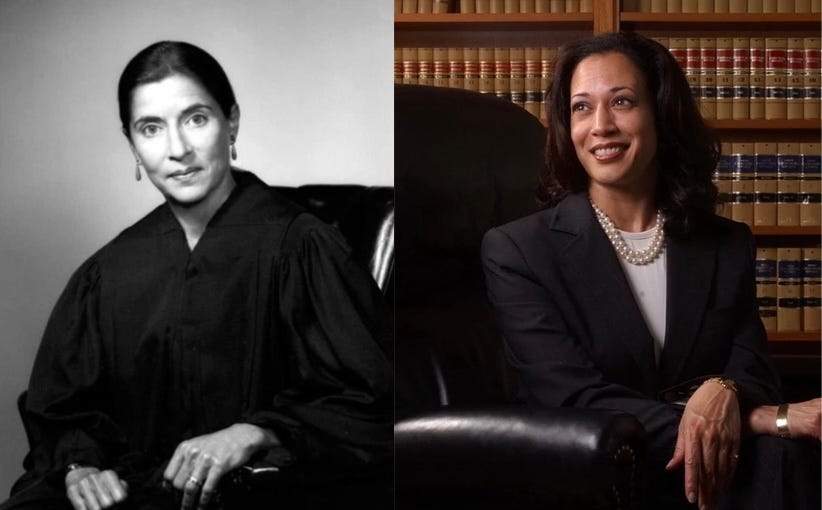
Black Women and Police: One Day on My Way to Agnes Scott College

by ©️Leslye Joy Allen

This essay is a revisit and an edit to a memory I wrote about 10 years ago, but a memory I hope might help someone else, particularly a Black or Brown woman.

Most of my encounters with police have been rare and routine. Most of the police officers I have dealt with have been courteous and helpful. I have made the occasional phone call about the neighbor whose dog has been running around the neighborhood terrorizing a few people. The police come out, speak with the offender, and the matter is resolved. Yet, I remember this incident…

A police officer discovered I had a “First Insurance Cancellation Suspension” on my driver’s license. For those of you born late in the 20th century, let me explain. An insurance cancellation suspension was common if you changed cars or changed insurance companies. You used to get a form in the mail from the Department of Motor Vehicles instructing you to record your new insurance or your new car. Occasionally, however, you might not receive the form by mail, and you could easily forget about it. 

If your new car/new insurance data had not arrived at the Department of Motor Vehicles when you bought a new car or changed your car insurance, you could end up with this particular type of suspension. You typically had to go to the Department of Motor Vehicles, show them your new purchase, along with your new insurance card.

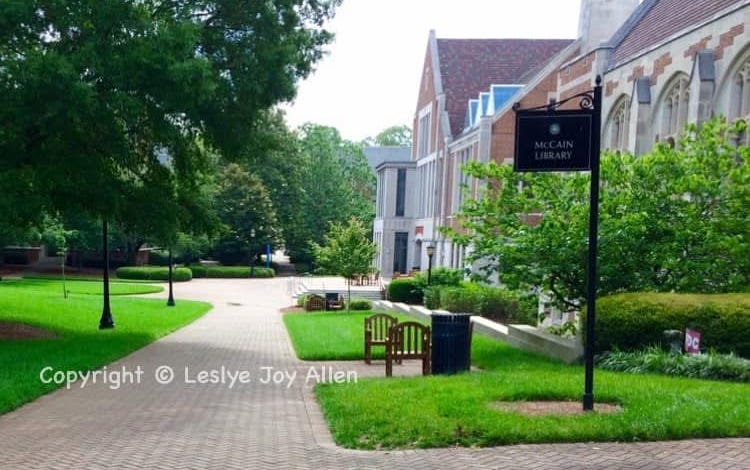
In what appeared to be a routine road check for driver’s license and insurance, the Decatur, Georgia Police held me for three hours only a few months after I purchased a car from my elderly uncle. This happened in the spring of 1998 when I was back in college to complete my Bachelor’s degree at Agnes Scott College

After checking my Driver’s License number the officer stated that I had a “First Insurance Cancellation Suspension” on the car I previously owned. I showed him my new insurance card on the car I was driving. I knew I would have to straighten out the suspension before I drove any car again. Since I was about a mile from the campus, I asked him if he could radio the Agnes Scott College Police and have someone from that police department drive down the street, and pick me (and the car) up.

I explained that I would have my Mama come pick me up at Agnes Scott and we would go to the Department of Motor Vehicles and get the suspension problem cleared up. 

“I’m not calling anybody,” he yelled. I pulled out my student ID. He said, “I don’t need that. Girl, get out of the car.” I was a grown woman then in my thirties; and while I might not have looked as old as my birth certificate said I was, I was nobody’s “girl.” I kept my mouth closed, but I am sure he sensed my displeasure.

I got out of the car and he instructed me to lie down in the street. When I asked why are you doing this? He told me to shut up. While I lay down in the street for over 30 minutes, he and another two officers pulled the back seat out of my car. They searched the trunk. If it had not been for the little old man that came out of his house to watch, I do not know what else might have happened. I was terrified, but I suffer from something my Mama used to call, “Your Daddy’s Disease.”

She said my father never showed fear when under pressure. I don’t show it either. Daddy always looked fearless, even menacing, when some horrible event was going on. Then later when everything was all over, he would fall apart, shaking and reaching for a good stiff drink. “That kind of thing can get you killed, Joy,” Mama said, “When someone expects you to be afraid, sometimes the worst thing you can do is look like you have no fear.”

This event was before everyone had a cellphone. A female police officer appeared and asked me if I wanted to call my Mama using her phone. The first police officer decided to write me a simple ticket for driving with a suspended license and he left me standing there in the street. He drove off. 

That sweet little old man stood there and talked with me until Mama arrived. He told me he thought the Decatur police were doing some kind of sweep. “They’re looking for somebody that’s up to no good, and they’re tryin’ to find ‘em in these road blocks,” he said. Mama arrived in about 30 minutes and picked me up. My new best friend—that sweet observant little old Black man told me to leave my car where it was until the suspension problem was straightened out.

Them SOBs are probably waiting somewhere watching and waiting for you to drive off so they can give you another ticket or take you to jail. I’ll watch your car until you get back,” he said.

Mama asked me how my clothes got so dirty. I lied and told her I slipped and fell. She would have had a heart attack if I told her what really happened to her only child. We headed to the Department of Motor Vehicles. The clerk handed me a simple form that I filled out citing that I no longer owned the previous vehicle and therefore had no insurance on that vehicle. 

I had to write down the serial number and model of my current car and provide my proof of insurance. The clerk recorded my data and lifted my “First Insurance Cancellation Suspension.” All of this took about 20 minutes.

I did argue my case in traffic court. The police officer rolled his eyes at me as I explained in detail his refusal to call the Agnes Scott College police even after I showed him my student ID. I told the judge every detail and showed him my insurance card, the purchase of my car, and the statement from the Department of Motor Vehicles that lifted my insurance cancellation suspension. 

To add as much injury as I could, I said, “I missed my Latin Class because of this!” The judge dismissed my case. I paid no fine. I was lucky. Yet, I sensed that what happened to me was not rare. This kind of treatment happens to women, and particularly Black women and women of color, with a frequency that many people do not want to admit. 

Black women encounter more than our share of rudeness and physical intimidation from male police. This offending officer was Black. It’s easy to talk about racist cops, but it is not so easy to talk about SEXIST ones. And for the record, I don’t like Black men who are cops anymore than I like White men who are cops. Here’s the rub…

I consider myself to be an average size woman. By the time I was 50 years old, I managed to gain enough weight to make it to a whopping 135 pounds at 5 feet, 5 inches tall. At the time of this incident, I weighed only about 115 pounds. That police officer was at least 6’ 2” tall and weighed well over 200 pounds. He called me a girl. He told me to shut up. He did not throw me to the ground, Thank God. Yet, just imagine how easy it would have been for him to do so.

©️Leslye Joy Allen

I am an Independent Historian, Oral Historian and Dramaturge. Please consider supporting my work with a few bucks for Coffee and Eggs via my CashApp.

All blogs written by Leslye Joy Allen are protected by U. S. Copyright Law and licensed under a Creative Commons Attribution-NonCommercial-NoDerivs 3.0 Unported License. Any partial or total reference to any blog authored by Leslye Joy Allen, or any total or partial excerpt of any blog authored by Leslye Joy Allen must contain a direct reference to this hyperlink: https://leslyejoyallen.com with Leslye Joy Allen clearly stated as the author.  Postings or blogs placed here by other writers should clearly reference those writers.  All Rights Reserved.
Race and Reproductive Rights

by ©️Leslye Joy Allen

I remember a conversation with my late cousin Billie Allen, who was an actor, dancer and stage director. She was here in Atlanta in 2003 directing her close friend, actor Ruby Dee in “Saint Lucy’s Eyes,” a play written by Bridgette Wimberly.

The play was about a woman who performed back room abortions for young women who were in serious trouble. The protagonist named “Old Woman” performed abortions out of mercy and out of a sense that those pregnant women were having their futures derailed by unplanned pregnancies.

Billie mailed me a copy of the play before it came to Atlanta’s Alliance Theatre, and not long after it had a successful off-Broadway premiere at New York’s Women’s Project Theater in 2001. Turning me into her personal dramaturge again, she and I discussed the hot topic of abortion. Then she shared with me something I did not know.

She told me that back in the 1940s and 1950s, when a Hollywood actress became pregnant and had too many professional and contractual obligations to a studio, she typically went to Puerto Rico to have an abortion.

I soon learned that in 1937, the Puerto Rican legislature made abortion and contraception legal. It also made sterilization legal. That’s the kicker—sterilization. An island with a population of people, many of who have Indian, African, and Spanish ancestry were often seen as expendable.

Puerto Rico’s legislature voted with all of the eugenicist and racist taint that emanated from the United States’ highly racist sterilization programs that were completely in line with the eugenics (racial cleansing) going on in Nazi Germany.

I mentioned to Billie that I had seen a short documentary called “La Operación,” by Ana María García back in the early 1980s. It was a documentary about how people involved with “population control” arrived in Puerto Rico in the 1950s and 1960s and sterilized about a third of the island’s women who were of childbearing age.

While there were certainly Puerto Rican women who no longer wanted to have more children, many women were sterilized without knowing exactly what was being done to them.

Puerto Rico was the location of where the first large scale trials of birth control pills took place before “the pill” debuted in 1960 in the United States. Various pills were first tested on a tiny group of women in Boston. Yet, the largest group of clinical guinea pigs were Puerto Rican women; other women of color in the Western hemisphere soon followed.

In 1933 Margaret Sanger, long heralded as a leader in the birth control movement, wrote in Birth Control Review that “Eugenic sterilization is an urgent need …We must prevent multiplication of this bad stock.” People of color were the bad stock.

In 1939 in a letter to Dr. Clarence Gamble, one of the architects of the United States’ eugenics movement (and heir to the Proctor & Gamble fortune), Sanger wrote that they should use Black male ministers to appeal to Black women to get them to agree to be sterilized. She sought to use Black women’s typical deference to Black clergy to accomplish her mission.

By 1955 biologist Gregory Pincus visited Puerto Rico and found it the best location to test birth control pills. After all, the island had no laws preventing contraception. Pincus and his partner John Rock, a gynecologist, promoted their work as poverty-prevention by making it possible for poor Puerto Rican women to have fewer babies.

And here we cisgender women are right now in 2025. We all worry about losing the right to make decisions about our own bodies; and we should. Yet, early birth control and abortion initiatives were never about women having the right to make their own reproductive choices.

The primary objective was to slow or stop the biological reproduction of any woman who did not belong to an accepted class or status of women classifiable as “white.”

Without fully understanding the racist origins of the state’s reproductive control over women, you will miss its original intent. Reproductive procedures, no matter how necessary they are, remain a political football; and Puerto Rican women, and other women of color were its first sacrifices.

©️Leslye Joy Allen

I am an Independent Historian, Oral Historian and Dramaturge. Please consider supporting my work with a few bucks via my CashApp.

My copy of the script of “Saint Lucy’s Eyes,” and one of several promotional posters for “La Operación.”

All blogs written by Leslye Joy Allen are protected by U. S. Copyright Law and licensed under a Creative Commons Attribution-NonCommercial-NoDerivs 3.0 Unported License. Any partial or total reference to any blog authored by Leslye Joy Allen, or any total or partial excerpt of any blog authored by Leslye Joy Allen must contain a direct reference to this hyperlink: https://leslyejoyallen.com with Leslye Joy Allen clearly stated as the author.  Postings or blogs placed here by other writers should clearly reference those writers.  All Rights Reserved.

A Word For Democrats About 2020

by Leslye Joy Allen

Copyright © by Leslye Joy Allen. All Rights Reserved.

I cannot really comment right now about the recent mass shootings because I am soul weary from it. I will write about it another day. I will only say we need to look very carefully at all candidates on this issue of gun control and the banishment of assault rifles. Democrats also better learn to really listen to young people, those Millennials who out-voted Baby Boomers in the 2018 national elections, if they want to win the Whitehouse and put a reasonable dent in the Republican-dominated Senate.

I watched political pundit Thomas Friedman talk about the possibility of Trump winning re-election on MSNBC, right after the publication of his New York Times op-ed “Trump’s Going to Get Re-elected, Isn’t He?”. It’s a chilling thought. Friedman noted that Democratic candidates for president produced some pretty radical ideas in the first debate: everything from advocating for open borders, to free healthcare for anyone who crossed our borders. He was right when he said most Americans, including many on the Left, are not going for any of this. So, after I listened to Friedman, and watched as much of the two Democratic presidential debates I could stomach, I saw several problems Democrats must overcome in order to win the White House in 2020 and possibly pick up more seats in the Senate.

Democrats must recognize that they are no match for our current president when it comes to spin. The current president is a damned reality TV star. He knows how to spin a story, create a repetitive slogan and throw his base enough raw meat to keep them snapping and cheering. If Trump (who already said as much) murdered a man in broad daylight for no reason, most of his supporters will still support him because they are, after all, frightened white people who are now forced to come to terms with what author James Baldwin tried to tell them a long time ago, mainly, that “the world is not white.” Europeans and White Americans are older than everyone else on the planet save the Japanese. Europe’s average age is 42 years old and that fact is coupled with a low birthrate.  Of course we must also consider that 11 percent of Black American men who voted for the current president too. These are the Black ass, sexist and self-defeating Neanderthals who are scared to death of women being in any kind of control to the point where they would willingly throw their own people (and themselves) under the bus in the antiquated belief that only men, and only white men at that, can get anything done…But I have not the time to digress about the current Massa’s favorite Darkies…let me get back to the demographics that matter.

When you toss in the relative youth of the rest of the world, it gets even scarier for some folks. Across the entire African continent, the average age is around 20 years old. With the continent of Africa, South America, the Caribbean, India and much of Southeast Asia containing young fertile populations, the death knell of worldwide white supremacy is ringing in many white folks’ ears. We already know the kinds of fears our current president stokes among his supporters, but we cannot spend all of our energy responding to his spin and his lies; we have to use them as fuel for some other strategy to beat him because the Democrats are never going to be able to beat him at propaganda, which leads me to something one of my young friends said. His name is John Jordan, Jr. and he’s a Black, 29-year-old entrepreneur and Morehouse College graduate. We trade ideas often.  As Joe Biden seems to be the frontrunner for the Democratic nomination for president, John said this:

“I’m a millenial and the one thing I know is the world has changed and will continue to change.  Baby Boomers, especially politicians try to act like they know…Biden’s entire candidacy will rest on his ability to show that as an old, white man he can listen and adapt based on what he is learning.”

John, who was mentored by a Black woman, is right. Democrats are going to have to overcome the generational gap and the intra-party gender and racial biases that threaten the best work of our most activist and youngest Congress persons, namely Ilhan Omar, Alexandria Ocasio-Cortez, Rashida Tlaib and Ayanna Pressley. Our current president has continued to verbally beat up on these four women, not simply because they are people of color, but also because they are women, and young women at that. Tragically, many men of color and white men will not defend women of color whenever those men fear that such a defense will cost them their own personal connections and favor with powerful white men. Additionally, men of a certain age (along with women who’ve learned to adapt to their habits), even when they respect the abilities of women, still tend to expect to direct women. Many of the men I know well over the age of 50 (and I will exit my 50s at the end of 2020), don’t always know how to not place themselves at the center of attention or how to not always have to direct the proceedings.

In my experiences mentoring and/or doing business with well-educated Black men in their 20s to early 40s, I learned that most of them are not terrified of the word “feminist” and can accept direction from a woman, particularly if they think she has a great idea or a better idea. They do not flinch from matters that concern or affect LGBTQIA communities either, but, more often than not, recognize those concerns as inextricably tied to the fabric of our entire community. They tend to worry a whole, whole, whole lot less than their older counterparts about who is going to get the most credit and the most limelight and the most money.  Importantly, they don’t see women as competition, and are rarely as defensive as some of their older counterparts when a woman offers an honest critique. In fact, they welcome these critiques as a way to brainstorm and look for new and better ideas. While I cannot speak for other people’s experiences, I can say the young, college-educated Black men I’ve been privileged to meet and mentor are a breath of fresh air.

So, when Democratic presidential candidate Joe Biden got blind-sided by Kamala Harris in the first Democratic debate about the subject of bussing, it was largely due to his underestimating Harris’s abilities at debate, and it was also due to his walking into that debate with a set of assumptions, which are, thank Goddess, becoming obsolete. The second Democratic debate became, unfortunately, one where the candidates spent far too much time critiquing Obama’s policies than expressing in clear language what they would do as president and how they would reverse much of the damage done by the current occupant of 1600 Pennsylvania Avenue. I really do not care much for Democrats savaging each other, but Harris’ one-two punch in the first debate exposed some of Biden’s weaknesses.

Young adults of all genders, women, and Black women in particular, are underestimated by a lot of Baby Boomers and older folks ALL THE TIME. It dawned on me that Biden could easily have his ass handed to him in a debate with the incoming first-year classes of all-women Agnes Scott College or all-women and historically Black Spelman College with ease. Biden wouldn’t fare too well with the students of all-men and historically Black Morehouse College either. If you don’t believe me, go visit those campuses. Go listen to them. Go sit and answer their tough questions. Better yet, go unprepared with the same old weak assumptions about what you think you don’t have to know in order to persuade these brilliant young women and men to vote for you. See what happens to you.

If Biden remains the frontrunner, and eventually the Democratic nominee for president, and the best choice for beating our current president, then there are two things he needs to correct ASAP.  First, he cannot dig in his heels and shrug off complaints about something he said simply because he feels like he didn’t do or say anything wrong or potentially offensive. I understood what Biden meant when he said he worked with segregationists because I was born in 1960 during a period when civil rights legislation was being passed, and there was no choice but to work with those segregationists.  A young man or woman born in the 80s, 90s or early 2000s would not/will not interpret his comments the same way I do.  So, he needs to get over himself enough to listen to and respond effectively to younger voters who he needs to win.

Second, Black women of all ages vote more consistently and solidly Democrat, more often, and in higher numbers than any other voting bloc. In the last election, this group voted 8 percentage points higher than the national average. Black women’s interests cannot be ignored and will be central to most Democratic victories. Black women, along with Millennials helped usher in a massive wave of Democrats in the House of Representatives with over 100 Congresswomen whose ideas and talents have been muted for far too long. Most of these newly-elected women are Millennials, with enough stamina to weather this current hate-filled political climate and most of them, if they wish to do so, will still be here 40 years from now.

I’ve lived long enough to become an elder. I relish my conversations with young Black men and women all the time. And as one told me, “We respect you because you respect us.” Whoever is the Democratic nominee for president better understand that the overwhelmingly young, Black and women voters that turned the House of Representatives BLUE in 2018 need to be listened to, not talked at. Democrats will not, cannot win without them.

Copyright © by Leslye Joy Allen. All Rights Reserved.

This blog was written by Leslye Joy Allen and is protected by U. S. Copyright Law and licensed under a Creative Commons Attribution-NonCommercial-NoDerivatives-4.0 International License. Any partial or total reference to this or any blog authored by Leslye Joy Allen, or any total or partial excerpt of this or any blog by Leslye Joy Allen must contain a direct reference to this hyperlink: https://leslyejoyallen.com with Leslye Joy Allen clearly stated as the author. All Rights Reserved.

Why We Fail: Forgetting Malcolm and Martin’s Internationalism

Weary Self-Portrait 2 “Weary Self-Portrait 2” (Copyright © 2014 by Leslye Joy Allen. All Rights Reserved.)

by Leslye Joy Allen

Copyright © 2014 by Leslye Joy Allen. All Rights Reserved.


As bad as things are in the USA—in particular, the killing of a young Black man named Michael Brown in Ferguson, Missouri—what we Black Americans are enduring is “a cakewalk” by comparison to some of the tragedies that are currently taking place in India, parts of Africa, Iraq, Israel, and so many other places around the world.  Yet, our current Black leadership has been conspicuously silent on so many of these international matters, including the excessive policies of Israel against an already displaced Palestinian people.  Yet, Arab, Jewish, African, and African American women found enough of a unified voice to write a statement of solidarity with the Palestinian people.  I wonder why they could do it, but not our elected officials.  These women understand an important component of previous human rights struggles—including the Civil Rights and Freedom struggles that took place during the 1950s well into the 1970s in the United States—the international component.

Martin Luther King, Jr. and Malcolm X always placed Black American freedom struggles in an international context.  If you do not believe me, then read or listen to Malcolm X’s “Message to the Grass Roots” and listen to him rattle off the names of those nations and peoples that too many of us frequently ignore.  Listen to King speak poetically and prophetically against the Vietnam War.  These are only a few examples, often scary examples.  Yet, there are many others.

What happened to Michael Brown in Ferguson, Missouri is going to resonate with other people in other parts of the world.  When we lost Trayvon Martin, you found people across the globe putting on “hoodies” in solidarity.  And, if it were not for the women of Nigeria taking full advantage of social media, most of us would never have known anything about the kidnapping of the Nigerian girls, who have still not been returned to their families.  Yet, when was the last time you saw a massive movement of Black Americans speaking out against and lending assistance to anyone outside of the USA.  Arguably, there has been no massive international activity on OUR part, at least not since the zenith of an internationally led movement that demanded that colleges and businesses divest from South Africa in protest of the country’s brutal and virulent social system known as apartheid, and that was in the late 1970s into the 1980s.

The question is when are we going to get our international legs back, and stop looking at what and who we are as if we are isolated in one country called the United States.  Does it not matter that two teenage Indian girls were gang-raped, and then lynched just a few months ago in Bengal, India?  Does it not matter that several hundred Nigerian girls were kidnapped and—sorry to say this—will probably never return to their families?  Does it not matter that former UK Prime Minister Gordon Brown has stayed on top of the problem in Nigeria and spoken out about this problem of female trafficking in Nigeria and elsewhere, and more often than many Black American politicians and self-appointed pundits?  You are damned right it matters.

I can count on one of my former English professors to regularly post articles and his own occasional eloquent outbursts on his page on Facebook about many of the atrocities that happen to women worldwide and, also what happens to Black Americans—He, however, was born in Pakistan.  The Executive Director of Greenpeace International was born and raised in South Africa, and spent his teenage years in the anti-Apartheid movement.  He regularly articulates how women’s oppression, the problems with the environment and human rights struggles are tied together.  I knew something had become completely out-of-whack when the only men I could count on—with any real regularity—to lend their voices and support against sexism were men of color who were also NON-American.  The difference is, they can and do connect the dots and see environmental problems, discrimination and the persecution of women, and battles to end racism and/or ethnic violence as connected problems in ways that so many Americans simply do not.  Yet, a few Black Americans do connect the dots, but they are not part of what is traditional Black leadership, which is a good thing.

Ron Davis, the father of Jordan Davis—the Black teenage boy that was killed in Florida when a man shot into his vehicle over a quarrel about loud music—took his complaint about the senseless murders and expendability of young Black men to Geneva, Switzerland at the 85th annual meeting of the Committee on the Elimination of Racial Discrimination.  The talks in Geneva run from August 11 through August 29, 2014. This was a bold move by Mr. Davis, but proof positive that he was paying attention in the sixties and seventies when international opinion about the United States government’s slow response to discrimination and racial virulence damaged the USA’s image abroad.  Both Mr. Davis and the women of all colors and nations who signed that Solidarity Pledge fully understand what Malcolm X and Martin Luther King, Jr. tried to teach.  We can hope that some citizens in Ferguson, Missouri are paying attention.

Now, thinking internationally or being concerned with tragedies or the well-being of people outside of the United States will not stop police officers from killing unarmed Black male teenagers.  My interest and sadness over the senseless gang rape and lynching of two teenage girls in India several months ago will not stop the rape and abuse of women anywhere, neither will my continued anguish over the kidnapping of girls in Nigeria.  Yet, to be a Black woman born and raised in the American South is to understand that racism and sexism come from all quarters of the country of my birth, and indeed all quarters of the world itself.

To fail to see the connections I have with peoples who may or may not speak my language or belong to the same racial and/or ethnic and/or gender group is to forget the real lessons of the Civil Rights Movement—that WE are not alone if WE will simply acknowledge that WE need allies, and international allies at that.  Yet, WE will be alone if WE operate from the position that people in other parts of the world do not have anything to teach us.  WE cannot afford to function from the position that because WE dwell in the United States that no one else’s problems or persecution matters as much as ours matter.  If WE do, WE will have missed Martin and Malcolm’s most important lesson, namely that if WE labor alone, WE, and everybody else, will lose.

Copyright © 2014 by Leslye Joy Allen. All Rights Reserved.

CCThis Blog was written by Leslye Joy Allen & is protected by U. S. Copyright Law and licensed under a Creative Commons Attribution-NonCommercial-NoDerivs 3.0 Unported License. Any partial or total reference to this blog, or any total or partial excerpt of this blog must contain a direct reference to this hyperlink: http://leslyejoyallen.com with Leslye Joy Allen clearly and visibly stated as the author. All Rights Reserved.