My last few blogs have largely been laments about illiteracy, sexism, and an assortment of problems we are facing with the incoming administration of Felon 47.
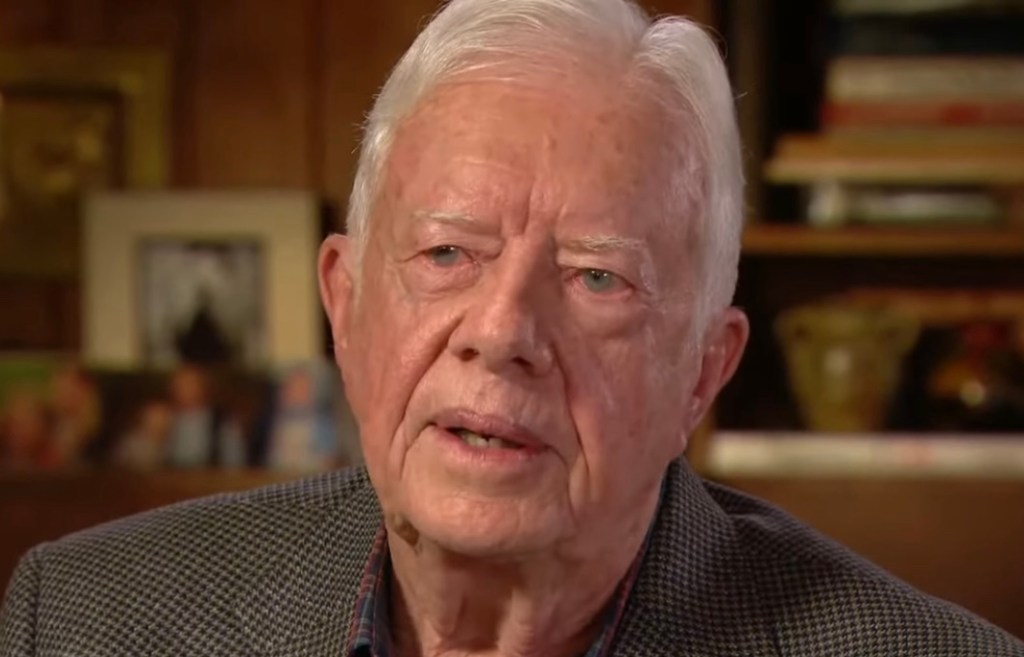
This particular blog is not really about men and women who have amnesia, but rather about those among us who conveniently try to forget uncomfortable truths. I am thinking about the now late Jimmy Carter as I write this. He was one of the few American men to write boldly about sexism and misogyny as a worldwide crisis.
So, let’s consider this. Felon 47 is not a new phenomenon in American history. I hear all this bluster from people about his abuse of women, his racism, his rape charges, and etcetera, but…
Back in the late 1700s Thomas Jefferson was having illicit sex (rape) with his 14-year-old slave Sally Hemmings. You notice how folks never bring up her age? Jefferson also knew that little Sally Hemmings was his wife’s half sister because his father-in-law was—like many slaveholders—taking advantage of their “white male privileges” to do whatever the hell they wanted to do to women, particularly Black women.
Now, before any of my Black brothers and sisters get too comfortable, let’s acknowledge that Elijah Muhammad who founded the Nation of Islam did damned near the same thing when he was screwing around with and impregnating his teenage secretaries.
Whenever I hear someone say that Malcolm X left the Nation of Islam, I want to scream because Malcolm X did not leave. He, along with Wallace Muhammad, was put out of the Nation for daring to raise questions about Elijah Muhammad’s behavior.
In spite of some of the sheer depravity we all have heard about in recent months, you would have known so much more IF most people actually listened to women in general, and Black women in particular.
The same Black women that most men and too many women never pay any attention to could have told you that there is not a nickel’s worth of difference between Harvey Weinstein, R. Kelly, Sean “P. Diddy” Combs, Donald Trump and Jeffrey Epstein. All of these men had different illicit methods of making money and illicit methods of chasing underage tail.
For the next 4 years every American will learn that the very high price of sexism and misogyny exacts far more than most are willing to pay. And the very high price of not fighting against these ills will ultimately cost you your soul.
Goddess Bless Jimmy Carter for not blinking, for owning his missteps and for speaking out when others were too cowardly to do so.
As bad as things are in the USA—in particular, the killing of a young Black man named Michael Brown in Ferguson, Missouri—what we Black Americans are enduring is “a cakewalk” by comparison to some of the tragedies that are currently taking place in India, parts of Africa, Iraq, Israel, and so many other places around the world. Yet, our current Black leadership has been conspicuously silent on so many of these international matters, including the excessive policies of Israel against an already displaced Palestinian people. Yet, Arab, Jewish, African, and African American women found enough of a unified voice to write a statement of solidarity with the Palestinian people. I wonder why they could do it, but not our elected officials. These women understand an important component of previous human rights struggles—including the Civil Rights and Freedom struggles that took place during the 1950s well into the 1970s in the United States—the international component.
Martin Luther King, Jr. and Malcolm X always placed Black American freedom struggles in an international context. If you do not believe me, then read or listen to Malcolm X’s “Message to the Grass Roots” and listen to him rattle off the names of those nations and peoples that too many of us frequently ignore. Listen to King speak poetically and prophetically against the Vietnam War. These are only a few examples, often scary examples. Yet, there are many others.
What happened to Michael Brown in Ferguson, Missouri is going to resonate with other people in other parts of the world. When we lost Trayvon Martin, you found people across the globe putting on “hoodies” in solidarity. And, if it were not for the women of Nigeria taking full advantage of social media, most of us would never have known anything about the kidnapping of the Nigerian girls, who have still not been returned to their families. Yet, when was the last time you saw a massive movement of Black Americans speaking out against and lending assistance to anyone outside of the USA. Arguably, there has been no massive international activity on OUR part, at least not since the zenith of an internationally led movement that demanded that colleges and businesses divest from South Africa in protest of the country’s brutal and virulent social system known as apartheid, and that was in the late 1970s into the 1980s.
The question is when are we going to get our international legs back, and stop looking at what and who we are as if we are isolated in one country called the United States. Does it not matter that two teenage Indian girls were gang-raped, and then lynched just a few months ago in Bengal, India? Does it not matter that several hundred Nigerian girls were kidnapped and—sorry to say this—will probably never return to their families? Does it not matter that former UK Prime Minister Gordon Brown has stayed on top of the problem in Nigeria and spoken out about this problem of female trafficking in Nigeria and elsewhere, and more often than many Black American politicians and self-appointed pundits? You are damned right it matters.
I can count on one of my former English professors to regularly post articles and his own occasional eloquent outbursts on his page on Facebook about many of the atrocities that happen to women worldwide and, also what happens to Black Americans—He, however, was born in Pakistan. The Executive Director of Greenpeace International was born and raised in South Africa, and spent his teenage years in the anti-Apartheid movement. He regularly articulates how women’s oppression, the problems with the environment and human rights struggles are tied together. I knew something had become completely out-of-whack when the only men I could count on—with any real regularity—to lend their voices and support against sexism were men of color who were also NON-American. The difference is, they can and do connect the dots and see environmental problems, discrimination and the persecution of women, and battles to end racism and/or ethnic violence as connected problems in ways that so many Americans simply do not. Yet, a few Black Americans do connect the dots, but they are not part of what is traditional Black leadership, which is a good thing.
Ron Davis, the father of Jordan Davis—the Black teenage boy that was killed in Florida when a man shot into his vehicle over a quarrel about loud music—took his complaint about the senseless murders and expendability of young Black men to Geneva, Switzerland at the 85th annual meeting of the Committee on the Elimination of Racial Discrimination. The talks in Geneva run from August 11 through August 29, 2014. This was a bold move by Mr. Davis, but proof positive that he was paying attention in the sixties and seventies when international opinion about the United States government’s slow response to discrimination and racial virulence damaged the USA’s image abroad. Both Mr. Davis and the women of all colors and nations who signed that Solidarity Pledge fully understand what Malcolm X and Martin Luther King, Jr. tried to teach. We can hope that some citizens in Ferguson, Missouri are paying attention.
Now, thinking internationally or being concerned with tragedies or the well-being of people outside of the United States will not stop police officers from killing unarmed Black male teenagers. My interest and sadness over the senseless gang rape and lynching of two teenage girls in India several months ago will not stop the rape and abuse of women anywhere, neither will my continued anguish over the kidnapping of girls in Nigeria. Yet, to be a Black woman born and raised in the American South is to understand that racism and sexism come from all quarters of the country of my birth, and indeed all quarters of the world itself.
To fail to see the connections I have with peoples who may or may not speak my language or belong to the same racial and/or ethnic and/or gender group is to forget the real lessons of the Civil Rights Movement—that WE are not alone if WE will simply acknowledge that WE need allies, and international allies at that. Yet, WE will be alone if WE operate from the position that people in other parts of the world do not have anything to teach us. WE cannot afford to function from the position that because WE dwell in the United States that no one else’s problems or persecution matters as much as ours matter. If WE do, WE will have missed Martin and Malcolm’s most important lesson, namely that if WE labor alone, WE, and everybody else, will lose.



 Leslye Joy Allen