
by ©️Leslye Joy Allen
This essay is a revisit and an edit to a memory I wrote about 10 years ago, but a memory I hope might help someone else, particularly a Black or Brown woman.
Most of my encounters with police have been rare and routine. Most of the police officers I have dealt with have been courteous and helpful. I have made the occasional phone call about the neighbor whose dog has been running around the neighborhood terrorizing a few people. The police come out, speak with the offender, and the matter is resolved. Yet, I remember this incident…
A police officer discovered I had a “First Insurance Cancellation Suspension” on my driver’s license. For those of you born late in the 20th century, let me explain. An insurance cancellation suspension was common if you changed cars or changed insurance companies. You used to get a form in the mail from the Department of Motor Vehicles instructing you to record your new insurance or your new car. Occasionally, however, you might not receive the form by mail, and you could easily forget about it.
If your new car/new insurance data had not arrived at the Department of Motor Vehicles when you bought a new car or changed your car insurance, you could end up with this particular type of suspension. You typically had to go to the Department of Motor Vehicles, show them your new purchase, along with your new insurance card.
In what appeared to be a routine road check for driver’s license and insurance, the Decatur, Georgia Police held me for three hours only a few months after I purchased a car from my elderly uncle. This happened in the spring of 1998 when I was back in college to complete my Bachelor’s degree at Agnes Scott College.
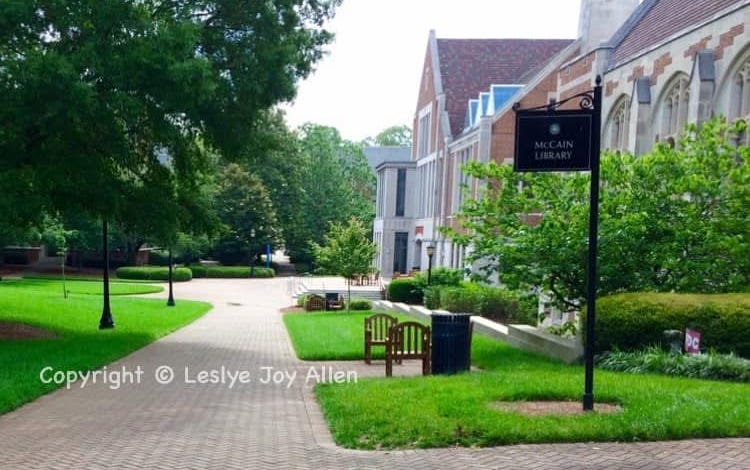
After checking my Driver’s License number the officer stated that I had a “First Insurance Cancellation Suspension” on the car I previously owned. I showed him my new insurance card on the car I was driving. I knew I would have to straighten out the suspension before I drove any car again. Since I was about a mile from the campus, I asked him if he could radio the Agnes Scott College Police and have someone from that police department drive down the street, and pick me (and the car) up.
I explained that I would have my Mama come pick me up at Agnes Scott and we would go to the Department of Motor Vehicles and get the suspension problem cleared up.
“I’m not calling anybody,” he yelled. I pulled out my student ID. He said, “I don’t need that. Girl, get out of the car.” I was a grown woman then in my thirties; and while I might not have looked as old as my birth certificate said I was, I was nobody’s “girl.” I kept my mouth closed, but I am sure he sensed my displeasure.
I got out of the car and he instructed me to lie down in the street. When I asked why are you doing this? He told me to shut up. While I lay down in the street for over 30 minutes, he and another two officers pulled the back seat out of my car. They searched the trunk. If it had not been for the little old man that came out of his house to watch, I do not know what else might have happened. I was terrified, but I suffer from something my Mama used to call, “Your Daddy’s Disease.”
She said my father never showed fear when under pressure. I don’t show it either. Daddy always looked fearless, even menacing, when some horrible event was going on. Then later when everything was all over, he would fall apart, shaking and reaching for a good stiff drink. “That kind of thing can get you killed, Joy,” Mama said, “When someone expects you to be afraid, sometimes the worst thing you can do is look like you have no fear.”
This event was before everyone had a cellphone. A female police officer appeared and asked me if I wanted to call my Mama using her phone. The first police officer decided to write me a simple ticket for driving with a suspended license and he left me standing there in the street. He drove off.
That sweet little old man stood there and talked with me until Mama arrived. He told me he thought the Decatur police were doing some kind of sweep. “They’re looking for somebody that’s up to no good, and they’re tryin’ to find ‘em in these road blocks,” he said. Mama arrived in about 30 minutes and picked me up. My new best friend—that sweet observant little old Black man told me to leave my car where it was until the suspension problem was straightened out.
“Them SOBs are probably waiting somewhere watching and waiting for you to drive off so they can give you another ticket or take you to jail. I’ll watch your car until you get back,” he said.
Mama asked me how my clothes got so dirty. I lied and told her I slipped and fell. She would have had a heart attack if I told her what really happened to her only child. We headed to the Department of Motor Vehicles. The clerk handed me a simple form that I filled out citing that I no longer owned the previous vehicle and therefore had no insurance on that vehicle.
I had to write down the serial number and model of my current car and provide my proof of insurance. The clerk recorded my data and lifted my “First Insurance Cancellation Suspension.” All of this took about 20 minutes.
I did argue my case in traffic court. The police officer rolled his eyes at me as I explained in detail his refusal to call the Agnes Scott College police even after I showed him my student ID. I told the judge every detail and showed him my insurance card, the purchase of my car, and the statement from the Department of Motor Vehicles that lifted my insurance cancellation suspension.
To add as much injury as I could, I said, “I missed my Latin Class because of this!” The judge dismissed my case. I paid no fine. I was lucky. Yet, I sensed that what happened to me was not rare. This kind of treatment happens to women, and particularly Black women and women of color, with a frequency that many people do not want to admit.
Black women encounter more than our share of rudeness and physical intimidation from male police. This offending officer was Black. It’s easy to talk about racist cops, but it is not so easy to talk about SEXIST ones. And for the record, I don’t like Black men who are cops anymore than I like White men who are cops. Here’s the rub…
I consider myself to be an average size woman. By the time I was 50 years old, I managed to gain enough weight to make it to a whopping 135 pounds at 5 feet, 5 inches tall. At the time of this incident, I weighed only about 115 pounds. That police officer was at least 6’ 2” tall and weighed well over 200 pounds. He called me a girl. He told me to shut up. He did not throw me to the ground, Thank God. Yet, just imagine how easy it would have been for him to do so.
I am an Independent Historian, Oral Historian and Dramaturge. Please consider supporting my work with a few bucks for Coffee and Eggs via my CashApp.
All blogs written by Leslye Joy Allen are protected by U. S. Copyright Law and licensed under a Creative Commons Attribution-NonCommercial-NoDerivs 3.0 Unported License. Any partial or total reference to any blog authored by Leslye Joy Allen, or any total or partial excerpt of any blog authored by Leslye Joy Allen must contain a direct reference to this hyperlink: https://leslyejoyallen.com with Leslye Joy Allen clearly stated as the author. Postings or blogs placed here by other writers should clearly reference those writers. All Rights Reserved.



 Leslye Joy Allen